Plant Vacation Care
Maintaining your houseplants while you are away requires matching the right preparation and watering strategy to the length of your trip and the specific needs of your plants. While a weekend away generally requires no special intervention beyond a standard watering, absences of a week or more demand passive hydration solutions like wicking systems, capillary mats, or self-watering containers. By making temporary environmental adjustments—such as reducing light intensity and grouping plants to increase humidity—you can significantly lower your plants' water consumption, ensuring they remain healthy until you return.
Quick Answer
For a short trip, most houseplants can be prepared by checking their soil moisture and watering normally when needed before you leave. Longer trips may require a wick, capillary mat, self-watering container, reservoir, or plant sitter. The best method depends on the plant's water needs, pot size, growing medium, temperature, and the length of your absence.
Before Leaving
Proper preparation is the most reliable way to ensure your indoor plants survive your absence. Assess the current soil moisture of each plant a few days before your trip. For most standard houseplants, water them normally right before you leave. Avoid the temptation to heavily overwater drought-tolerant species (like succulents or ZZ plants) in an attempt to "store" water, as this can easily trigger root rot while you are away.
Strategies by Trip Length
2–3 Days (Weekend Trip)
Most established houseplants require no special intervention for a weekend trip. Ensure they are watered appropriately before departure. Even moisture-loving tropicals generally survive a few days without damage.
4–7 Days (Short Vacation)
For trips lasting up to a week, normal watering prior to leaving is usually sufficient for medium-to-large pots. However, plants in very small pots, or highly thirsty plants like ferns and calatheas, may benefit from being moved slightly further away from bright light to reduce their transpiration rate.
1–2 Weeks
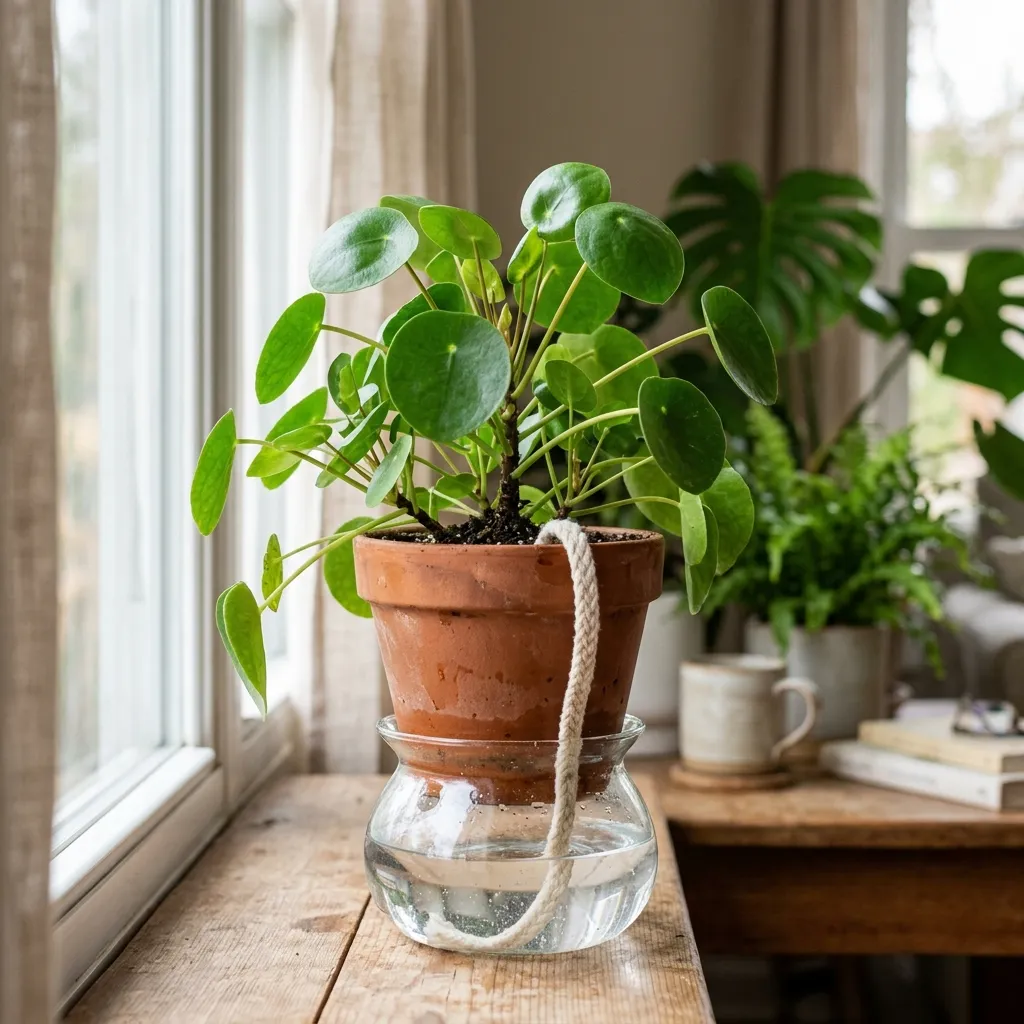
Absences of one to two weeks require proactive planning. Consider a passive watering system, such as a cotton wick or a capillary mat, for your moisture-dependent plants. Drought-tolerant plants will usually survive this duration without intervention.
Longer Trips (Over 2 Weeks)
For extended travel, passive systems may run dry. It is often best to enlist a reliable plant sitter, use large self-watering containers with deep reservoirs, or set up an automated drip irrigation system hooked to a timer and a large water source.
Passive Watering Methods Compared
| Watering Method | Mechanism | Best For | Limitations |
|---|---|---|---|
| Cotton / Nylon Wick | Draws water from a nearby reservoir up into the root zone via capillary action. | Small to medium pots; 1-2 week trips. | Requires testing beforehand; reservoir can run dry on long trips. |
| Capillary Mat | Plants sit on a wet fabric mat that continuously draws water from a reservoir. | Seedlings, small pots, and moisture-loving tropicals. | Pots must have bottom drainage holes touching the mat. |
| Self-Watering Pots | Built-in bottom reservoir allows roots to pull moisture as needed. | Long-term maintenance; thirsty plants like ferns and aroids. | Requires repotting before the trip if not already in one. |
| Watering Globes | Slowly releases water into the soil as it dries and oxygen enters the globe. | Small to medium plants needing supplemental moisture. | Can occasionally clog with soil or empty too quickly. |
Plant-Specific Considerations
Not all plants require the same vacation care. Drought-tolerant plants, such as cacti, succulents, snake plants, and ZZ plants, can typically be left alone for several weeks after a normal watering. In contrast, tropical plants with thin leaves, such as Calatheas or Maidenhair ferns, require consistent moisture and high humidity, making them ideal candidates for wicking systems or capillary mats. Be particularly mindful of plants in very small nursery pots (2 to 4 inches), as their small soil volume dries out much faster than larger planters.
Environmental Adjustments
You can significantly reduce the amount of water your plants consume by altering their environment while you are away. Moving plants out of intense, direct sunlight into lower (but still appropriate) indirect light slows down their photosynthesis and transpiration rates. Similarly, lowering the room temperature slightly reduces water loss. Grouping several plants together can also create a localized microclimate with higher ambient humidity, which helps them retain moisture longer.
What NOT to Do
- Don't automatically overwater: Saturating a plant far beyond its normal capacity right before leaving is a leading cause of root rot.
- Don't leave every plant sitting in water: While some bog plants tolerate wet feet, sitting most standard houseplants in a tub of water for weeks will suffocate their roots.
- Don't bag sensitive plants without care: Using a clear plastic bag to create a "greenhouse" effect can work for moisture lovers, but placing it in direct sun will quickly cook the plant.
Frequently Asked Questions
Can I leave my houseplants sitting in the bathtub while on vacation?
Placing plants in a bathtub with a shallow layer of water is only appropriate for a few highly moisture-dependent bog plants or ferns. For the vast majority of standard houseplants, sitting in standing water for several days or weeks will suffocate the roots and cause severe rot.
How does a cotton wick watering system work?
A wicking system uses capillary action to draw water from a large reservoir (like a bucket or jar) up through a cotton or nylon string and into the plant's soil. As the soil dries out, it naturally pulls more moisture through the wick, providing a steady, slow supply of water.
Are watering globes effective for long trips?
Watering globes can provide supplemental moisture for a few days up to a week, making them suitable for short trips. However, they are generally not reliable for absences longer than a week, as the water can sometimes discharge completely in just a day or two if the soil is loose.
Will putting a plastic bag over my plants help them retain moisture?
Yes, placing a clear plastic bag over a recently watered plant creates a miniature greenhouse that traps and recycles moisture. However, the plant must be kept completely out of direct sunlight to prevent overheating, and stakes should be used so the plastic doesn't stick to the foliage.
Should I fertilize my plants before leaving for vacation?
It is usually best to avoid fertilizing right before a trip. Fertilization can stimulate a flush of new growth, which increases the plant's demand for water. Pause your feeding schedule until you return and resume normal care.
How do I care for succulents and cacti when traveling?
Succulents, cacti, and other drought-tolerant plants are perfectly adapted to survive long periods without water. Give them a thorough watering right before you leave, and they can comfortably be left alone for two to four weeks without any special setup.
Explore More
Related Articles
Related Plant Guides
No specific plant guides found matching this topic.