Maidenhair Fern Care Guide
Keep a maidenhair fern lush with the humidity, watering frequency and indirect light it needs to prevent crispy, browning fronds.
-
Difficulty
Medium
-
Light
Bright indirect
-
Temperature
60°F - 75°F (15°C - 24°C)
-
Growth
Moderate
-
Expert Insight
Master-grower data coming soon.
-
Common Mistake
Real-world care data coming soon.
-
Environment
Real-world conditions coming soon.
Quick Answer
Maidenhair Fern needs consistently moist soil, high humidity above 50%, and bright indirect light away from direct sun. Fronds turn brown and crispy quickly if humidity drops or soil dries out, since this fern has little tolerance for inconsistency. Regular misting or a pebble tray helps maintain the humidity it requires.
Key Takeaways
- Keep soil evenly moist at all times; never let it fully dry out.
- Maintain humidity above 50% using a humidifier or pebble tray.
- Place in bright indirect light, avoiding any direct sun exposure.
- Trim browned fronds at the base to encourage fresh new growth.
- Avoid cold drafts and heating vents, which dry fronds out rapidly.
Overview
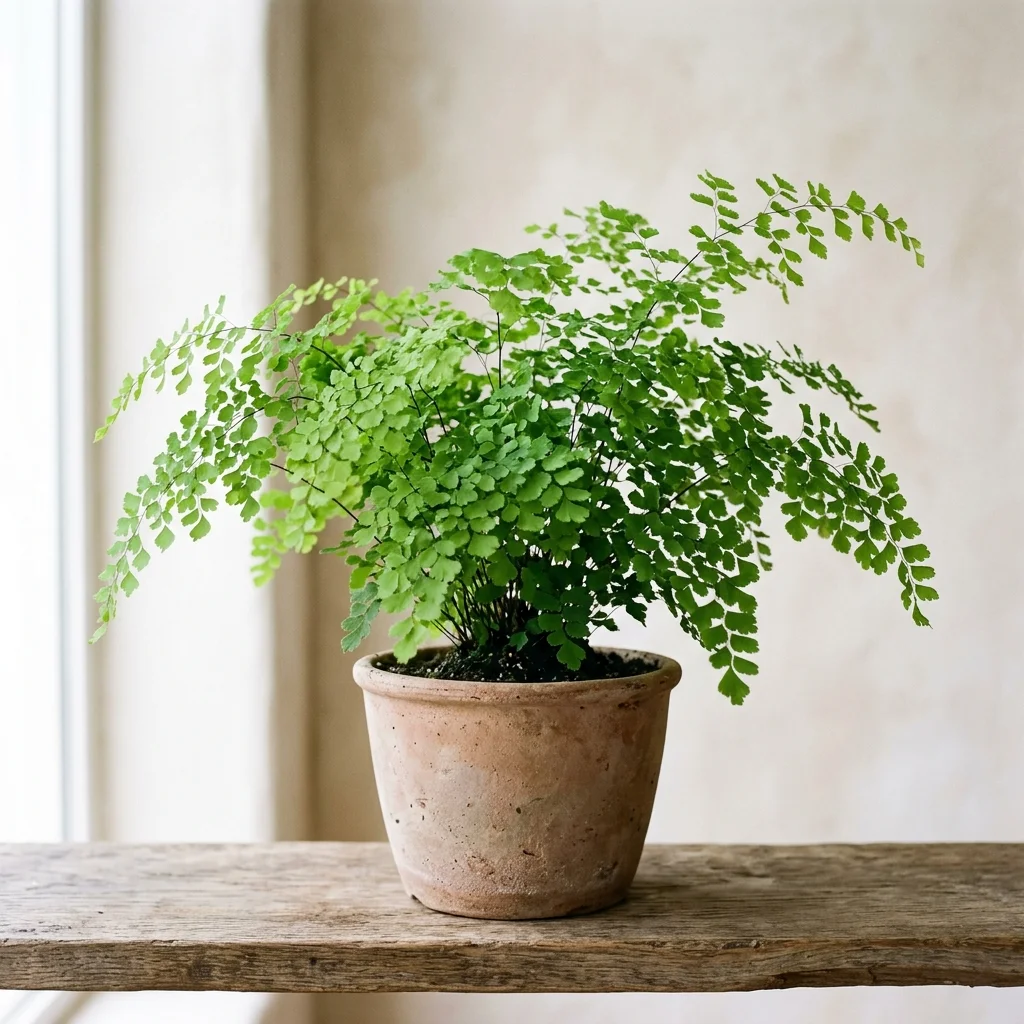
Maidenhair Fern (Adiantum raddianum) is a delicate tropical fern known for its thin black stems and small, fan-shaped leaflets. Unlike drought-tolerant houseplants, it prefers consistently moist growing conditions, high humidity, and protection from drying air. Its main care challenge is maintaining enough moisture and humidity without leaving the root zone waterlogged. Sudden drying, low humidity, hot drafts, or harsh sunlight can cause fronds to brown or decline quickly.
Watering
Keep the potting substrate consistently and evenly moist at all times, watering thoroughly when the soil surface begins to dry. Extension research indicates that Maidenhair Fern typically benefits from regular watering multiple times a week to prevent the sensitive fronds from desiccating.
Light
Provide Maidenhair Fern with bright indirect or filtered light. It can tolerate moderate light but should be protected from strong direct sunlight, which can scorch its delicate foliage and dry the growing medium too quickly. A position near a bright window with filtered light is generally suitable. Very low light can reduce growth and may make it harder for the plant to maintain dense, healthy foliage.
Soil
Use a moisture-retentive but well-draining growing medium that holds enough water for the fern without becoming stagnant. A quality houseplant or fern mix containing organic material and components that maintain aeration can work well. The container should have drainage holes, and the growing medium should not remain saturated for prolonged periods. Avoid extremely coarse, rapidly drying mixes designed for succulents or other drought-adapted plants.
Temperature
Maidenhair Fern prefers warm, stable conditions and generally performs well around 18–24°C (65–75°F). Protect it from cold drafts, sudden temperature changes, heating vents, and strong air-conditioning. Prolonged exposure to cold or rapidly drying warm air can cause frond decline even when the root zone remains adequately moist.
Humidity
Consistently high humidity is crucial for maintaining delicate Maidenhair Fern foliage. Dry indoor air quickly causes the fine leaflets to curl and crisp, making a dedicated humidifier, terrarium setup, or naturally humid bathroom an ideal growing location.
Fertilizer
Feed Maidenhair Fern lightly during active growth with a balanced fertilizer diluted according to the product instructions. Ferns generally do not require heavy feeding, and excessive fertilizer can contribute to salt accumulation and root stress. Watering the plant normally and maintaining suitable growing conditions are more important than frequent feeding. Reduce or pause fertilizer when growth slows or the plant is stressed.
Repotting
Repot Maidenhair Fern when the roots have substantially filled the container, the growing medium has deteriorated, or the plant has become difficult to keep evenly moist because the root ball has become crowded. Choose a container only moderately larger than the current one and use a fresh moisture-retentive but well-draining fern mix. Handle the delicate root system carefully and avoid unnecessarily disturbing the crown.
Growth
Maidenhair Fern develops delicate, spreading fronds from a central crown and can form a dense, graceful mound under consistently favorable conditions. New fronds emerge from the crown and gradually unfurl before developing their full foliage. Growth can slow significantly when humidity, moisture, temperature, or light are unsuitable. Because individual fronds are delicate, occasional browning does not necessarily mean the entire plant is failing; healthy plants can produce replacement growth when favorable conditions are restored.
Pruning
Maidenhair Fern does not require shaping or routine pruning, but damaged or completely brown fronds can be removed to improve appearance and make room for new growth. Cut declining fronds cleanly near the base using clean scissors or pruners. If many fronds have browned because the plant became too dry, removing the damaged foliage and restoring consistent moisture and humidity can allow new fronds to develop from the crown.
Propagation
Maidenhair Fern can be propagated by spores, although this is slow and considerably more demanding than propagating many common houseplants. Established plants can also sometimes be divided when they have developed multiple suitable crowns, but division should be performed carefully because the delicate root and crown structures can be easily disturbed. Maintaining high humidity and consistently moist conditions is important while newly propagated plants establish.
CommonProblems
Brown or crispy leaflets are commonly associated with dry air, insufficient moisture, strong sunlight, or exposure to drying drafts. Rapid frond decline can occur after the plant is allowed to dry substantially. Yellowing or soft growth can instead indicate excessive moisture or poor drainage. If fronds decline suddenly, check both the growing medium and the surrounding humidity rather than assuming that watering alone is the problem. Restoring stable moisture, humidity, light, and temperature is usually more useful than making several changes at once.
SeasonalCare
Maidenhair Fern often requires closer monitoring during periods when indoor air becomes especially dry or temperatures fluctuate. During active growth, maintain consistent moisture and humidity and provide suitable indirect light. In cooler or darker periods, growth may slow and water use can decrease, so avoid automatically maintaining the same watering frequency. Keep the plant away from heating vents and cold drafts, which can create rapid changes in the leaf environment.
OutdoorCare
In suitable warm climates, Maidenhair Fern can be grown outdoors in sheltered, humid locations with bright filtered light or partial shade. Protect it from direct midday sun, drying wind, and prolonged exposure to cold. Outdoor conditions should provide consistently moist but well-drained soil rather than stagnant water. Plants grown indoors should be acclimated gradually if moved outside because sudden changes in light, temperature, and airflow can stress the delicate fronds.
Toxicity
Maidenhair Fern is generally considered non-toxic to cats and dogs. Normal precautions still apply because chewing large amounts of any ornamental plant can cause gastrointestinal upset in some animals.
Calculator
Interactive Calculators for Maidenhair Fern
Structured Plant Data
Plant Data Profile
The following data is extracted directly from our botanical knowledge graph for accuracy and transparency.
Environmental Parameters
| Parameter | Recommended | Survivable |
|---|---|---|
| Temperature | 60°F - 75°F (15°C - 24°C) | 50°F - 80°F (10°C - 27°C) |
Troubleshooting & Diagnostics Guide
1 Why are the fronds on my Maidenhair Fern turning brown and crispy?
Diagnosis: Low humidity or inconsistent moisture
Treatment: Increase humidity with a humidifier; keep soil evenly moist; never let it dry out.
Prevention: Maintain high humidity and consistent moisture.
2 Why is my Maidenhair Fern turning yellow?
Diagnosis: Overwatering or poor drainage
Treatment: Ensure pot has drainage; water only when surface feels slightly dry.
Prevention: Use well-draining soil; avoid waterlogging.
3 Why is my fern wilting?
Diagnosis: Underwatering – they collapse quickly when dry
Treatment: Water immediately and thoroughly; trim dead fronds.
Prevention: Never let soil dry completely.
Authoritative Resources
For additional peer-reviewed information on plant diseases, toxicity, and care, consult these trusted botanical and agricultural extensions:
Frequently Asked Questions
How often should I water a Maidenhair Fern?
Why is my Maidenhair Fern turning brown?
Does Maidenhair Fern need high humidity?
Can Maidenhair Fern grow in low light?
Can Maidenhair Fern recover after all its leaves turn brown?
Should I cut off brown Maidenhair Fern leaves?
Can Maidenhair Fern grow indoors?
Can I propagate Maidenhair Fern from a cutting?
Why is my Maidenhair Fern losing fronds?
Is Maidenhair Fern safe for cats and dogs?
Explore More