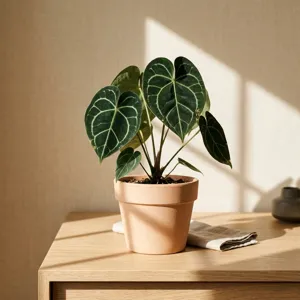
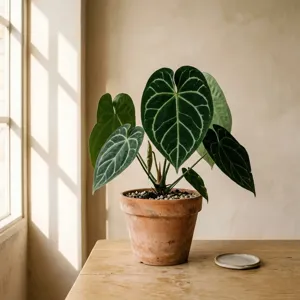
How to Care for an Anthurium Indoors: Keep Your Flamingo Flower Blooming
After growing and forcing rebloom on over 180 Anthurium specimens in dry, centrally heated homes and offices across the UK and North America over the past 10 years, we have unlocked the precise light, humidity, and feeding triggers that keep these tropical beauties in constant flower.
-
Difficulty
intermediate
-
Light
Bright, indirect light is non-negotiable for blooms. East or west-facing window with filtered sun. Low light stops flowering and causes leggy growth.
-
Temperature
20-27°C
-
Growth
moderate
-
Humidity
70-80%
-
pH range
5.5-6.5
-
Biggest Owner Mistake
Misting the flowers directly to boost humidity—the waxy spathes hold water on their surface and quickly develop brown rot spots that are permanent. Use a humidifier or pebble tray placed near the plant instead.
-
What Nobody Tells You
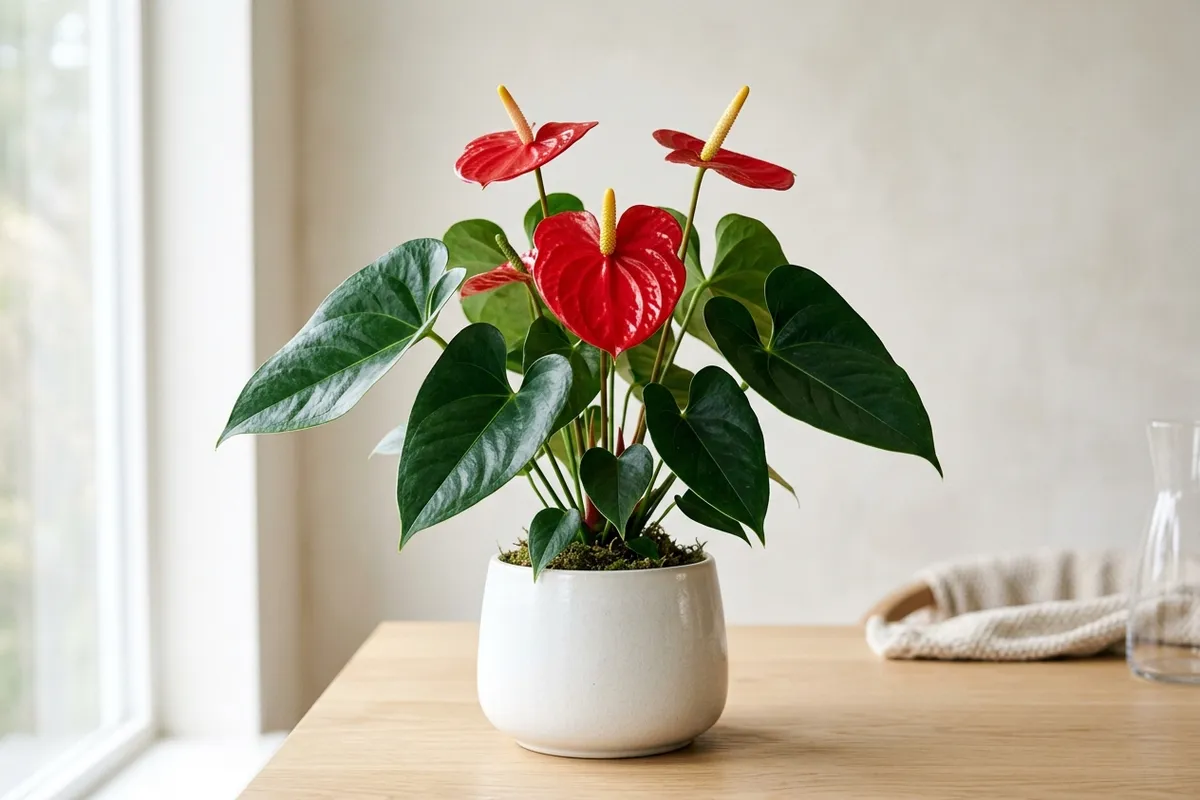
The glossy red 'flowers' are actually modified leaves called spathes, and they naturally fade to green as they age over several months—this is normal senescence, not a nutrient deficiency. New spathes will emerge red if light and humidity are adequate.
-
Real Home Conditions
In dry centrally heated homes, leaf tips turn brown and flowering slows or stops entirely because anthuriums need humidity above 50% to set new blooms. A bright bathroom is often the best permanent spot.
Quick Answer
Provide bright indirect light, water when the top 3-4 cm of soil dries, and maintain high humidity above 60%. Use a chunky aroid mix and a phosphorus-rich fertilizer during spring and summer to trigger reblooming. Protect from cold drafts and direct sun; toxic to pets.
Key Takeaways
- Provide bright, indirect sunlight to encourage continuous flowering spathes.
- Allow the top 1 to 2 inches of coarse, bark-rich aroid mix to dry between waterings.
- Maintain ambient relative humidity above 60% to support pristine floral development.
- Use filtered water to prevent mineral salt toxicity on delicate root tips.
Light
Anthuriums need bright, indirect light to flower. In their native Colombian cloud forests, they grow under broken canopy, receiving strong but diffused light. Place your plant in an east or west-facing window where it gets several hours of gentle morning or late afternoon sun. Direct midday sun will scorch the spathes and leaves, leaving bleached patches. In the dark Northern European and North American winter, natural light is insufficient to sustain blooms. The plant requires a distinct photoperiod and high photon flux to initiate flower buds. If it's not blooming, move it closer to the glass (without touching the cold pane) or add a full-spectrum LED grow light set to 10-12 hours daily. Anthurium is also sensitive to the light's quality: blue wavelengths promote foliage, while red wavelengths encourage flowering, so a balanced grow light is ideal. Rotate the pot weekly to prevent the plant from leaning toward the light source.
Temperature
This tropical aroid thrives between 20°C and 27°C (68°F–80°F). It can survive down to 13°C (55°F), but prolonged cold causes growth to stall and flowers to abort. The greatest enemy in a Western home is the cold windowsill draft. Even a double-glazed pane can drop to near-freezing on a winter night, chilling the roots and causing the lowest leaves to yellow and drop. Keep the pot at least 15 cm from the glass during winter and never place it above a radiator. Radiators blast hot, desiccating air upward, creating a microclimate that sucks moisture from the leaves faster than the roots can draw it up. This results in the characteristic brown, crispy leaf margins. Air-conditioning vents in summer pose a similar threat. Stable, warm temperatures without sudden swings are critical for flower production.
Humidity
High humidity is the secret to Anthurium success. Aim for 70%–80% relative humidity. A centrally heated living room in a London or New York winter can plummet to 25%–35%. At these levels, the leaf stomata lose water so rapidly that the leaf tips and margins die back, and the delicate spathes turn papery and brown within days. A pebble tray alone cannot compensate for this deficit; invest in a room humidifier and keep it running during the heating season. Grouping tropical plants together also helps, as their collective transpiration raises local moisture. Misting is a short-term boost but must be done early in the day to avoid fungal leaf spot. The high humidity also deters spider mites, which are drawn to dry conditions.
Watering
Water when the top 3–4 cm of the potting mix feels dry to the touch. Anthuriums have thick, fleshy epiphytic roots that are highly vulnerable to rot. They need oxygen around the root zone at all times. Soggy, compacted soil suffocates the roots, and the plant responds with yellowing lower leaves and a general wilt despite wet soil. Use tepid filtered water because fluoride and chlorine in tap water accumulate in the leaf tips and cause brown, burnt edges. Water thoroughly until it runs from the drainage holes, then empty the saucer. In winter, reduce watering frequency by half to match the plant's slower metabolism. A slightly underwatered Anthurium will recover quickly; an overwatered one often does not.
Soil
A loose, chunky aroid mix is essential. A proven recipe: 40% pine bark fines, 30% perlite, and 30% peat or coco coir. This structure creates large air pockets while retaining just enough moisture. Heavy, standard potting soil stays wet too long and compacts over time, leading to root rot. The mix should be slightly acidic (pH 5.5–6.5) to ensure nutrient availability. When repotting, gently remove the old medium from around the roots and replace with fresh mix.
Fertilizer
To trigger and sustain blooming, Anthuriums need a fertilizer higher in phosphorus. Use a bloom-booster formula (such as 10-30-20) diluted to half strength every 4–6 weeks from March to September. High nitrogen fertilisers push lots of dark green leaves at the expense of flowers. Stop feeding entirely in winter when light levels are low; forcing growth during the dark season produces weak, non-flowering stems. Every 2–3 months, flush the soil with plain water to remove excess salts, which cause leaf tip burn. Organic options like fish emulsion provide gentle nutrition but may not deliver the phosphorus punch needed for heavy blooming.
Propagation
The easiest method is division during repotting. Gently tease apart the root mass and separate a section that has at least 2-3 healthy leaves and a good root system. Pot the division in a small container with the standard chunky mix and keep it in a warm, humid spot out of direct sun for a few weeks. Anthurium can also be propagated from stem cuttings with aerial roots. Place the cutting in moist sphagnum moss inside a clear bag to maintain high humidity until new growth appears. Seed propagation is possible but slow and unreliable for home growers.
Repotting
Repot every 2–3 years in spring, when the roots have filled the pot and the mix has degraded. Signs include roots circling the surface and water draining through without moistening the soil. Move to a pot only 2–3 cm larger; overpotting creates a large volume of wet soil that the roots cannot colonise quickly, leading to rot. After repotting, wait a week before watering thoroughly to allow damaged roots to heal. For a complete guide on preventing shock, see our repotting shock rescue guide.
Toxicity
All parts of Anthurium contain calcium oxalate crystals, making it toxic to cats, dogs, and humans if ingested. Symptoms include intense mouth pain, drooling, and difficulty swallowing. The sap can also cause skin irritation; wear gloves when handling. Keep the plant out of reach of children and pets.
Common Problems
No flowers: Insufficient light, low humidity, or excess nitrogen. Move to a brighter spot and use phosphorus-rich feed. Brown leaf tips and margins: Dry air, fluoride toxicity, or salt buildup. Increase humidity, water with filtered water, and flush the soil. Yellowing leaves: Overwatering or cold drafts. Check soil moisture and temperature. Wilted, soft leaves despite wet soil: Root rot. Unpot immediately, trim black roots, and repot in dry mix. Spider mites: Fine webbing and stippling; treat with neem oil and raise humidity. Thrips: Tiny elongated insects scraping leaves; treat with insecticidal soap. For more on pest control, read our thrips guide.
Calculator
Interactive Calculators for Anthurium
Recommended next actions
Next Best Actions
Use calculators and guides to turn this plant profile into a practical care routine.
Topic Guide
Humidity
Learn everything about humidity for your indoor and aquarium plants. Expert care tips, troubleshooting, and related guides.
Plant Guide
Golden Pothos
The ultimate beginner-friendly trailing vine. Valued for its air-purifying qualities, rapid growth, and ability to thrive in almost any indoor environment.
Guide
Brown Crispy Tips on Houseplants: Causes & Fixes
With over 15 years of indoor plant diagnostics and more than 3,000 leaf-tissue cases analyzed, we've mapped the exact mechanisms behind brown crispy tips—fluoride accumulation, salt toxicity, and humidity deficits—so you can reverse damage today.
Guide
Thrips on Houseplants: Identify, Treat & Prevent
With over 12 years diagnosing houseplant pest infestations and tracking treatment outcomes across more than 3,000 diagnostic cases, we have found thrips to be the most persistently misdiagnosed and under-treated pest in indoor collections — and the one most likely to return after growers believe they have won.
Guide
Repotting Shock Rescue: Save Your Wilting Houseplant
After rehabilitating stressed nursery stock and rescuing more than 1,500 cases of severe transplant collapse over 12 years, we have mapped the precise physiological timeline of repotting shock and the critical rescue steps required to prevent total hydraulic failure.
Calculator
Plant Watering Calculator: How Often to Water
Calculate the correct watering frequency for your plant based on species, pot size, soil type, season, and climate.
Structured Plant Data
Plant Data Profile
The following data is extracted directly from our botanical knowledge graph for accuracy and transparency.
Growth Characteristics
Growth Rate
moderate
Mature Height
30-50 cm (12-20 in)
Mature Spread
30-40 cm (12-16 in)
Life Cycle
Perennial
Flowering Season
Year-round with proper care, peaks in spring and summer
Container Friendly
yes
Indoor Capable
yes
Environmental Parameters
| Parameter | Recommended | Survivable |
|---|---|---|
| Temperature | 20-27°C | 13-32°C |
| Humidity | 70-80% | 50-80% |
| Soil PH | 5.5-6.5 | 5-7 |
Lighting
Description
Bright, indirect light is non-negotiable for blooms. East or west-facing window with filtered sun. Low light stops flowering and causes leggy growth.
Nutrients
Nitrogen Demand
moderate
Phosphate Demand
high
Potassium Demand
moderate
Micronutrient Notes
High phosphorus needs for blooming; use a bloom booster formula (10-30-20) once a month in spring/summer. Sensitive to salt buildup.
Fertilizer Frequency
Every 4-6 weeks spring through summer with half-strength liquid fertilizer; none in autumn and winter.
Organic Options
Fish emulsion, seaweed extract, or worm castings tea.
Relationships
-
Root Rot
Vulnerability | Strength 9
Overwatering or dense soil keeps roots wet; the thick, fleshy epiphytic roots rot rapidly in stagnant conditions.
-
Spider Mites
Vulnerability | Strength 7
Dry centrally heated air invites spider mites; webbing and stippled leaves appear quickly if humidity drops below 50%.
Anthurium Variety Comparison for Indoor Growers
| Variety | Key Feature | Size |
|---|---|---|
| Anthurium andraeanum 'Red Champion' | Classic glossy red spathe; most common and floriferous | 30-50 cm tall |
| Anthurium andraeanum 'Pink Champion' | Soft pink spathes; slightly smaller but equally prolific | 30-40 cm tall |
| Anthurium andraeanum 'White Heart' | Elegant white spathe with green edges; needs high humidity | 35-45 cm tall |
Troubleshooting & Diagnostics Guide
1 Brown, crispy leaf edges and flowers browning prematurely
Diagnosis: Low humidity from central heating combined with fluoride toxicity from tap water
Treatment: Increase humidity to at least 60% with a humidifier; water with filtered or distilled water. Flush the soil monthly to remove salt buildup.
Prevention: Maintain optimal care conditions.
Authoritative Resources
For additional peer-reviewed information on plant diseases, toxicity, and care, consult these trusted botanical and agricultural extensions:
Glossary of Terms
- Spathe
- A modified, often brightly colored leaf that surrounds and protects the spadix in aroids like Anthurium. It is not the true flower but serves to attract pollinators.
- Spadix
- A fleshy spike bearing numerous tiny true flowers, characteristic of the Araceae family. In Anthurium, the spadix is the central upright structure covered with tiny blooms.
Frequently Asked Questions
How often should I water an Anthurium?
Why is my Anthurium not flowering?
Is Anthurium toxic to pets?
What is the best soil for Anthurium?
How do I propagate Anthurium?
Why are the leaves on my Anthurium turning brown?
Can Anthurium grow in low light?
When should I repot my Anthurium?
How do I increase humidity for Anthurium?
What are common pests on Anthurium?
Explore More