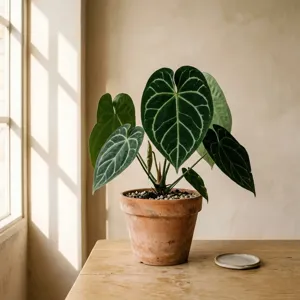
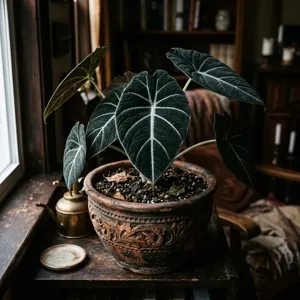
Anthurium Clarinervium Care: The Complete Velvet Leaf Guide
Having grown Anthurium Clarinervium alongside its larger cousin Crystallinum in identical humid grow cabinets, we've identified exactly where its native limestone habitat gives it a genuine care advantage for home growers.
-
Difficulty
advanced
-
Light
Native to shaded limestone slopes in Chiapas, Clarinervium wants bright, filtered indirect light without direct sun. Its compact size makes it easier to fit into a consistently bright but shaded spot than larger velvet-leaf Anthuriums.
-
Temperature
20-27°C
-
Growth
slow
-
Humidity
60-85%
-
pH range
6-7
-
Biggest Owner Mistake
Using a standard peat-heavy aroid mix without extra drainage amendments. Because this species evolved on limestone rock rather than deep leaf litter, a mix that works fine for a Monstera or Pothos often stays too wet for Clarinervium's roots.
-
What Nobody Tells You
Its slightly higher drought and humidity tolerance compared to Crystallinum isn't a coincidence of breeding - it's a direct legacy of growing on exposed rock faces where soil moisture and humidity fluctuate far more than on a shaded forest floor.
-
Real Home Conditions
Its compact mature size makes it one of the more realistic velvet-leaf Anthuriums to grow on an open shelf rather than in a full enclosed cabinet, provided the room maintains at least 55-60% humidity.
Quick Answer
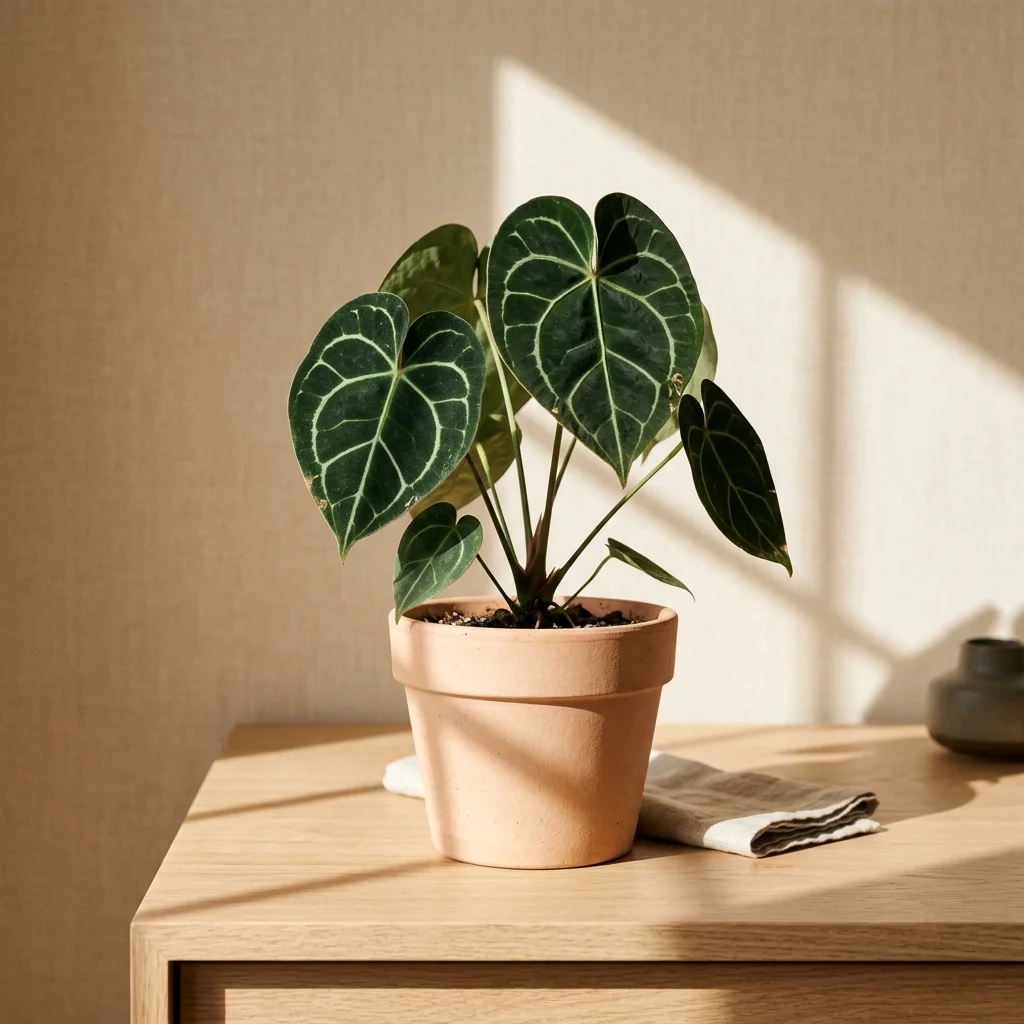
Anthurium Clarinervium needs 60-85% humidity, 6-8 hours of bright filtered indirect light with no direct sun, and watering only once the top 3-4 cm of soil dries. It's slightly more tolerant of average home humidity than Anthurium Crystallinum thanks to its native limestone habitat. Toxic to pets.
Key Takeaways
- More tolerant of average home humidity (down to ~45-50%) than Anthurium Crystallinum, though 60%+ produces better leaves.
- Compact mature size makes it easier to fit on an open shelf than larger velvet-leaf Anthuriums.
- Needs a very chunky, well-draining aroid mix - consider added perlite or crushed eggshell for extra drainage.
- Grown for foliage, not flowers - the small purplish spadix is insignificant.
Light
Give it 6-8 hours of bright, filtered indirect light daily, with no direct sun. In its native habitat it grows in the dappled shade beneath a forest canopy on rocky limestone slopes, so intense direct light both scorches the leaves and dulls the velvety surface texture that gives the veining its striking contrast. An east-facing window, or a spot set back from a south or west window, works well. In lower light the plant survives but produces smaller leaves with noticeably less defined vein patterning.
Temperature
Keep it between 20°C and 27°C (68-80°F). It tolerates a brief dip to 15°C (59°F), slightly better than many tropical aroids, but sustained cold stalls growth and can cause leaf drop. Protect from cold drafts in winter and air-conditioning vents in summer.
Humidity
Aim for 60-85% relative humidity. Because it evolved on exposed limestone rather than deep rainforest floor, Clarinervium tolerates average home humidity down to around 45-50% noticeably better than Crystallinum, though leaf size and vein contrast both improve significantly above 60%. A room humidifier is still the most reliable way to get consistently large, well-patterned leaves.
Watering
Water when the top 3-4 cm of soil has dried out, typically every 7-10 days. Its limestone-slope origin gives it slightly more drought tolerance than Crystallinum, but the thick, fleshy roots still rot fast in compacted or waterlogged mix. Use tepid, filtered water to avoid tip burn from accumulated fluoride and chlorine.
Soil
Use a very chunky, open aroid mix: roughly equal parts orchid bark, perlite, sphagnum moss, and charcoal. Because the species naturally grows on limestone, some growers add a small amount of crushed eggshell or extra perlite to sharpen drainage and nudge the pH slightly higher, closer to neutral.
Fertilizer
Feed lightly, at quarter to half strength, every 4-6 weeks through spring and summer. The thin leaves show fertilizer salt burn at the tips quickly, so flush the soil with plain water every 2-3 months. Stop feeding in autumn and winter.
Propagation
Division during repotting is the most reliable method: separate a rooted offset with at least one leaf and pot it into fresh chunky mix, keeping humidity high while it re-establishes. Stem cuttings with a node can also be rooted in moist sphagnum inside a clear humidity container, though rooting is slow.
Toxicity
Contains calcium oxalate crystals throughout, making it toxic to cats, dogs, and humans if chewed or ingested, with symptoms including oral pain, drooling, and swelling. Handle with gloves during repotting or propagation, as the sap can irritate skin.
Common Problems
Faded or indistinct veining: Usually low light; move to a brighter, filtered spot. Dulled velvet texture: Too much direct or intense light. Crispy brown leaf edges: Low humidity or fertilizer salt buildup. Yellowing leaves in wet soil: Root rot from a compacted or overly moist mix; check roots and repot into fresh, chunky medium if needed. Small new leaves that stall mid-unfurl: Usually a combination of low humidity and insufficient light.
Calculator
Interactive Calculators for Anthurium Clarinervium
Recommended next actions
Next Best Actions
Use calculators and guides to turn this plant profile into a practical care routine.
Plant Guide
Anthurium Crystallinum
After growing Anthurium Crystallinum in both enclosed grow cabinets and open humid rooms across UK and US homes, we've pinpointed the exact humidity and light thresholds that keep its velvet leaves large, dark, and undamaged.
Plant Guide
Anthurium
After growing and forcing rebloom on over 180 Anthurium specimens in dry, centrally heated homes and offices across the UK and North America over the past 10 years, we have unlocked the precise light, humidity, and feeding triggers that keep these tropical beauties in constant flower.
Topic Guide
Humidity
Learn everything about humidity for your indoor and aquarium plants. Expert care tips, troubleshooting, and related guides.
Guide
Repotting Shock Rescue: Save Your Wilting Houseplant
After rehabilitating stressed nursery stock and rescuing more than 1,500 cases of severe transplant collapse over 12 years, we have mapped the precise physiological timeline of repotting shock and the critical rescue steps required to prevent total hydraulic failure.
Calculator
Plant Watering Calculator: How Often to Water
Calculate the correct watering frequency for your plant based on species, pot size, soil type, season, and climate.
Calculator
Will Heat-Stressed Plants Recover? Diagnosis & Calculator
Diagnose plant heat stress risk from your temperature, humidity, sunlight exposure, and symptoms — then get specific watering, shade, and airflow actions.
Structured Plant Data
Plant Data Profile
The following data is extracted directly from our botanical knowledge graph for accuracy and transparency.
Growth Characteristics
Growth Rate
slow
Mature Height
30-45 cm (12-18 in)
Mature Spread
30-45 cm (12-18 in)
Life Cycle
Perennial
Flowering Season
Insignificant purplish-green spadix; grown almost exclusively for foliage
Container Friendly
yes
Indoor Capable
yes, with humidity support
Environmental Parameters
| Parameter | Recommended | Survivable |
|---|---|---|
| Temperature | 20-27°C | 15-30°C |
| Humidity | 60-85% | 45-85% |
| Soil PH | 6-7 | 5.5-7.5 |
Lighting
Description
Native to shaded limestone slopes in Chiapas, Clarinervium wants bright, filtered indirect light without direct sun. Its compact size makes it easier to fit into a consistently bright but shaded spot than larger velvet-leaf Anthuriums.
Nutrients
Nitrogen Demand
moderate
Phosphate Demand
low
Potassium Demand
moderate
Micronutrient Notes
Its native limestone habitat means it tolerates a slightly higher soil pH than most aroids; very acidic mixes can mildly reduce nutrient uptake over time.
Fertilizer Frequency
Quarter to half-strength balanced liquid fertilizer every 4-6 weeks in spring and summer; flush soil every 2-3 months.
Organic Options
Diluted worm castings tea or crushed eggshell added to the mix for extra calcium and slightly raised pH.
Relationships
-
Root Rot
Vulnerability | Strength 8
Roots need excellent drainage; slightly more forgiving than Crystallinum but still highly sensitive to compacted or waterlogged mix.
-
Spider Mites
Vulnerability | Strength 6
Dry indoor air invites spider mites, which can be hard to spot on the textured, deeply-veined leaf surface until webbing appears.
-
Bacterial Leaf Spot
Vulnerability | Strength 5
Wet foliage combined with still air encourages bacterial leaf spot on the thin leaf tissue.
Anthurium Clarinervium vs. Crystallinum
| Trait | Clarinervium | Crystallinum |
|---|---|---|
| Mature size | 30-45 cm - compact | 45-75 cm - larger footprint |
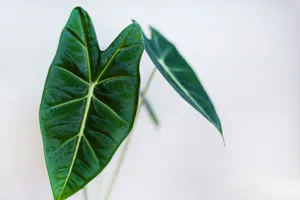
| Vein pattern | Fine, dense white network | Bold, widely-spaced silvery veins |
| Humidity tolerance | Slightly more forgiving, 45%+ | Needs consistently 70%+ |
| Native habitat | Limestone slopes, Chiapas, Mexico | Rainforest floor, Colombia/Peru |
Troubleshooting & Diagnostics Guide
1 Vein patterning on new leaves looks faded or less contrasted than older leaves
Diagnosis: Insufficient bright, filtered light during the leaf's development
Treatment: Move the plant to a brighter spot with filtered indirect light; subsequent leaves should show improved contrast within a few growth cycles.
Prevention: Maintain consistent bright, filtered light year-round rather than seasonal repositioning only.
2 Leaf edges browning despite regular watering
Diagnosis: Fertilizer salt buildup or low humidity affecting the thin leaf tissue
Treatment: Flush the soil thoroughly with plain water and raise ambient humidity above 60% using a humidifier.
Prevention: Flush soil every 2-3 months and avoid fertilizing above quarter to half strength.
Authoritative Resources
For additional peer-reviewed information on plant diseases, toxicity, and care, consult these trusted botanical and agricultural extensions:
Glossary of Terms
- Limestone endemic
- A plant species naturally restricted to areas with limestone-derived soil or rock, which tends to be more alkaline and better-draining than typical rainforest floor substrate.
- Velvet-leaf Anthurium
- An informal grouping of Anthurium species, including clarinervium and crystallinum, prized for foliage with a soft, velvety surface texture and pronounced pale venation rather than for their flowers.
Frequently Asked Questions
Is Anthurium Clarinervium easier to grow than Crystallinum?
Why are my Anthurium Clarinervium's veins fading or less distinct?
What soil does Anthurium Clarinervium need?
How often should I water Anthurium Clarinervium?
Does Anthurium Clarinervium need a humidifier?
Why are the leaf edges on my Anthurium Clarinervium turning brown?
Can Anthurium Clarinervium tolerate direct sun?
What's the difference between Anthurium Clarinervium and Crystallinum?
Explore More