Anthurium Crystallinum Care: The Complete Velvet Leaf Guide
After growing Anthurium Crystallinum in both enclosed grow cabinets and open humid rooms across UK and US homes, we've pinpointed the exact humidity and light thresholds that keep its velvet leaves large, dark, and undamaged.
-
Difficulty
advanced
-
Light
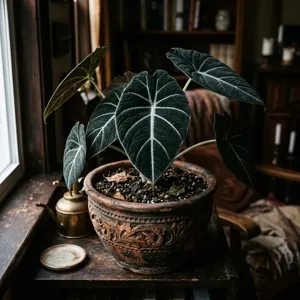
Velvet-leaf Anthuriums grow on the shaded rainforest floor beneath the canopy, so they want bright but heavily filtered, indirect light. Too much direct light dulls or bleaches the velvet sheen; too little slows growth and produces smaller leaves.
-
Temperature
21-27°C
-
Growth
slow
-
Humidity
70-90%
-
pH range
5.5-6.5
-
Biggest Owner Mistake
Trying to grow Crystallinum in an average living room without a humidifier or enclosed cabinet. It will survive for a while but never produce the large, dramatic leaves it's known for - humidity below 60% is the ceiling on this plant's potential, not just a comfort issue.
-
What Nobody Tells You
The velvet texture itself is a light-management adaptation - the microscopic surface structure helps the leaf capture the maximum amount of the dim, filtered light available on a rainforest floor, which is exactly why too much direct light degrades it.
-
Real Home Conditions
A closed grow cabinet with a small fan for airflow consistently outperforms open-room humidifiers for this species, because it maintains humidity through the night when most home humidifiers cycle off or run dry.
Quick Answer
Anthurium Crystallinum needs 70-90% humidity, 6-8 hours of bright filtered indirect light with no direct sun, and watering only once the top 3-4 cm of soil dries. Use a very chunky aroid mix and feed lightly to avoid salt burn on its thin, velvety leaves. Toxic to pets.
Key Takeaways
- Requires 70-90% humidity to produce large, unblemished velvet leaves - most homes need a humidifier or enclosed cabinet.
- Bright but filtered indirect light only; direct sun dulls and flattens the velvet texture.
- Use a very chunky, open aroid mix - standard potting soil causes rapid root rot.
- Grown for foliage, not flowers - the greenish spadix is insignificant.
Light
In the wild, Crystallinum grows on the shaded floor of Colombian and Peruvian rainforests, receiving bright but heavily dappled, filtered light through a dense canopy. Replicate that indoors with 6-8 hours of bright, indirect light and no direct sun at all. Direct sun doesn't just risk scorching; it also flattens and dulls the velvety sheen that makes this plant desirable in the first place, since intense light causes the leaf surface's microscopic texture to change. An east-facing window, or a spot a few metres back from a south or west window, is ideal.
Temperature
Keep it between 21°C and 27°C (70-80°F). It tolerates a brief dip to 16°C (60°F) but sustained cold below that causes growth to stall and can trigger leaf drop. Keep it well away from cold drafts, single-glazed windows in winter, and air-conditioning vents in summer.
Humidity
This is the single hardest requirement to meet in an average home. Crystallinum wants 70-90% relative humidity to produce large, unblemished leaves. Standard centrally heated living rooms in the UK and US typically sit at 30-50% in winter, which causes crispy brown edges, stunted new growth, and leaves that never reach their full potential size. Most successful growers keep this species in an enclosed humidity cabinet, a greenhouse cabinet, or a naturally humid bathroom with a skylight, supplemented by a dedicated room humidifier rather than relying on pebble trays or misting alone.
Watering
Water when the top 3-4 cm of the potting mix is dry, roughly every 6-9 days depending on humidity and season. The thick, fleshy roots need oxygen and rot quickly in stagnant, compacted soil, so err on the side of slightly under- rather than overwatering. Use tepid, filtered water, since fluoride and chlorine accumulate in the thin leaf tissue and cause tip burn faster than in tougher-leaved plants.
Soil
Use a very chunky, open mix: roughly equal parts orchid bark, perlite, sphagnum moss, and horticultural charcoal. This mix should feel almost too airy - standard potting soil holds far too much water for this species' epiphytic root system and leads to rot within days, not weeks.
Fertilizer
Feed lightly, at quarter to half strength, every 4-6 weeks through spring and summer. The large, thin leaves show fertilizer salt burn at the tips faster than most houseplants, so flush the soil thoroughly with plain water every 2-3 months to prevent buildup. Stop feeding in autumn and winter.
Propagation
Division during repotting is the most reliable method: separate a rooted offset with at least one leaf and a healthy portion of root, then pot it into the same chunky mix and keep humidity high while it establishes. Stem cuttings with a node can also be rooted in moist sphagnum moss inside a clear humidity container, though this species roots slower than more common aroids.
Toxicity
Contains calcium oxalate crystals throughout, making it toxic to cats, dogs, and humans if chewed or ingested, causing oral pain, drooling, and swelling. Handle with gloves during repotting or propagation, as the sap can irritate skin.
Common Problems
Dull or flattened leaf texture: Too much direct or intense light; move to a more filtered spot. Crispy brown leaf edges: Low humidity or fertilizer salt buildup; raise humidity and flush the soil. Yellowing, wilted leaves in wet soil: Root rot from compacted or overly moist mix; unpot and check roots immediately. Small, slow-emerging new leaves: Usually insufficient humidity or light; both need to be addressed together for this species. Bacterial or fungal leaf spot: Wet foliage from misting combined with poor airflow; improve air circulation and avoid wetting the leaves directly.
Calculator
Interactive Calculators for Anthurium Crystallinum
Recommended next actions
Next Best Actions
Use calculators and guides to turn this plant profile into a practical care routine.
Plant Guide
Anthurium Clarinervium
Having grown Anthurium Clarinervium alongside its larger cousin Crystallinum in identical humid grow cabinets, we've identified exactly where its native limestone habitat gives it a genuine care advantage for home growers.
Plant Guide
Anthurium
After growing and forcing rebloom on over 180 Anthurium specimens in dry, centrally heated homes and offices across the UK and North America over the past 10 years, we have unlocked the precise light, humidity, and feeding triggers that keep these tropical beauties in constant flower.
Topic Guide
Humidity
Learn everything about humidity for your indoor and aquarium plants. Expert care tips, troubleshooting, and related guides.
Guide
Repotting Shock Rescue: Save Your Wilting Houseplant
After rehabilitating stressed nursery stock and rescuing more than 1,500 cases of severe transplant collapse over 12 years, we have mapped the precise physiological timeline of repotting shock and the critical rescue steps required to prevent total hydraulic failure.
Calculator
Plant Watering Calculator: How Often to Water
Calculate the correct watering frequency for your plant based on species, pot size, soil type, season, and climate.
Calculator
Will Heat-Stressed Plants Recover? Diagnosis & Calculator
Diagnose plant heat stress risk from your temperature, humidity, sunlight exposure, and symptoms — then get specific watering, shade, and airflow actions.
Structured Plant Data
Plant Data Profile
The following data is extracted directly from our botanical knowledge graph for accuracy and transparency.
Growth Characteristics
Growth Rate
slow
Mature Height
45-75 cm (18-30 in)
Mature Spread
45-60 cm (18-24 in)
Life Cycle
Perennial
Flowering Season
Insignificant greenish spadix; grown almost exclusively for foliage
Container Friendly
yes
Indoor Capable
yes, with high humidity support
Environmental Parameters
| Parameter | Recommended | Survivable |
|---|---|---|
| Temperature | 21-27°C | 16-30°C |
| Humidity | 70-90% | 50-90% |
| Soil PH | 5.5-6.5 | 5-7 |
Lighting
Description
Velvet-leaf Anthuriums grow on the shaded rainforest floor beneath the canopy, so they want bright but heavily filtered, indirect light. Too much direct light dulls or bleaches the velvet sheen; too little slows growth and produces smaller leaves.
Nutrients
Nitrogen Demand
moderate
Phosphate Demand
low
Potassium Demand
moderate
Micronutrient Notes
Sensitive to fertilizer salt buildup, which shows as brown leaf-tip burn on the large, thin leaves faster than on tougher-leaved houseplants.
Fertilizer Frequency
Quarter to half-strength balanced liquid fertilizer every 4-6 weeks in spring and summer; flush soil with plain water every 2-3 months.
Organic Options
Diluted worm castings tea or seaweed extract.
Relationships
-
Root Rot
Vulnerability | Strength 9
Roots are highly sensitive to stagnant moisture; a dense or compacted mix causes rot within days even with correct watering frequency.
-
Spider Mites
Vulnerability | Strength 6
Low humidity dries out the thin velvet leaves and invites spider mites, which are difficult to spot on the textured surface until damage is visible.
-
Bacterial Leaf Spot
Vulnerability | Strength 6
Wet foliage combined with poor airflow, especially from overhead misting, encourages bacterial and fungal leaf spot on the thin leaf tissue.
Velvet-Leaf Anthurium Comparison
| Species | Leaf Shape | Humidity Need |
|---|---|---|
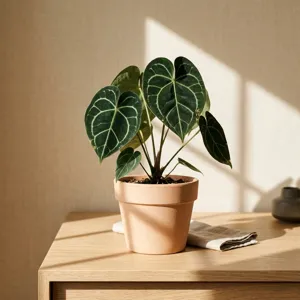
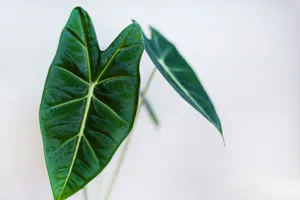
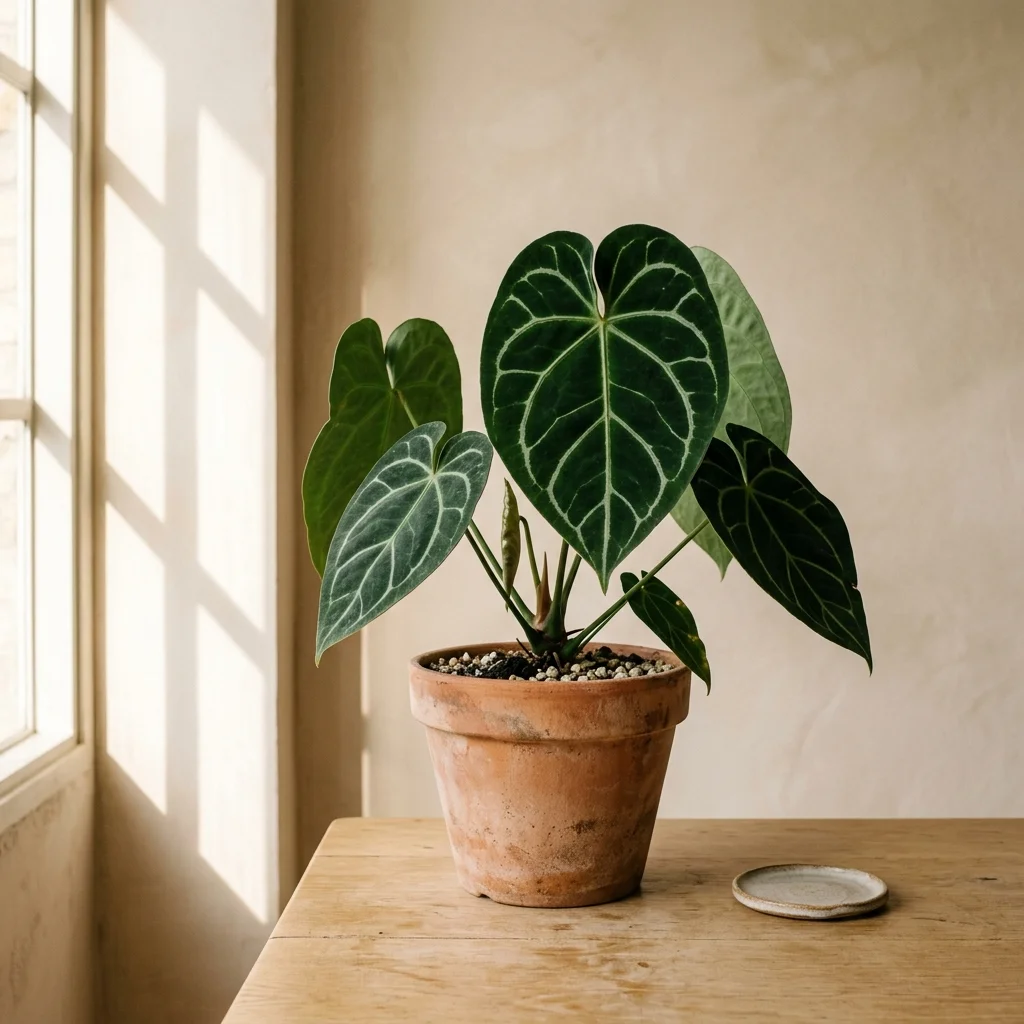
| Anthurium Crystallinum | Large, elongated heart shape with bold silvery veins | 70-90% - needs a humidifier or cabinet |
| Anthurium Clarinervium | Smaller, more compact heart shape with fine white venation | 60-80% - slightly more tolerant |
| Anthurium andraeanum | Glossy, non-velvet, grown for flowers | 50-70% - most adaptable of the three |
Troubleshooting & Diagnostics Guide
1 Velvet leaf texture appears flat, shiny, or dulled compared to new growth
Diagnosis: Excess light intensity, often from a recent move closer to a window or a change in season
Treatment: Move the plant to a spot with more filtered, indirect light and monitor whether new leaves emerge with restored texture.
Prevention: Keep light bright but consistently filtered year-round; adjust position seasonally as sun angle changes.
2 New leaves are small, slow to unfurl, or fail to reach full size
Diagnosis: Insufficient humidity, most commonly from lack of a humidifier or enclosed growing environment
Treatment: Raise ambient humidity to at least 70% using a room humidifier or move the plant into an enclosed grow cabinet.
Prevention: Maintain consistent high humidity rather than relying on occasional misting.
Authoritative Resources
For additional peer-reviewed information on plant diseases, toxicity, and care, consult these trusted botanical and agricultural extensions:
Glossary of Terms
- Velvet-leaf Anthurium
- An informal grouping of Anthurium species, including crystallinum and clarinervium, prized for foliage with a soft, velvety surface texture and pronounced pale venation rather than for their flowers.
- Hemi-epiphytic
- A growth habit where a plant begins life rooted in soil or leaf litter but may later climb and root onto tree bark, drawing moisture and nutrients from both the ground and the air.
Frequently Asked Questions
Is Anthurium Crystallinum hard to keep alive?
Why are my Anthurium Crystallinum leaves losing their velvet sheen?
Does Anthurium Crystallinum need a humidifier?
What soil does Anthurium Crystallinum need?
Why are the leaf tips on my Anthurium Crystallinum turning brown?
How often should I water Anthurium Crystallinum?
Can I clean the leaves with water?
What's the difference between Anthurium Crystallinum and Clarinervium?
Explore More