How to Flush Houseplant Soil to Remove Fertilizer Salts
Learn why and how to flush your houseplant soil. Removing excess fertilizer salts prevents root burn, brown tips, and nutrient lockout.
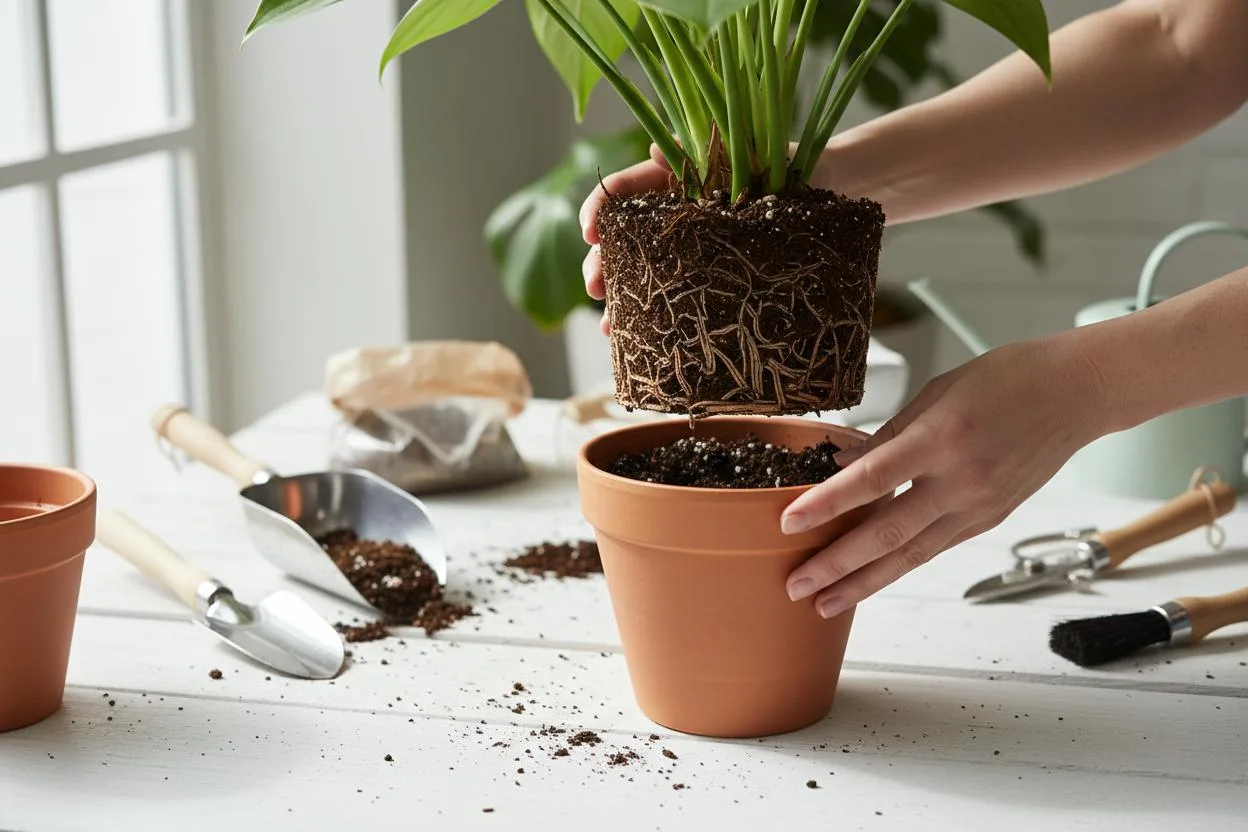
Quick Answer
To flush houseplant soil, place the plant in a sink or drainable area and slowly run clean, room-temperature water through the mix until it drains freely from the bottom. Use roughly 3–4× the container's volume as a starting point. The goal is moving accumulated salts out of the root zone, not hitting an exact volume. Leach every 4–6 months or sooner if buildup is visible. Don't fertilize immediately after; resume once the plant returns to its normal routine.
Key Takeaways
- Regular leaching helps prevent soluble salts from accumulating in container soil.
- White mineral or fertilizer residue on the soil surface or pot rim can indicate salt accumulation.
- Thorough flushing requires good drainage and enough clean water to move salts out of the root zone.
- Room-temperature water is appropriate for flushing most indoor plants to help prevent unnecessary stress on the plant.
- If salt buildup returns quickly, investigate fertilizer concentration, watering practices, drainage, and irrigation-water quality.
Quick Facts
- Typical leaching interval About every 4–6 months when salt buildup is a concern
- Practical flush volume Use several times the container volume as a practical starting point; 3–4× can be used for a thorough flush in well-draining pots
- Water temperature Room temperature or lukewarm
- When to resume fertilizer Once the plant returns to its normal watering and active-growth routine
- Warning signs White residue, burned leaf margins, or suspected soluble-salt accumulation
What Should I Do?
White, crusty residue on soil surface or pot rim
Brown, crispy leaf tips despite consistent watering and adequate humidity
Sudden yellowing of lower leaves despite otherwise appropriate watering
Plant wilts even when the potting mix is moist
You've been using fertilizer regularly and haven't flushed in 6+ months
Soil has become hydrophobic and repels water
Houseplant Soil Flushing Methods
| Method | Best For | Water Approach | Drainage | Risk Level |
|---|---|---|---|---|
| Sink flush | Small to medium pots with good drainage | Apply several times the container volume gradually | Allow water to drain freely before returning the plant | Low when drainage is adequate |
| Shower or tub flush | Large pots or multiple plants | Apply clean water gradually until the root ball is thoroughly leached | Allow excess water to drain completely | Low when drainage is adequate |
| Slow-flow flush | Dense or compacted potting mixes | Apply water slowly so it penetrates rather than running around the root ball | Allow complete drainage between applications | Low when performed gradually |
| Pre-soak then flush | Extremely dry or hydrophobic potting mix | Rehydrate the mix first, then perform a normal flush | Drain thoroughly afterward | Moderate if the plant remains waterlogged |
The Danger of Salt Buildup
When you water a plant, it absorbs the moisture but leaves behind dissolved minerals from tap water and unabsorbed fertilizer salts. Over time, these can accumulate in the potting mix. In nature, rain flushes these materials deeper into the soil, but in a container, they have nowhere to go.
Excess soluble salts can make it harder for roots to take up water, which can cause wilting even when the potting mix is moist. Excess salts can also contribute to root injury, burned leaf margins, and other stress symptoms.
Signs Your Soil May Need Flushing
- A white or yellowish crust on the top of the soil.
- White, chalky rings on the outside of terracotta clay pots.
- Crispy brown edges and tips on leaves, especially on sensitive plants.
- Sudden yellowing of lower leaves despite proper watering.
- Plant appears wilted or dehydrated even when the soil is moist.
How to Properly Flush Soil
- Preparation: Move the plant to a sink, bathtub, or outdoor area. Ensure the pot has functional drainage holes and is not sitting in a decorative cachepot.
- Initial wetting: Pour water evenly over the top of the soil until it begins draining out the bottom. This helps dissolve hardened salts.
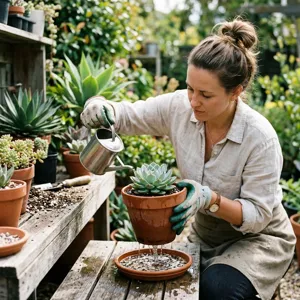
- The flush: Slowly apply clean water to the soil surface, allowing it to drain freely through the root ball. A practical rule of thumb is to use several times the container's volume; about 3–4× can be used as a starting point for a thorough flush in a well-draining pot. The goal is to move accumulated soluble salts out of the root zone, not to hit an exact volume.
- Drainage: Let the plant drain completely before returning it to its cachepot or saucer. Do not allow the plant to sit in the runoff water.
If the potting mix is hydrophobic or severely compacted: Briefly rehydrate the root ball first so water can penetrate evenly, then perform the flush.
What to Do After Flushing
After flushing, allow the plant to drain thoroughly before returning it to its normal spot. Do not fertilize immediately—resume feeding once the plant returns to its normal watering and active-growth routine, following the fertilizer label. The plant may appear slightly stressed or droopy for a day or two, which is normal.
If you flushed because of severe salt buildup, you may notice some leaf yellowing or drop in the following days as the plant adjusts. This is usually temporary.
How to Prevent Salt Buildup
- Water thoroughly enough for some drainage: This provides periodic natural leaching.
- Consider irrigation-water quality: If your tap water is very hard, dissolved minerals may accumulate more quickly.
- Follow fertilizer label directions: Over-fertilizing is a common cause of salt buildup.
- Leach periodically: About every 4–6 months when salt accumulation is a concern. Avoid unnecessary repeated flushing because leaching also removes nutrients.
- Evaluate your watering and drainage practices: If salts return quickly, examine fertilizer concentration, watering frequency, drainage, potting mix, and irrigation-water quality.
Frequently Asked Questions
How often should I flush my houseplant soil?
How much water should I use to flush soil?
Can I flush soil in winter?
Does flushing work for all types of potting soil?
Should I fertilize after flushing the soil?
Can flushing harm my plant?
What if my plant is root-bound? Can I still flush?
Sources & References
-
Source: extension.illinois.edu
Type: extension
-
Source: extension.illinois.edu
Type: extension
-
Source: extension.illinois.edu
Type: extension
-
Source: extension.psu.edu
Type: extension
Explore More