Cat Grass for Cats: How to Grow Wheat, Oat, Barley & Rye Indoors
Learn how to grow cat grass indoors from seed. Compare wheat, oat, barley and rye grass types, with step-by-step planting, watering, light needs, harvest.
Quick Answer
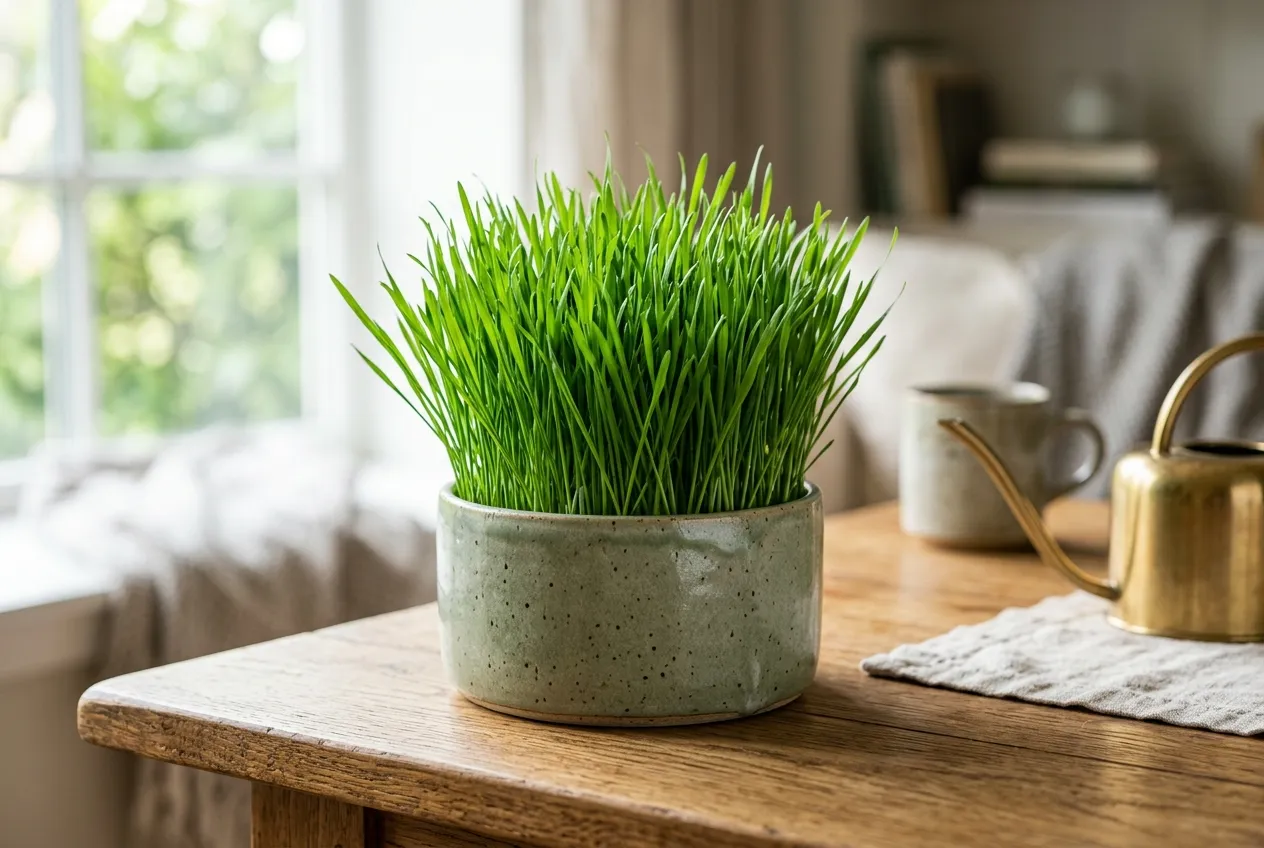
Cat grass is a general term for young cereal grasses — usually wheat, oat, barley, or rye — grown specifically for cats to chew on. To grow it, soak seeds overnight, sow densely in shallow, well-draining soil, keep dark and moist for 2-3 days until sprouts appear, then move to bright light. It is ready in about 7-14 days when grown from untreated seed without pesticides, though mold is the biggest real safety risk.
Key Takeaways
- Cat grass isn't one species — it's typically wheat, oat, barley, or rye, each with a different texture and growth habit.
- When grown from untreated, clean seed, wheat, oat, barley, and rye are generally cat-safe.
- Grass may aid digestion of indigestible material, though this remains a research hypothesis.
- Mold is the real safety risk — discard any batch that looks or smells off.
- For a continuous supply, stagger new trays every 1-2 weeks rather than relying on a single pot.
Quick Facts
- Common cat grass types Wheat, oat, barley, rye
- Typical blackout (germination) phase 2-3 days
- Typical time until ready to offer 7-14 days
- Typical usable lifespan of a batch Roughly 1-3 weeks
- Biggest real safety risk Mold from overwatering, not the grass species itself
What Should I Do?
Your cat is new to cat grass or has a sensitive palate
You want the fastest, most widely available option
Your cat likes a firmer, more textured chew
A previous batch developed mold
You want a continuous supply rather than one pot
Cat Grass Types Compared
| Type | Scientific Name | Growth Speed | Texture | Difficulty | Best For | Main Caution |
|---|---|---|---|---|---|---|
| Wheatgrass | Triticum aestivum | Tender, chlorophyll-rich | Fast | Easy | The classic, most commonly grown option | Requires careful moisture management; mist rather than pour water to avoid overwatering |
| Oat Grass | Avena sativa | Soft, mild flavor | Fast | Easy | Cats new to grass or those preferring softer blades | None significant; the gentlest introduction |
| Barley Grass | Hordeum vulgare | Fine, less dense than wheat | Fast | Easy | Cats with delicate chewing habits | Harvest young for best texture |
| Rye Grass | Secale cereale | Coarser, sturdier blades | Moderate | Easy | Cats who like a tougher chew | Never allow to flower or go to seed — seed heads can lodge in mouth or nasal passages |
What Is Cat Grass?
"Cat grass" isn't a single species — it's a general term for young cereal grasses grown specifically for cats to chew on, most commonly wheat, oat, barley, or rye. This is different from the grass in your lawn, which may have been treated with fertilizers, pesticides, or herbicides that aren't safe for pets.
Before You Grow Cat Grass
You'll need: untreated cat grass seed (wheat, oat, barley, or rye), a shallow container with drainage holes, clean well-draining potting soil or seed-starting mix, water, and a bright growing location.
Setup checklist:
- Use untreated, pesticide-free seed
- Choose a shallow container with drainage
- Use clean growing medium (no fertilizer needed)
- Find a bright window or light source
- Keep cat grass separate from toxic houseplants
Cat Grass Types Compared
| Type | Scientific Name | Growth Speed | Texture | Difficulty | Best For | Main Caution |
|---|---|---|---|---|---|---|
| Wheatgrass | Triticum aestivum | Fast | Tender, chlorophyll-rich | Easy | The classic, most commonly grown option | Requires careful moisture management; mist rather than pour water to avoid overwatering |
| Oat Grass | Avena sativa | Fast | Soft, mild flavor | Easy | Cats new to grass or those preferring softer blades | None significant; the gentlest introduction |
| Barley Grass | Hordeum vulgare | Fast | Fine, less dense than wheat | Easy | Cats with delicate chewing habits | Harvest young for best texture |
| Rye Grass | Secale cereale | Moderate | Coarser, sturdier blades | Easy | Cats who like a tougher chew | Never allow to flower or go to seed — seed heads can lodge in mouth or nasal passages |
Is Cat Grass Safe for Cats?
When grown from untreated, pesticide-free seed in clean conditions, wheat, oat, barley, and young rye grass are generally considered suitable for cats to nibble. But safety has real conditions attached: use untreated seed, don't apply fertilizer or pesticide once it's growing, and never offer grass that's moldy or discolored, since mold ingestion can irritate a cat's digestive tract.
Keep cat grass separate from your other houseplants. Several common plants — including species in the Dracaena genus (sometimes called grass palm) and Cymbopogon (lemongrass) — are toxic to cats, and a cat used to nibbling safe grass may not distinguish it from something dangerous nearby.
Cats do not fully digest grass, and some cats may vomit after eating it. Occasional vomiting can occur, but repeated vomiting, lethargy, loss of appetite, or other symptoms should be discussed with a veterinarian.
When to Contact a Veterinarian
Eating a small amount of cat grass is generally not a reason for concern, but contact a veterinarian if your cat develops any of the following after eating grass:
- Repeated vomiting or persistent diarrhea
- Lethargy or unusual tiredness
- Loss of appetite
- Difficulty swallowing
- Breathing problems
- Any other unusual symptoms
Cat Grass vs Houseplants
Providing cat grass gives indoor cats an appropriate plant to investigate and nibble, but it does not guarantee that a cat will stop chewing other houseplants. Many common houseplants — including lilies, pothos, philodendron, and sago palm — are toxic to cats. The safest approach is to offer cat grass and remove or restrict access to toxic plants, rather than relying on cat grass alone as a deterrent.
How to Grow Cat Grass Indoors
1. Choose the Right Seed
Pick untreated, pesticide-free seed sold specifically for cat grass or human sprouting/wheatgrass use — wheat, oat, barley, or rye all work.
2. Soak the Seeds
Cover the seeds with water and let them soak overnight, about 12 hours. This softens the outer hull and speeds germination.
3. Prepare the Container
Use a shallow, wide pot with drainage holes, filled with basic well-draining potting soil, leaving about an inch of space at the top.
4. Sow the Seeds
Scatter the soaked seeds densely across the soil surface to form a thick carpet, then cover with a thin layer (about ¼ inch) of soil.
5. Germinate the Seeds
Mist the soil thoroughly, cover the pot to trap humidity, and keep it in a dark, warm spot for 2-3 days. This encourages strong root development before the shoots emerge.
6. Move the Grass Into Light
Once pale sprouts appear, uncover the pot and move it to a bright window. The sprouts typically green up within a couple of days.
7. Water and Maintain It
Keep the soil consistently and lightly moist — misting daily is often gentler than pouring water, which helps avoid the overwatering that leads to mold.
8. Offer It to Your Cat
Once the grass reaches a few inches tall, usually 7-14 days after planting, it's ready. Place it somewhere your cat can access freely, separate from any other houseplants.
Growing Parameters at a Glance
| Parameter | Recommended |
|---|---|
| Container | Shallow tray with drainage holes |
| Seed | Untreated cat grass seed (wheat, oat, barley, or rye) |
| Soil | Clean, well-draining potting soil or seed-starting mix |
| Seed depth | Light covering (~¼ inch) |
| Germination | Warm, moist, dark — 2-3 days |
| Light after emergence | Bright light (window or grow light) |
| Water | Keep evenly moist, never waterlogged |
| Harvest | Young, green blades at 3-4 inches |
| Replacement | When yellowing, declining, or mold develops |
How Much Light Does Cat Grass Need?
During germination, cat grass actually needs darkness, not light — this is what encourages strong roots before top growth. Once sprouted, move it to a bright window; a few hours of direct or bright indirect light daily keeps growth dense and upright. Insufficient light after sprouting typically shows up as pale, leggy, or floppy growth as the grass stretches toward whatever light it can find.
How Often Should You Water Cat Grass?
There is no rigid "X ounces per day" rule. The goal is to keep the growing medium evenly moist but never waterlogged. Misting daily is often gentler than pouring water, which helps avoid the overwatering that leads to mold. Always use a container with drainage holes and empty any standing water from the saucer. If the soil surface stays wet for extended periods, reduce watering and improve airflow.
How Long Does Cat Grass Last?
Most cat grass batches stay usable for roughly one to three weeks, depending on how much your cat grazes it and how it's grown. Because the grass has a shallow root system with no long-term energy reserve, it will eventually yellow and decline regardless of care.
Can cat grass be regrown? Generally no — once heavily grazed or declining, it's better to start fresh. For a continuous supply, stagger multiple trays and sow a new batch every 1-2 weeks rather than trying to revive an old one.
When to replace: Discard immediately if mold appears, the soil smells sour, blades become slimy, seed heads form (especially on rye), or the container develops standing water.
Cat Grass Growing Timeline
Day 0 — Soak seeds overnight (~12 hours) to soften hulls and speed germination.
Day 1 — Sow seeds densely in shallow, well-draining soil; cover with ~¼ inch soil.
Days 2–3 — Blackout phase: keep dark, warm, and moist for strong root development.
Days 4–6 — Move into bright light once pale sprouts appear; they green up within days.
Days 7–14 — Grass is ready for your cat to graze.
Weeks 2–3 — Peak usable period; grass is dense, green, and actively growing.
Week 3+ — Replace declining batch; start a new tray for continuous supply.
Common Cat Grass Problems
Mold
Usually caused by overwatering, poor airflow, or soil that doesn't drain. Mist rather than soak, and use a container with drainage. If you see mold, discard the batch entirely rather than trimming around it — don't offer moldy grass to your cat.
Yellowing Grass
Often just a sign the batch is nearing the end of its natural lifespan. If it happens early, check that the grass is getting enough light after the blackout phase.
Grass Falling Over
A sign of insufficient light after sprouting — the grass is stretching toward a weak light source. Move it to a brighter spot or provide supplemental light.
Poor Germination
Usually old or low-quality seed, an insufficient soak, or letting the soil dry out during the blackout phase. Fresh seed and consistent moisture solve most cases.
Cat Won't Eat It
Individual preference varies. Try a different grass type — oat grass has a softer texture and can be a reasonable option for cats that prefer tender blades.
Bad Smell
A sour or musty smell usually means rot or mold from overwatering. Discard the entire batch and clean the container before re-sowing.
How Much Cat Grass Should a Cat Eat?
There is no universal gram-per-day target for cat grass. Most cats self-limit their grazing and will nibble only what they want. Moderate grazing is generally considered fine. However, because cats do not fully digest grass, eating a large amount can trigger vomiting. If your cat suddenly starts eating noticeably more grass than usual, or experiences repeated vomiting, consult your veterinarian — a change in appetite for grass can sometimes indicate an underlying digestive issue rather than simple preference.
Can You Grow Cat Grass Without Soil?
Yes, cat grass can be grown without traditional soil using alternative methods:
- Seed-starting mix: A soilless blend of peat, vermiculite, and perlite. Works well and drains easily.
- Hydroponic growing: Seeds germinated on a mesh or mat with water underneath. Requires more attention to moisture levels.
- Sprouting mats or pads: Pre-made mats designed for microgreens. Convenient but less economical long-term.
Soilless methods can reduce mess but still require the same attention to moisture, light, and mold prevention. The growing timeline remains roughly the same.
Cat Grass vs Catnip
Cat grass and catnip serve different purposes and come from entirely different plants.
| Feature | Cat Grass | Catnip |
|---|---|---|
| Purpose | Grazing and plant enrichment | Behavioral enrichment |
| Common plants | Wheat, oat, barley, rye | Nepeta cataria |
| Eaten? | Yes — cats chew and swallow the blades | Sometimes — cats may nibble, but mainly sniff and rub |
| Typical effect | Grazing behavior; may trigger vomiting | Excitement, rolling, or relaxation response |
| Safe for cats? | Generally suitable under proper growing conditions | Generally safe in appropriate amounts |
| Frequency | Can be offered continuously in rotation | Best offered intermittently to maintain sensitivity |
Is Cat Grass the Same as Wheatgrass?
No — wheatgrass is one type of cat grass. "Cat grass" is the general category for young cereal grasses grown specifically for cats, and it includes wheat, oat, barley, and rye. Wheatgrass (Triticum aestivum) is simply the most commonly grown variety. When you buy a "cat grass" kit, it may contain wheat, oat, barley, rye, or a blend — so if you specifically want wheatgrass, check the seed label.
Cat Grass vs Commercial Cat Grass Kits
Commercial cat grass kits typically include seed, a shallow container, and sometimes a soil disc. They are convenient for beginners but usually cost more than buying seed and soil separately. If you plan to grow cat grass regularly, buying bulk untreated seed and using your own containers is more economical. The growing process is identical either way.
Which Cat Grass Should You Choose?
New to cat grass or a picky eater: Start with oat grass — it has the softest texture and mildest flavor of the common types.
Want the most common, widely available option: Wheatgrass, but watch moisture closely since it is commonly grown and moisture-sensitive.
Cat likes a firmer chew: Rye or barley grass, harvested young.
Previous batch went moldy: Discard it, then re-sow with less water and better drainage/airflow.
Want a continuous supply: Stagger new trays every 1-2 weeks rather than relying on one pot.
What to Avoid When Growing Cat Grass
- Treated lawn seed — may contain fungicides or insecticides unsafe for pets.
- Pesticide-treated seed — always choose seed labeled untreated or organic.
- Herbicide exposure — never use weed-killer near cat grass.
- Fertilizer — cats don't need it, and residues can be harmful. Use plain potting soil.
- Moldy soil — discard any batch that shows mold, discoloration, or a sour smell.
- Standing water — ensure your container drains properly.
- Contaminated containers — clean pots thoroughly between batches.
- Mature or seed-producing grass — especially rye; seed heads can become physical hazards.
- Toxic ornamental plants nearby — keep cat grass separate from toxic houseplants.
Frequently Asked Questions
Is cat grass the same as wheatgrass?
Is cat grass actually safe for cats to eat?
Does cat grass really help with hairballs?
Why does my cat throw up after eating grass?
How long does a batch of cat grass last?
Why is my cat grass moldy, and what should I do about it?
Is rye grass safe for cats?
Can kittens eat cat grass?
How much cat grass can a cat eat?
Why is my cat grass turning yellow?
How often should I grow new cat grass?
Can cats eat oat grass?
Sources & References
-
Source: petmd.com
Type: veterinary
-
Source: vcahospitals.com
Type: veterinary
-
Source: amcny.org
Type: veterinary
-
Source: sciencedirect.com
Type: research
-
Source: hillspet.com
Type: pet-brand
-
Source: purina.com
Type: pet-brand
Explore More