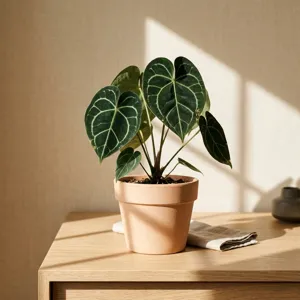
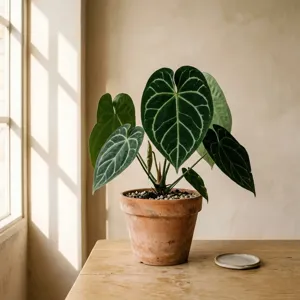
Treubii Moonlight Care: Fix Leaf Curling & Root Rot
The Treubii Moonlight is a highly sought-after, slow-growing vine with stunning, solid-silver leaves. While often grouped with Pothos, it is far more sensitive to overwatering.
-
Difficulty
intermediate
-
Light
Requires bright, indirect light to maintain its metallic silver color. If kept in a dark corner, the plant will stop growing entirely and revert to a dull green.
-
Temperature
65°F - 85°F (18°C - 29°C)
-
Growth
slow
-
Humidity
50% - 70%
-
pH range
6.0 - 6.5
-
Biggest Owner Mistake
Placing it in low light because it resembles a pothos—but the pale silver-green leaves depend on bright indirect light to maintain their luminous, frosted appearance. In dim conditions, the silvery overlay fades and new leaves emerge as a dull, unremarkable green.
-
What Nobody Tells You
It's a genuinely slow grower that produces just a few new leaves per growing season under normal indoor conditions—this is its natural pace, not a sign of poor health or inadequate care. Repotting or fertilizing heavily in an attempt to speed it up typically just stresses the plant.
-
Real Home Conditions
In dry air below 50% humidity, the leaf edges develop a persistent brown margin and growth effectively stops, because the plant's thin leaves lose moisture rapidly. Consistent humidity above 50% is the single most impactful environmental improvement for this species indoors.
Quick Answer
The Treubii Moonlight requires bright, indirect light to maintain its silver color. It is highly prone to root rot; never water it until the soil is 100% dry and the leaves begin to curl inward. For best results, we suggest keeping an eye on the plant's response throughout the active growing season.
Key Takeaways
- Provide bright indirect light for the best subtle leaf sheen and color.
- Water when the top 1-2 inches of soil feel dry to the touch.
- Use a well-draining, chunky mix to prevent overly wet roots.
- Expect a more compact, slower growth habit than trailing Pothos.
Overview
The Scindapsus treubii 'Moonlight' is a show-stopping tropical vine that has captivated the houseplant community. A close relative of the popular Satin Pothos (Scindapsus pictus), the Treubii Moonlight trades the speckled silver pattern for leaves that are almost entirely solid, metallic silver. The thick, slightly rubbery leaves shimmer beautifully in indirect light, making it a spectacular statement piece.
However, many growers mistakenly treat this plant exactly like a standard Golden Pothos, which leads to disaster. The Treubii Moonlight is notoriously slow-growing and has an incredibly low tolerance for wet soil. If you overwater it, the roots will rot almost immediately. The key to success with this rare beauty is extreme patience and absolute discipline with the watering can.
Light Requirements: Keeping the Silver
To maintain that intense, solid-silver color, the plant requires bright, indirect light. An east-facing window is perfect. If you place it in a low-light environment, the plant will not only stop its already-slow growth completely, but the new leaves will revert to a dull, solid green. Avoid harsh, direct afternoon sun, which will scorch and yellow the thick leaves.
Watering: Watch for the Curl
Watering a Treubii Moonlight by a strict calendar schedule drastically increases the risk of severe root rot. You must wait for the plant to tell you it is thirsty.
First, allow the potting soil to dry out 100% completely. Once the soil is dry, watch the leaves. When the plant is hydrated, the thick leaves are flat and rigid. As the plant dehydrates, the edges of the leaves will slowly curl inward, eventually curling up tight like a taco. Wait for the leaves to curl before you water. Once they are curled and the soil is bone dry, soak the pot thoroughly until water flows out the drainage holes. The leaves will uncurl and flatten out within 24 hours.
Temperature and Humidity
Typical household temperatures between 65°F and 85°F (18°C - 29°C) are perfect. Protect it from freezing winter drafts. While it appreciates higher humidity (around 50-60%), its thick, waxy leaves allow it to perfectly tolerate the dry air of centrally heated homes without getting crispy edges.
Soil and Potting
Because it is so incredibly prone to root rot, standard potting soil will suffocate the roots. You must use an extremely chunky, airy aroid mix. Combine a high-quality potting base with 40-50% coarse orchid bark and perlite. This ensures that water runs straight through the pot instantly, leaving only a thin film of moisture and plenty of oxygen for the roots.
The Secret to Growth: Moss Poles
As a juvenile plant hanging in a basket, the Treubii Moonlight is agonizingly slow-growing, often only pushing out one or two leaves a month. In the wild, it is a shingling vine that climbs flat against the trunks of large trees.
If you want the plant to grow faster and produce significantly larger leaves, you must give it something to climb. Attach the bare vines to a moss pole or a flat wooden plank. When the aerial roots grab onto a vertical surface, a hormonal shift occurs, drastically increasing the plant's growth rate and leaf size.
Toxicity
Like all plants in the Araceae family, the Treubii Moonlight contains insoluble calcium oxalate crystals. If chewed by cats, dogs, or humans, the crystals embed in the soft tissues of the mouth and throat, causing severe burning, swelling, drooling, and vomiting. Keep the trailing vines safely out of reach of curious pets.
Calculator
Interactive Calculators for Scindapsus Treubii
Recommended next actions
Next Best Actions
Use calculators and guides to turn this plant profile into a practical care routine.
Topic Guide
Watering
Learn everything about watering for your indoor and aquarium plants. Expert care tips, troubleshooting, and related guides.
Plant Guide
Satin Pothos
The Satin Pothos is the ultimate communicator. We teach new plant parents how to read its curling leaves to perfectly time their watering and prevent the dreaded root rot.
Guide
Yellow Houseplant Leaves: Diagnose & Fix Guide 2026
After diagnosing hundreds of yellow-leaf cases across dozens of plant species, we've mapped the ten distinct causes that look nearly identical at first glance — and built the only systematic guide that tells you not just what's wrong, but exactly how to confirm it and fix it.
Topic Guide
Root Rot
Learn how to identify and treat root rot in houseplants. Discover causes, symptoms, and step-by-step solutions to save your plants from overwatering.
Structured Plant Data
Plant Data Profile
The following data is extracted directly from our botanical knowledge graph for accuracy and transparency.
Growth Characteristics
Growth Rate
slow
Mature Height
Trailing vines 4-6 feet
Mature Spread
1 foot wide
Life Cycle
Perennial
Flowering Season
Rarely flowers indoors
Container Friendly
yes
Indoor Capable
yes
Environmental Parameters
| Parameter | Recommended | Survivable |
|---|---|---|
| Temperature | 65°F - 85°F (18°C - 29°C) | 55°F - 90°F (13°C - 32°C) |
| Humidity | 50% - 70% | 30% - 80% |
| Soil PH | 6.0 - 6.5 | 5.5 - 7.0 |
Lighting
Description
Requires bright, indirect light to maintain its metallic silver color. If kept in a dark corner, the plant will stop growing entirely and revert to a dull green.
Nutrients
Nitrogen Demand
low
Phosphate Demand
low
Potassium Demand
low
Micronutrient Notes
Very slow grower; excess fertilizer will burn the roots.
Fertilizer Frequency
Once a month during spring and summer with a diluted houseplant fertilizer.
Organic Options
A light layer of worm castings.
Relationships
-
Root Rot
Vulnerability | Strength 9
Extremely sensitive to overwatering. Will drop yellow leaves rapidly if the soil stays wet.
Scindapsus vs. Epipremnum (Pothos) Comparison
| Plant | Leaf Texture | Growth Speed |
|---|---|---|
| Treubii Moonlight (Scindapsus) | Thick, solid metallic silver | Very Slow |
| Satin Pothos (Scindapsus) | Thick, speckled silver | Slow |
| Golden Pothos (Epipremnum) | Thin, glossy green/yellow | Very Fast |
Troubleshooting & Diagnostics Guide
1 Why are the leaves on my Treubii Moonlight curling inward?
Diagnosis: Underwatering (if soil dry) or overwatering (root rot, if wet)
Treatment: Check soil: if dry, water; if wet, check roots for rot.
Prevention: Water when top inch is dry.
2 Why are the yellow leaves turning yellow and falling off?
Diagnosis: Overwatering – root rot
Treatment: Reduce watering; allow soil to dry; inspect roots.
Prevention: Water only when top inch is dry.
3 Why is my plant growing so slowly?
Diagnosis: Naturally slow growth; can be boosted with a moss pole
Treatment: Provide a climbing support (moss pole); increase light; fertilise monthly in growing season.
Prevention: Offer a pole and good light.
Authoritative Resources
For additional peer-reviewed information on plant diseases, toxicity, and care, consult these trusted botanical and agricultural extensions:
Glossary of Terms
- Shingling Vine
- A plant growth habit where the leaves grow perfectly flat against the surface they are climbing, overlapping each other like roof shingles.
Frequently Asked Questions
Why are the leaves on my Treubii Moonlight curling inward?
Why are the yellow leaves turning yellow and falling off?
Is Scindapsus Treubii toxic to cats?
Why is my plant growing so slowly?
How do I make the leaves grow larger?
Sources & References
-
Source: powo.science.kew.org
-
Source: aroid.org
Explore More