Elephant Ear (Colocasia) Care Guide
Care for Colocasia esculenta elephant ear plants indoors or outdoors with proper light, watering and tuber storage to prevent yellowing leaves.
-
Difficulty
Medium
-
Light
Bright indirect
-
Temperature
70°F - 85°F (21°C - 29°C)
-
Growth
Moderate
-
Expert Insight
Master-grower data coming soon.
-
Common Mistake
Real-world care data coming soon.
-
Environment
Real-world conditions coming soon.
Quick Answer
Elephant Ear (Colocasia esculenta) needs bright indirect light, consistently moist soil, and high humidity to thrive. Unlike most houseplants, it prefers evenly damp conditions rather than drying out between waterings. In cooler climates, tubers should be lifted and stored dry over winter to prevent rot and replanted after the last frost.
Key Takeaways
- Keep soil consistently moist; Colocasia dislikes drying out between waterings.
- Provide high humidity and bright indirect light for lush, unblemished leaves.
- Lift and store tubers dry indoors if winter temperatures drop near freezing.
- Yellowing leaves often signal underwatering or humidity that's too low.
- Feed regularly during the growing season to support its rapid, large-leaf growth.
Overview: The Dramatic Tropical Giant
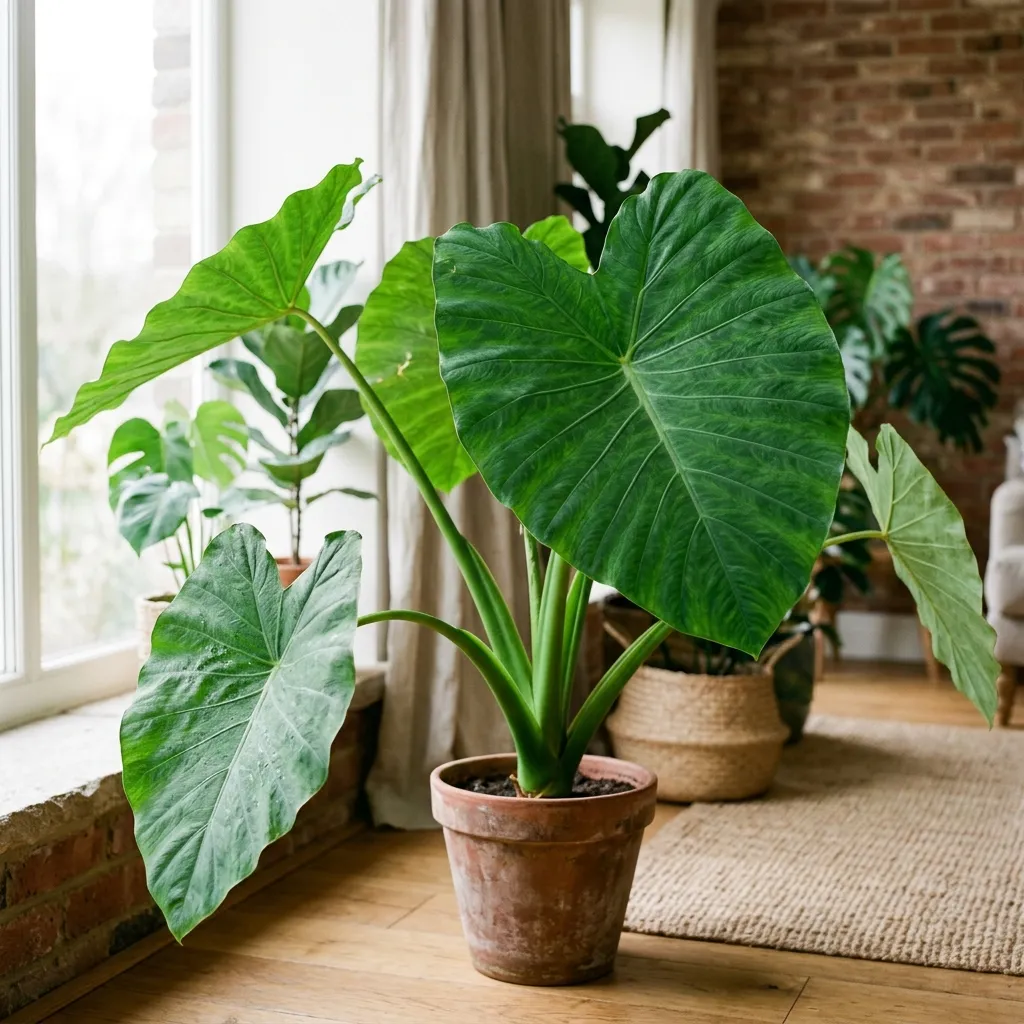
Elephant Ear (Colocasia esculenta), also widely recognized as Taro, is a bold, architectural tropical perennial celebrated for its massive, heart-shaped (cordate) foliage. Native to tropical Southeast Asia and the Pacific Islands, its dramatic leaves point downwards on long, succulent stems, creating an instant jungle canopy in garden beds, patio containers, or bright indoor spaces. In addition to its ornamental grandeur, Colocasia esculenta has been cultivated for millennia as a staple food crop for its starchy, edible corms (tubers).
Light & Placement Requirements
Colocasia esculenta thrives best in bright, filtered sunlight to partial shade. In outdoor landscapes with ample soil moisture, established plants can tolerate full morning sun, which deepens foliage coloration—especially in dark cultivars like 'Black Magic' or 'Illustris'. When grown indoors or in containers on a balcony, place the plant in a bright location receiving abundant indirect light. Avoid harsh, unshaded midday sun in hot climates, as dry heat and direct radiation can scorch the margins of the tender leaves.
Soil, Potting & Substrate Needs
Unlike many houseplants that require rapid-draining, gritty soil, Elephant Ears are bog-tolerant marginal plants that demand rich, moisture-retentive, humus-heavy soil. An optimal potting mix consists of 40% organic compost or well-aged cow manure, 30% coco peat or peat moss, 20% quality garden loam, and 10% perlite or vermiculite to retain structure. Maintain a rich, slightly acidic to neutral pH between 5.5 and 6.5. When planting in containers, choose large, sturdy pots (minimum 12–16 inches wide) to support their rapid root and tuber development.
Watering Routine & Moisture Management
Elephant Ears are voracious drinkers. They thrive in consistently damp to wet soil and cannot tolerate drying out. During the peak summer growing season, water deeply and frequently to ensure the substrate never dries beyond the immediate surface layer. Outdoor container plants during hot spells often require daily watering. If growing in outdoor ponds or water features, Colocasia can even sit in shallow water margins up to 2 inches deep. Reduce watering in the cooler autumn and winter months when the plant enters dormancy.
Humidity & Temperature Preferences
Thriving naturally in hot, humid climates, Colocasia prefers ambient temperatures between 20°C and 35°C (68°F–95°F) and relative humidity levels of 60% or higher. In dry indoor air or air-conditioned rooms, leaf edges will turn brown and papery; run a humidifier nearby or group it with other tropical plants to build a humid microclimate. The plant is frost-sensitive; temperatures below 10°C (50°F) will cause the foliage to die back to the corm.
Fertilization & Heavy Feeding
Because they produce massive foliage in a matter of weeks, Elephant Ears are exceptionally heavy feeders. Apply a high-nitrogen, balanced water-soluble fertilizer or an organic liquid feed (such as fish emulsion or compost tea) every 2 to 3 weeks throughout the active growing season (spring through late summer). Incorporating a generous top-dressing of vermicompost or slow-release granular fertilizer at the start of the season provides the sustained nutrient drive needed for giant leaves.
Propagation, Division & Winter Care
Propagate Colocasia esculenta easily through corm division or by separating small side-pups (runners) in the spring during repotting. In temperate zones with freezing winters (below USDA Zone 8), dig up the tubers in late autumn before the first hard frost, trim back the dead stems, allow the corms to dry in a shaded area for a few days, and store them in dry peat moss or wood shavings in a cool, dark, frost-free location (10°C–15°C / 50°F–59°F) until spring replanting.
Pest Management, Toxicity & Troubleshooting
Dry indoor conditions frequently invite spider mites, aphids, and thrips, which cluster on the undersides of the broad leaves. Wash foliage regularly with a gentle spray of water and treat outbreaks with organic neem oil or insecticidal soap. Yellowing lower leaves are natural as older foliage is shed to fuel new center spikes; simply trim them off close to the base. Toxicity Note: All raw parts of Colocasia esculenta contain insoluble calcium oxalate crystals, which cause intense oral irritation and swelling if ingested by pets or humans. Keep ornamental plants out of reach of curious pets, and only consume taro tubers after proper and thorough culinary cooking.
Calculator
Interactive Calculators for Elephant Ear
Structured Plant Data
Plant Data Profile
The following data is extracted directly from our botanical knowledge graph for accuracy and transparency.
Environmental Parameters
| Parameter | Recommended | Survivable |
|---|---|---|
| Temperature | 70°F - 85°F (21°C - 29°C) | 50°F - 95°F (10°C - 35°C) |
Troubleshooting & Diagnostics Guide
1 Why are the leaves of my Elephant Ear turning yellow?
Diagnosis: Overwatering or poor drainage
Treatment: Check soil; if waterlogged, allow to dry; ensure pot has drainage. Cut off yellow leaves.
Prevention: Water when top 2 inches are dry; use well-draining soil.
2 Why is my Elephant Ear not growing new leaves?
Diagnosis: Lack of light or nutrients
Treatment: Move to brighter indirect light; feed with balanced fertilizer monthly during growing season.
Prevention: Provide bright light and regular feeding.
3 Why are the edges of the leaves turning brown and crispy?
Diagnosis: Low humidity or dry air
Treatment: Increase humidity with a pebble tray or humidifier; mist leaves regularly.
Prevention: Maintain high humidity (60%+).
Authoritative Resources
For additional peer-reviewed information on plant diseases, toxicity, and care, consult these trusted botanical and agricultural extensions:
Explore More