Granular Fertilizer for Plants
Granular slow-release fertilizer offers a low-maintenance feeding strategy that prevents the stressful "feast or famine" cycle often associated with liquid feeding. By delivering a steady trickle of nutrients every time the plant is watered, it supports consistent, long-term growth. While liquid fertilizers are excellent for rapid correction of deficiencies, granular formulas are ideal for large established houseplants, outdoor container gardens, and heavy-feeding trees. When applied correctly—mixed into the topsoil and kept away from the main stem—granular fertilizer is a safe and highly effective way to sustain plant health throughout the active growing season.
Quick Answer
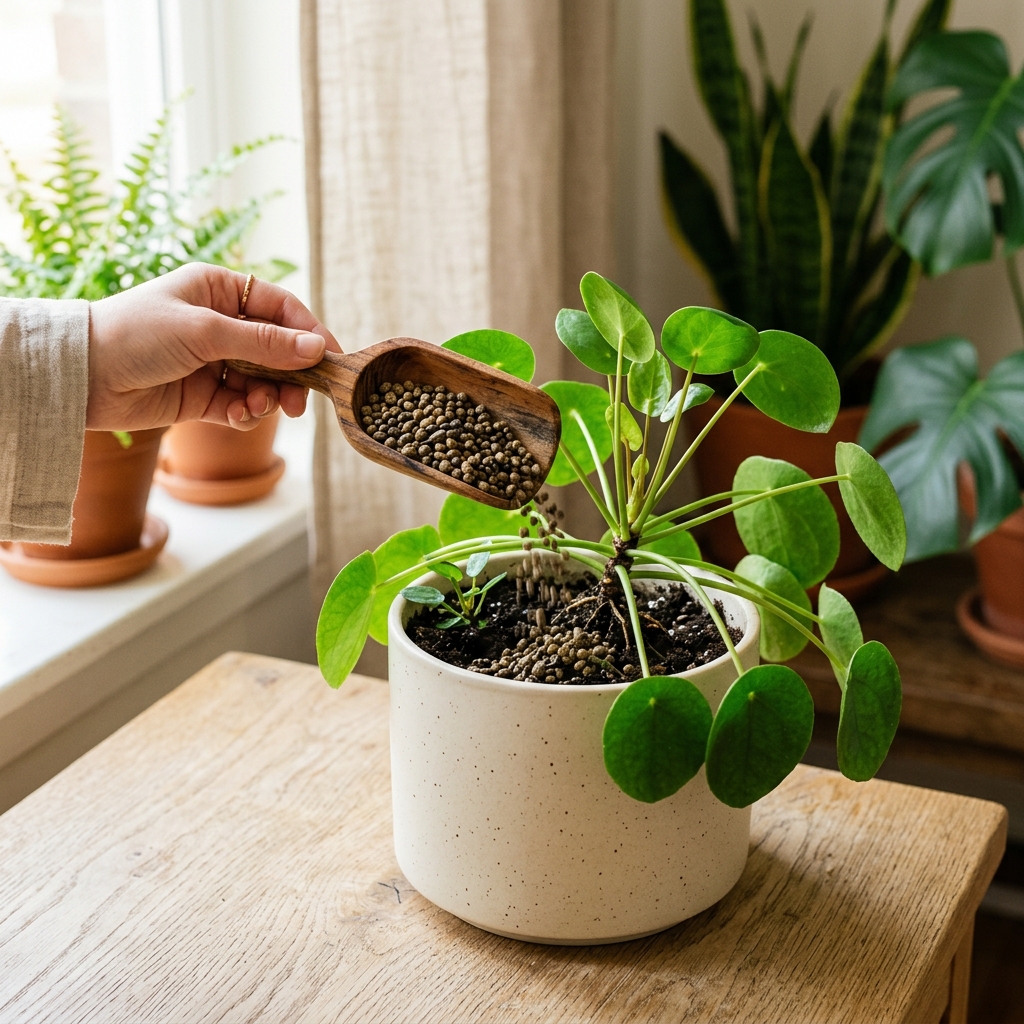
Granular fertilizer comes in dry pellet form and is typically scratched into the topsoil. It acts as a slow-release nutrient source; as it is exposed to water and warm temperatures, the granules gradually break down to provide a steady supply of nutrients over several weeks or months.
Key Takeaways
- Granular fertilizers require moisture and warm soil temperatures to activate and release their nutrients.
- They provide a steady, slow release of nutrients over weeks or months, reducing the risk of fertilizer burn.
- Always apply granules evenly across the soil surface and gently scratch them into the top inch of the potting mix.
- Never pile granular fertilizer against the plant's stem, as the concentrated salts can cause chemical burns.
- Avoid applying slow-release fertilizers in late autumn or winter when houseplants enter dormancy.
What Is Granular Fertilizer?
Granular fertilizer, sometimes called granulated fertilizer, consists of dry, solid pellets or granules that contain concentrated plant nutrients. Unlike water-soluble liquid fertilizers that deliver an immediate nutrient spike, granular fertilizers are typically designed for slow release. As they are watered and exposed to soil microbes, the granules gradually break down, providing a steady trickle of nitrogen, phosphorus, and potassium (N-P-K) over several weeks or months.
How Slow-Release Granules Work
The activation of granular fertilizer depends on three primary environmental factors: moisture, temperature, and microbial activity. When you water the plant, the moisture slowly dissolves the outer coating of the pellet. Warm soil temperatures further accelerate this breakdown. Because the nutrients are released incrementally, granular formulas significantly reduce the risk of accidental fertilizer burn compared to concentrated liquid feeds.
Comparison: Granular vs. Liquid Fertilizer
| Feature | Granular (Slow-Release) | Liquid (Water-Soluble) |
|---|---|---|
| Release Speed | Slow (Weeks to Months) | Fast (Immediate) |
| Application Frequency | Infrequent (1-3 times per growing season) | Frequent (Every 1-4 weeks) |
| Risk of Root Burn | Low (if applied correctly) | High (if incorrectly diluted) |
| Best For | Large plants, trees, outdoor containers | Delicate tropicals, treating deficiencies |
How to Apply Granular Fertilizer Safely
Proper application is critical to ensure the nutrients reach the root zone without damaging the plant's stem or shallow roots.
- Top Dressing: Sprinkle the recommended measurement of granules evenly across the surface of the soil.
- Avoid the Stem: Never pile fertilizer directly against the plant's main stem or trunk. The concentrated salts can cause severe chemical burns. Keep granules at least an inch away from the base.
- Scratch it In: Use a small hand fork or your fingers to gently mix the granules into the top inch of the potting soil. This prevents them from washing away and helps maintain the moisture needed for activation.
- Water Thoroughly: Always water the plant immediately after application to begin dissolving the pellets and carry the nutrients down into the root zone.
When to Avoid Granular Fertilizer
Do not apply slow-release granular fertilizer during a plant's winter dormancy. Because the granules continue to release nutrients over time, applying them in late autumn can force tender new growth during a period when the plant lacks sufficient light and warmth to support it. Additionally, avoid using granular feeds on severely dehydrated plants; rehydrate the soil with plain water first to prevent fertilizer salts from burning the thirsty roots.
Frequently Asked Questions
Can I use granular fertilizer on indoor houseplants?
Yes, you can use granular fertilizer on indoor houseplants, particularly large, established species like Monstera or Ficus. However, for very small or highly sensitive plants like Orchids and African Violets, a heavily diluted liquid fertilizer is often safer and easier to control.
How often should I apply slow-release granular fertilizer?
Most slow-release granular fertilizers only need to be applied once every 3 to 6 months during the active growing season (spring and summer). Always check the manufacturer's label, as the precise release duration varies by brand and temperature.
Why are there still beads on the soil after several months?
The visible beads left behind on the soil surface are often just the empty resin or polymer husks that previously contained the fertilizer. The actual water-soluble nutrients inside have likely already dissolved and washed into the soil.
Will granular fertilizer burn my plant's roots?
Granular fertilizer is generally safer than liquid fertilizer, but it can still cause chemical burns if heavily over-applied or if the pellets are piled directly against the plant's stem. Always follow the recommended dosage and distribute the granules evenly.
Do I need to water after applying granular fertilizer?
Yes, you must water the plant immediately after applying granular fertilizer. The moisture is required to begin dissolving the outer coating of the pellets and carry the nutrients down into the root zone where the plant can absorb them.
Explore More
Related Articles
Related Plant Guides
No specific plant guides found matching this topic.
Recommended next actions
Continue Exploring
Dive deeper into related plant care tools and profiles.
Topic Guide
Fertilizer
Learn everything about fertilizer for your indoor and aquarium plants. Expert care tips, troubleshooting, and related guides.
Topic Guide
Slow Release Fertilizer: How It Works, Best Types & When to Use
Learn what slow-release fertilizer is, how polymer-coated and organic formulations work, how long they last, application tips, and when to choose.
Topic Guide
NPK Explained for Plant Care
Understand what NPK means, how nitrogen, phosphorus and potassium affect plant growth and how to choose the right balance.
Topic Guide
NPK Ratios Explained
Read NPK ratios on fertilizer labels correctly and choose the right nitrogen, phosphorus and potassium formula for each plant stage.
Topic Guide
Fertilizer Burn: Symptoms and Treatment
Identify fertilizer burn symptoms like scorched leaf edges and treat overfertilized plants by flushing soil and adjusting feeding.