Zebra Plant Care: Preventing Wilting & Triggering Yellow Blooms
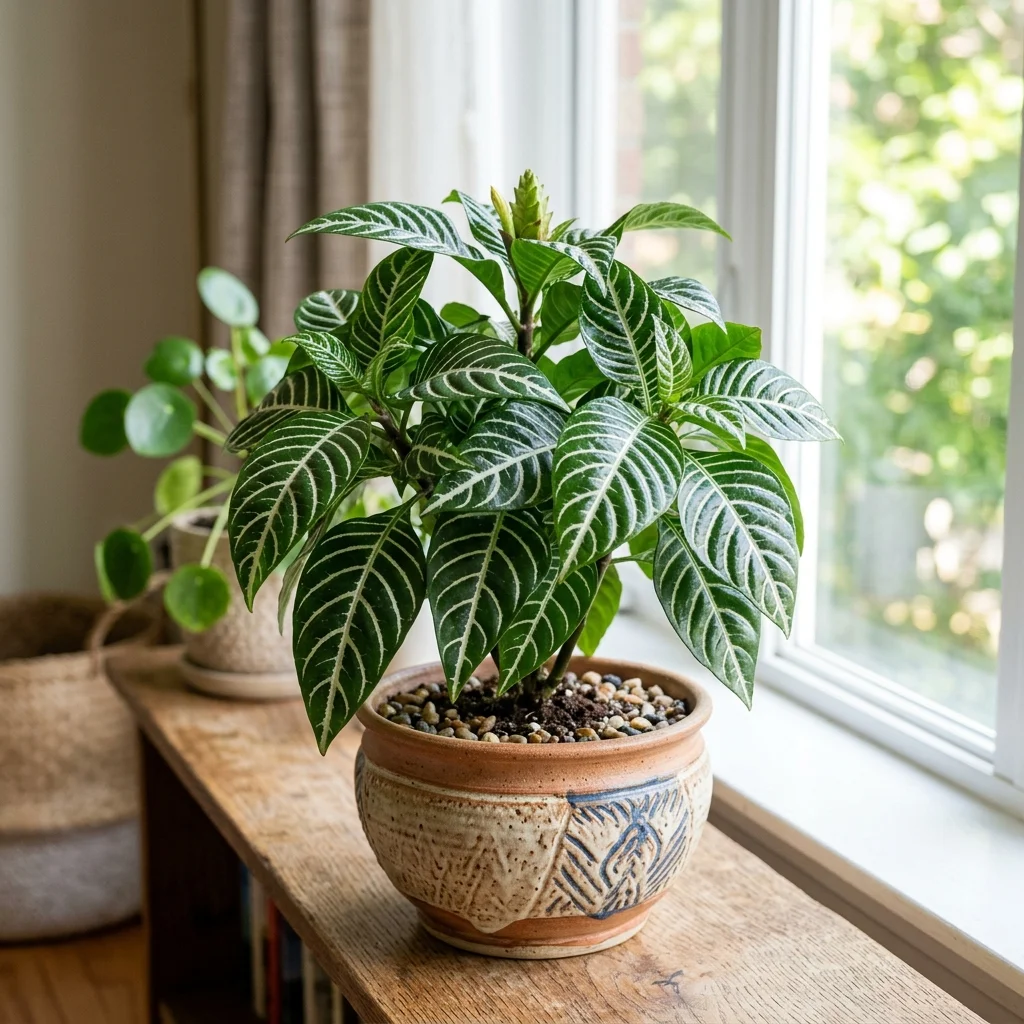
The Zebra Plant is a spectacular, high-maintenance diva. Famous for its dark green leaves painted with thick white veins and its massive yellow flowers, it demands rainforest-level humidity and constant watering.
-
Difficulty
very advanced
-
Light
Requires very bright, indirect light to maintain its striking white stripes and eventually produce flowers. Direct sun will instantly scorch the delicate leaves and cause them to turn crispy brown.
-
Temperature
65°F - 80°F (18°C - 27°C)
-
Growth
moderate
-
Humidity
60% - 80%
-
pH range
5.5 - 6.5
-
Biggest Owner Mistake
Letting the soil go completely dry between waterings—unlike succulents, this plant's large leaves cannot store water, so it wilts dramatically and sheds lower leaves after just one dry-out event. Keep the soil consistently moist but never waterlogged.
-
What Nobody Tells You
After the yellow bract flowers fade, the plant typically looks ragged and bare for several months—this is normal recovery, not decline. Cutting off the spent flower spike instead of leaving it redirects energy to producing new bushy leaf growth.
-
Real Home Conditions
Drafty windows or sudden temperature drops below 60°F trigger immediate leaf drop, even in otherwise healthy plants. It needs stable warmth between 65–75°F and hates being relocated once it has settled.
Quick Answer
The Zebra Plant requires evenly moist soil and extremely high humidity. If the soil dries out even slightly, the plant will completely collapse and wilt. Keep it in bright, indirect light and cut off the yellow flower spike once it dies back naturally.
Key Takeaways
- Provide bright, indirect sunlight to support zebra foliage and yellow floral bracts.
- Keep the substrate consistently moist; avoid letting the pot dry out fully.
- Maintain relative humidity between 60% and 80% to prevent severe leaf drop.
- Prune spent yellow flower bracts at the stem base once blooming finishes.
Overview
The Zebra Plant (Aphelandra squarrosa) is undeniably breathtaking. Native to the Atlantic Forest of Brazil, it features large, incredibly glossy, dark green leaves heavily painted with stark, thick white veins that look exactly like zebra stripes. In the late summer and autumn, it produces a massive, towering, golden-yellow cone (bract) from the top of the plant that lasts for weeks.
As a bonus, it is completely non-toxic to pets. However, the Zebra Plant has a fearsome reputation in the houseplant community. It is arguably one of the most difficult, high-maintenance, uncompromising divas you can buy. It demands an exact replica of its humid rainforest home. If you miss a single watering, or if the air in your home is too dry, it will punish you by dropping all of its spectacular leaves onto the floor.
The Dramatic Wilt: The Damp Sponge Rule
The Zebra Plant possesses zero drought tolerance. Its large leaves transpire moisture rapidly. You must keep the soil consistently, evenly moist at all times—exactly like a wrung-out damp sponge. When the top half-inch of soil feels dry to the touch, you must water it thoroughly.
If you are one day late, the plant will dramatically lose all water pressure and completely collapse, its leaves hanging limp over the sides of the pot. While soaking the pot will usually cause the plant to stand back up within a few hours, you cannot let this happen repeatedly. Every time the plant wilts, it suffers severe stress, and it will eventually drop its bottom leaves in protest.
Humidity: Fighting the Crisp
If watering wasn't difficult enough, the Zebra Plant also demands humidity levels between 60% and 80%. The air inside a standard, centrally heated home in the winter often drops to 30%. This dry air acts like a vacuum, sucking the moisture out of the thin, glossy leaves, causing the tips and edges to turn brown and permanently crispy.
Misting the plant is highly discouraged; water sitting on the glossy leaves will quickly cause fungal rot. You must either place a dedicated room humidifier directly next to the plant, keep it in a bright, frequently used bathroom, or place it on a pebble tray filled with water to increase the ambient humidity around the foliage.
Light Requirements
To keep the white zebra stripes crisp and to give the plant enough energy to produce its massive yellow flower, it requires bright, indirect light. An east-facing or north-facing window is ideal.
Never place this plant in direct sunlight. The delicate leaves have no protection against intense heat and will instantly scorch, bleach out, and curl inward.
The Yellow Bract (Flower)
When the plant blooms, it pushes up a large, four-sided, golden-yellow cone called a bract. Tiny, true yellow flowers will pop out from the sides of this bract and last for a few days, but the cone itself will last for weeks.
Eventually, the yellow cone will begin to dry up and turn brown. You must cut it off immediately. If you leave the dying bract on the plant, the plant assumes it needs to produce seeds and will redirect all of its energy into the dead flower, halting all new leaf growth and often causing the plant to slowly decline. Snip the stalk cleanly at the base to force the plant back into a vegetative growth state.
Calculator
Interactive Calculators for Aphelandra Squarrosa
Recommended next actions
Next Best Actions
Use calculators and guides to turn this plant profile into a practical care routine.
Topic Guide
Humidity
Learn everything about humidity for your indoor and aquarium plants. Expert care tips, troubleshooting, and related guides.
Topic Guide
Watering
Learn everything about watering for your indoor and aquarium plants. Expert care tips, troubleshooting, and related guides.
Guide
Wilting Houseplants: Is it Thirsty, Drowning, or Dying?
As horticulturists, we've found that the biggest mistake indoor gardeners make when seeing a wilted plant is blindly reaching for the watering can. We use a simple diagnostic matrix based on turgor pressure to determine exactly why a plant has collapsed.
Topic Guide
Fungus Gnats
Learn everything about fungus gnats for your indoor and aquarium plants. Expert care tips, troubleshooting, and related guides.
Structured Plant Data
Plant Data Profile
The following data is extracted directly from our botanical knowledge graph for accuracy and transparency.
Growth Characteristics
Growth Rate
moderate
Mature Height
1-2 feet indoors
Mature Spread
1 foot wide
Life Cycle
Perennial
Flowering Season
Autumn (produces a bright yellow, cone-shaped bract with tiny flowers)
Container Friendly
yes
Indoor Capable
yes
Environmental Parameters
| Parameter | Recommended | Survivable |
|---|---|---|
| Temperature | 65°F - 80°F (18°C - 27°C) | 60°F - 85°F (15°C - 29°C) |
| Humidity | 60% - 80% | 50% - 90% |
| Soil PH | 5.5 - 6.5 | 5.0 - 7.0 |
Lighting
Description
Requires very bright, indirect light to maintain its striking white stripes and eventually produce flowers. Direct sun will instantly scorch the delicate leaves and cause them to turn crispy brown.
Nutrients
Nitrogen Demand
moderate
Phosphate Demand
high
Potassium Demand
moderate
Micronutrient Notes
Requires heavy feeding during the summer to develop the massive yellow flower bract.
Fertilizer Frequency
Every two weeks during spring and summer with a balanced liquid fertilizer.
Organic Options
Monthly top dressing of worm castings.
Relationships
-
Fungus Gnats
Vulnerability | Strength 8
Because the soil must be kept constantly moist, it is a prime breeding ground for fungus gnats.
High-Humidity Houseplant Comparison
| Plant | Main Care Challenge | Signs of Stress |
|---|---|---|
| Zebra Plant | Needs constant moisture | Dramatic, complete wilting |
| Calathea | Needs pure distilled water | Crispy brown leaf edges |
| Fiddle Leaf Fig | Hates being moved or drafts | Drops all its leaves instantly |
Troubleshooting & Diagnostics Guide
1 Why did my Zebra Plant suddenly collapse and wilt completely?
Diagnosis: Severe underwatering – the plant loses turgor pressure
Treatment: Water immediately and thoroughly; the plant should recover within hours. If it does not, check root health for possible rot.
Prevention: Keep soil consistently moist but not waterlogged; water when the top inch feels dry.
2 Why are the bottom leaves turning yellow and falling off?
Diagnosis: Environmental stress from low humidity, cold drafts, or inconsistent watering
Treatment: Increase humidity to 60% or more using a humidifier; place the plant away from air vents and drafty windows; water consistently when the top soil is dry.
Prevention: Maintain stable warm temperatures (18–24°C) and high humidity; avoid sudden changes.
3 Why are the tips of the leaves turning brown and crispy?
Diagnosis: Low humidity or fluoride toxicity from tap water
Treatment: Increase humidity with a humidifier; switch to distilled or rainwater for watering; trim crispy tips.
Prevention: Maintain humidity above 50% and use only filtered or distilled water.
4 What do I do with the yellow flower when it dies?
Diagnosis: Natural senescence of the flower bract
Treatment: Cut the entire flower stalk at the base as soon as the flowers fade and the bract turns brown to redirect energy to leaf growth.
Prevention: Regularly deadhead spent blooms to encourage bushier growth.
Authoritative Resources
For additional peer-reviewed information on plant diseases, toxicity, and care, consult these trusted botanical and agricultural extensions:
Glossary of Terms
- Bract
- A modified, highly colored leaf that surrounds the true flowers of a plant. On the Zebra Plant, the large golden-yellow "cone" is actually a bract, not a flower petal.
- Turgor Pressure
- The water pressure inside plant cells that keeps the leaves rigid and upright. When the Zebra Plant runs out of water, it loses turgor pressure and collapses.
Frequently Asked Questions
Why did my Zebra Plant suddenly collapse and wilt completely?
Why are the bottom leaves turning yellow and falling off?
Why are the tips of the leaves turning brown and crispy?
What do I do with the yellow flower when it dies?
Is the Zebra Plant toxic to cats?
Sources & References
-
Source: powo.science.kew.org
-
Source: edis.ifas.ufl.edu
Explore More