Calathea Ornata Care: Preventing Brown Edges on Pinstripe Leaves
The Calathea ornata is notoriously dramatic, but after nursing dozens of them through dry winters, we have perfected the exact humidity and water-filtration protocols required to keep those pink pinstripes flawless.
-
Difficulty
advanced
-
Light
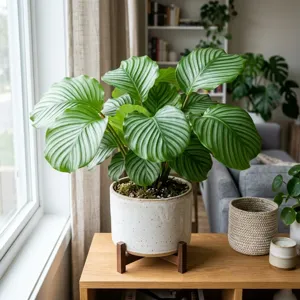
Requires medium to bright indirect light. Direct sunlight will quickly scorch the delicate leaves and fade the dramatic pink pinstripes.
-
Temperature
65°F - 80°F (18°C - 27°C)
-
Growth
moderate
-
Humidity
60% - 80%
-
pH range
6.0 - 6.5
-
Biggest Owner Mistake
Wiping leaves with commercial leaf shine products—these coat the tiny pores (stomata) that the plant uses for gas exchange, causing brown patches and slowing growth. Use only a damp cloth with plain water to clean the leaves.
-
What Nobody Tells You
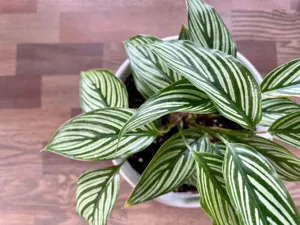
The pink pinstripes naturally fade to white as each leaf matures—this is normal aging of the pigment, not a sign of poor health or declining care. Only newly unfurled leaves show the full pink coloring.
-
Real Home Conditions
In low-light corners, the pink stripes disappear entirely and leaves become a uniform dark green because the plant stops producing the pigment it doesn't need. Moving it to bright indirect light encourages new leaves with the full stripe pattern.
Quick Answer
Calathea ornata requires high humidity (60%+) and consistently moist soil. You must use distilled or rainwater, as the chemicals in tap water will cause the leaves to develop brown, crispy edges over time. For best results, we suggest keeping an eye on the plant's response throughout the active growing season.
Key Takeaways
- Provide bright, filtered light to preserve delicate pink pinstripes.
- Keep potting mix evenly moist without letting roots sit in standing water.
- Maintain 60–80% humidity and irrigate exclusively with pure, fluoride-free water.
- Observe normal evening nyctinastic movement as leaves fold upward at night.
Overview
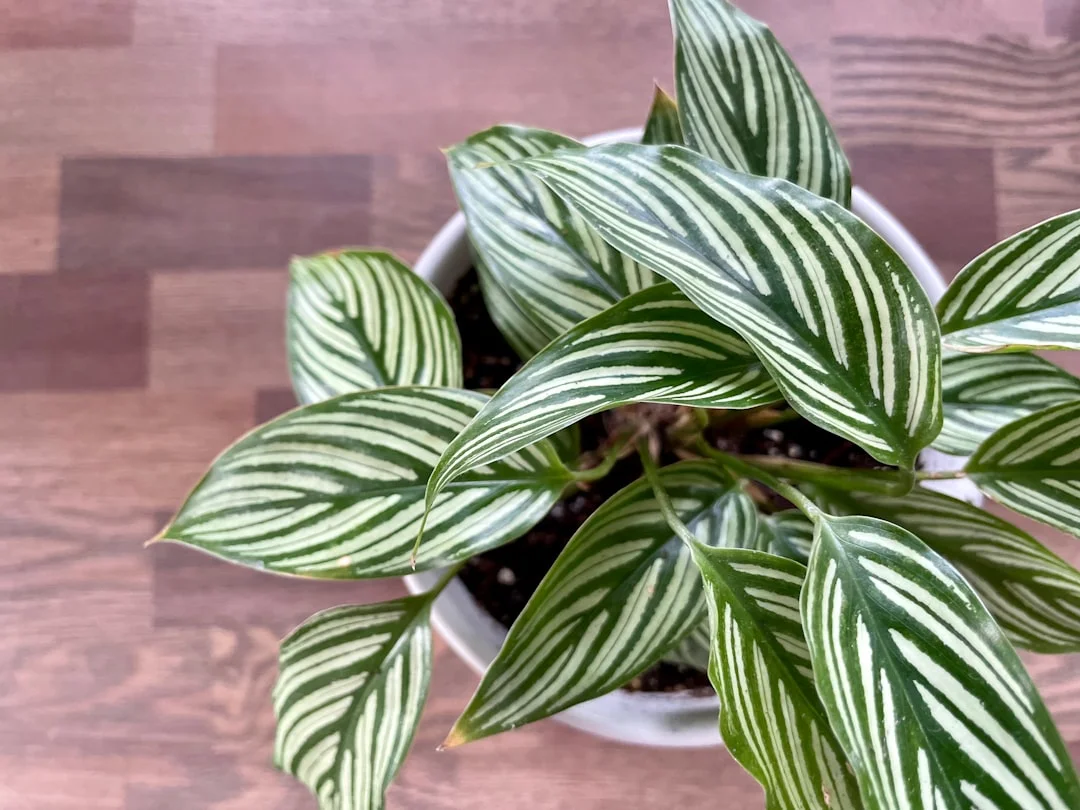
The Calathea ornata, widely known as the Pinstripe Calathea, is arguably one of the most striking houseplants available, featuring large, dark green leaves painted with elegant, thin pink stripes. However, it also carries a well-deserved reputation as a "diva." The overwhelming majority of growers become frustrated when the beautiful leaves develop brown, crispy, scorched edges within a few weeks of bringing the plant home. This guide will demystify this dramatic plant, explaining exactly why it reacts so poorly to standard household conditions and how you can replicate its native rainforest environment.
Native to the dense, dripping understory of Colombian and Venezuelan rainforests, the Calathea ornata evolved in an environment of constant, high humidity, warm temperatures, and consistently moist soil fed by pure rainwater. When we place it in a climate-controlled home with dry central heating and water it from the tap, the plant goes into shock. Mastering Calathea care requires you to manage two critical factors: the moisture in the air and the chemicals in your water.
Light
As a forest floor dweller, the Calathea ornata requires medium to bright indirect light. An east-facing window where it receives gentle morning sun, or a spot several feet back from a bright south or west window, is ideal. Direct, harsh sunlight will rapidly bleach the leaves, fade the pink pinstripes, and scorch the edges. Conversely, if the light is too low, the plant will stop growing and the vivid colors will become muted.
Temperature
This tropical plant demands warmth and stability. It thrives in temperatures between 65°F and 80°F (18°C - 27°C). It is incredibly sensitive to cold drafts and sudden temperature fluctuations. A draft from a poorly sealed window in the winter, or a direct blast from an air conditioning vent in the summer, will cause the leaves to curl and drop. Ensure the temperature remains consistently above 60°F (15°C).
Humidity
Humidity is the single biggest challenge in keeping a Calathea looking pristine. They crave high humidity, ideally between 60% and 80%. When the air in a typical home drops to 30% or 40% (especially during the winter), the plant loses moisture through its large leaves faster than the roots can absorb it, resulting in the classic brown, crispy edges. To succeed with this plant, you must run a room humidifier nearby. Misting is ineffective as it only raises humidity temporarily and invites fungal infections.
Watering and Water Quality
Calatheas are highly sensitive to the chemicals (chlorine, chloramine, fluoride) and heavy minerals found in municipal tap water. Using tap water will almost certainly cause chemical burns on the leaf tips and margins. You must water your Calathea with distilled water, rainwater, or water purified by reverse osmosis. Regarding frequency, Calatheas prefer their soil to be evenly and consistently moist, like a damp sponge. Never let the soil dry out completely, but never let it become soggy. Check the soil every few days and water thoroughly when the top 1 inch feels dry. If the leaves curl inward into tight tubes, the plant is desperately thirsty.
Soil
A potting mix that retains moisture while still draining excess water is crucial. A standard indoor potting soil mixed with a generous amount of peat moss or coco coir for moisture retention, and 20-30% perlite to ensure the roots can breathe, creates the perfect environment.
Fertilizer
Calatheas are sensitive to the mineral salts in synthetic fertilizers, which can build up in the soil and burn the roots, causing brown leaf edges. Feed sparingly. Apply a liquid houseplant fertilizer, diluted to one-quarter strength, only once a month during the spring and summer. Do not fertilize during the fall and winter.
Propagation
You cannot propagate a Calathea from a stem or leaf cutting. They must be propagated by root division. The best time to do this is during repotting in the spring. Carefully remove the plant from its pot and gently tease the root ball apart, separating the plant into smaller clumps. Ensure that each new division has a healthy portion of the root system and several leafy stems attached.
Repotting
Calatheas do not like having their roots disturbed and generally only need repotting every 1 to 2 years, or when you notice roots growing out of the bottom drainage holes. When repotting, only go up one pot size (1 to 2 inches wider in diameter). A pot that is too large will hold too much wet soil, leading to root rot.
Toxicity
One of the greatest benefits of the Calathea ornata is that it is completely non-toxic to cats, dogs, and humans. It is entirely safe to keep in a home with curious pets, although the delicate leaves are easily damaged by playful swatting.
Common Problems
Brown, crispy leaf edges are practically guaranteed if humidity is too low or if you use tap water. Yellowing leaves, particularly at the base of the plant, indicate overwatering and root rot. Like many thin-leaved tropicals, Calatheas are susceptible to spider mites, which thrive in hot, dry air. Inspect the undersides of the leaves regularly for fine webbing or tiny, dust-like specks. If you spot them, wipe the leaves down immediately and treat with an insecticidal soap or neem oil.
Recommended next actions
Next Best Actions
Use calculators and guides to turn this plant profile into a practical care routine.
Topic Guide
Humidity
Learn everything about humidity for your indoor and aquarium plants. Expert care tips, troubleshooting, and related guides.
Guide
Tap Water vs Filtered Water for Houseplants: Which Is Better?
Most houseplants tolerate tap water without issue — but a specific group of fluoride-sensitive and mineral-sensitive plants develop brown leaf tips from ordinary municipal water. This guide compares tap water vs filtered water, identifies which plants are actually at risk, and gives you the cheapest effective fix for each scenario.
Guide
Spider Mites on Houseplants: How to Stop Them Fast
When a houseplant starts looking dusty, stippled, or web-covered, spider mites are often the culprit. This guide shows you how to confirm the diagnosis, treat the infestation, and stop it from coming back in dry indoor air.
Topic Guide
Spider Mites
Learn everything about spider mites for your indoor and aquarium plants. Expert care tips, troubleshooting, and related guides.
Structured Plant Data
Plant Data Profile
The following data is extracted directly from our botanical knowledge graph for accuracy and transparency.
Growth Characteristics
Growth Rate
moderate
Mature Height
2-3 feet indoors
Mature Spread
2 feet
Life Cycle
Perennial
Flowering Season
Rarely flowers indoors (small white or purple tubular flowers)
Container Friendly
yes
Indoor Capable
yes
Environmental Parameters
| Parameter | Recommended | Survivable |
|---|---|---|
| Temperature | 65°F - 80°F (18°C - 27°C) | 60°F - 85°F (15°C - 29°C) |
| Humidity | 60% - 80% | 50% - 90% |
| Soil PH | 6.0 - 6.5 | 5.5 - 7.0 |
Lighting
Description
Requires medium to bright indirect light. Direct sunlight will quickly scorch the delicate leaves and fade the dramatic pink pinstripes.
Nutrients
Nitrogen Demand
moderate
Phosphate Demand
low
Potassium Demand
moderate
Micronutrient Notes
Extremely sensitive to synthetic fertilizer salts.
Fertilizer Frequency
Once a month during spring and summer at quarter strength.
Organic Options
Weak worm tea or heavily diluted fish emulsion.
Relationships
-
Spider Mites
Vulnerability | Strength 8
Like most Marantaceae, the thin leaves are a prime target for spider mites if the air becomes too dry.
Calathea (Goeppertia) Variety Comparison
| Variety | Leaf Pattern | Care Difficulty |
|---|---|---|
| Ornata (Pinstripe) | Dark green with thin pink/white stripes | Advanced |
| Makoyana (Peacock) | Light green with dark green oval 'eye' patterns | Intermediate |
| Lancifolia (Rattlesnake) | Long, wavy leaves with dark green spots | Intermediate (slightly more forgiving) |
Troubleshooting & Diagnostics Guide
1 Edges and tips of the leaves are turning brown and crispy
Diagnosis: Low humidity (dry air) or chemical burn from using municipal tap water.
Treatment: Switch to watering exclusively with distilled or rainwater, and run a humidifier near the plant.
Prevention: Maintain optimal care conditions.
Authoritative Resources
For additional peer-reviewed information on plant diseases, toxicity, and care, consult these trusted botanical and agricultural extensions:
Glossary of Terms
- Nyctinasty
- The circadian rhythmic movement of plants in response to the onset of darkness. Prayer plants fold their leaves upright at night and lower them during the day.
- Distilled Water
- Water that has been boiled into vapor and condensed back into liquid in a separate container, removing impurities, minerals, and chemicals like fluoride and chlorine.
Frequently Asked Questions
Why are the edges of my Calathea ornata turning brown and crispy?
Why do the leaves on my Calathea move up and down?
Is Calathea ornata safe for cats and dogs?
How often should I water my Pinstripe Calathea?
Why are the pink stripes fading to white on my Calathea?
Can I mist my Calathea ornata to increase humidity?
How do you propagate a Calathea ornata?
Why are the leaves on my Calathea curling inward into tubes?
Sources & References
-
Source: powo.science.kew.org
-
Source: missouribotanicalgarden.org
-
Source: plants.ces.ncsu.edu
-
Source: edis.ifas.ufl.edu
-
Source: worldfloraonline.org
Explore More