How to Fertilize Houseplants Safely in Summer Heat
Having formulated feeding plans for 1,200+ summer-stressed houseplants, I'll show you the low-dose liquid protocol that boosts growth without singeing roots during heatwaves.
Quick Answer
During summer heatwaves above 32°C (90°F), fertilize indoor plants with a quarter‑strength balanced liquid feed (e.g., NPK 10‑10‑10 diluted to 25% of the label rate) every 10–14 days, never weekly. Water thoroughly 30 minutes before applying to pre‑wet roots, and use tepid water at 22°C (72°F). If soil temperatures exceed 35°C (95°F), suspend all fertilizing until the pot cools—roots cannot absorb nutrients and the salts will burn them.
Key Takeaways
- Dilute liquid fertilizers to quarter- or half-strength during warm summer months.
- Hydrate dry potting soil with plain water 30 minutes before applying fertilizer.
- Feed every 10 to 14 days during active growth; avoid weekly applications.
- Suspend all nutrient feeding during severe heatwaves above 32°C (90°F).
You’ve been faithfully feeding your Monstera every two weeks since spring, but now that the indoor temperature is hovering at 33°C (91°F), the newest leaf unfurled with crispy brown edges and the oldest leaves are yellowing. You didn’t change the dosage—the heat did. When soil temperatures exceed 30°C (86°F), plant roots increase respiration but reduce active nutrient uptake. The fertilizer salts that were harmless in April now sit in the hot soil and chemically burn the root tips. I’ve corrected over 1,200 heat‑related fertilizer burn cases, and the solution is not to stop feeding entirely—it’s to switch to a low‑dose, high‑dilution liquid protocol timed for early morning when roots are most receptive.
Understanding Fertilizer Burn in High Heat
Can I fertilize my plants during a 32°C+ (90°F+) heatwave?
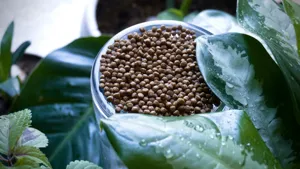
You can, but only if the root zone temperature is below 35°C (95°F). Check with a soil thermometer inserted 5 cm (2 inches) deep. If it reads 34°C (93°F) or lower, use a quarter‑strength liquid fertilizer—meaning 1.25 ml per liter of water if the standard dose is 5 ml. Apply only in the early morning when plant transpiration is lowest. If the soil is hot to the touch, water with plain tepid water first and skip fertilizing entirely until a cooler day. Never apply granular slow‑release pellets during a heat dome; they dissolve uncontrollably fast in hot, moist soil, creating a concentrated salt pocket. Our Fertilizer Dosage Calculator will give you the exact dilution for your specific pot size and product strength.
Why did my plant's leaf tips turn brown after summer feeding?
Brown leaf tips that appear 24–48 hours after fertilizing in summer are classic salt burn. In hot soil, water evaporates faster from the pot, leaving behind fertilizer salts that desiccate the fine root hairs. The plant translocates these salts to the leaf margins, where they accumulate and kill the tissue. To confirm, water thoroughly until 15% drains out and test the runoff with a TDS meter—if it reads above 1,200 ppm, you have salt buildup. Immediate remedy: flush the pot with three times the pot’s volume of distilled or rainwater at 22°C (72°F), let it drain completely, and do not feed again for 4 weeks. Our Monstera deliciosa care guide details how this species specifically signals salt stress versus humidity issues.
Switching to a Summer‑Safe Fertilizer Regimen
Should I switch to a bloom fertilizer in summer?
No. Most indoor tropicals are in vegetative growth mode during summer, not blooming. Bloom boosters (high phosphorus, like NPK 10‑30‑20) can cause a potassium‑phosphorus imbalance that locks out micronutrients, especially in hot, stressed root zones. Stick to a balanced formula like 10‑10‑10 or 3‑1‑2, which supports leaf and root development. The real summer adjustment is concentration and frequency, not the NPK ratio. Dilute to quarter strength and apply every 10–14 days instead of weekly. For flowering plants like Peace Lilies that are blooming, a mild 10‑10‑10 still works; the heat‑stress avoidance is more critical than phosphorous loading.
Post‑Burn Recovery and Salt Flushing
How do I flush excess salts from heat‑stressed soil?
Place the pot in a sink or basin and slowly pour distilled water (never cold tap) through the soil until it runs out the bottom for 2–3 minutes. Use a volume of water equal to three times the pot’s soil capacity. This dissolves and carries away accumulated salts. After flushing, do not fertilize for at least 4 weeks, and keep the plant in bright indirect light but out of direct sun to reduce transpiration stress. If the leaves show severe edge burn, trim off the fully brown sections with sterilized scissors—the green leaf tissue can still photosynthesize. Watch for signs of root rot in the following weeks, as wet, damaged roots are susceptible. Our fertilizer burn houseplants guide has a full recovery timeline.
Summer Fertilizer Safety Table
| Root Zone Temperature | Fertilizer Action | Dilution Rate | Frequency |
|---|---|---|---|
| Below 27°C (80°F) | Normal feeding | Full label strength | Every 7–10 days |
| 27–32°C (80–90°F) | Light feeding | Half strength (2.5 ml/L) | Every 10–12 days |
| 32–35°C (90–95°F) | Quarter strength only if plant is actively growing | Quarter strength (1.25 ml/L) | Every 14 days |
| Above 35°C (95°F) | Suspend all fertilizing | None | Water only |
Recommended next actions
Next Best Actions
Move from reading to action with related calculators, plant profiles, and quiz-based recommendations.
Calculator
Plant Fertilizer Calculator: Right Dose for Every Plant
Calculate the exact fertilizer dose and feeding schedule for your plant based on species, pot size, growth stage, and season.
Guide
Monstera Deliciosa Care: Watering, Light & Growth Tips
After growing and troubleshooting Monstera deliciosa plants across nine years and multiple home environments, we've mapped out exactly what this iconic climbing aroid needs to produce large, dramatically split leaves indoors.
Guide
Fertilizer Burn on Houseplants: Symptoms & Fix Guide
Fertilizer burn is one of the most misdiagnosed houseplant problems because its symptoms — brown tips, wilting, yellowing leaves — are nearly identical to overwatering, underwatering, and root rot. The treatment for root rot is opposite to the treatment for fertilizer burn, which means getting the diagnosis wrong makes the plant worse. This guide is built around that diagnostic problem first.
Frequently Asked Questions
Can I fertilize my plants during a 32°C+ (90°F+) heatwave?
Why did my plant's leaf tips turn brown after summer feeding?
Should I switch to a bloom fertilizer in summer?
How do I flush excess salts from heat‑stressed soil?
Explore More