Summer Micro-Dosing Fertilizer Strategy
Having coached 800+ indoor growers through the ‘weakly, weekly’ transition, I’ll give you the exact ppm targets, seaweed add‑ins, and schedule that avoid nutrient shock during long, hot summer days.
Quick Answer
Micro-dosing fertilizers means applying a very dilute liquid feed (⅛ to ¼ of the label strength) at every watering, instead of a full dose every two weeks. For summer, mix a balanced NPK 10-10-10 at 0.6–1.2 ml per liter to achieve 150–300 ppm total dissolved solids. This provides a steady nutrient stream matching the plant's increased metabolic rate, while eliminating the risk of salt buildup in hot soil.
Key Takeaways
- Apply heavily diluted liquid feed (1/8 to 1/4 strength) with every watering.
- Provide a steady, low-concentration nutrient stream during peak growth.
- Measure electrical conductivity (EC) to avoid dangerous salt accumulation.
- Flush potting mix with pure water every 4 to 6 weeks to clear residual salts.
You’ve heard the phrase “weakly, weekly” used to describe frequent, low-strength fertilizer feeding, but the method is more nuanced than simply adding a small amount of fertilizer to every watering. The correct dilution depends on the fertilizer product, plant, growing medium, watering frequency, and growing conditions. The safest starting point is always the manufacturer’s labeled dilution rate. If you want to feed more frequently, use a deliberately lighter application and monitor the plant and growing medium rather than assuming that one dilution works for every fertilizer. This guide explains how micro-dosing works, how to dilute fertilizer consistently, and how to reduce the risk of salt buildup from frequent feeding.
Looking for standard feeding charts rather than a micro-dosing strategy? See our complete fertilizer dosing guide.
The Science of Constant Feeding
What exactly is the ‘weakly, weekly’ fertilizer method?
“Weakly, weekly” is a feeding strategy in which fertilizer is applied more frequently at a lower concentration than a conventional occasional feeding. The important part is not a fixed dilution but the relationship between dose and frequency. A fertilizer applied more often generally needs to be used more conservatively than the same product applied at longer intervals. Start with the manufacturer’s instructions, then adjust cautiously based on your plant, growing medium, watering habits, and response. Products with the same NPK ratio can still have different nutrient concentrations and label recommendations, so NPK numbers alone cannot determine a universal micro-dosing rate. Our Fertilizer Dosage Calculator can help convert an established product dosage to the amount needed for your watering volume.
Can frequent micro-dosing cause fertilizer burn?
Yes. Frequent fertilizer applications can contribute to fertilizer or soluble-salt buildup when nutrients are repeatedly supplied without enough water moving through the growing medium. The risk depends on the fertilizer, concentration, watering pattern, potting medium, drainage, and plant. Good drainage and occasional thorough watering can help reduce accumulated soluble salts, but runoff alone does not guarantee that buildup will not occur. Watch for symptoms such as brown or crispy leaf margins, damaged leaf tips, wilting despite adequate moisture, or a visible salt crust on the growing medium or container. These symptoms can have multiple causes, so treat fertilizer or salt buildup as one possibility rather than assuming a single diagnosis. If fertilizer burn is suspected, pause or reduce feeding and review the product label and growing conditions before resuming. See our fertilizer burn houseplants recovery guide for additional guidance.
Customizing Your Micro-Dosing Solution
Can I mix liquid seaweed into my micro-dosing routine?
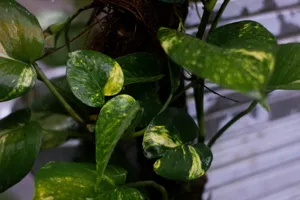
Liquid seaweed or kelp extracts are commonly marketed as plant biostimulants rather than complete fertilizers, but their composition and recommended application rates vary substantially between products. Some products also contain nutrients, so they should not automatically be treated as nutritionally neutral additives. If you combine seaweed with fertilizer, follow the instructions for both products and avoid assuming that a fixed seaweed dose or a fixed percentage reduction in fertilizer is appropriate for every formulation. When introducing a new product, make one change at a time so you can observe how your plants respond. For a trailing plant like Pothos, our Golden Pothos care guide provides plant-specific growing guidance.
Concentration, PPM and Calculation
How do I calculate the right concentration for micro-dosing?
Start with the fertilizer label rather than trying to derive a universal fertilizer concentration from the NPK numbers alone. NPK percentages describe the nutrient analysis of a fertilizer, but they do not tell you how much liquid or powder should be added per liter or gallon. Two fertilizers with the same NPK ratio can therefore have different application rates. For frequent feeding, use the manufacturer’s recommended dilution as your reference and make any reduction deliberately and conservatively. Measure the fertilizer with a syringe, graduated measuring spoon, or other suitable measuring tool rather than estimating by eye. If you use a TDS or EC meter, treat the reading as an indicator of dissolved material in the solution, not as a direct measurement of individual nutrient concentration. Water quality, fertilizer composition, and meter calibration can all affect the reading. Our Fertilizer Dosage Calculator can help with the arithmetic once the appropriate product dosage has been established.
Micro-Dosing vs. Traditional Fertilizing
| Method | Frequency | Concentration | Best Use | Salt Buildup Consideration |
|---|---|---|---|---|
| Traditional feeding | According to product label | Manufacturer-recommended dilution | Simple, label-based feeding schedule | Monitor drainage and growing-medium conditions |
| Micro-dosing (“weakly, weekly”) | More frequent feeding | A deliberately lighter application based on the product label | Growers who prefer smaller, more frequent applications | Monitor for soluble-salt accumulation and plant stress |
| Micro-dosing with additives | Product-dependent | Follow each product’s instructions | When an additional product is specifically appropriate | Consider the combined inputs rather than assuming additives are neutral |
Recommended next actions
Next Best Actions
Move from reading to action with related calculators, plant profiles, and quiz-based recommendations.
Calculator
Plant Fertilizer Calculator: Right Dose for Every Plant
Calculate the exact fertilizer dose and feeding schedule for your plant based on species, pot size, growth stage, and season.
Plant Guide
Golden Pothos
The ultimate beginner-friendly trailing vine. Valued for its air-purifying qualities, rapid growth, and ability to thrive in almost any indoor environment.
Guide
Fertilizer Burn on Houseplants: Symptoms & Fix Guide
Fertilizer burn is one of the most misdiagnosed houseplant problems because its symptoms — brown tips, wilting, yellowing leaves — are nearly identical to overwatering, underwatering, and root rot. The treatment for root rot is opposite to the treatment for fertilizer burn, which means getting the diagnosis wrong makes the plant worse. This guide is built around that diagnostic problem first.
Frequently Asked Questions
What exactly is the ‘weakly, weekly’ fertilizer method?
Will micro-dosing burn my plants if I water more often in summer?
Can I mix liquid seaweed into my micro-dosing routine?
How do I calculate the right ppm for micro-dosing?
Explore More