Liquid vs Slow-Release Fertilizer
Compare liquid vs slow-release fertilizer for houseplants. Understand nutrient uptake speeds, burn risks, application schedules, and climate factors for optimal indoor plant growth.
Quick Answer
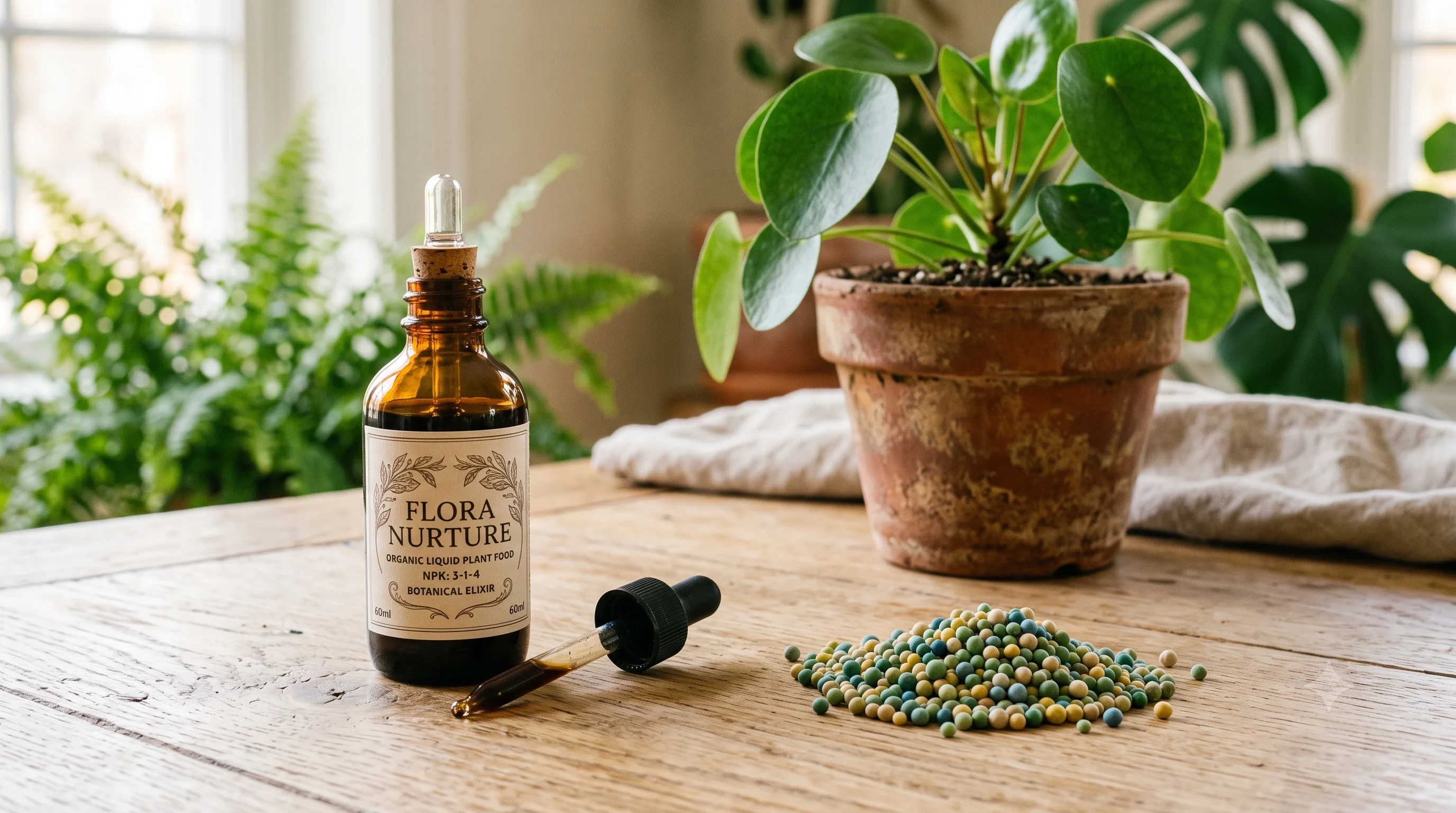
Liquid fertilizers provide instant nutrient availability and precise dosage control, making them ideal for targeted seasonal feeding and rapid deficiency correction. Slow-release fertilizers offer steady, low-maintenance feeding over 3 to 6 months through coated granules. Liquid formulas excel for actively growing and heavy-feeding houseplants, while slow-release granules work best for low-maintenance routines.
Key Takeaways
- Liquid fertilizers provide immediate bioavailable nutrients with exact dilution control for seasonal feeding cycles.
- Slow-release granules deliver sustained baseline nutrition over 3-6 months, ideal for busy growers and large collections.
- Slow-release fertilizer breakdown accelerates in high ambient temperatures (>30°C / 85°F), requiring careful dosage in warm climates.
- Combining both fertilizers is rarely necessary and increases the risk of root burn from excessive soluble salt accumulation.
Quick Facts
- Liquid Fertilizer Instant root/foliar bioavailability; applied every 1-4 weeks at diluted strength
- Slow-Release Temperature- and moisture-dependent gradual release lasting 3-6 months
- Burn Risk Factor Liquid burns via high concentration; slow-release burns via heat-induced nutrient dumping
- Soil Flushability High for liquid (rinses out readily); Low for slow-release (granules must be physically removed)
Liquid vs Slow-Release Fertilizer Comparison
| Feature | Liquid Fertilizer | Slow-Release Fertilizer |
|---|---|---|
| Nutrient Availability | Immediate (absorbed via roots and foliage) | Gradual (depends on soil moisture and ambient temperature) |
| Application Frequency | Every 1-4 weeks during active growth | Every 3-6 months |
| Dosage & Dilution Control | High (easy to dilute to half or quarter strength) | Low (fixed formulation once applied to substrate) |
| Fertilizer Burn Risk | Low if diluted correctly; higher with concentrated doses | Low overall, but spikes in high temperatures (>30°C / 85°F) |
| Application Method | Watering cans, bottom watering, or foliar spray | Top-dressed on soil or mixed into potting substrate |
| Best Use Case | Active growing season, correcting deficiencies, rare tropicals | Large collections, commercial repotting, busy plant parents |
Understanding Liquid Fertilizers for Houseplants
Liquid fertilizers are concentrated mineral or organic nutrient solutions diluted in water and delivered directly to the root zone or foliage. Because the nutrients (nitrogen, phosphorus, potassium, and essential chelated micronutrients like iron and magnesium) are already fully dissolved in ionic form, plant roots can absorb them immediately through osmotic uptake.
Key Advantages:
- Precision Feeding: You can effortlessly calibrate concentrations—such as using quarter-strength solutions for delicate foliage like Calatheas, monsteras, or semi-hydroponic LECA setups.
- Dormancy Adaptability: You can instantly withhold feeding when daylight decreases and plants enter seasonal dormancy, preventing root rot and salt toxicity.
- Remediation: If over-fertilization occurs, excess mineral salts can be promptly flushed out of the potting substrate with clean water.
Understanding Slow-Release Fertilizers (SRF & CRF)
Slow-release and controlled-release fertilizers consist of nutrient prills coated with semi-permeable polymers, resins, or sulfur membranes. Water penetrates the outer shell, dissolves the core nutrients, and slowly diffuses them into the substrate over an extended period—typically ranging between 3 and 6 months depending on formulation grade.
Key Advantages:
- Set-and-Forget Convenience: A single top-dress application or potting mix amendment provides a sustained baseline of primary macro-nutrients.
- Uniform Growth Curves: Prevents the boom-and-bust nutrient cycles common with irregular manual feeding routines.
- Leaching Resistance: Minimizes immediate nutrient loss through container drainage holes during routine watering.
Key Differences: Temperature, Moisture, and Safety Factors
The primary performance distinction between both formats lies in environmental interaction:
- Temperature Sensitivity (Dumping Risk): Polymer-coated slow-release prills release nutrients faster as soil temperatures rise. In hot tropical climates or warm indoor environments exceeding 30°C (86°F), rapid nutrient dumping can occur, increasing electrical conductivity (EC) and stressing roots.
- Distribution Uniformity: Liquid solutions permeate the entire root ball evenly during a thorough drench, whereas granular prills release nutrients locally around where each bead rests.
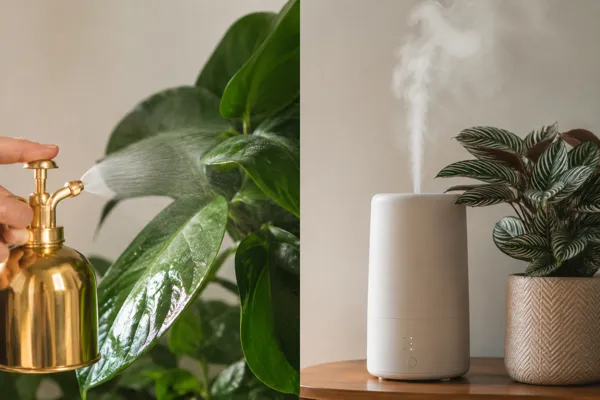
- Foliar Feeding: Liquid options can double as diluted foliar sprays for immediate micronutrient correction, a capability slow-release prills do not offer.
Frequently Asked Questions
Which is better for indoor houseplants: liquid or slow-release fertilizer?
Can I use liquid and slow-release fertilizer together?
How do warm indoor temperatures affect slow-release fertilizer?
What are the signs of fertilizer burn in houseplants?
Should I fertilize indoor plants during winter dormancy?
Sources & References
-
Source: extension.psu.edu
Type: extension
-
Source: hgic.clemson.edu
Type: extension
Explore More