Perlite vs Pumice: Choosing the Right Soil Amendment
Compare perlite and pumice for indoor plant potting mixes. Learn their differences in drainage, water retention, durability, and weight to choose the best option for your plants.
Quick Answer
Both perlite and pumice significantly improve soil drainage and aeration. Perlite is lighter, more cost-effective, and retains slightly more water, making it ideal for general houseplants and seed starting. Pumice is a heavier volcanic rock that doesn't float to the surface or break down over time, making it superior for anchoring heavy plants like Bougainvillea, large succulents, and long-term orchid plantings.
Key Takeaways
- Both perlite and pumice are excellent for improving soil aeration and drainage, preventing root rot.
- Perlite is lighter, cheaper, and more common, but tends to float to the soil surface over time and crush into dust.
- Pumice is heavier, offering superior structural stability for large, top-heavy plants or woody ornamentals.
- Pumice will not break down over time, making it ideal for long-term plantings like orchids and slow-growing cacti.
Quick Facts
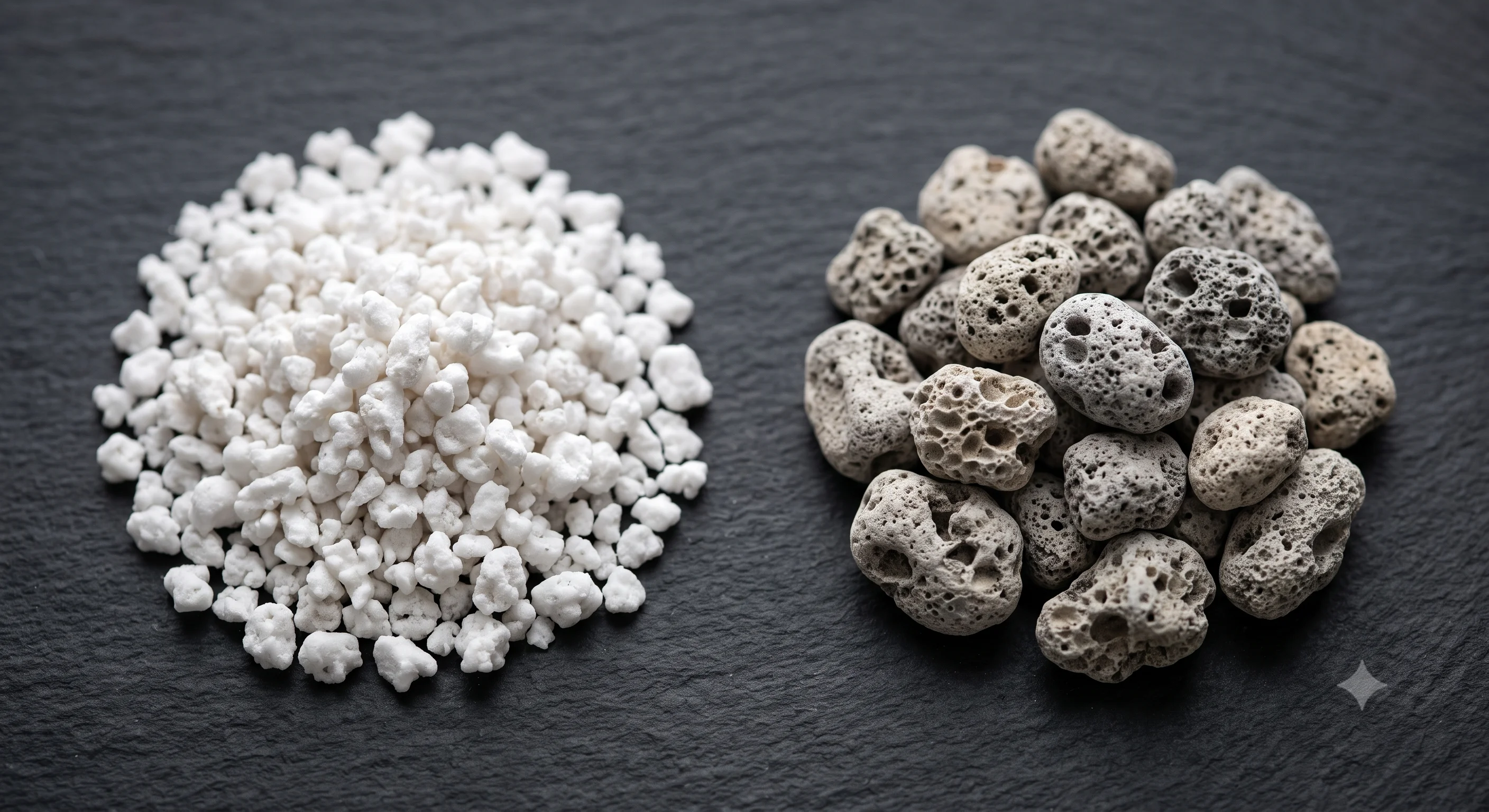
- Perlite Lightweight expanded volcanic glass, highly affordable, tends to float over time
- Pumice Porous volcanic rock, heavier, structurally durable, stays mixed in the soil profile
- Primary Function Root zone aeration and fast drainage
- Toxicity Both are non-toxic, but perlite dust can be a respiratory irritant if inhaled dry
Perlite vs. Pumice Feature Comparison
| Feature | Perlite | Pumice |
|---|---|---|
| Origin | Expanded volcanic glass (superheated) | Naturally porous volcanic rock |
| Weight | Extremely light (tends to float to surface) | Moderate (stays consistently mixed in soil) |
| Durability | Can crush into dust under pressure | Highly durable, resists physical breakdown |
| Water Retention | Moderate surface retention | Low surface retention, drains faster |
| Best For | General houseplants, seedlings, light pots | Succulents, orchids, heavy woody plants, windy outdoor pots |
What is Perlite?
Perlite is a type of volcanic glass with a relatively high water content. When superheated to 850–900 °C (1,560–1,650 °F), the trapped moisture expands, causing the material to pop like popcorn. This creates a lightweight, highly porous white granule that is extremely popular in standard potting mixes.
Its primary advantage is cost and availability. It does an excellent job of preventing soil compaction and allowing oxygen to reach the root zone. However, its extreme lightness means it often floats to the top of the pot after repeated watering, and it can crush into a fine powder if handled roughly. Note: Always wear a mask when working with dry perlite, as the fine silica dust can irritate the lungs.
What is Pumice?
Pumice is a naturally occurring, frothy volcanic rock created during explosive eruptions. It is highly porous but significantly heavier and denser than perlite. Because it is a natural rock, it provides unparalleled structural integrity in potting mixes, maintaining air pockets without breaking down or turning to mush over the years.
Pumice is a top-tier choice for structural stability. When potting heavy, woody ornamentals like Bougainvillea or tall cacti, the added weight of pumice anchors the roots beautifully and prevents the pot from blowing over in the wind. It is also an exceptional, long-lasting amendment for orchids and other epiphytes that require massive root airflow without the potting media degrading prematurely.
Key Differences in Soil Dynamics
While both amendments serve the same fundamental purpose—drainage and aeration—their behaviors in the pot differ greatly. Perlite's tendency to float means that over a year or two, the lower half of your potting mix may lose its aeration as the perlite migrates upward. Pumice stays locked in the soil matrix exactly where you mixed it. Furthermore, pumice contains trace minerals beneficial to plants and lacks the trace fluorides occasionally found in perlite, which can cause leaf-tip burn in highly sensitive tropicals.
Frequently Asked Questions
Is pumice better than perlite for indoor plants?
Can I substitute pumice for perlite in a soil recipe?
Why does perlite turn yellow or brown over time?
Can I mix perlite and pumice together in the same pot?
Sources & References
-
Source: extension.psu.edu
Type: extension
Explore More