Bird of Paradise Care Guide: Light, Brown Tips & How to Get It to Bloom
Bird of Paradise is one of the most purchased and most misunderstood large houseplants. This guide covers exactly what it needs to stay healthy, why brown tips are so common, and what it realistically takes to get one to bloom indoors.
Quick Answer
Bird of Paradise needs 4 to 6+ hours of direct sunlight daily and deep watering once the top 2 inches (5 cm) of soil are dry. Aim for 40 to 60% humidity. Brown crispy tips are usually caused by minerals or fluoride in tap water, or by dry air: switch to filtered or rainwater and flush the soil. Split leaves are normal.
Key Takeaways
- Provide 4 to 6+ hours of direct sunlight daily to support robust leaf development.
- Water deeply when the top 2 inches (5 cm) of soil are dry, then let it drain fully.
- Aim for 40 to 60% humidity and 65-85°F (18-29°C); brown tips usually mean dry air or tap-water minerals.
- Wipe broad leaves monthly with a damp cloth to keep photosynthesis efficient.
Bird of Paradise Care: What to Know Before You Start
Bird of Paradise plants sell in large numbers because they look spectacular and promise a tropical statement in any room. Then the brown tips start, growth stalls, and the owner of a large, expensive plant starts wondering what went wrong.
Usually, nothing dramatic. Bird of Paradise is fairly tolerant, but it has two or three firm requirements, mainly light, that careful watering cannot make up for. This guide covers those requirements, the most common problems and their fixes, and an honest answer to the question everyone eventually asks: will mine ever bloom?
Bird of Paradise Care at a Glance
- Light: 4 to 6+ hours of direct sun daily. A south- or west-facing window in the Northern Hemisphere.
- Water: Water deeply when the top 2 inches (5 cm) of soil are dry. Typically every 7 to 10 days in summer and every 14 to 18 days in winter.
- Humidity: 40 to 60% is ideal. Tip browning increases below about 30%.
- Temperature: 65 to 85°F (18 to 29°C). Keep above 50°F (10°C).
- Soil: Rich, well-draining mix with perlite. Drainage holes are essential.
- Fertilizer: Half-strength balanced liquid feed every 2 to 3 weeks in spring and summer, little or none in winter.
- Repotting: Rarely. It flowers best when slightly root-bound.
- Leaf care: Wipe dust from the leaves monthly with a damp cloth so they can photosynthesize efficiently.
- Toxicity: Mildly toxic to cats and dogs.
Want the species facts on one page? See the Bird of Paradise plant profile.
Strelitzia reginae vs. Strelitzia nicolai: Which Do You Have?
These two species are sold interchangeably as 'Bird of Paradise,' but they are different plants with different expectations.
Strelitzia reginae (Orange Bird of Paradise)
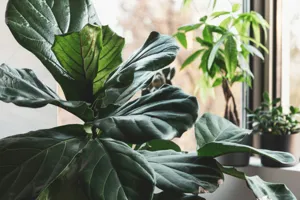
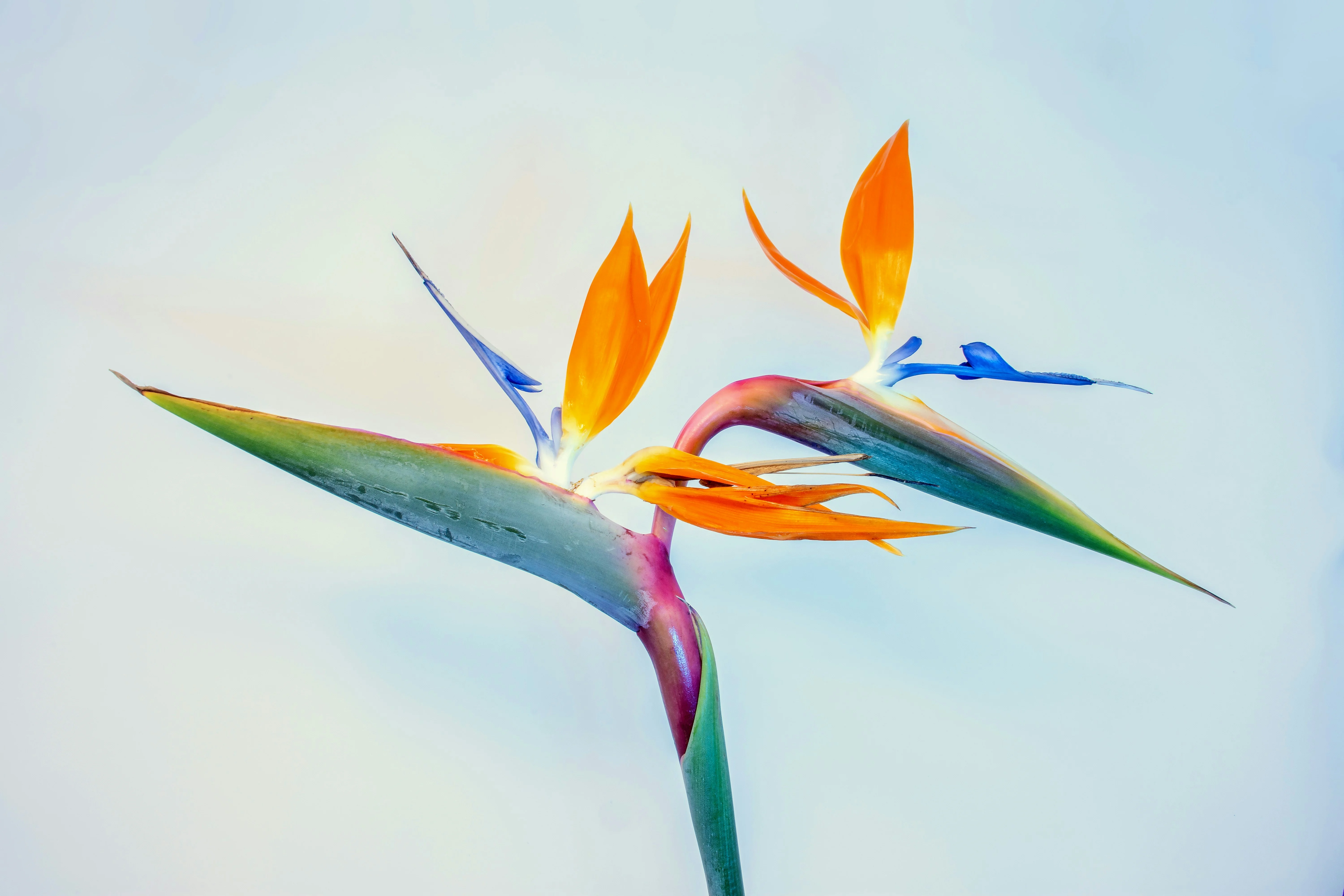
The smaller species, typically reaching 3 to 6 feet indoors over many years. Leaves are blue-green and paddle-shaped on slender upright stems, and the plant forms a clump without a trunk. It produces the iconic orange and blue flowers and can bloom indoors given maturity and the right conditions. It is the better choice for apartments.
Strelitzia nicolai (Giant or White Bird of Paradise)
The large-format species widely sold as a statement plant, commonly reaching 6 to 10+ feet indoors. Its leaves are much bigger and it develops a tree-like trunk. The flowers are white and dark blue, but blooming indoors is exceptionally rare. If you have the tall version with massive leaves, this is almost certainly your plant. Buy it for its foliage, not for flowers.
Care requirements are nearly identical. The differences that matter: reginae copes with a smaller pot before showing stress, and only reginae is a realistic candidate for indoor blooming.
How Much Light Does a Bird of Paradise Need?
Bird of Paradise is not a 'bright indirect light' plant in any practical sense. It comes from subtropical coastal South Africa, where it grows in full sun. Indoors it needs the brightest position available: ideally a south-facing window in the Northern Hemisphere, or a north-facing window in Australia and New Zealand, with several hours of direct sunlight each day.
The results of too little light are predictable. Growth slows almost to nothing, new leaves come in smaller than the last, the plant leans toward the window, and blooming becomes essentially impossible. As a rule of thumb, aim for 4 to 6 hours of direct or near-direct sun. If your plant is more than 3 feet from a window, it is very likely not getting enough.
In northern winters even south-facing windows lose intensity and day length. A high-output LED grow light from November through March can maintain growth and foliage quality. Follow the manufacturer's recommended distance, typically 12 to 24 inches above the canopy for a high-output fixture.
How Often to Water a Bird of Paradise
Bird of Paradise has thick, fleshy roots that store water and dislike prolonged saturation. The right approach is deep, thorough watering followed by a clear drying period, not frequent light sips.
Water until it flows freely from the drainage holes, then let the top 2 inches (5 cm) of soil dry before watering again. In summer in a bright position that usually means every 7 to 10 days. In winter, when growth slows in a heated home, it can stretch to every 14 to 18 days. Check the soil instead of following a fixed schedule: pot size, temperature, light and pot material all change drying time. PlantSolve's watering calculator can help you estimate the interval for your setup.
An early sign that the plant needs water is leaves rolling inward from the edges, a response that reduces surface area and conserves moisture. Leaves typically flatten again within a day or so of watering. Treat it as a prompt: if the soil is dry and the leaves are curling, water thoroughly today.
Overwatering looks different: yellowing lower leaves, a musty smell from the soil, and soft, darkened stems at the base. If roots have been waterlogged for a long time you may find brown, slimy roots when you unpot. Mild root rot caught early is recoverable, but a severely rotted root system can collapse the whole plant.
Why Are My Bird of Paradise Leaves Turning Brown?
Brown leaf tips and margins are the most common complaint from Bird of Paradise owners. Three different causes produce nearly identical symptoms, and the fixes differ. For a general overview, see our brown tips guide.
Cause 1: Minerals and Fluoride from Tap Water
Bird of Paradise is widely reported to be sensitive to fluoride, chlorine and dissolved minerals in municipal water. These accumulate in the soil with every watering and cause progressive tip burn that creeps inward from the edges. Telltale signs: browning is uniform across many leaves, limited to the tips and margins, and there may be a white mineral crust on the soil surface or around drainage holes.
Switch to filtered water, distilled water or collected rainwater. Letting tap water sit overnight removes chlorine but not fluoride or dissolved minerals, so it will not solve this problem. Flush the soil every month or two by slowly running plain filtered water through the pot for a few minutes so salts drain out. Existing brown tips will not recover: trim them at a slight angle with clean scissors, leaving a thin brown margin.
Cause 2: Low Humidity
Bird of Paradise tolerates average indoor humidity better than most tropicals, but heated homes in winter can fall to 20 to 25% relative humidity, low enough to dry the leaf margins. This type of browning intensifies in winter, hits the largest and oldest leaves first, and improves when humidity rises. A small humidifier or grouping plants together helps during the heating season.
Cause 3: Underwatering or Root Stress
A plant that is chronically underwatered, or so root-bound that the pot holds almost no moisture, develops brown tips as a stress response. This browning comes with leaf curling and a very dry, compacted root ball. Consistent deep watering, and repotting if severely root-bound, resolves it.
Why Isn't My Bird of Paradise Blooming?
Most Bird of Paradise owners will never see their plant bloom indoors. That is not pessimism. It is a plant that evolved to flower in conditions few homes can match. Here is what it takes:
- Maturity: Strelitzia reginae typically needs about 4 to 7 years of growth to reach flowering age. A small plant from a garden center may be years away from its first flower no matter how well you care for it.
- Bright, direct light sustained over years: This is the factor most often missed. A spot near a window is not enough. The plant needs several hours of real direct sun daily across multiple growing seasons to build the energy surplus needed to flower.
- Being slightly root-bound: Bird of Paradise is more likely to bloom when its roots are crowded. Moving a mature plant to a much larger pot often delays flowering by a couple of years while it fills the new space with roots.
- Cooler nights (may help): In their native habitat, nights are cooler in winter. Letting a plant in a conservatory or near an unheated window experience 50 to 60°F (10 to 15°C) nights may help trigger buds, but never let it drop below 50°F.
- Species: Strelitzia nicolai almost never blooms indoors. If flowers matter to you, reginae is the only realistic candidate.
If your reginae is in an extremely bright position, is 4+ years old, and has stayed in the same pot for 2 or more years, there is a genuine chance of a flower spike in late winter or early spring. For everyone else, focus on growing magnificent foliage. A well-grown Bird of Paradise is spectacular without flowers.
Why Are Bird of Paradise Leaves Splitting? (It's Normal)
Discovering splits or tears in the leaves causes real anxiety, especially right after buying an expensive plant. In most cases, splitting is natural. In their windy coastal habitat, the leaves split along weak seams so wind passes through rather than shredding the whole leaf. Indoor plants develop the same splits as leaves mature and expand, particularly the large, fast-growing leaves of Strelitzia nicolai.
Splitting from normal maturation cannot be prevented and does not need treatment. It is only a concern if the splits come with brown edges, appear on very new leaves that have barely unfurled, or coincide with rapid drying, which can point to a humidity or watering problem. A split leaf that is green, glossy and firm is simply a fully developed Bird of Paradise leaf.
Other Problems: Curling, Yellowing and Drooping
- Leaves curling inward: Usually thirst or very dry air. Check the soil first.
- One old outer leaf turning yellow: Normal aging. Cut it off at the base once fully yellow.
- Several leaves yellowing with wet soil: Overwatering. Let the soil dry and check the roots.
- Leaning, slow growth, small new leaves: Not enough light.
- Webbing, sticky residue or small brown bumps on leaves: Check the undersides for spider mites or scale insects and treat early.
Humidity and Temperature
Aim for 40 to 60% humidity and 65 to 85°F (18 to 29°C). Bird of Paradise is not frost-hardy, so keep it above 50°F (10°C) and away from cold drafts, exterior doors in winter, and heating vents that blast hot, dry air.
Best Soil and Fertilizer for Bird of Paradise
Use a rich, well-draining mix: quality potting soil with roughly 30% perlite and some coarse bark or compost. It must retain some moisture but drain fast, and the pot must have drainage holes.
Feed with a balanced liquid fertilizer (10-10-10 or 20-20-20) diluted to half strength every 2 to 3 weeks from March through September. In winter, feed once every 6 to 8 weeks or stop entirely if the plant is in low light and not growing. Some orchid and bromeliad fertilizers contain more fluoride, which can worsen tip burn, so check the label. Flush the soil every 6 to 8 weeks with plain filtered water to prevent salt buildup.
When to Repot a Bird of Paradise
This is one of the few houseplants where the standard advice to repot every year or two can work against you. Mature plants thrive when root-bound and are more likely to flower in a snug pot.
Young plants can be repotted every year or two until they reach a 10 to 12 inch pot. After that, repot only when roots are pushing up through the soil surface or deforming the pot, the plant dries out within 2 to 3 days of a thorough watering, or dense roots escape from every drainage hole. Go up by no more than 2 inches in diameter. For large plants, top dressing (replacing the top few inches of soil with fresh compost each spring) is often easier than repotting.
Expect an adjustment period after repotting. Some lower-leaf yellowing and a pause in growth for 4 to 8 weeks is normal. Hold off on fertilizer for about 6 weeks.
How to Propagate a Bird of Paradise (Division Only)
Bird of Paradise cannot be propagated from leaf or stem cuttings. The reliable method is division:
- In spring, water the plant a day ahead, then remove it from its pot.
- Look for an offset (pup) growing beside the main clump that has its own roots.
- Use a clean, sharp knife to separate the pup with its roots from the mother plant.
- Pot the pup in a well-draining mix in a small pot, water lightly, and keep it in bright light.
Growing from seed is possible but slow, and plants take many years to reach flowering size.
Is Bird of Paradise Toxic to Pets?
Yes, mildly. The ASPCA lists it as toxic to cats and dogs, with symptoms that are mainly gastrointestinal: drooling, nausea and vomiting. It is not in the same danger category as calcium-oxalate plants like Alocasia, but keep it out of reach of pets and small children. If a significant amount is eaten, contact your veterinarian or the ASPCA Animal Poison Control Center (in the US).
Recommended next actions
Next Best Actions
Move from reading to action with related calculators, plant profiles, and quiz-based recommendations.
Plant Guide
Bird of Paradise
A quick-reference profile of Bird of Paradise (Strelitzia reginae): light, water, humidity, size and toxicity at a glance, with the key differences between the orange reginae and the giant white nicolai.
Calculator
Plant Light Calculator: Find the Best Window for Your Plant
Determine the ideal indoor light placement for your plant based on species, window direction, and seasonal light availability.
Topic Guide
Watering
Learn everything about watering for your indoor and aquarium plants. Expert care tips, troubleshooting, and related guides.
Topic Guide
Fertilizer
Learn everything about fertilizer for your indoor and aquarium plants. Expert care tips, troubleshooting, and related guides.
Topic Guide
Brown Tips: Diagnostic Treatment
Learn everything about brown tips for your indoor and aquarium plants. Expert care tips, troubleshooting, and related guides.
Guide
Yellow Houseplant Leaves: Diagnose & Fix Guide 2026
After diagnosing hundreds of yellow-leaf cases across dozens of plant species, we've mapped the ten distinct causes that look nearly identical at first glance — and built the only systematic guide that tells you not just what's wrong, but exactly how to confirm it and fix it.
Frequently Asked Questions
Why won't my Bird of Paradise bloom indoors?
Why do Bird of Paradise leaves split?
How do I fix brown tips on my Bird of Paradise?
How often should I water a Bird of Paradise?
How fast does Bird of Paradise grow indoors?
Is Bird of Paradise toxic to cats and dogs?
Can Bird of Paradise grow in low light?
How often should I repot my Bird of Paradise?
What is the difference between Strelitzia reginae and Strelitzia nicolai?
Can you propagate a Bird of Paradise from a cutting?
Sources & References
-
Source: gardeningsolutions.ifas.ufl.edu
-
Source: hgic.clemson.edu
-
Source: aspca.org
Explore More