Bird of Paradise (Strelitzia reginae): Plant Profile & Quick Care Facts
A quick-reference profile of Bird of Paradise (Strelitzia reginae): light, water, humidity, size and toxicity at a glance, with the key differences between the orange reginae and the giant white nicolai.
-
Difficulty
intermediate
-
Light
Requires the brightest light you can offer indoors. Direct sunlight is strongly preferred. Insufficient light causes slow, leaning growth and rules out flowering.
-
Temperature
65°F - 85°F (18°C - 29°C)
-
Growth
moderate
-
Humidity
40% - 60%
-
pH range
6.0 - 7.0
-
Biggest Owner Mistake
Expecting indoor blooms too soon, or repotting into a much larger pot to help it grow. A roomy pot delays flowering because the plant spends its energy on roots. Strong direct light, a snug pot and patience are the real triggers.
-
What Nobody Tells You
The lengthwise splits that appear along mature leaves are not damage. They are an adaptation that lets wind pass through without tearing the whole leaf. Misting or changing your care will not stop a natural process.
-
Real Home Conditions
In ordinary indoor light it grows slowly, often adding only a few new leaves a year. A south-facing window with direct sun, or a supplemental grow light, is what lets it reach its impressive mature height indoors.
Quick Answer
Bird of Paradise needs 4 to 6+ hours of direct sun, deep watering when the top 2 inches of soil are dry, and half-strength fertilizer every 2 to 3 weeks in spring and summer. Split leaves are normal. Brown tips usually mean low humidity or tap-water minerals. Indoor blooming needs a mature (4+ years) Strelitzia reginae, strong direct light and a snug pot.
Key Takeaways
- Provide 4 to 6+ hours of direct sunlight daily for healthy paddle leaves.
- Water deeply when the top 2 inches (5 cm) of soil are dry, and never leave the pot standing in water.
- Split leaves are a natural adaptation to wind, not a care mistake.
- Keep temperatures at 65-85°F (18-29°C) and humidity around 40-60%.
Bird of Paradise (Strelitzia reginae) at a Glance
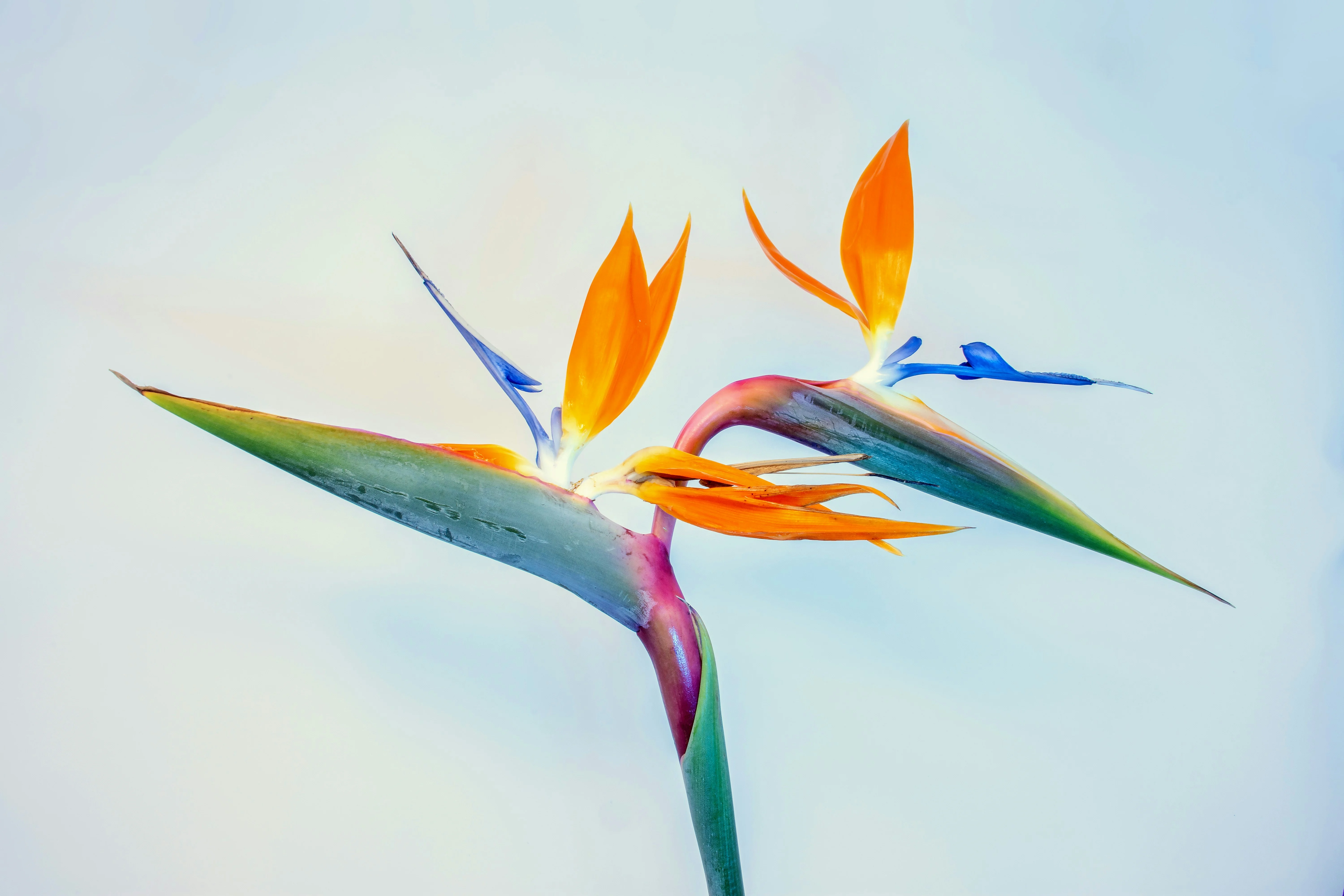
The Bird of Paradise is a subtropical evergreen perennial from coastal South Africa, grown indoors for its large paddle-shaped leaves and, more rarely, its crane-like orange and blue flowers. It needs far more light than most houseplants: 4 to 6 or more hours of direct sun, a deep watering once the top 2 inches of soil are dry, and a pot that stays snug rather than spacious. This profile is the quick-reference sheet. For a full walkthrough of problems and fixes, read the complete Bird of Paradise care guide.
Bird of Paradise Light Requirements
Light decides how well this plant does indoors. Put it in the brightest spot you have: a south- or west-facing window in the Northern Hemisphere (north- or west-facing in the Southern Hemisphere) with 4 to 6 or more hours of direct sun. In a dim room it will survive for a while, but it grows slowly, leans toward the window, and will not flower.
How Often to Water a Bird of Paradise
Water deeply when the top 2 inches (5 cm) of soil are dry, until water runs out of the drainage holes, then empty the saucer. In a bright room that works out to roughly weekly in summer and every two to three weeks in winter, but check the soil instead of following the calendar. PlantSolve's watering calculator can estimate the interval for your pot size and conditions. Never leave the pot standing in water: thick, fleshy roots rot easily.
Humidity and Temperature
Ideal humidity is 40 to 60%. Average homes are usually fine, but heated winter air below about 30% dries the leaf edges. Keep temperatures between 65 and 85 degrees F (18 to 29 degrees C) and avoid cold drafts. It is not frost-hardy, so keep it above 50 degrees F (10 degrees C).
Soil and Fertilizer
Use a rich, well-draining mix: quality potting soil with roughly 30% perlite and a handful of compost or worm castings. Feed with a balanced liquid fertilizer at half strength every 2 to 3 weeks in spring and summer, and cut back or stop in winter. Flush the soil with plain water every couple of months so fertilizer and tap-water salts do not build up.
Bird of Paradise Size and Growth Rate
Indoors, Strelitzia reginae typically reaches 3 to 6 feet with a spread of 3 to 4 feet, at a moderate pace in bright light and very slowly in dim rooms. Strelitzia nicolai is a much bigger plant, commonly 6 to 10+ feet indoors and 20 to 30 feet outdoors in warm climates. Check the comparison table below to see which one you have.
Will a Bird of Paradise Bloom Indoors?
Sometimes, but only Strelitzia reginae is a realistic candidate. It needs to be mature (typically at least four years old, often more), get strong direct light over several seasons, and be slightly root-bound. Strelitzia nicolai almost never flowers as a houseplant. Full details are in our care guide.
Repotting and Propagation
Young plants can be repotted every year or two until they reach a 10 to 12 inch pot. After that, repot only every 3 to 5 years, or simply top dress by replacing the top few inches of soil each spring, because mature plants bloom best when slightly root-bound. Bird of Paradise cannot be grown from leaf or stem cuttings. Propagate by division: during spring repotting, separate an offset (pup) that has its own roots from the main clump using a clean, sharp knife.
Is Bird of Paradise Toxic to Pets?
Yes, mildly. The ASPCA lists it as toxic to cats and dogs. Chewing the leaves or stems can cause drooling, nausea and vomiting. It is rarely dangerous, but keep it away from pets that chew houseplants.
Common Problems
Split leaves are natural and cannot be repaired. Brown tips usually come from low humidity or minerals in tap water (see our brown tips guide). Inward-curling leaves signal thirst or very dry air. Lower leaves yellowing one at a time is normal aging, but several yellowing at once in wet soil points to overwatering and possible root rot.
Calculator
Interactive Calculators for Bird of Paradise
Recommended next actions
Next Best Actions
Use calculators and guides to turn this plant profile into a practical care routine.
Guide
Bird of Paradise Care: Light, Water, Brown Tips & Blooming
Bird of Paradise is one of the most purchased and most misunderstood large houseplants. This guide covers exactly what it needs to stay healthy, why brown tips are so common, and what it realistically takes to get one to bloom indoors.
Topic Guide
Watering
Learn everything about watering for your indoor and aquarium plants. Expert care tips, troubleshooting, and related guides.
Topic Guide
Brown Tips: Diagnostic Treatment
Learn everything about brown tips for your indoor and aquarium plants. Expert care tips, troubleshooting, and related guides.
Guide
Stem Rot in Houseplants: Diagnosis & Treatment Guide
With over 12 years of houseplant pathology diagnostics and more than 1,800 fungal stem infection cases assessed across tropical and subtropical indoor growing environments, we have mapped the precise conditions under which Pythium, Fusarium, and Rhizoctonia colonise houseplant stems — and developed a triage protocol that more than doubles plant survival rates when applied within the first 72 hours of visible symptoms.
Topic Guide
Root Rot
Learn how to identify and treat root rot in houseplants. Discover causes, symptoms, and step-by-step solutions to save your plants from overwatering.
Structured Plant Data
Plant Data Profile
The following data is extracted directly from our botanical knowledge graph for accuracy and transparency.
Growth Characteristics
Growth Rate
moderate
Mature Height
3-6 feet indoors (S. nicolai: 6-10+ feet indoors)
Mature Spread
3-4 feet
Life Cycle
Perennial
Flowering Season
Late winter to early spring (only under intense light conditions)
Container Friendly
yes
Indoor Capable
yes
Environmental Parameters
| Parameter | Recommended | Survivable |
|---|---|---|
| Temperature | 65°F - 85°F (18°C - 29°C) | 50°F - 95°F (10°C - 35°C) |
| Humidity | 40% - 60% | 30% - 80% |
| Soil PH | 6.0 - 7.0 | 5.5 - 7.5 |
Lighting
Description
Requires the brightest light you can offer indoors. Direct sunlight is strongly preferred. Insufficient light causes slow, leaning growth and rules out flowering.
Nutrients
Nitrogen Demand
high
Phosphate Demand
moderate
Potassium Demand
high
Micronutrient Notes
A heavy feeder during the growing season because of its large foliage.
Fertilizer Frequency
Half-strength balanced liquid fertilizer every 2-3 weeks in spring and summer; little or none in winter.
Organic Options
Compost top dressing or heavily diluted fish emulsion.
Relationships
-
Root Rot
Vulnerability | Strength 7
Large pots without adequate drainage can hold too much moisture deep down, leading to root rot.
Strelitzia reginae vs. Strelitzia nicolai
| Feature | S. reginae (Orange) | S. nicolai (White/Giant) |
|---|---|---|
| Flower Color | Bright orange and blue | White with dark blue |
| Mature Size Indoors | 3 to 6 feet | 6 to 10+ feet |
| Leaf Shape | Narrower, spear-shaped, blue-green | Massive, broad paddle shape |
| Growth Habit | Clumping, no trunk | Tall, tree-like with a trunk |
| Blooms Indoors? | Possible when mature and in strong light | Very rare |
Troubleshooting & Diagnostics Guide
1 Leaves are tearing and splitting along the lateral veins
Diagnosis: Natural adaptation to wind, sometimes made more visible by low humidity or physical brushing.
Treatment: No fix needed. Increase humidity slightly if the edges of the tears are brown and crispy.
Prevention: Give the plant space so leaves are not brushed by walls or furniture.
2 Leaves curl inward along their length
Diagnosis: Water stress or very dry air. The plant rolls its leaves to reduce surface area.
Treatment: Check the soil. If the top 2 inches are dry, water deeply. If the soil is wet, look for root problems instead of watering more.
Prevention: Water on soil dryness, not on a fixed calendar, and keep the plant away from heating vents.
3 Brown, crispy leaf tips and edges
Diagnosis: Most often low humidity, mineral or fluoride buildup from tap water, or underwatering.
Treatment: Trim brown tissue, switch to filtered or rain water, flush the soil with plain water, and raise humidity if it is below about 30%.
Prevention: Flush the soil every 6-8 weeks and avoid heavy fertilizer salt buildup.
4 Lower outer leaves turn yellow one at a time
Diagnosis: Normal aging of the oldest leaves.
Treatment: Cut the yellow leaf off at the base once it has fully yellowed.
Prevention: None needed.
5 Several leaves yellow at once, soil stays wet, base feels soft
Diagnosis: Overwatering and possible root rot.
Treatment: Let the soil dry, empty the saucer, and unpot to check the roots. Cut away brown, mushy roots and repot in fresh, well-draining mix.
Prevention: Use a pot with drainage holes and water only when the top 2 inches are dry.
6 Slow growth, small new leaves and leaning stems
Diagnosis: Not enough light.
Treatment: Move to a south- or west-facing window or add a high-output LED grow light.
Prevention: Keep the plant within 3 feet of a bright window and rotate it regularly.
7 Healthy plant that never flowers
Diagnosis: Too young, not enough direct light, recently repotted into a much larger pot, or a Strelitzia nicolai, which almost never blooms indoors.
Treatment: Confirm the species, increase direct light, and avoid upsizing the pot until roots are truly crowded.
Prevention: Be patient: flowering typically takes several years of strong light.
Authoritative Resources
For additional peer-reviewed information on plant diseases, toxicity, and care, consult these trusted botanical and agricultural extensions:
Glossary of Terms
- Offset (Pup)
- A small, complete daughter plant that has been naturally produced asexually on the mother plant, usually near the base.
- Top Dressing
- The practice of removing the top 2-3 inches of old, depleted soil from a potted plant and replacing it with fresh, nutrient-rich compost or potting soil, usually done for large plants that are too difficult to fully repot.
Frequently Asked Questions
Why are the leaves on my Bird of Paradise splitting?
How do I get my Bird of Paradise to bloom indoors?
What is the difference between Orange and White Bird of Paradise?
How often should I water my Bird of Paradise?
Why are the leaves curling inward on my Bird of Paradise?
Is the Bird of Paradise safe for cats and dogs?
Should I cut off the brown, crispy leaf edges?
How do you propagate a Bird of Paradise?
Sources & References
-
Source: powo.science.kew.org
-
Source: missouribotanicalgarden.org
-
Source: plants.ces.ncsu.edu
-
Source: gardeningsolutions.ifas.ufl.edu
-
Source: hgic.clemson.edu
-
Source: worldfloraonline.org
Explore More