Nepenthes ventrata Care Guide: Tropical Pitcher Plant Water, Light & Pitchers
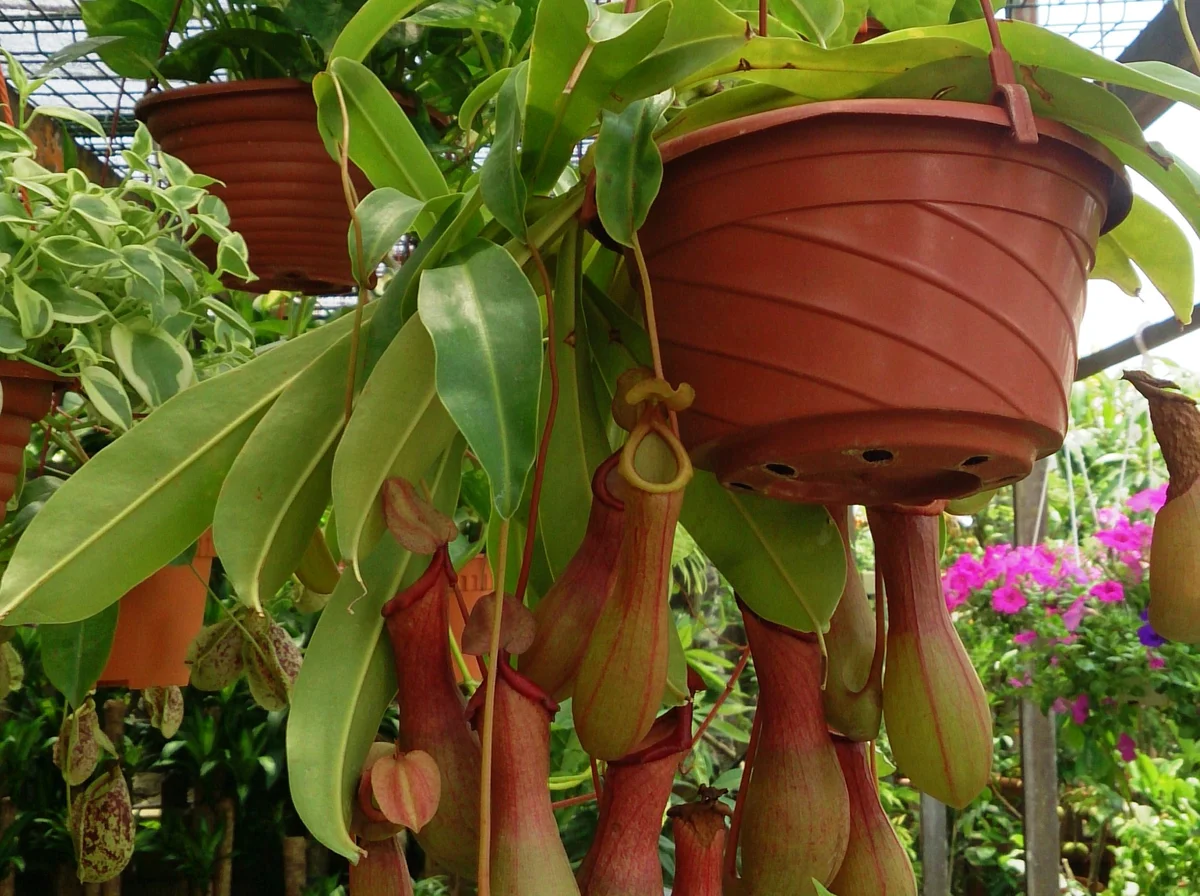
Nepenthes ventrata is a hardy tropical pitcher plant hybrid that produces fluid-filled pitfall traps on its leaf tendrils, grows year-round without dormancy and tolerates household humidity better than most Nepenthes.
-
Difficulty
moderate
-
Light
High indirect or bright ambient light of about 150-220 PPFD keeps pitchers well colored, with red peristomes and plenty of tendril swelling. Bright east windows or LED grow lights suit it, and harsh midday sun through glass should be avoided.
-
Temperature
Day 18-30°C (65-86°F); night 15-20°C (59-68°F)
-
Growth
moderate to fast in warm, bright conditions
-
Humidity
50-85%
-
pH range
4.5-6.0 (acidic, low-mineral medium)
-
Biggest Owner Mistake
Standing the pot in a water tray like a sundew. Nepenthes roots need air as well as moisture, and a pot sitting in water rots the roots within weeks, so water from the top until it drains away.
-
What Nobody Tells You
Pitchers abort mostly because of humidity swings and moving the plant, not because of feeding. Keeping the plant in one stable spot, with steady humidity above 50%, matters more than any fertilizer.
-
Real Home Conditions
Ventrata copes with ordinary household air better than most Nepenthes, but windowsills often give too little light for pitchers. A grow light 30-50 cm above the plant for 12-14 hours usually fixes it within a few months.
Quick Answer
Nepenthes ventrata is a hardy tropical pitcher plant that grows all year without dormancy. Pot it in an airy mix of 60-70% long-fiber sphagnum and 30-40% coarse perlite or pumice, and water it from the top with RO, distilled or rain water under 50 ppm TDS (ideally under 20 ppm) until runoff drains away, never leaving the pot standing in water. Give it bright indirect light of 150-220 PPFD for 12-14 hours, 18-30°C by day and 15-20°C at night, and 50-85% humidity (40-50% once acclimated). Feed a freeze-dried cricket or a little 1/4-strength Maxsea into an open pitcher about once a month if prey is scarce, and propagate by stem cuttings.
Key Takeaways
- Pot it in an airy mix of 60-70% long-fiber sphagnum and 30-40% coarse perlite or pumice, and never leave the pot standing in water, because Nepenthes roots rot quickly without air.
- Use only RO, distilled or rain water under 50 ppm TDS, ideally under 20 ppm, and water from the top until runoff drains away completely.
- Give it bright indirect light of 150-220 PPFD for 12-14 hours, with 18-30°C days and 15-20°C nights, to produce well-colored pitchers.
- It is strictly tropical with no dormancy, so keep it above 10°C and never give it a cold rest. It tolerates 40-50% household humidity once acclimated, though 50-85% gives the best pitchers.
- Feed a freeze-dried cricket or bloodworms, or a little 1/4-strength Maxsea, into an open pitcher about once a month at most, prune upper vines to stimulate basal shoots and propagate by stem cuttings.
Nepenthes ventrata Care at a Glance
- Light: High indirect light, about 150-220 PPFD, for 12-14 hours daily.
- Substrate: 60-70% long-fiber sphagnum moss and 30-40% coarse perlite or pumice. Never dense peat.
- Water: RO, distilled or rain water under 50 ppm TDS, ideally under 20 ppm, from the top until runoff drains away. Never stand the pot in water.
- Temperature: 18-30°C (65-86°F) by day and 15-20°C (59-68°F) at night.
- Humidity: 50-85%, tolerating 40-50% once acclimated.
- Dormancy: None. Keep it above 10°C.
- Propagation: stem cuttings in pure water or damp sphagnum.
What Is Nepenthes ventrata?
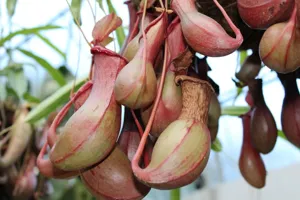
Nepenthes x ventrata is a horticultural hybrid between Nepenthes alata and Nepenthes ventricosa, two species from the Philippines. It is a climbing or scrambling tropical sub-shrub that grows partly as an epiphyte. Each leaf ends in a tendril, and the tip of the tendril swells into a pitcher, a passive pitfall trap that holds digestive fluid. Insects slip on the waxy inner wall, fall into the fluid and are digested. Ventrata is one of the most forgiving Nepenthes, which is why it is the usual first pitcher plant.
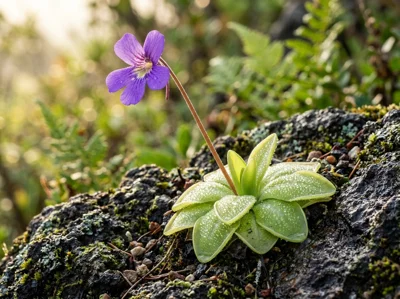
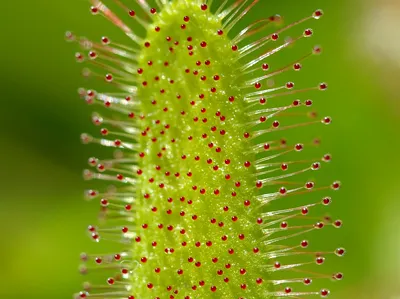
It differs from sticky-leaved plants such as Drosera capensis and Pinguicula moranensis, which trap prey with mucilage rather than pitfalls.
Light
Give the plant 150-220 PPFD for 12-14 hours daily. A bright east window or filtered south or west window works, but most indoor growers get better pitchers with an LED grow light 30-50 cm above the plant. Strong light keeps the peristome (the rim) red and encourages tendrils to swell into pitchers. Weak light gives dark green leaves, long gaps between leaves and few pitchers. Avoid hot midday sun through glass, which scorches leaves.
Substrate and Drainage
Nepenthes roots are fine and epiphytic, so they need an open, airy mix: 60-70% long-fiber sphagnum moss and 30-40% coarse perlite or pumice. Rinse the perlite or pumice in RO water before mixing. Dense peat bog mixes hold too much water, compact over time and rot the roots. The carnivorous plant substrate guide covers other mixes and what to avoid.
Never let the pot sit in standing water. Unlike sundews, which tolerate a constant tray, Nepenthes roots rot quickly without oxygen. Water from the top until water drains completely from the holes, then empty any saucer. A hanging basket or a slotted orchid pot with plenty of drainage suits it well.
Water Quality
Use RO, distilled or rain water under 50 ppm TDS, and aim for under 20 ppm. Minerals from tap water build up in the sphagnum as water evaporates, burning the fine roots, browning leaf tips and slowing pitcher production. Test your water with a TDS pen, and use the carnivorous water TDS calculator to check blends and estimate how quickly minerals accumulate in your pot. Because water runs through the pot, flush it from the top every month or so, and never put fertilizer in the medium.
Temperature and Humidity
Ventrata grows well at 18-30°C by day, with cooler nights of 15-20°C. The nightly drop helps pitcher production. Keep it above 10°C, because cold damages leaves and roots and freezing kills the plant. Humidity of 50-85% gives the best pitchers, but this hybrid tolerates ordinary household air of 40-50% once it is acclimated. Acclimate slowly, because a sudden move to dry air makes pitchers brown and abort.
In a dry home, a ventilated terrarium or greenhouse helps, but still air invites mold. The carnivorous plant terrarium build guide explains how to ventilate an enclosure and group plants with similar needs.
No Dormancy
Nepenthes ventrata is strictly tropical and grows all year, so it never needs a cold rest. In low winter light it may slow down, and a grow light keeps it active. This is the opposite of Venus flytraps, Sarracenia and temperate sundews, which need a cold winter. The dormancy requirements guide explains which carnivorous plants rest and which do not, and warns that cold exposure harms tropical species such as this one.
Hanging Basket vs Terrarium
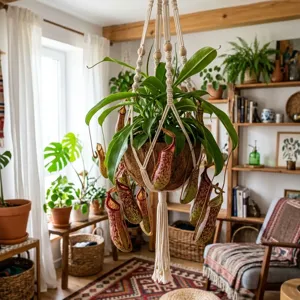
A hanging basket suits ventrata well. Vines trail, pitchers hang freely and air moves around the roots. Place it in a bright window or under a grow light, and mist or humidify the surrounding air if the room is dry. A terrarium or greenhouse is better where household air stays below 40% humidity, provided it has ventilation. Do not seal the plant in a closed jar, because still, saturated air causes rot and mold.
Pitcher Production and Diagnostics
A healthy plant produces pitchers on new leaves several times a year. If tendrils fail to swell or pitchers abort, the cause is almost always light, humidity or a stressed root zone. The pitcher diagnostic matrix above lists the common tendril patterns. In brief, stronger light, steady humidity of at least 50% and clean pure water fix most cases. Keep conditions steady while pitchers form, because moving the plant often triggers aborted pitchers.
Feeding and Jump-Starting Pitchers
A plant that catches its own prey needs no feeding. If prey is scarce, drop one or two freeze-dried crickets or a pinch of freeze-dried bloodworms directly into an open pitcher about once a month. Use pieces smaller than the pitcher opening, feed only one or two pitchers at a time, and never feed meat, dairy or large prey, which rot in the fluid. As an alternative, add a few drops of Maxsea fertilizer at 1/4 strength into an open pitcher about once a month. Never put fertilizer in the substrate.
Nepenthes are poor fungus gnat traps, because gnats are small enough to avoid or escape pitchers. For gnat control, use a sundew or a Mexican butterwort instead, as described in carnivorous plants for fungus gnats.
Pruning and Trellising
Vines can reach one to three metres, and a long, bare vine looks untidy and produces fewer pitchers near the base. Cut the upper vine back to a few leaves, just above a node, to stimulate new basal shoots. You can also train the vine up a trellis, moss pole or hoop, or let it trail from a hanging basket. Trim a pitcher only when it is fully brown, and cut leaf blades only after they have turned brown too.
Propagation by Stem Cuttings
- Choose a stem. Take a healthy vine section with two or three leaf nodes, cutting just below a node.
- Prepare the cutting. Keep a leaf attached, and trim a large leaf blade to about half to reduce water loss.
- Root it. Stand the cutting in a container of RO or distilled water, or press it into damp long-fiber sphagnum with the lowest node covered.
- Keep it humid and bright. Use a clear, loosely closed container with some airflow, warmth of 20-28°C and moderate light.
- Wait. Roots usually appear in two to four months. Pot the rooted cutting in the sphagnum and perlite mix and acclimate it slowly.
Not every cutting succeeds, so take several. Pruning the parent vine produces new basal shoots, and cuttings from the pruned top are a free by-product.
Maintenance Routine
- Weekly: check that the medium is evenly moist, remove dead leaves and look for mold or crust.
- Monthly: flush the pot with pure water, check TDS and feed a pitcher if needed.
- Every 1-2 years: repot into fresh sphagnum and perlite or pumice in spring.
Troubleshooting Summary
| Symptom | Likely cause | Quick fix |
|---|---|---|
| Pitchers brown and abort before opening | Low humidity or sudden change | Raise humidity, keep conditions steady and avoid moving the plant |
| No pitchers, leaves only | Low light or cold nights | Increase light and keep nights at 15-20°C |
| Leaf tips brown and crisp | Mineral build-up or dry air | Flush with pure water and raise humidity |
| Yellow leaves and soft, black roots | Standing water or dense medium | Remove the tray, repot into an airy mix and trim rot |
| Mold in a pitcher | Overfeeding or stagnant fluid | Empty and rinse with pure water, and feed less |
Related Resources
Plan an enclosure with the carnivorous plant terrarium build guide, choose a medium with the carnivorous plant substrate guide, compare winter care in the dormancy requirements guide, control gnats with carnivorous plants for fungus gnats, check your water with the carnivorous water TDS calculator, and meet companions in the profiles for Drosera capensis and Pinguicula moranensis.
Recommended next actions
Next Best Actions
Use calculators and guides to turn this plant profile into a practical care routine.
Calculator
Carnivorous Plant Water TDS Calculator: Safety & Dilution
Rate your water's TDS for carnivorous plants, calculate how much tap water can be blended with RO or distilled water to reach a safe target, and estimate how fast minerals build up in a pot.
Plant Guide
Cape Sundew
Drosera capensis, the Cape sundew, is a fast-growing, forgiving carnivorous plant with long sticky red-tipped leaves that curl around prey, grows all year without dormancy and doubles as a living flypaper.
Plant Guide
Mexican Butterwort
Pinguicula moranensis is a compact Mexican butterwort that switches between sticky carnivorous leaves in summer and a tight succulent rosette in winter, and thrives in pumice or on wicking rock.
Topic Guide
Carnivorous Plant Substrate Guide: Ingredients, Ratios & Zero Fertilizer
Master carnivorous plant substrate recipes: 50/50 peat-perlite/silica sand ratios, zero-fertilizer rules, rinsing minerals, and live sphagnum moss.
Topic Guide
Humidity
Learn everything about humidity for your indoor and aquarium plants. Expert care tips, troubleshooting, and related guides.
Topic Guide
Water Quality for Houseplants
Compare tap, filtered, distilled, and rainwater for houseplants. Learn which water is best for sensitive plants and how to prevent mineral buildup.
Structured Plant Data
Plant Data Profile
The following data is extracted directly from our botanical knowledge graph for accuracy and transparency.
Growth Characteristics
Growth Rate
moderate to fast in warm, bright conditions
Mature Height
Vines 1-3 m (3-10 ft) if left to climb; pitchers 10-20 cm (4-8 inches)
Mature Spread
40-90 cm (16-36 inches)
Life Cycle
Perennial
Flowering Season
Irregular; mature plants flower on separate male and female plants, usually in spring and summer
Container Friendly
yes
Indoor Capable
yes
Environmental Parameters
| Parameter | Recommended | Survivable |
|---|---|---|
| Temperature | Day 18-30°C (65-86°F); night 15-20°C (59-68°F) | 10-35°C (50-95°F); avoid anything below 10°C |
| Humidity | 50-85% | 40-50% once acclimated, with good airflow |
| Soil PH | 4.5-6.0 (acidic, low-mineral medium) | 4.0-6.5 |
Lighting
Description
High indirect or bright ambient light of about 150-220 PPFD keeps pitchers well colored, with red peristomes and plenty of tendril swelling. Bright east windows or LED grow lights suit it, and harsh midday sun through glass should be avoided.
Nutrients
Nitrogen Demand
low
Phosphate Demand
low
Potassium Demand
low
Micronutrient Notes
Takes nutrients from insects digested in the pitcher fluid and from dilute foliar feeding. Fertilizer in the substrate and mineral salts in the water damage the roots.
Fertilizer Frequency
Do not fertilize the substrate. Optionally add a few drops of Maxsea at 1/4 strength into open pitchers about once a month.
Organic Options
A few freeze-dried crickets or bloodworms dropped directly into an open pitcher about once a month, only if the plant is not catching its own prey.
Relationships
-
Water Quality
Requirement | Strength 9
Needs RO, distilled or rain water under 50 ppm TDS, ideally under 20 ppm, because dissolved minerals build up in the medium and burn the fine roots.
-
Airy Substrate
Requirement | Strength 9
Roots need an open sphagnum and perlite or pumice mix and must never sit in a standing water tray, which causes rapid root rot.
-
Light
Requirement | Strength 8
Strong indirect light of 150-220 PPFD for 12-14 hours drives pitcher production and red coloration.
-
Humidity
Requirement | Strength 7
Pitchers form best at 50-85% humidity, though ventrata tolerates ordinary household air once acclimated.
-
Cold Exposure
Vulnerability | Strength 8
A tropical plant with no dormancy. Temperatures below about 10°C damage leaves and roots.
Tropical Pitcher Plant vs Other Common Carnivorous Plants
| Plant | Winter Pattern | Water Regime | Gnat Capture |
|---|---|---|---|
| Nepenthes ventrata | No dormancy; keep warm above 10°C | Top-watered, moist but airy, never in a tray | Poor |
| Drosera capensis | No dormancy; slows slightly | Constant tray of 1-2 cm pure water | Excellent all year |
| Pinguicula moranensis | Succulent rosette, no cold rest | Damp in summer, near-dry in winter | Excellent in summer |
| Dionaea muscipula | Cold dormancy for 3-4 months | Barely damp in winter | Poor |
Troubleshooting & Diagnostics Guide
1 Pitchers form but brown and shrivel before opening
Diagnosis: Low humidity, a sudden change in conditions or dry roots
Treatment: Raise humidity toward 50% or more, keep conditions steady, water the medium until runoff drains away and avoid moving the plant while pitchers form.
Prevention: Acclimate the plant slowly to household air and keep humidity and light consistent.
2 Plant makes leaves but no pitchers
Diagnosis: Light too low, nights too warm or cold, or a stressed root zone
Treatment: Raise light to 150-220 PPFD for 12-14 hours, keep nights at 15-20°C and flush the pot with pure water.
Prevention: Use a grow light with a timer and keep the plant in stable conditions.
3 Leaf tips turn brown and crisp
Diagnosis: Mineral build-up from tap water, or very dry air
Treatment: Flush the pot slowly from the top with RO water, check TDS and raise humidity.
Prevention: Use water under 20 ppm TDS and avoid fertilizer in the medium.
4 Leaves yellow and the roots are soft, dark and smelly
Diagnosis: Root rot from standing water or a dense, compacted medium
Treatment: Unpot the plant, trim rotted roots, repot into fresh sphagnum and perlite or pumice and empty any water tray.
Prevention: Water from the top until runoff drains away and never leave the pot standing in water.
5 Pitcher fluid dries up or the pitcher collapses
Diagnosis: Low humidity, strong airflow or heat on the pitcher
Treatment: Raise humidity, move the plant away from direct airflow and heat, and top up a dry pitcher with a little pure water if needed.
Prevention: Keep humidity at 50% or more and avoid hot, dry drafts.
6 Mold or a foul smell in a pitcher
Diagnosis: Overfeeding, large prey or stagnant fluid
Treatment: Empty the pitcher, rinse it with RO water and let the plant refill. Remove the pitcher if it is rotting.
Prevention: Feed small pieces monthly at most and never use meat, dairy or large prey.
7 Leaves blacken or collapse after cold exposure
Diagnosis: Chilling below about 10°C or frost damage
Treatment: Move the plant to a warm spot above 15°C, trim blackened leaves and keep the medium just moist in bright light.
Prevention: Keep it away from cold glass and drafts, and never give it a cold winter rest.
8 Long, bare vine with few leaves and pitchers near the base
Diagnosis: Vine has grown tall without pruning, and light is weaker at the base
Treatment: Cut the vine back to a few leaves just above a node to stimulate basal shoots, and root the cuttings.
Prevention: Prune once or twice a year and provide even light.
Authoritative Resources
For additional peer-reviewed information on plant diseases, toxicity, and care, consult these trusted botanical and agricultural extensions:
Glossary of Terms
- Pitfall Trap
- A passive trap in which prey slips on a slick surface and falls into a fluid-filled pitcher, where it is digested.
- Peristome
- The ribbed rim of a pitcher, which is slippery when wet and often red in strong light.
- Tendril
- The extension of a Nepenthes leaf whose tip swells into a pitcher.
- Epiphyte
- A plant that grows on another plant or object rather than rooting in deep soil, so its roots need air and fast drainage.
- TDS (Total Dissolved Solids)
- The concentration of dissolved minerals in water, measured in ppm. Nepenthes ventrata needs water under 50 ppm, ideally under 20 ppm.
Frequently Asked Questions
Why have the pitchers on my Nepenthes ventrata stopped inflating?
Should I fill a dried-out pitcher with water?
Is a hanging basket or a terrarium better for Nepenthes ventrata?
Can I use tap water on a Nepenthes?
When should I trim dead pitchers?
How do I safely feed insects to a Nepenthes?
Does Nepenthes ventrata need a winter dormancy?
Will a Nepenthes catch fungus gnats?
Why must I never leave the pot standing in water?
How do I propagate Nepenthes ventrata from cuttings?
Is Nepenthes ventrata safe around pets?
Sources & References
-
Source: carnivorousplants.org
-
Source: kew.org
-
Source: missouribotanicalgarden.org
Explore More