Drosera capensis Care Guide: Cape Sundew Water, Light & Propagation
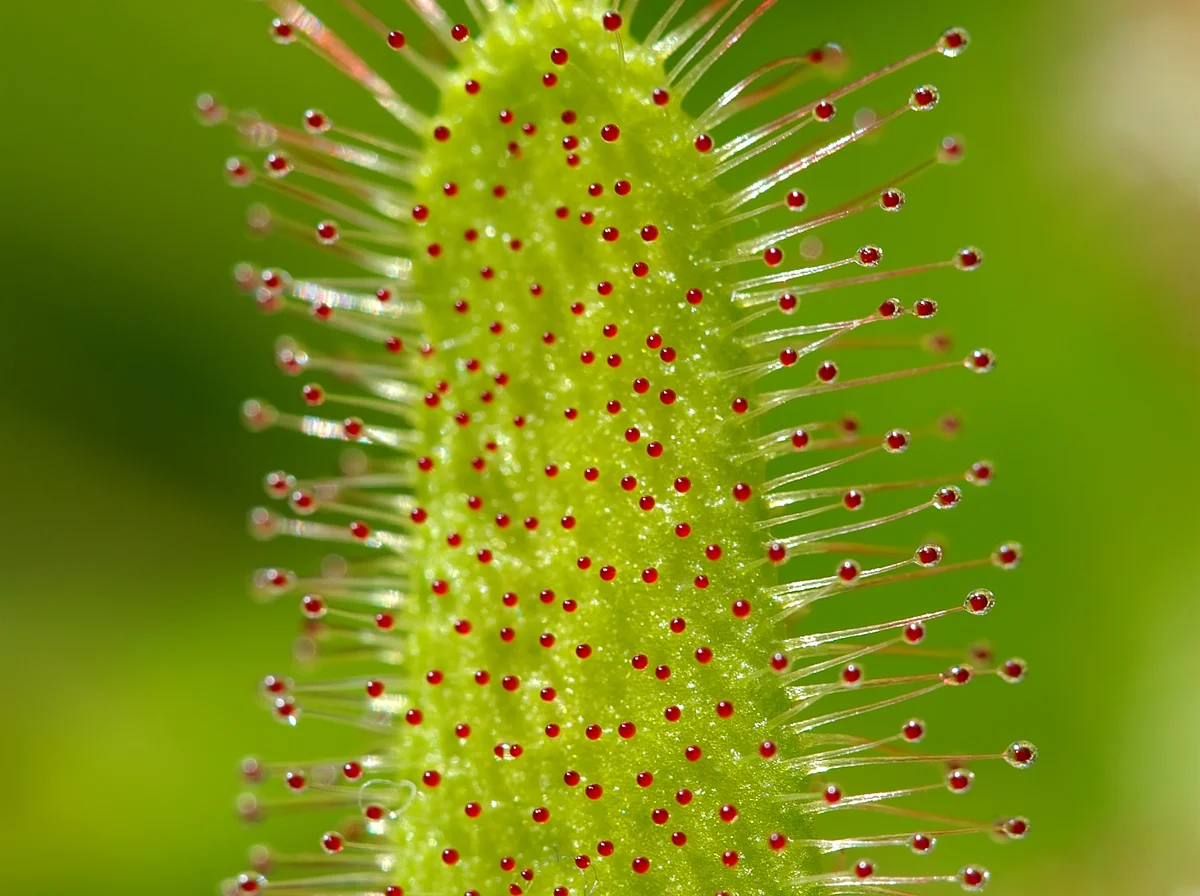
Drosera capensis, the Cape sundew, is a fast-growing, forgiving carnivorous plant with long sticky red-tipped leaves that curl around prey, grows all year without dormancy and doubles as a living flypaper.
-
Difficulty
easy
-
Light
High-intensity light of about 150-250 PPFD brings out red tentacles and plentiful glistening dew. Bright south or east windows, or strong LED grow lights, suit it well.
-
Temperature
15-28°C (59-82°F)
-
Growth
fast
-
Humidity
50-80%
-
pH range
4.5-6.0 (acidic, mineral-free medium)
-
Biggest Owner Mistake
Watering with tap water or bottled mineral water. Minerals build up in the peat as water evaporates, burn the roots and tentacle tips and dry up the dew, and many plants decline within weeks before the grower finds the cause.
-
What Nobody Tells You
Cape sundews set huge amounts of fine seed, so one flowering plant can fill a bog terrarium with seedlings. Cut the stalks early unless you want more plants, and never release them outdoors.
-
Real Home Conditions
Most indoor plants lose their red colour and dew because windows give too little light. A grow light 15-30 cm above the plant for 12-16 hours usually fixes it within a few weeks.
Quick Answer
Drosera capensis, the Cape sundew, is an easy, fast-growing carnivorous plant. Grow it in a 50/50 mix of unfertilized Canadian sphagnum peat and coarse silica sand or perlite, standing in a constant 1-2 cm tray of RO, distilled or rain water (ideally under 20 ppm TDS, never above 50 ppm). Give it strong light of 150-250 PPFD for 12-16 hours to get red tentacles and plenty of dew. It needs no winter dormancy, tolerates 15-28°C, catches fungus gnats and fruit flies on its sticky leaves, and propagates easily from seed, leaf cuttings or root cuttings.
Key Takeaways
- Grow it in a 50/50 mix of unfertilized Canadian sphagnum peat and coarse washed silica sand or perlite, standing in a constant 1-2 cm tray of pure water.
- Use only RO, distilled or rain water under 50 ppm TDS, and ideally under 20 ppm, because tap water minerals burn the roots and dry up the dew.
- Give it strong light of 150-250 PPFD for 12-16 hours daily to produce red tentacles and glistening dew drops.
- It needs no winter dormancy, grows well at 15-28°C and tolerates cool spells to about 5°C, with roots that can resprout after frost.
- It works as living flypaper for adult fungus gnats and fruit flies, propagates easily from seed, leaf cuttings and root cuttings, and can self-seed heavily unless flower stalks are cut.
Drosera capensis Care at a Glance
- Light: High intensity, 150-250 PPFD, for 12-16 hours daily.
- Substrate: 50% unfertilized Canadian sphagnum peat and 50% coarse washed silica sand or perlite.
- Water: RO, distilled or rain water, ideally under 20 ppm TDS and never above 50 ppm, in a constant 1-2 cm tray.
- Temperature: 15-28°C (59-82°F), with 50-80% humidity and gentle airflow.
- Dormancy: None. It grows all year.
- Propagation: seed, leaf cuttings and root cuttings.
What Is Drosera capensis?
Drosera capensis, the Cape sundew, is a fast-growing carnivorous plant in the family Droseraceae. It comes from the Cape Province of South Africa, where it grows in fynbos and along stream seepages. Its long, narrow leaves are covered in tentacles tipped with glistening droplets of sticky mucilage. Insects stick to the dew, and the leaf slowly curls around them as nearby tentacles bend inwards, a movement called thigmotropism, and digests them. It is one of the easiest sundews to grow and a good first carnivorous plant. For a companion with a different winter pattern, see Pinguicula moranensis.
Light
Strong light is the key to a good Cape sundew. Aim for 150-250 PPFD for 12-16 hours daily. A bright south or east window can work, but most indoor growers do better with an LED grow light 15-30 cm above the plant. Strong light turns the tentacles red through anthocyanin pigments and drives heavy dew production. Plants in weak light turn green, grow floppy and make little dew.
Water: The Continuous Tray Method
Stand the pot in a tray holding 1-2 cm of RO, distilled or rain water at all times. Unlike many carnivorous plants, Drosera capensis tolerates constant wetness and does not need a drier season. Use water under 50 ppm TDS, and aim for under 20 ppm. Minerals in tap water build up in the peat as water evaporates, burn the roots and tentacle tips and dry up the dew. Test the tray with a TDS pen, and use the carnivorous water TDS calculator to check blends and estimate how fast minerals accumulate in your pot. Flush the pot from the top with pure water every month or two, and never use fertilizer.
Substrate
Use a mix of 50% unfertilized Canadian sphagnum peat moss and 50% coarse washed silica sand or perlite by volume. This holds moisture but stays open enough for roots to breathe. Never use potting soil, fertilizer, or sand that contains lime or shell. Rinse sand and perlite in RO water before mixing. The carnivorous plant substrate guide covers other mixes and what to avoid.
Temperature, Humidity and Airflow
The plant grows best at 15-28°C and tolerates cooler spells down to about 5°C. Hard frost kills the leaves, but the roots can resprout from the base. Moderate humidity of 50-80% is enough, and gentle air circulation helps prevent mold on dead leaves. In an enclosed display, ventilate so the surface does not stay saturated. The carnivorous plant terrarium build guide explains how to ventilate a terrarium and group plants with similar needs.
No Dormancy Needed
Drosera capensis is a subtropical perennial and does not need a cold winter rest. In winter it may slow down and make fewer leaves, but it should stay green and sticky in bright light. This is different from Venus flytraps, Sarracenia and temperate sundews, which need cold dormancy. The dormancy requirements guide explains which plants rest and which do not. Mexican butterworts also differ, because they need a near-dry winter substrate, as described in the Pinguicula rock setup guide.
Trapping and Feeding
The Cape sundew works as living flypaper for fungus gnats, fruit flies and other small flies. Prey sticks to the dew, and the leaf curls around it within hours. A plant in a room with a few gnats or flies usually feeds itself. If prey is scarce, rehydrate a few dried bloodworms in a drop of RO water and place a small piece on one or two leaves. Feed only a leaf or two at a time, no more than once every week or two, and never feed the substrate or tray.
The plant catches only adult insects, so it does not kill fungus gnat larvae in the soil of other houseplants. Combine it with BTI and a dry-down cycle as described in carnivorous plants for fungus gnats. Place the plant within 30-60 cm of the infested pots, and let leaves covered in carcasses wither naturally.
Flowering and Self-Seeding
Healthy plants send up tall stalks with clusters of pink to purple flowers from spring through summer, and often flower repeatedly in good light. Each flower produces plenty of fine black seed. In a bog terrarium or crowded tray, seedlings can pop up everywhere. To prevent this, cut the flower stalks at the base before the seed ripens. If you want more plants, let one stalk dry and collect the seed. Do not release the plant outdoors, because it has naturalised in some regions.
Propagation
The second reference table above compares the three methods.
From Seed
- Collect ripe black seed from dried flower heads.
- Sprinkle it on the surface of damp peat and sand mix. Do not cover it.
- Keep the pot in a tray of RO water, in bright light and high humidity.
- Seed usually sprouts in one to three weeks. Thin crowded seedlings after a couple of months.
From Leaf Cuttings
- Cut or pull a healthy, young leaf from the base.
- Lay it on damp peat and sand mix, or float it in a shallow dish of RO water.
- Keep it bright, warm and undisturbed.
- Plantlets form at the base or along the leaf in two to six weeks.
From Root Cuttings
- Lift the plant in spring and wash the roots in RO water.
- Cut thick root pieces about 2-4 cm long.
- Lay them flat on the surface of damp medium and keep them humid and bright.
- New shoots appear in three to six weeks. Roots left in the old pot often resprout on their own.
Repotting and Maintenance
- Weekly: check the tray, remove dead black leaves and look for algae, mold or white crust.
- Monthly: check the TDS of the tray and flush the pot with RO water.
- Every 1-2 years: repot in fresh peat and sand mix in spring, and divide crowded clumps.
Troubleshooting Summary
| Symptom | Likely cause | Quick fix |
|---|---|---|
| Dew drops disappear | Low light, dry tray, minerals or heat | Raise light, refill the tray with pure water and flush the pot |
| Leaves green and floppy | Too little light | Move to a brighter spot or add a grow light |
| Tentacle tips and leaf tips brown | Mineral build-up from tap water | Flush with RO water and switch to pure water |
| Mold on dead leaves | Still air and dead tissue | Trim dead leaves and improve airflow |
| Seedlings everywhere | Self-seeding | Cut flower stalks before seed ripens and pull unwanted seedlings |
Related Resources
Plan an enclosure with the carnivorous plant terrarium build guide, choose a medium with the carnivorous plant substrate guide, grow a butterwort on rock with the Pinguicula rock setup guide, compare winter care in the dormancy requirements guide, use sundews for pest control with carnivorous plants for fungus gnats, check your water with the carnivorous water TDS calculator, and meet companions in the profiles for Pinguicula moranensis and Nepenthes ventrata.
Recommended next actions
Next Best Actions
Use calculators and guides to turn this plant profile into a practical care routine.
Calculator
Carnivorous Plant Water TDS Calculator: Safety & Dilution
Rate your water's TDS for carnivorous plants, calculate how much tap water can be blended with RO or distilled water to reach a safe target, and estimate how fast minerals build up in a pot.
Plant Guide
Ventrata Pitcher Plant
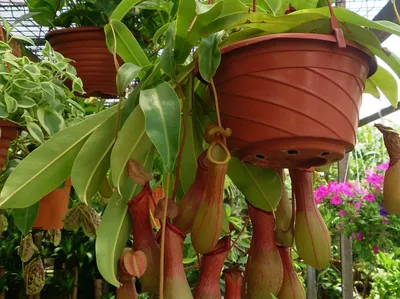
Nepenthes ventrata is a hardy tropical pitcher plant hybrid that produces fluid-filled pitfall traps on its leaf tendrils, grows year-round without dormancy and tolerates household humidity better than most Nepenthes.
Plant Guide
Mexican Butterwort
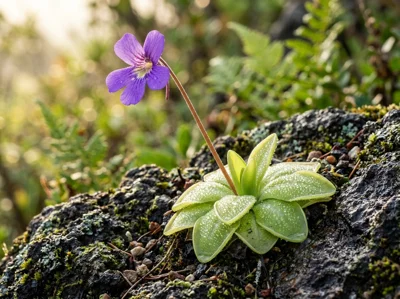
Pinguicula moranensis is a compact Mexican butterwort that switches between sticky carnivorous leaves in summer and a tight succulent rosette in winter, and thrives in pumice or on wicking rock.
Topic Guide
Carnivorous Plant Substrate Guide: Ingredients, Ratios & Zero Fertilizer
Master carnivorous plant substrate recipes: 50/50 peat-perlite/silica sand ratios, zero-fertilizer rules, rinsing minerals, and live sphagnum moss.
Topic Guide
Fungus Gnats
Learn everything about fungus gnats for your indoor and aquarium plants. Expert care tips, troubleshooting, and related guides.
Topic Guide
Water Quality for Houseplants
Compare tap, filtered, distilled, and rainwater for houseplants. Learn which water is best for sensitive plants and how to prevent mineral buildup.
Structured Plant Data
Plant Data Profile
The following data is extracted directly from our botanical knowledge graph for accuracy and transparency.
Growth Characteristics
Growth Rate
fast
Mature Height
4-8 inches (leaves); flower stalks up to 12 inches
Mature Spread
6-10 inches
Life Cycle
Perennial
Flowering Season
Spring to summer, and often repeatedly in good light
Container Friendly
yes
Indoor Capable
yes
Environmental Parameters
| Parameter | Recommended | Survivable |
|---|---|---|
| Temperature | 15-28°C (59-82°F) | 5-35°C (41-95°F) |
| Humidity | 50-80% | 30-90% with gentle air circulation |
| Soil PH | 4.5-6.0 (acidic, mineral-free medium) | 4.0-6.5 |
Lighting
Description
High-intensity light of about 150-250 PPFD brings out red tentacles and plentiful glistening dew. Bright south or east windows, or strong LED grow lights, suit it well.
Nutrients
Nitrogen Demand
low
Phosphate Demand
low
Potassium Demand
low
Micronutrient Notes
Gets nutrients from insects digested by its leaves. Fertilizer and mineral salts in the substrate or water damage the roots.
Fertilizer Frequency
None. Do not fertilize the substrate or the tray.
Organic Options
Live or thawed tiny insects such as fungus gnats and fruit flies, or a few rehydrated bloodworms on individual leaves.
Relationships
-
Water Quality
Requirement | Strength 10
Needs RO, distilled or rain water, ideally under 20 ppm TDS and never above 50 ppm, because dissolved minerals burn the roots and dry up the dew.
-
Light
Requirement | Strength 9
Strong light of 150-250 PPFD for 12-16 hours drives red coloration and heavy mucilage production.
-
Continuous Tray Watering
Requirement | Strength 8
Tolerates and prefers a constant 1-2 cm tray of pure water, unlike Mexican butterworts that need a drier winter.
-
Fungus Gnats
Benefit | Strength 9
Sticky tentacles catch adult fungus gnats all year, but the plant does not kill larvae in nearby soil.
-
Self Seeding
Vulnerability | Strength 5
Prolific seed can spread through a bog terrarium, so cut flower stalks before seed ripens if you want to prevent it.
Cape Sundew vs Other Common Carnivorous Plants
| Plant | Winter Pattern | Water Regime | Gnat Capture |
|---|---|---|---|
| Drosera capensis | No dormancy; slows slightly | Constant tray of 1-2 cm pure water | Excellent all year |
| Pinguicula moranensis | Succulent rosette, no cold rest | Damp in summer, near-dry in winter | Excellent in summer |
| Dionaea muscipula | Cold dormancy for 3-4 months | Barely damp in winter | Poor |
| Nepenthes ventrata | No dormancy; keep warm | Consistently moist | Poor |
Troubleshooting & Diagnostics Guide
1 Dew drops disappear from the tentacles
Diagnosis: Low light, dry tray, mineral build-up, heat or low humidity with strong airflow
Treatment: Raise light to 150-250 PPFD for 12-16 hours, refill the tray with 1-2 cm of RO water, flush the pot with pure water and move the plant out of hot, dry air.
Prevention: Use water under 20 ppm TDS, keep the tray topped up and provide strong light.
2 Leaves turn green, long and floppy
Diagnosis: Too little light
Treatment: Move the plant to a brighter window or add a grow light 15-30 cm above it and extend the photoperiod to 12-16 hours.
Prevention: Provide at least 150 PPFD year-round.
3 Tentacle tips and leaf tips turn brown or black
Diagnosis: Mineral build-up from tap water or fertilizer
Treatment: Flush the pot slowly from the top with RO water, empty and refill the tray with pure water and trim dead leaves.
Prevention: Use RO, distilled or rain water under 50 ppm TDS and never fertilize.
4 White crust on the peat surface or pot rim
Diagnosis: Dissolved minerals concentrating as water evaporates
Treatment: Flush the pot with several times its volume of RO water, scrape off the crust and repot in fresh peat and sand if heavy.
Prevention: Use water under 20 ppm TDS and flush every month or two.
5 Grey mold on dead leaves or the crown
Diagnosis: Still, humid air with dead tissue left on the plant
Treatment: Cut off dead and moldy leaves with clean scissors, increase airflow and let the surface dry slightly between waterings.
Prevention: Trim dead leaves weekly and use a small fan in enclosed setups.
6 Seedlings appear in neighbouring pots and across the terrarium
Diagnosis: Prolific self-seeding from flower stalks
Treatment: Pull unwanted seedlings and cut or bag the flower stalks.
Prevention: Cut flower stalks at the base before the seed ripens.
7 Fungus gnats hover around the pot
Diagnosis: Wet organic matter, such as dead leaves, supports larvae in the peat
Treatment: Remove dead leaves, top the surface with a thin layer of sand or perlite and apply a light BTI dose. The sticky leaves will catch adults.
Prevention: Keep the surface clean and trim dead tissue weekly.
8 Plant looks dead after a frost or cold snap
Diagnosis: Frost damage to the leaves, with roots often still alive
Treatment: Bring the pot indoors, cut off blackened leaves and keep the roots just moist in bright light. New shoots often appear from the roots in a few weeks.
Prevention: Keep the plant above about 5°C and protect it from frost.
Authoritative Resources
For additional peer-reviewed information on plant diseases, toxicity, and care, consult these trusted botanical and agricultural extensions:
Glossary of Terms
- Mucilage
- The sticky, sugary secretion produced by tentacle glands that forms the dew drops on sundew leaves and traps small insects.
- Thigmotropism
- A growth movement in response to touch. Sundew tentacles and leaves curl around prey that sticks to the dew.
- Anthocyanin
- A red to purple pigment that plants produce in strong light, giving Cape sundew tentacles their red colour.
- Tray Method
- A watering method in which a pot stands in a shallow tray of pure water so the substrate stays constantly moist.
- TDS (Total Dissolved Solids)
- The concentration of dissolved minerals in water, measured in ppm. Drosera capensis needs water under 50 ppm, ideally under 20 ppm.
Frequently Asked Questions
Why have the dew drops disappeared on my Cape sundew?
Can Drosera capensis self-seed and become invasive in a bog terrarium?
Can I feed dried bloodworms to a Cape sundew?
Should I trim the flower stalks on Drosera capensis?
Can I use tap water on a Cape sundew?
Does Drosera capensis need winter dormancy?
How many fungus gnats can a Cape sundew catch?
Can I grow a Cape sundew with a Mexican butterwort?
Why are the leaves turning green instead of red?
How do I propagate Drosera capensis easily?
Sources & References
-
Source: carnivorousplants.org
-
Source: kew.org
-
Source: missouribotanicalgarden.org
Explore More