Venus Flytrap Care Guide
Grow a healthy venus flytrap with the right water quality, boggy soil mix and winter dormancy period it needs to survive long term.
-
Difficulty
Medium
-
Light
Bright indirect
-
Temperature
18-25°C (64-77°F)
-
Growth
Moderate
-
Expert Insight
Master-grower data coming soon.
-
Common Mistake
Real-world care data coming soon.
-
Environment
Real-world conditions coming soon.
Quick Answer
Venus Flytrap needs distilled or rainwater only, consistently boggy soil made of peat moss and perlite, and full sun exposure. It requires a cold winter dormancy period of 3-4 months to survive long term. Tap water minerals and fertilizer will damage or kill this carnivorous plant over time.
Key Takeaways
- Water only with distilled water, rainwater, or reverse-osmosis water.
- Use a peat moss and perlite mix kept consistently damp, never dry.
- Provide full, direct sunlight for at least several hours daily.
- Allow a 3-4 month cold winter dormancy; skipping it weakens the plant.
- Never apply standard fertilizer, which will damage or kill the plant.
Overview
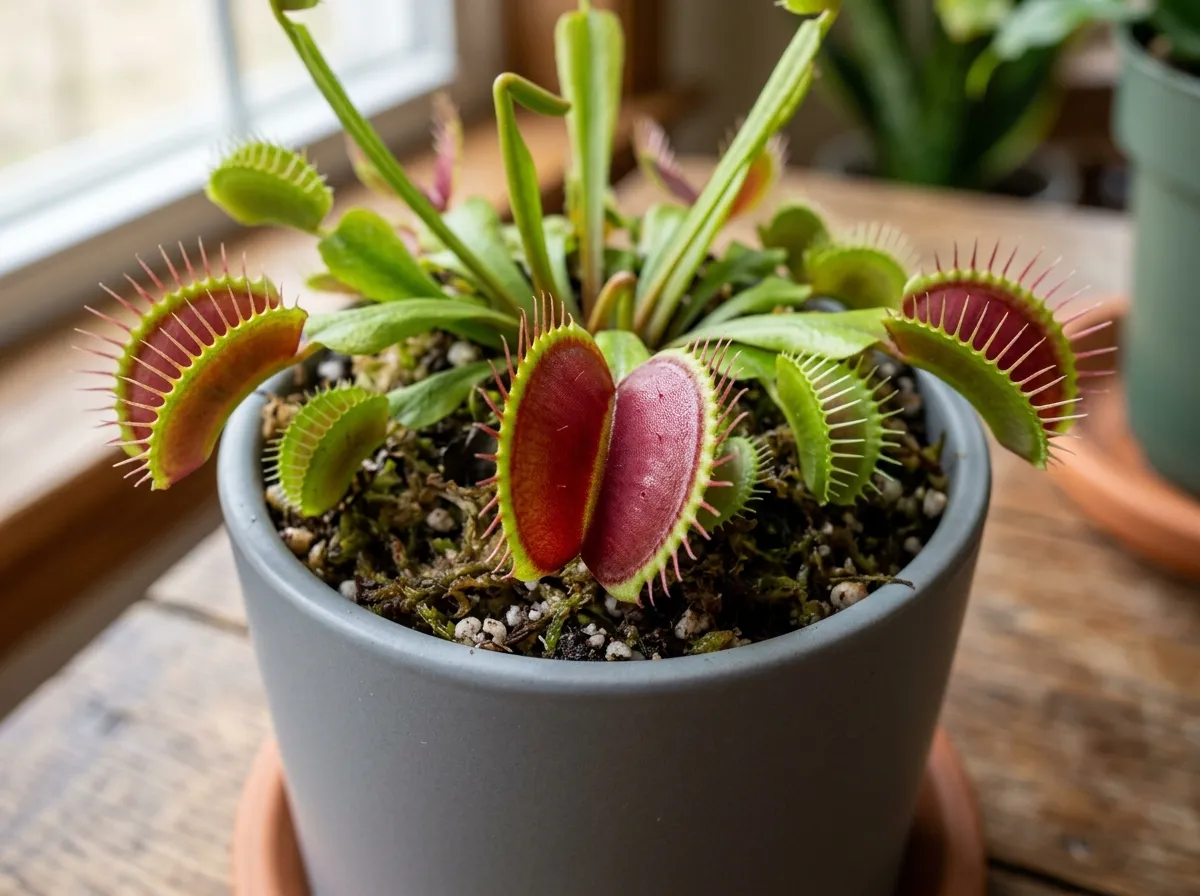
Venus Flytrap (Dionaea muscipula) is a small carnivorous perennial native to nutrient-poor wetlands of the southeastern United States. It captures small insects using specialized hinged traps and obtains nutrients from its prey rather than from rich soil. Successful cultivation depends on providing strong light, mineral-free water, an acidic nutrient-poor growing medium, and appropriate seasonal dormancy. The biggest mistakes are usually using mineral-rich water, fertilizing the soil, or keeping the plant in insufficient light.
Watering
Keep the growing medium consistently moist during active growth and never allow the plant to dry out completely. Use distilled water, reverse-osmosis water, or suitable rainwater with very low dissolved mineral content rather than ordinary tap water unless its mineral content has been verified as safe. The tray method can maintain consistent moisture by allowing the pot to sit in a shallow amount of water. Avoid letting the plant remain deeply submerged or waterlogged for extended periods.
Light
Venus Flytraps require very strong light and generally perform best with several hours of direct sunlight or an appropriately strong grow light. Insufficient light can produce weak, elongated growth and poorly developed traps. Plants moved from lower light should be acclimated gradually to intense direct sun to reduce the risk of scorch. Strong light also helps maintain compact growth and can contribute to deeper coloration inside healthy traps.
Soil
Use an acidic, nutrient-poor growing medium specifically suited to carnivorous plants. A common approach is sphagnum peat or long-fiber sphagnum combined with perlite or silica sand that contains no added fertilizer or minerals. Do not use standard potting soil, compost, manure, or fertilized mixes because Venus Flytraps are adapted to nutrient-poor substrates and their roots can be damaged by excess minerals.
Temperature
Venus Flytraps tolerate warm conditions during active growth and generally perform well around 18–30°C (65–86°F). They can tolerate substantial temperature variation outdoors when properly acclimated, but extreme heat combined with stagnant air and drying soil can cause stress. Protect container-grown plants from prolonged freezing of the entire root system unless they are being managed as part of an appropriate outdoor dormancy regime.
Humidity
Venus Flytraps generally adapt to normal household humidity when their growing medium is kept consistently moist. Very high humidity is not essential if the plant receives strong light and good airflow. Avoid creating stagnant, constantly wet conditions because poor airflow can encourage fungal problems. Humidity should support consistent moisture rather than replace appropriate watering.
Fertilizer
Do not fertilize Venus Flytraps through the soil. Their natural habitat is extremely nutrient-poor, and fertilizer salts can damage the roots. The plant obtains supplemental nutrients by digesting prey. If the plant receives sufficient natural prey, additional feeding may not be necessary. Any supplemental feeding should be limited and appropriate for a carnivorous plant rather than treated like conventional houseplant fertilization.
Feeding
Venus Flytraps can obtain nutrients from small insects and other suitable prey that trigger and are captured by their traps. When grown indoors without access to prey, occasional feeding can supplement nutrition, but it is not necessary to trigger traps repeatedly for entertainment. Never feed meat, cheese, or other human foods. Avoid oversized prey that cannot be properly contained by the trap.
Traps
Each trap contains trigger hairs that help the plant determine whether suitable prey has entered. A trap does not benefit from being repeatedly triggered without prey because closing consumes energy and traps have a limited functional lifespan. Avoid manually closing traps with fingers or other objects. Traps that have captured prey eventually reopen after digestion, while individual traps naturally age and die after repeated use.
Dormancy
Venus Flytraps enter a winter dormancy triggered by shorter days and cooler conditions. During dormancy, growth slows substantially and some foliage may die back. Plants managed outdoors in an appropriate climate can experience natural seasonal dormancy, while indoor growers may need to provide a cool, bright winter rest depending on their cultivation setup. Watering should be adjusted so the plant remains moist but is not kept excessively wet in cold conditions.
Growth
Venus Flytraps grow from a compact underground rhizome and produce a rosette of traps on short leaf stalks. Growth is strongest during the warm, bright growing season and slows considerably during winter dormancy. Healthy plants may produce additional growth points or flower stalks as they mature. Individual traps naturally have a limited lifespan and should not be treated as permanent foliage.
Flowering
Mature Venus Flytraps can produce a tall flower stalk carrying small white flowers, typically during the growing season. Flowering requires substantial energy, so young, weak, or recently acquired plants may benefit from having the flower stalk removed before it develops fully. Healthy mature plants can be allowed to flower if the grower wants to collect seed or observe the natural reproductive cycle.
Propagation
Venus Flytraps can be propagated from seed, division of established plants or rhizomes, and in specialized cultivation settings through tissue culture. Seed propagation is relatively slow and requires suitable conditions. Division is more practical for established plants that naturally develop multiple growth points. Propagation should be carried out during an appropriate active growth period when the plant is healthy.
Repotting
Repot Venus Flytrap when the growing medium has deteriorated, the plant has outgrown its container, or routine seasonal repotting is appropriate for the cultivation setup. Use only a suitable nutrient-poor carnivorous plant medium and a container that does not leach harmful minerals. Avoid disturbing the roots unnecessarily because the plant's rhizome and roots can be sensitive to rough handling.
SeasonalCare
Care should change substantially between the active growing season and winter dormancy. During active growth, provide strong light, consistent moisture, warm conditions, and occasional suitable prey when necessary. During dormancy, growth and water use decrease, and the plant should be kept cooler while remaining appropriately moist. Resume stronger growth conditions gradually as the plant emerges from dormancy.
OutdoorCare
Outdoor cultivation can work very well when the climate provides strong light, appropriate seasonal temperatures, and mineral-free water. Place the plant where it receives several hours of direct sunlight while protecting the container from extreme heat buildup. Outdoor plants naturally encounter small prey and can experience seasonal dormancy. Heavy rain is generally less concerning than mineral-rich irrigation water, provided the growing medium and container drain appropriately.
CommonProblems
Black traps and dying leaves are not always signs of disease because individual traps naturally age and die. Persistent blackening, widespread decline, weak elongated growth, or a collapsing plant can indicate insufficient light, unsuitable water, mineral buildup, inappropriate soil, or root stress. The first checks should be water quality, growing medium composition, light intensity, and seasonal conditions.
WaterQuality
Water quality is one of the most important factors in Venus Flytrap care. Mineral-rich tap water can gradually accumulate salts in the growing medium and damage the roots. Distilled water, reverse-osmosis water, or suitable low-mineral rainwater is generally preferred. If using rainwater or another alternative source, ensure it is free from contaminants and stored appropriately.
Toxicity
Venus Flytrap is generally regarded as non-toxic to cats and dogs, although pets should not be encouraged to chew the plant or disturb its traps. The traps are specialized structures rather than a food source for pets, and repeated handling can damage the plant.
Troubleshooting & Diagnostics Guide
1 Why are my Venus Flytrap traps turning black?
Diagnosis: Normal die-off after feeding or stress (tap water, low light)
Treatment: If old traps, trim; if all, use distilled water and give full sun.
Prevention: Use distilled water; provide full sun.
2 Why isn't my Venus Flytrap closing on insects?
Diagnosis: Lack of stimulation (dead prey) or plant is dormant
Treatment: Gently tickle trigger hairs to test; if no response, it may be dormant.
Prevention: Know its dormancy cycle.
3 Why is my Venus Flytrap turning brown in winter?
Diagnosis: Natural winter dormancy
Treatment: Reduce water and keep in a cool (but not freezing) place; it will return in spring.
Prevention: Allow dormancy.
Authoritative Resources
For additional peer-reviewed information on plant diseases, toxicity, and care, consult these trusted botanical and agricultural extensions: