North American Pitcher Plant Care Guide: Light, Watering & Growing Tips
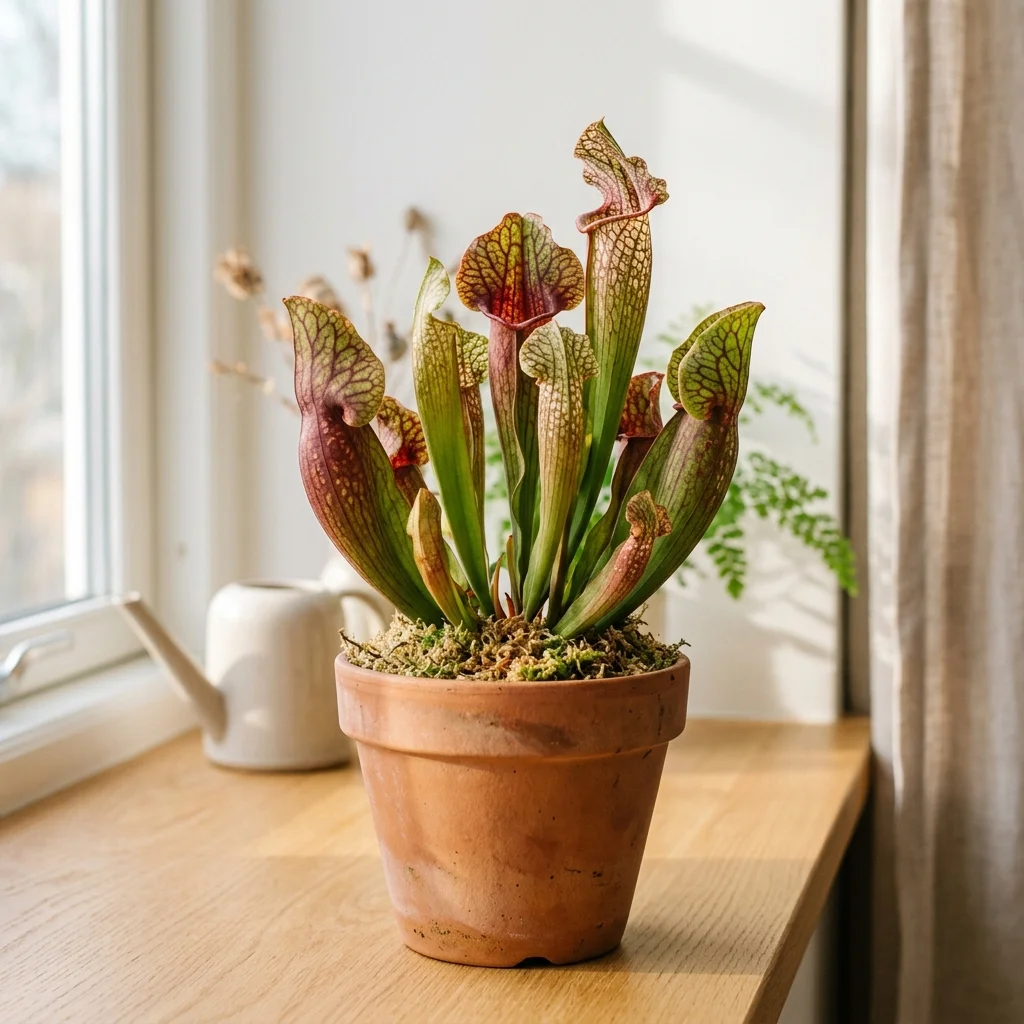
Sarracenia (North American Pitcher Plant) is a striking carnivorous bog plant native to the US Southeast. It traps insects in tubular, hooded leaves. It demands full outdoor sun, a constant supply of distilled or rainwater, and a cold winter dormancy to thrive year after year.
-
Difficulty
Medium
-
Light
Bright indirect
-
Temperature
18-25°C (64-77°F)
-
Growth
Moderate
-
Expert Insight
Master-grower data coming soon.
-
Common Mistake
Real-world care data coming soon.
-
Environment
Real-world conditions coming soon.
Quick Answer
Place your Sarracenia outdoors in full sun, keep its pot standing in a 2–5 cm tray of distilled or rainwater at all times, and never let the soil dry out. Provide a cold winter dormancy (0–10°C) for 3–4 months, and avoid tap water and fertilisers completely.
Key Takeaways
- Water only with distilled water, rainwater, or reverse-osmosis water year-round.
- Provide full sun and consistently boggy, low-nutrient soil at all times.
- Allow a cold winter dormancy period to support long-term health.
- Never apply standard fertilizer, which will damage or kill the plant.
Overview
Sarracenia, commonly known as the North American Pitcher Plant, is a genus of carnivorous plants native to the southeastern United States. Its tubular, hooded leaves (pitchers) are modified for trapping insects, which supplement the plant's nutrient intake in the poor, acidic soils of bogs and wetlands.
Care Basics
- Light: Full, direct outdoor sun – at least 6–8 hours daily. Indoors, they weaken rapidly.
- Water: Absolutely critical: sit the pot in a tray of distilled water, reverse osmosis water, or collected rainwater. Never use tap water. Keep the tray filled 2–5 cm deep at all times.
- Soil: Use a nutrient-poor, acidic mix – 50% peat moss and 50% perlite (or coarse sand). No compost, fertiliser, or ordinary potting soil.
- Dormancy: Mandatory winter rest (3–4 months). Temperatures should drop to 0–10°C. Reduce water slightly but never let it dry out completely.
- Feeding: If grown outdoors, they catch their own insects. Indoors, you can drop a live or freshly dead bug into a pitcher every 2–4 weeks.
Common Issues
- Brown/black leaf tips: Usually natural dieback or insufficient humidity/sun. Cut off dead parts.
- No new pitchers: Almost always insufficient light. Move to a sunnier spot.
- Yellowing foliage: Often a sign of mineral burn from tap water – flush with distilled water and switch permanently.
Dormancy
This is the most commonly overlooked requirement. Sarracenia are temperate plants and need 3–4 months of cold (but not bone-dry) conditions. An unheated garage, cold frame, or windowsill works. Don't panic if the pitchers die back – they'll regrow in spring.
Propagation
Divide mature rhizomes in late winter or early spring, just before new growth begins. Ensure each division has healthy roots and a growth point.
Recommended next actions
Next Best Actions
Use calculators and guides to turn this plant profile into a practical care routine.
Structured Plant Data
Plant Data Profile
The following data is extracted directly from our botanical knowledge graph for accuracy and transparency.
Relationships
-
Sarraceniaceae
Belongs To Family
-
Shares Care With
-
Drosera
Shares Care With
-
Distilled Rainwater
Requires Water Type
-
Full Outdoor Sun
Requires Light Condition
-
Cold Winter Dormancy
Requires Dormancy
Popular Sarracenia Species for Beginners
| Species | Height | Hardiness | Distinctive Trait |
|---|---|---|---|
| S. purpurea | 20–30 cm | Very hardy (Zone 6+) | Short, squat, rosette-shaped pitchers; easiest for beginners |
| S. flava | 60–100 cm | Zone 7+ | Tall, slender yellow-green pitchers; strong upright growth |
| S. leucophylla | 50–90 cm | Zone 7+ | White-tipped, highly patterned pitchers; stunning fall growth |
| S. x catesbaei (hybrid) | 60–80 cm | Zone 7+ | Vigorous hybrid of S. purpurea & S. flava; very forgiving |
Troubleshooting & Diagnostics Guide
1 Pitchers turning brown and crispy
Diagnosis: Lack of water or low humidity
Treatment: Ensure the pot is sitting in 1-2 inches of distilled or rainwater at all times. Do not use tap water.
Prevention: Never let the growing medium dry out.
2 Green, floppy pitchers with no color
Diagnosis: Insufficient sunlight
Treatment: Move the plant to full, direct outdoors sun.
Prevention: Provide 6+ hours of direct sunlight daily for robust, colorful pitchers.
3 Plant dying back rapidly in winter
Diagnosis: Natural dormancy (Normal)
Treatment: Trim off dead pitchers in late winter. Keep the soil damp but not waterlogged in a cool location.
Prevention: Allow the plant its essential winter rest period.
Authoritative Resources
For additional peer-reviewed information on plant diseases, toxicity, and care, consult these trusted botanical and agricultural extensions:
Frequently Asked Questions
Can I use tap water for my Sarracenia?
Do I need to feed my pitcher plant?
Why are my pitchers turning brown?
Does Sarracenia need winter dormancy?
Can Sarracenia be grown indoors?
How much sun does a pitcher plant need?
How do I divide Sarracenia?
What soil should I use for Sarracenia?
Why isn't my Sarracenia producing pitchers?
Can Sarracenia survive frost and freezing temperatures?
What size pot does a Sarracenia need?
Is Sarracenia toxic to cats or dogs?
Do Sarracenia attract flies?
What is Sarracenia used for?
Is Sarracenia toxic to humans?
Are there pitcher plants in the US?
Where can I find Sarracenia?
Is pitcher plant found in India?
Is Sarracenia self-fertile?
Explore More