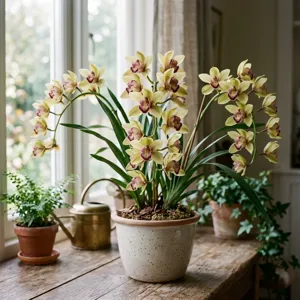
Dendrobium Orchid Care Guide: Light, Watering & Growing Tips
Expert care guide and diagnostic data for the Dendrobium Orchid. Learn how to properly water, light, and troubleshoot common issues.
-
Difficulty
Medium
-
Light
Bright indirect
-
Temperature
65°F - 85°F (18°C - 29°C)
-
Growth
Moderate
-
Expert Insight
Master-grower data coming soon.
-
Common Mistake
Real-world care data coming soon.
-
Environment
Real-world conditions coming soon.
Quick Answer
Dendrobium Orchids need bright indirect light, a bark-based orchid mix, and a distinct dry, cool rest period after flowering to encourage rebloom. Water thoroughly during active growth, then reduce significantly during dormancy. Overwatering during the rest period is the most common cause of bud drop and rot in this genus.
Key Takeaways
- Reduce watering significantly during the post-bloom rest period.
- Use a fast-draining, bark-based orchid mix.
- Provide bright indirect light throughout the growing cycle.
- Allow cooler temperatures during dormancy to encourage reblooming.
- Avoid overwatering during rest, the top cause of bud and root loss.
Humidity
Maintain relative humidity at 50% or higher to keep Dendrobium canes firm and encourage prolific bud initiation. Pair this elevated humidity with steady, gentle air movement to protect the root system and flower spikes.
Calculator
Interactive Calculators for Dendrobium Orchid
Structured Plant Data
Plant Data Profile
The following data is extracted directly from our botanical knowledge graph for accuracy and transparency.
Environmental Parameters
| Parameter | Recommended | Survivable |
|---|---|---|
| Temperature | 65°F - 85°F (18°C - 29°C) | 50°F - 90°F (10°C - 32°C) |
Troubleshooting & Diagnostics Guide
1 Why are my Dendrobium leaves turning yellow and dropping?
Diagnosis: Normal seasonal leaf drop for deciduous types, or overwatering for evergreen types
Treatment: If deciduous, it's normal; if evergreen, reduce watering and allow medium to dry.
Prevention: Know your Dendrobium type; water accordingly.
2 Why isn't my Dendrobium producing flowers?
Diagnosis: Insufficient light or lack of winter rest
Treatment: Provide bright light and a cool, dry rest period in winter to initiate flowering.
Prevention: Give adequate light and seasonal rest.
3 Why are the canes turning yellow and soft?
Diagnosis: Overwatering causing root rot
Treatment: Unpot, trim dead roots, repot in fresh bark; water sparingly.
Prevention: Allow medium to dry between waterings.
Authoritative Resources
For additional peer-reviewed information on plant diseases, toxicity, and care, consult these trusted botanical and agricultural extensions:
Explore More