Moth Orchid Care Guide: Light, Watering & Growing Tips
Expert care guide and diagnostic data for the Moth Orchid. Learn how to properly water, light, and troubleshoot common issues.
-
Difficulty
Medium
-
Light
Bright indirect
-
Temperature
18-25°C (64-77°F)
-
Growth
Moderate
-
Expert Insight
Master-grower data coming soon.
-
Common Mistake
Real-world care data coming soon.
-
Environment
Real-world conditions coming soon.
Quick Answer
Phalaenopsis (Moth Orchid) needs bright indirect light, a bark-based orchid mix, and watering once weekly by soaking rather than misting. Blooms can last 2-3 months, and spent flower spikes can sometimes be cut above a node to encourage rebloom. Overwatering and direct sun are the most common care mistakes with this species.
Key Takeaways
- Water roughly once weekly by soaking, rather than misting lightly.
- Use a bark-based orchid mix that drains and dries between waterings.
- Provide bright indirect light; direct sun can scorch the leaves.
- Expect blooms to last 2-3 months under good care conditions.
- Cut spent spikes above a node to potentially encourage a rebloom.
Overview
Moth Orchid (Phalaenopsis spp.) is a tropical epiphytic orchid valued for its long-lasting flowers, broad leaves, and ability to rebloom under suitable conditions. Unlike terrestrial plants, it naturally grows attached to trees with its roots exposed to air, so it requires an airy, fast-draining growing medium rather than ordinary moisture-retentive potting soil. Its main care challenges are balancing moisture with root aeration, providing adequate indirect light, and maintaining stable temperatures and humidity.
Watering
Water Moth Orchid thoroughly when the growing medium has become mostly dry, then allow excess water to drain completely. Avoid keeping the roots continuously wet or allowing water to remain trapped in the crown between leaves. Clear or slotted orchid pots can make root and moisture monitoring easier. Watering frequency depends on the potting medium, container size, temperature, humidity, and airflow, so the plant should be checked regularly rather than watered on a fixed calendar.
Light
Provide bright indirect light for healthy leaves and reliable flowering. An east-facing or bright filtered window is often suitable, while stronger afternoon sunlight may require a sheer curtain to prevent leaf scorch. Insufficient light can result in dark green foliage, weak growth, and poor flowering. Avoid moving a plant suddenly from low light into intense direct sun.
Soil
Do not use ordinary garden soil or dense houseplant potting mix for Moth Orchid. Use a purpose-made orchid medium based on materials such as medium-grade bark, sphagnum moss, or other coarse components that provide drainage and airflow around the roots. The growing medium gradually breaks down and should be replaced when it becomes compacted or retains excessive moisture.
Temperature
Moth Orchids prefer warm, stable temperatures and generally perform well around 18–29°C (65–85°F), with slightly cooler nighttime conditions often tolerated. Protect the plant from cold drafts, sudden temperature changes, heating vents, and prolonged exposure to temperatures near the lower end of its tolerance. Stable conditions are particularly useful when the plant is developing flower spikes.
Humidity
Moth Orchids benefit from moderate to high humidity, generally around 50–70%, while still requiring good air movement around the leaves and roots. If indoor air is very dry, a humidifier can provide more consistent humidity than occasional misting. Avoid allowing water to remain trapped in the crown or between leaves, especially in poorly ventilated conditions.
Fertilizer
Feed Moth Orchid during active growth with a fertilizer formulated for orchids or a balanced fertilizer used at an appropriate dilution. Apply fertilizer to a hydrated root system rather than repeatedly feeding a completely dry plant. Periodically flushing the growing medium with plain water can help reduce fertilizer salt accumulation. Reduce feeding when growth is slow and follow the fertilizer manufacturer's instructions.
Repotting
Repot Moth Orchid when the orchid medium has broken down, roots are repeatedly staying wet, the plant has outgrown its container, or the medium no longer provides adequate airflow. Repotting is often best performed after flowering or when new roots are beginning active growth. Use a pot only moderately larger than the root system and avoid burying the crown. Healthy aerial roots can remain above the medium.
Growth
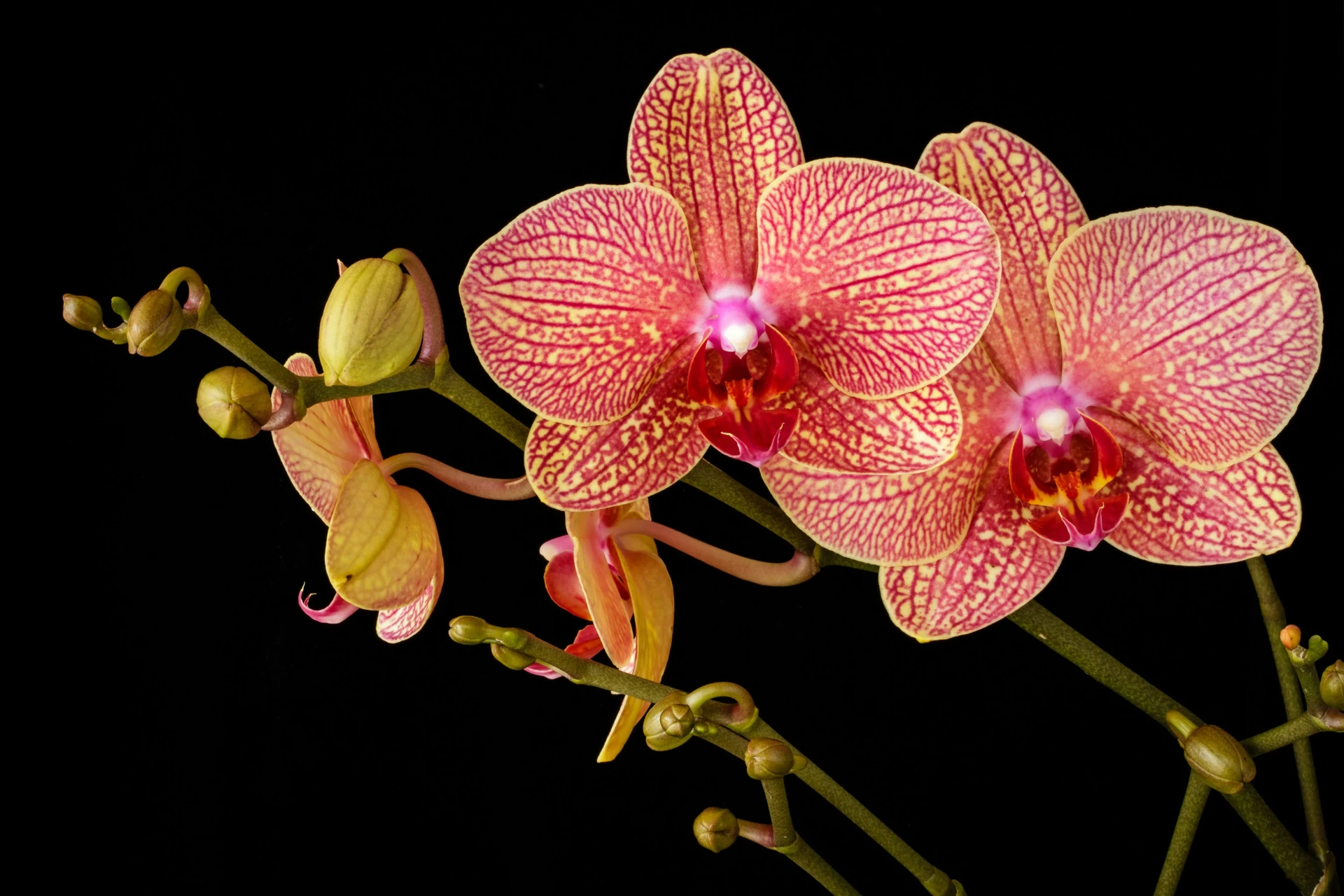
Moth Orchid grows from a central crown and produces broad, fleshy leaves and thick aerial roots. New leaves emerge from the center while older lower leaves naturally age over time. Healthy roots may grow outside the container and can appear silvery when dry and greener after absorbing water. Growth is generally moderate and strongly influenced by light, temperature, moisture, and nutrition.
Roots
Healthy Moth Orchid roots are typically firm and may appear green when hydrated or silvery when dry, depending on the root surface and growing conditions. Brown, mushy, hollow, or easily collapsing roots can indicate decay associated with prolonged excessive moisture. Do not remove healthy aerial roots simply because they grow outside the pot. When repotting, remove only roots that are clearly dead or severely damaged using clean tools.
Flowering
Moth Orchids can produce tall flower spikes carrying multiple long-lasting blooms, and mature plants may flower more than once. Flowering is strongly influenced by adequate light, healthy growth, temperature patterns, and overall plant condition. Some plants produce new spikes after the previous flowers fade, while others benefit from a period of recovery before blooming again. Lack of flowering is often associated with insufficient light or an unsuitable growing environment rather than a need for more fertilizer.
Reblooming
After flowering, the appropriate treatment depends on the condition of the flower spike and the health of the plant. A green, healthy spike may sometimes produce additional branches or flowers, while a completely brown or dried spike can be cut back near its base. Continued bright indirect light, appropriate watering, adequate nutrition, and healthy roots are more important for reblooming than repeatedly cutting or forcing the spike.
Pruning
Routine pruning is minimal for Moth Orchid. Remove completely yellow or dead leaves only after they have naturally detached or can be removed without force. Flower spikes can be trimmed after flowering depending on whether they remain green and healthy or have become completely dry and brown. Always use clean, sharp tools and avoid damaging the central crown.
Propagation
Moth Orchids are not normally propagated from ordinary leaf or stem cuttings. Commercial propagation is commonly performed through tissue culture, while mature plants may occasionally produce keikis, or plantlets, on flower spikes. A sufficiently developed keiki with its own roots can eventually be separated and potted independently. Propagation requires patience and careful handling because young orchid plants are sensitive to environmental stress.
CommonProblems
Yellowing leaves, wrinkled foliage, root loss, and failure to flower can have several causes. Overwatering and poorly aerated media can lead to root decay, while severe underwatering can cause limp or wrinkled leaves. Dark green foliage with little flowering can indicate insufficient light. Crown rot can occur when water remains trapped between leaves. Examine the roots, growing medium, light exposure, watering pattern, and crown before changing multiple care factors.
SeasonalCare
Moth Orchid generally grows actively when temperatures and light are favorable, while growth can slow during darker or cooler periods. Adjust watering to how quickly the orchid medium dries rather than maintaining the same schedule year-round. Continue providing bright indirect light and avoid cold drafts during winter. After flowering, allow the plant to continue growing and rebuilding energy rather than treating flowering as the end of its active care cycle.
OutdoorCare
Moth Orchids can be kept outdoors in warm, humid, frost-free climates if they are protected from direct midday sun and extreme weather. Bright filtered light, good airflow, and protection from heavy rain are important. Plants moved outdoors from indoor conditions should be acclimated gradually to stronger light and increased airflow. Return the orchid indoors before temperatures become unsuitable.
Toxicity
Moth Orchids are generally considered non-toxic to cats and dogs. Normal precautions still apply because chewing or consuming large quantities of any ornamental plant material can cause gastrointestinal upset in some animals.
Troubleshooting & Diagnostics Guide
1 Why are my orchid leaves turning yellow?
Diagnosis: Overwatering (if bottom leaves) or natural aging (if oldest leaf)
Treatment: If multiple, allow potting medium to dry; check roots for rot.
Prevention: Water only when roots are silvery and medium is dry.
2 Why isn't my Phalaenopsis blooming again?
Diagnosis: Lack of temperature drop or insufficient light
Treatment: Provide a 10–15°F drop at night for a few weeks; give bright indirect light.
Prevention: Maintain proper light and seasonal temperature change.
3 Why are the flower buds turning yellow and falling off?
Diagnosis: Bud blast – drafts, dry air, or inconsistent watering
Treatment: Keep plant in stable conditions; increase humidity; avoid moving.
Prevention: Stable environment during bud formation.
4 Why are the roots turning brown and mushy?
Diagnosis: Root rot from overwatering
Treatment: Unpot, trim dead roots, repot in fresh bark; water less frequently.
Prevention: Allow medium to dry between waterings.
Authoritative Resources
For additional peer-reviewed information on plant diseases, toxicity, and care, consult these trusted botanical and agricultural extensions:
Frequently Asked Questions
How often should I water a Moth Orchid?
How do I know when my Moth Orchid needs water?
Why are my Moth Orchid leaves turning yellow?
Why are my Moth Orchid roots turning brown?
How much light does a Moth Orchid need?
How do I get my Moth Orchid to bloom again?
Should I cut the flower spike after my Moth Orchid finishes blooming?
Why are my Moth Orchid leaves wrinkled?
Should I cut off aerial roots?
Can I plant a Moth Orchid in normal potting soil?
How often should I repot a Moth Orchid?
Can Moth Orchids grow in low light?
Are Moth Orchids safe for cats and dogs?
Explore More