Cymbidium Orchid Care Guide: Light, Watering & Reblooming
Expert care guide and diagnostic data for the Boat Orchid. Learn how to properly water, light, and troubleshoot common issues.
-
Difficulty
Medium
-
Light
Bright indirect
-
Temperature
50°F - 75°F (10°C - 24°C)
-
Growth
Moderate
-
Expert Insight
Master-grower data coming soon.
-
Common Mistake
Real-world care data coming soon.
-
Environment
Real-world conditions coming soon.
Quick Answer
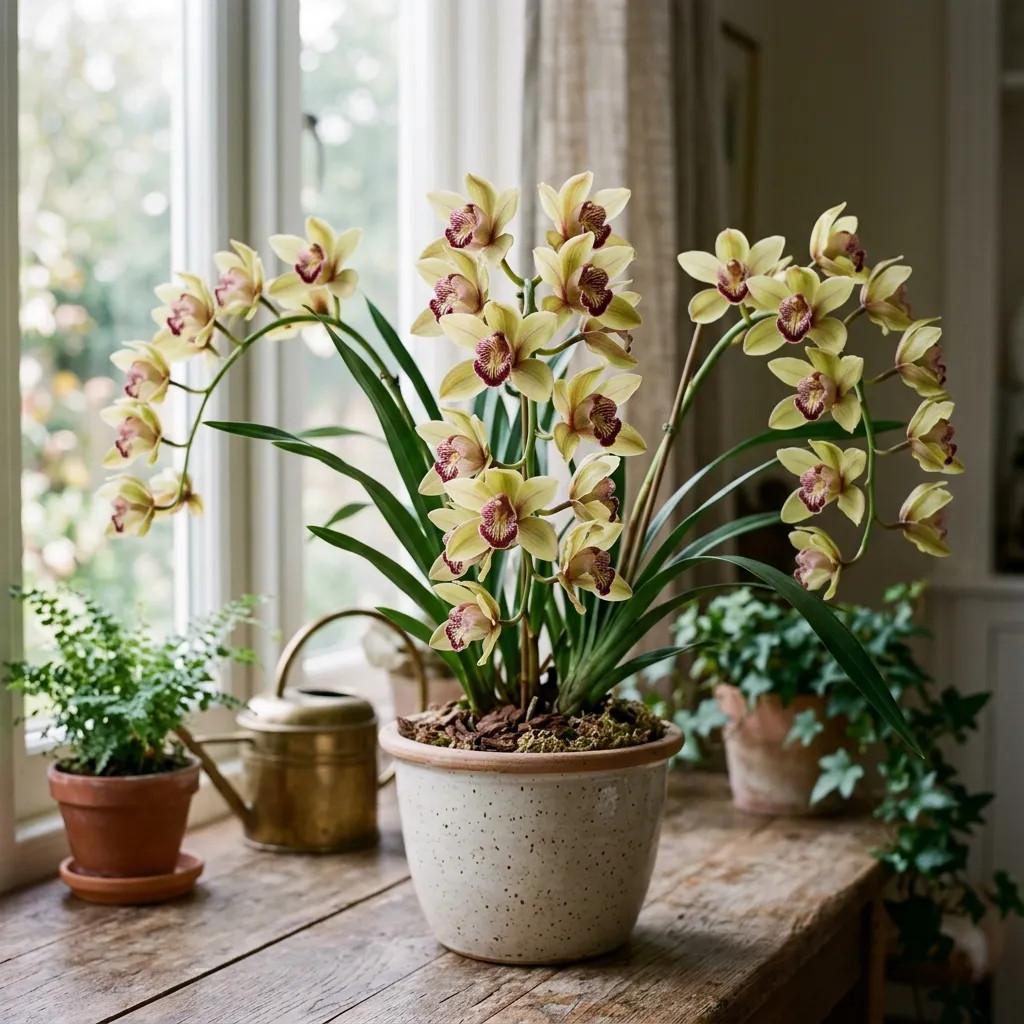
Cymbidium Orchids need bright indirect light, a bark-based orchid mix, and a noticeable night-time temperature drop in autumn to trigger flowering. Water when the mix approaches dryness rather than staying constantly wet, since standing water causes root rot. Unlike many orchids, Cymbidiums tolerate cooler temperatures and even brief light frost once established.
Key Takeaways
- Provide a night-time temperature drop in autumn to trigger flowering.
- Use a bark-based orchid mix with excellent drainage.
- Water when the mix approaches dryness, avoiding standing moisture.
- Give bright indirect light, more than typical tropical orchids need.
- Move outdoors in mild seasons where temperatures allow, avoiding hard frost.
Humidity
Cymbidium orchids perform best with moderate to high humidity, ideally maintained between 40% and 60% relative humidity. Ensure consistent air circulation around the pseudobulbs and foliage to optimize growth while keeping fungal issues at bay.
Structured Plant Data
Plant Data Profile
The following data is extracted directly from our botanical knowledge graph for accuracy and transparency.
Environmental Parameters
| Parameter | Recommended | Survivable |
|---|---|---|
| Temperature | 50°F - 75°F (10°C - 24°C) | 35°F - 85°F (2°C - 29°C) |
Troubleshooting & Diagnostics Guide
1 Why are my Cymbidium orchid leaves turning yellow?
Diagnosis: Overwatering or poor drainage
Treatment: Allow potting medium to dry slightly between waterings; repot in fresh orchid bark if needed.
Prevention: Water only when the medium is nearly dry.
2 Why isn't my Cymbidium blooming?
Diagnosis: Insufficient light or lack of temperature drop
Treatment: Provide bright light and a 10–15°C temperature drop at night in autumn to trigger spikes.
Prevention: Give bright light and seasonal cool nights.
3 Why are the flower buds turning brown and falling off?
Diagnosis: Bud blast from drafts, dry air, or inconsistent watering
Treatment: Keep plant in stable conditions; increase humidity; avoid moving during bud formation.
Prevention: Stable environment and consistent care.
Authoritative Resources
For additional peer-reviewed information on plant diseases, toxicity, and care, consult these trusted botanical and agricultural extensions:
Explore More