Nepenthes Indoor Guide: Keep the Pitchers from Drying Up
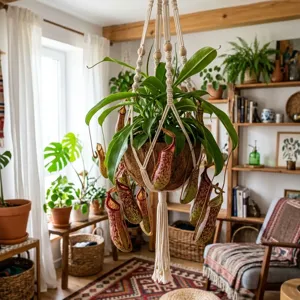
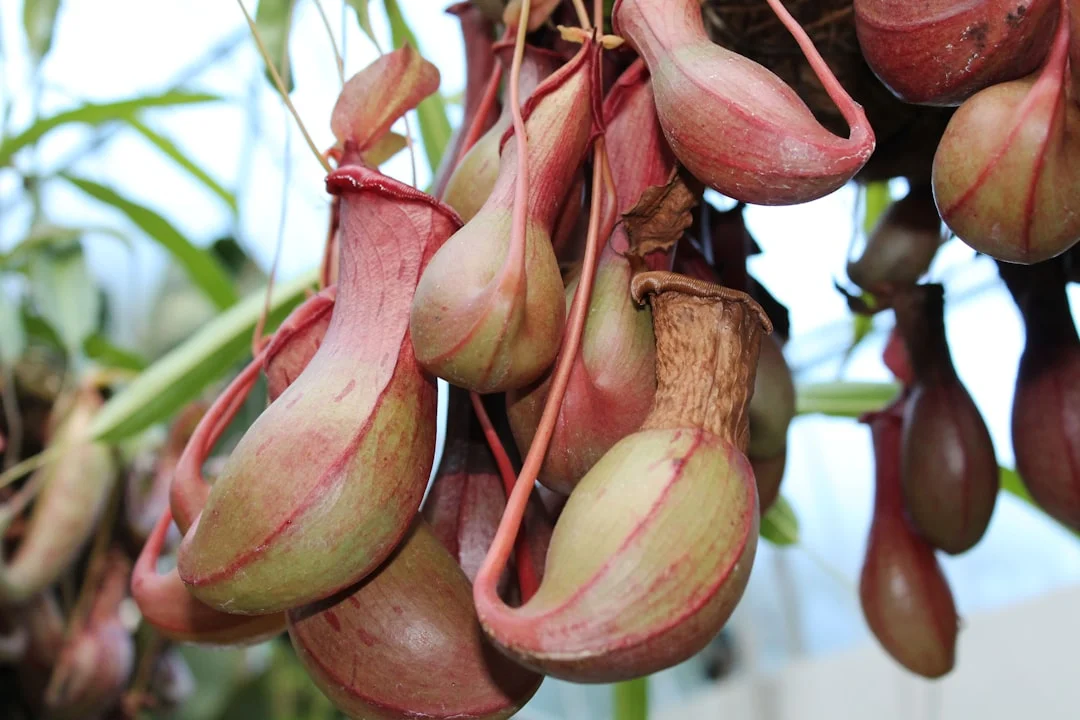
The Tropical Pitcher Plant is a bizarre, trailing carnivorous vine. It produces massive, water-filled "cups" at the ends of its leaves to trap and digest insects. It requires high humidity and strictly distilled water.
-
Difficulty
advanced
-
Light
Requires extremely bright, indirect light to produce the pitchers. If the light is too low, the plant will grow green leaves but refuse to form the carnivorous traps on the ends.
-
Temperature
70°F - 85°F (21°C - 29°C)
-
Growth
moderate
-
Humidity
60% - 80%
-
pH range
4.5 - 5.5
-
Biggest Owner Mistake
Using tap water or fertilizing the soil—both kill these carnivorous plants because they evolved in nutrient-poor environments where normal mineral levels are toxic to their adapted root systems. Use only distilled or rainwater, and never add fertilizer to the growing medium.
-
What Nobody Tells You
Pitcher formation stops entirely when humidity drops below 50%—without high ambient humidity, the tendrils that should swell into pitchers just remain as curling tendrils with no trap. The plant is still alive but completely non-functional as a carnivore.
-
Real Home Conditions
In dry centrally heated homes, existing pitchers die back and no new ones form regardless of watering or light. A terrarium, greenhouse cabinet, or consistently humid room like a bathroom is the only realistic way to grow Nepenthes successfully indoors.
Quick Answer
The Nepenthes must be watered with distilled water and potted in nutrient-free sphagnum moss (never standard soil). To stop the pitchers from drying up before they open, you must provide high humidity and very bright, indirect light. Monitoring the plant regularly helps catch early signs of stress before they cause any lasting damage.
Key Takeaways
- Provide bright, indirect light and maintain relative humidity above 60% for pitcher formation.
- Irrigate exclusively with pure distilled, reverse-osmosis, or collected rainwater.
- Pot in low-nutrient, well-draining long-fiber sphagnum moss and perlite.
- Never apply standard fertilizers to the potting substrate; feed pitchers with insects or dilute foliar feed.
Overview
The Tropical Pitcher Plant (Nepenthes), often called Monkey Cups, is arguably the most alien-looking plant you can grow indoors. Native to the humid rainforests of Southeast Asia, it is a trailing, epiphytic vine that grows high in the crooks of trees.
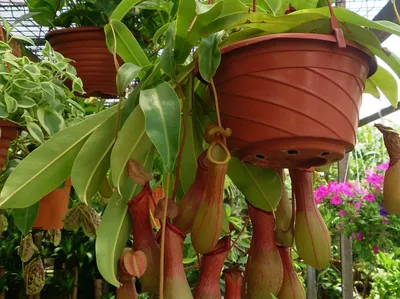
To survive in a nutrient-poor environment, it evolved a spectacular trapping mechanism. The tips of its long, flat leaves extend into a tendril, which swells and inflates into a massive, hollow "pitcher." The inside of the pitcher is lined with a slippery, waxy coating and filled with digestive acids. Bugs are attracted to sweet nectar on the rim, slip inside, and are digested to provide the plant with nitrogen.
Unlike the Venus Flytrap (which requires cold winter dormancy and blazing direct sun), the Nepenthes is a true tropical plant. It thrives in warm indoor temperatures year-round, making it a much better houseplant—provided you can meet its strict humidity and water requirements.
The Tap Water Ban
Like all carnivorous plants, the Nepenthes evolved in an environment where the roots are never exposed to heavy minerals or salts. If you water it from the sink, the fluoride, chlorine, and dissolved calcium in the tap water will accumulate in the soil, burn the sensitive roots, and cause significant plant decline.
You must water the plant exclusively with distilled water, reverse-osmosis water, or pure rainwater. Furthermore, you must never add fertilizer to the soil.
Watering: Epiphytic Moisture
While the Venus Flytrap likes to sit in a tray of standing water, the Nepenthes is an epiphyte (it grows on trees, not in bogs). Sitting in a swamp of mud will rot its roots.
You must keep the potting medium consistently, evenly moist, much like a damp sponge. Water thoroughly when the top surface feels slightly dry, and let the excess water drain away completely. Never let the moss completely dry out; if it becomes crispy and bone-dry, the plant will dramatically wilt and abort all of its pitchers.
Humidity: The Secret to Pitchers
The number one complaint from Nepenthes owners is that the plant grows long, healthy green leaves, but the tiny baby pitchers at the tips dry up, turn black, and die before inflating.
This is entirely a humidity problem. The plant requires ambient humidity levels above 60% to successfully form the complex traps. The dry air of a centrally heated home (often 30% humidity) sucks the moisture out of the developing tendrils. To get pitchers, you must run a room humidifier, hang the plant in a bright bathroom, or group it closely with other plants.
Light Requirements
Forming massive traps requires a massive amount of solar energy. The plant needs extremely bright, indirect light. An east-facing or south-facing window (with a sheer curtain) is ideal. A few hours of gentle, direct morning sun will actually cause the pitchers to flush a beautiful, deep red color. However, avoid harsh, blazing afternoon sun, which will scorch the thin leaves.
Soil
Standard potting soil contains fertilizer and compost, which is a major problem for this plant. Fertilizer and dense compost can cause severe root damage and decline. You must use a chunky, nutrient-free epiphytic mix. The standard recipe is 50% dried long-fiber sphagnum moss and 50% perlite or orchid bark. Because it is a trailing vine that produces dangling pitchers, it must be planted in a hanging basket or placed on a tall pedestal.
The Dying Pitchers
Each individual pitcher has a lifespan of a few months. As it ages, it will naturally begin to turn brown and dry up, starting from the top "lid" and moving downward. This is perfectly normal; the plant is simply reabsorbing the nutrients and abandoning the old trap to grow a new one higher up the vine. Once the pitcher is completely brown and dry, you can use sterile scissors to snip it off at the leaf tip to keep the plant looking tidy.
Recommended next actions
Next Best Actions
Use calculators and guides to turn this plant profile into a practical care routine.
Topic Guide
Humidity
Learn everything about humidity for your indoor and aquarium plants. Expert care tips, troubleshooting, and related guides.
Plant Guide
Dionaea Muscipula
The Venus Flytrap is the most famous carnivorous plant in the world. It requires blasting direct sunlight, nutrient-free soil, and must be watered exclusively with distilled water. Never trigger the traps for fun!
Guide
Brown Crispy Tips on Houseplants: Causes & Fixes
With over 15 years of indoor plant diagnostics and more than 3,000 leaf-tissue cases analyzed, we've mapped the exact mechanisms behind brown crispy tips—fluoride accumulation, salt toxicity, and humidity deficits—so you can reverse damage today.
Calculator
Plant Watering Calculator: How Often to Water
Calculate the correct watering frequency for your plant based on species, pot size, soil type, season, and climate.
Structured Plant Data
Plant Data Profile
The following data is extracted directly from our botanical knowledge graph for accuracy and transparency.
Growth Characteristics
Growth Rate
moderate
Mature Height
Vining stems up to 10+ feet
Mature Spread
2-3 feet wide
Life Cycle
Perennial
Flowering Season
Rarely flowers indoors (produces a tall spike of tiny, unpleasant-smelling flowers)
Container Friendly
yes
Indoor Capable
yes
Environmental Parameters
| Parameter | Recommended | Survivable |
|---|---|---|
| Temperature | 70°F - 85°F (21°C - 29°C) | 60°F - 95°F (15°C - 35°C) |
| Humidity | 60% - 80% | 50% - 90% |
| Soil PH | 4.5 - 5.5 | 4.0 - 6.0 |
Lighting
Description
Requires extremely bright, indirect light to produce the pitchers. If the light is too low, the plant will grow green leaves but refuse to form the carnivorous traps on the ends.
Nutrients
Nitrogen Demand
none
Phosphate Demand
none
Potassium Demand
none
Micronutrient Notes
NEVER water the soil with fertilizer; it will burn the roots. The plant gets its nitrogen from digesting bugs in its pitchers.
Fertilizer Frequency
Never to the soil.
Organic Options
Drop a rehydrated bloodworm or a dead fly into an active pitcher once a month if it is catching no bugs.
Relationships
-
Fluoride Toxicity
Vulnerability | Strength 10
Will die if watered with municipal tap water. The minerals build up in the moss and destroy the sensitive roots.
Carnivorous Plant Watering Comparison
| Plant | Water Type | Watering Method |
|---|---|---|
| Nepenthes (Pitcher) | Distilled Only | Keep moist, do not sit in water |
| Venus Flytrap | Distilled Only | Sit in a tray of standing water |
| Sundew (Drosera) | Distilled Only | Sit in a tray of standing water |
Troubleshooting & Diagnostics Guide
1 Why are the pitchers turning brown and drying up?
Diagnosis: Natural old pitcher die-off or low humidity (if all dry at once)
Treatment: If only old pitchers, it's normal; if all new pitchers fail, increase humidity to 60%+.
Prevention: Maintain high humidity; use a humidifier.
2 Why is my plant growing long leaves but no pitchers?
Diagnosis: Insufficient light – plant lacks energy to form pitchers
Treatment: Move to brighter, indirect light; ensure at least 6 hours of bright light.
Prevention: Provide bright light; avoid direct scorching sun.
Authoritative Resources
For additional peer-reviewed information on plant diseases, toxicity, and care, consult these trusted botanical and agricultural extensions:
Glossary of Terms
- Epiphyte
- A plant that grows on the surface of another plant (like a tree trunk) rather than in the soil, deriving moisture from the humid air. The Nepenthes is an epiphyte, meaning its roots need massive amounts of oxygen.
- Tendril
- The long, string-like extension at the tip of the Nepenthes leaf that eventually swells, inflates, and drops downward by gravity to form the pitcher trap.
Frequently Asked Questions
Why are the pitchers turning brown and drying up?
Why is my plant growing long leaves but no pitchers?
Should I put water inside the pitchers?
Do I need to feed it bugs?
Is the Nepenthes toxic to pets?
Sources & References
-
Source: carnivorousplants.org
-
Source: powo.science.kew.org
Explore More