Carnivorous Plants for Fungus Gnats: Living Sticky Traps
Fungus gnats breed in constantly wet potting soil, and the adults are weak fliers that hover near the soil surface. Carnivorous plants with adhesive leaves, mainly Mexican Pinguicula and Drosera, catch many of these adults and so interrupt the breeding cycle. This guide explains how flypaper traps work, why snap traps and pitchers fail against such tiny insects, what a living trap can and cannot do within an integrated pest management plan, where to place plants among houseplants and terrarium vents, how heavy gnat capture affects the plants, and the water and substrate rules that keep beginners from killing their own pest control.
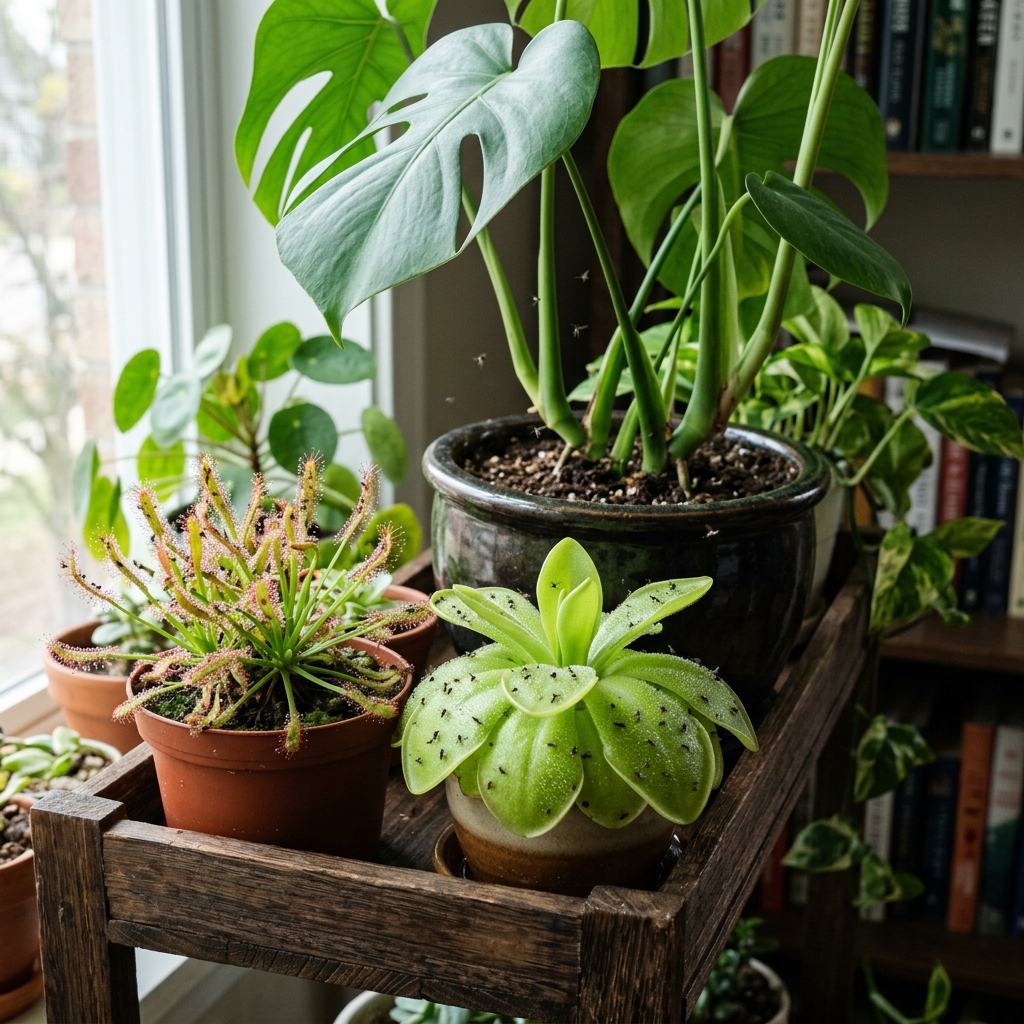
Quick Answer
Sundews (Drosera) and Mexican butterworts (Pinguicula) work as living flypaper: their sticky, mucilage-coated leaves trap adult fungus gnats that land on them. Place a few plants directly among vulnerable houseplants such as Monstera, aroids and Ficus, or beside terrarium vents, and keep them in bright light with RO or distilled water (under 30 ppm TDS) and a peat-and-perlite mix, never houseplant soil or tap water. They catch only airborne adults and do not kill the larvae living in damp potting soil, so pair them with BTI (Bacillus thuringiensis israelensis) drenches or a dry-down cycle for the host plants. Venus flytraps, Sarracenia and Nepenthes are poor choices, because gnats are too small to trigger trap hairs or are able to climb out of or avoid pitchers.
Key Takeaways
- Adhesive-leaf plants such as Mexican Pinguicula and Drosera capture fungus gnats well. Venus flytraps, Sarracenia and Nepenthes do not, because gnats are too small to trigger trap hairs and can avoid or escape pitchers.
- Carnivorous plants target only adult, airborne gnats. They do not kill larvae in damp potting soil, so combine them with BTI, a dry soil cycle on the host plants, or beneficial nematodes to break the full life cycle.
- Place plants within about 30-60 cm (1-2 ft) of the infested pots, among Monstera, aroids and Ficus or near terrarium vents, where gnats hover and fly. Start with one or two plants per infested zone and add more if captures stay low.
- Hundreds of tiny gnats supply nitrogen and phosphorus without burning the leaves. Problems come from fertilizer or large prey, not from gnats, and a leaf covered in carcasses is simply replaced by new growth.
- Keep the biological control alive: use only RO or distilled water under 30 ppm TDS and a peat-and-perlite or similar low-nutrient mix. Tap water and houseplant soil slowly kill carnivorous plants and make them useless as traps.
Why Carnivorous Plants Work Against Fungus Gnats
Fungus gnats (family Sciaridae) are small, dark, weak-flying insects that breed in damp potting soil rich in organic matter. The larvae feed on fungi and fine roots in the top few centimetres of the medium, and the adults hover near the soil surface, drifting between pots and toward windows and lights. Adults live only a few days, but each female lays dozens of eggs, so a small problem grows quickly. Carnivorous plants with sticky leaves catch adults on contact, which reduces egg-laying and gives you a visible measure of how bad the infestation is. For help identifying the pest and the damage it causes, see the fungus gnat diagnostic guide.
How Adhesive Traps Catch Gnats
The plants that work are those with adhesive flypaper traps. They have no moving parts. Instead, they produce mucilage, a sticky, sugary glue, that holds small insects fast.
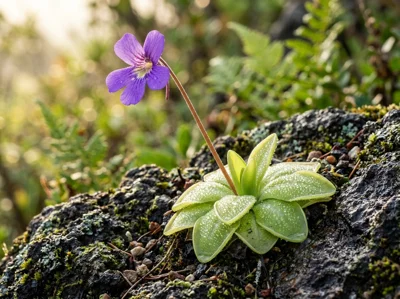
- Mexican butterworts (Pinguicula): broad, flat leaves covered in tiny glands that produce sticky droplets and digestive enzymes. A gnat that lands on the surface sticks and is slowly digested. Pinguicula moranensis is a classic, forgiving choice for a windowsill.
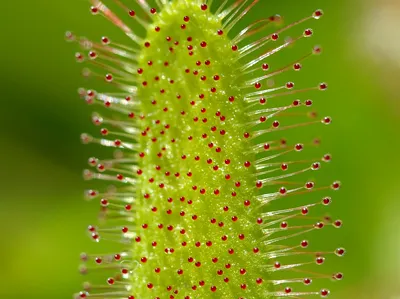
- Sundews (Drosera): leaves lined with tentacles that carry a glistening droplet of mucilage on every tip. When prey touches them, nearby tentacles often bend inward to hold it. Drosera capensis is the easiest sundew for beginners, grows fast and makes sticky new leaves all year.
The first reference table above rates each species by capture rate, placement and the risk that the plant's own wet medium becomes a breeding site (listed as siphon risk, meaning how strongly the plant draws gnats toward its damp surface).
Why Snap Traps and Pitchers Fail
Not every carnivorous plant is a good gnat catcher, and recommending the wrong one is the most common mistake.
- Venus flytraps (Dionaea): the trap closes only when two trigger hairs are touched within a short time by an insect large enough to register. A fungus gnat weighs almost nothing and rarely triggers the mechanism, and the plant also needs a cold winter rest that makes it unsuitable as a year-round trap.
- Pitcher plants (Sarracenia and Nepenthes): pitchers rely on slippery walls and a digestive fluid to drown larger insects such as flies and ants. Gnats are small fliers that rarely land on the rim, and a gnat that does can often fly out. Pitcher plants also need their own wet or cool conditions, so they add maintenance instead of removing pests.
The IPM Reality Check
Carnivorous plants are one layer of integrated pest management, not a complete cure. They catch adult gnats only. The larvae live inside the soil of your houseplants, and a sundew a few centimetres away cannot reach them. If you rely on plants alone, adults will keep emerging from the soil for weeks, and the plants will catch a steady stream without ending the infestation.
A reliable plan combines three actions:
- Catch the adults with sticky carnivorous leaves and yellow sticky cards.
- Kill the larvae in the host pots with a BTI drench (Bacillus thuringiensis israelensis), repeated weekly for three to four weeks, or with beneficial nematodes such as Steinernema feltiae.
- Remove the habitat by letting the top 2-3 cm of the host soil dry between waterings, watering from below, and adding a thin layer of sand or grit to the surface.
The second reference table above lines up each life stage with the role of the carnivorous plant and the companion treatment. Do not dry out the carnivorous plants themselves: they need constant moisture, so treat the host plants and the sundew trays as two separate watering systems.
Placement and Staging
Gnats spend most of their time near the soil surface and move short distances, so the traps must be close to the source.
- Intercrop among host plants. Place butterwort pots and sundew trays within about 30-60 cm (1-2 ft) of vulnerable houseplants such as Monstera, aroids, Ficus and other plants kept in moist soil.
- Put traps at the soil level. Gnats rest on and fly just above the surface, so pots on the same shelf or a saucer beside the host plant outperform traps placed high on a bookshelf.
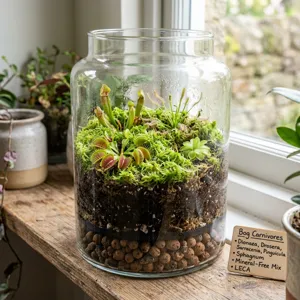
- Use terrarium vents. In an enclosed display, place a sundew near the vent or lid gap where adults hover. See the carnivorous plant terrarium build guide for ventilation layouts that keep the traps in the airflow.
- Keep the traps lit. Sticky leaves only form in strong light. Give the plants a bright window or a grow light for 12-14 hours in the growing season.
- Add more only if needed. Start with one or two plants per infested zone and watch the captures. If after two weeks the leaves are catching only a handful of gnats, add a plant or a sticky card near the pots with the heaviest activity.
What Heavy Feeding Does to the Plants
It is easy to worry that hundreds of captured gnats will overwhelm a sundew or butterwort. In practice, fungus gnats are so small that each one delivers a tiny amount of nitrogen and phosphorus, and the plants digest them as they would any natural prey. A heavy gnat catch usually improves growth and colour. Digestive burn comes from large prey that the leaf cannot cover, or from fertilizer applied to the leaf or medium, not from small insects.
A few housekeeping habits keep plants healthy:
- When a leaf is covered in carcasses, let it be. New sticky leaves form from the centre and the old one will wither on its own. Remove a leaf only when it is black or mouldy.
- Do not apply any fertilizer. The gnats are the fertilizer, and added salts will harm the plant.
- Trim dead leaves from the base so they do not hold moisture against the crown.
During the winter succulent phase, Mexican butterworts stop making sticky leaves, so their trapping drops sharply. Read the Pinguicula rock setup guide for the seasonal cycle, and rely on sundews and yellow cards for cold-season capture.
Water and Care Constraints for Novice Growers
The biggest reason a living trap fails is that the grower treats it like an ordinary houseplant. Carnivorous plants have simple needs, but they are different from those of Monstera or Ficus.
Use RO or Distilled Water Only
Keep water under 30 ppm TDS. Tap water contains dissolved minerals that build up in the pot, burn the roots and eventually kill the plant. Use RO, distilled or clean rainwater, and check the reading with a TDS pen. The carnivorous water TDS calculator shows how to blend water and how evaporation concentrates minerals in a small pot.
Never Use Houseplant Soil
Regular potting mixes contain fertilizer, compost and fine organic matter. These feed fungus gnat larvae, and the salts damage carnivorous roots. Use a low-nutrient mix such as peat with perlite or sand. The carnivorous plant substrate guide lists safe recipes. Because even peat can host a few gnats when it stays wet and covered with dead leaves, keep the surface clean and top it with a thin layer of sand or perlite if you see larvae.
Give Them Their Own Watering Routine
Keep sundews and butterworts in their own pots or trays, away from the watering routine of the host plants. Cape sundews tolerate shallow standing water. Mexican butterworts prefer a damp, free-draining medium and drier winters. If you also grow plants that need a cold winter rest, such as Venus flytraps, read the dormancy requirements guide, and do not rely on them as year-round traps.
Is BTI Safe Around Carnivorous Plants?
BTI targets the larvae of fungus gnats, mosquitoes and black flies, and is considered safe for plants, pets and people when used as directed. It is usually applied as a water soak of dissolved granules (such as mosquito dunks or bits). When treating the host plants, mix the BTI with RO or rainwater if you can, and keep runoff away from sundew and butterwort pots so the minerals in a dunk do not reach the carnivorous medium. If you apply BTI to the carnivorous plants' own medium, use a small dose and flush with RO water afterward.
A Simple Rollout Plan
- Week 0: inspect the host plants, treat the larvae with a BTI drench, let the top layer of the soil dry and set out yellow sticky cards.
- Week 0-1: place one or two sundews or butterworts beside the worst-affected pots.
- Weeks 1-4: repeat the BTI each week, keep the soil surface dry between waterings and watch the captures on the cards and leaves.
- Week 4 onward: keep the plants as a permanent, low-effort adult trap and re-treat only if the cards show new activity.
Troubleshooting Summary
| Symptom | Likely cause | Quick fix |
|---|---|---|
| Gnats keep appearing despite the plants | Larvae still living in the host soil | BTI drench weekly, dry the soil surface and add sticky cards |
| Leaves not sticky or catching nothing | Low light, dry medium or winter succulent phase | Move to brighter light, keep the medium damp and use sundews in winter |
| Plant declining or leaf tips browning | Tap water or mineral buildup | Flush with RO water and check TDS |
| Gnats seem to breed in the carnivorous pot | Constantly wet organic matter and dead leaves | Remove dead tissue, add a sand or perlite top layer and apply BTI |
| Mold on captured prey | Still, humid air and heavy catch | Increase airflow and trim blackened leaves |
Related Resources
Plan an enclosed display with the carnivorous plant terrarium build guide, choose a safe medium with the carnivorous plant substrate guide, manage the butterwort winter cycle with the Pinguicula rock setup guide, plan winter rest for temperate species with the dormancy requirements guide, check your water with the carnivorous water TDS calculator, identify the pest with the fungus gnat diagnostic, and read the plant profiles for Pinguicula moranensis and Drosera capensis.
Frequently Asked Questions
How many butterworts do I need per room to control fungus gnats?
There is no exact number, and no controlled trial sets one, but a practical starting point is one or two plants for each cluster of infested pots, placed within 30-60 cm of the soil. A large room with several host plants may need three to five plants spread among the pots. Watch the leaves and yellow sticky cards for two weeks, and add plants near the pots where gnats still gather.
Will sundews become overwhelmed by too many gnats?
No. Fungus gnats are tiny, so even a leaf covered in dozens of them gets only a small nutrient boost. Sundews keep growing new sticky leaves from the centre, and old leaves covered in carcasses wither naturally. Remove a leaf only if it is black or moldy, and do not add fertilizer.
Can I use tap water on carnivorous plants that I keep for pest control?
No. Tap water carries dissolved minerals that build up in the pot and burn the roots, and a plant in decline stops producing sticky leaves, so it stops catching gnats. Use RO, distilled or rainwater under 30 ppm TDS, and check the water with a TDS pen or the carnivorous water TDS calculator.
Is BTI safe to use alongside carnivorous plants?
BTI is a bacterial larvicide that targets fungus gnat, mosquito and black fly larvae, and it is considered safe for plants, pets and people when used as directed. Apply it to the host plants, use RO or rainwater where possible and keep mineral-rich runoff away from the carnivorous pots. Repeat weekly for three to four weeks to cover the whole life cycle.
Do fungus gnats breed in carnivorous plant substrate?
They can, though less often than in rich potting soil. Carnivorous plants grow in low-nutrient peat and sand, which supports fewer larvae, but constantly wet peat or sphagnum covered in dead leaves can still host some. Remove dead tissue, top the surface with a thin layer of sand or perlite and apply BTI if you see larvae.
Do carnivorous plants kill fungus gnat larvae in the soil?
No. Sundews and butterworts only catch adult gnats that land on their leaves. Larvae live inside the soil of the host plants, out of reach. To end an infestation, combine the plants with BTI or nematodes, dry the surface of the host soil between waterings and use yellow sticky cards.
Can a Venus flytrap or pitcher plant catch fungus gnats?
Rarely. Venus flytraps need larger insects to trigger the trap hairs, and pitcher plants rely on slippery walls to drown bigger prey. Gnats are small, light fliers that rarely trigger traps or fall in. Choose sundews or Mexican butterworts instead.
Which is better for gnats, a sundew or a butterwort?
Both work. Cape sundews (Drosera capensis) grow quickly, make sticky leaves all year and tolerate a wet tray, so they are the easiest choice for continuous capture. Mexican butterworts such as Pinguicula moranensis have broad sticky leaves that catch many gnats in summer, but they switch to non-sticky succulent leaves in winter. Many growers use both.
Can I plant my sundew in regular houseplant soil?
No. Regular potting soil contains fertilizer and fine organic matter that burn carnivorous roots and feed fungus gnat larvae. Use a low-nutrient mix of peat with perlite or sand, as described in the carnivorous plant substrate guide.
How long does it take for carnivorous plants to reduce a gnat problem?
You will usually see captured gnats on the leaves within days. Adult numbers typically fall over one to three weeks, and a full infestation takes about three to six weeks to clear when the plants are combined with BTI and a dry-down cycle on the host soil. Plants alone may keep catching adults without ever stopping the supply of larvae.
Sources & References
-
Source: carnivorousplants.org
Type: horticultural-reference
-
Source: ipm.ucanr.edu
Type: horticultural-reference
-
Source: rhs.org.uk
Type: horticultural-reference
Explore More
Related Articles
Related Plant Guides
Recommended next actions
Continue Exploring
Dive deeper into related plant care tools and profiles.
Calculator
Carnivorous Plant Water TDS Calculator: Safety & Dilution
Rate your water's TDS for carnivorous plants, calculate how much tap water can be blended with RO or distilled water to reach a safe target, and estimate how fast minerals build up in a pot.
Plant Guide
Cape Sundew
Drosera capensis, the Cape sundew, is a fast-growing, forgiving carnivorous plant with long sticky red-tipped leaves that curl around prey, grows all year without dormancy and doubles as a living flypaper.
Plant Guide
Mexican Butterwort
Pinguicula moranensis is a compact Mexican butterwort that switches between sticky carnivorous leaves in summer and a tight succulent rosette in winter, and thrives in pumice or on wicking rock.
Topic Guide
Carnivorous Plant Substrate Guide: Ingredients, Ratios & Zero Fertilizer
Master carnivorous plant substrate recipes: 50/50 peat-perlite/silica sand ratios, zero-fertilizer rules, rinsing minerals, and live sphagnum moss.
Topic Guide
How to Build a Carnivorous Plant Terrarium: Bog Layering & Drainage
Build a carnivorous bog terrarium with LECA drainage, mineral-free peat mix, RO water, species zoning, ventilation, and strong LED lighting.
Topic Guide
Carnivorous Plant Dormancy: Winter Rest, Triggers & Cold Stratification
Master winter dormancy for carnivorous plants: cold stratification triggers, fridge dormancy methods, photoperiod drops, and preventing winter rot.