Pinguicula moranensis Care Guide: Mexican Butterwort in Summer and Winter
Pinguicula moranensis is a compact Mexican butterwort that switches between sticky carnivorous leaves in summer and a tight succulent rosette in winter, and thrives in pumice or on wicking rock.
-
Difficulty
moderate
-
Light
Bright indirect to moderate light, about 120-200 PPFD at the leaves. Morning sun or strong LED grow lights suit it, and hot afternoon sun on bare rock should be avoided.
-
Temperature
Summer 20-28°C (68-82°F); winter 10-18°C (50-64°F)
-
Growth
moderate in summer, slow in winter
-
Humidity
40-70%
-
pH range
5.5-7.0 (mineral-free medium)
-
Biggest Owner Mistake
Treating the winter succulent rosette as a dying plant and keeping the water dish full. The compact, non-sticky rosette is normal, and a wet substrate in cool, still air is what rots the crown.
-
What Nobody Tells You
A butterwort catches only adult gnats. The larvae stay in the damp soil of your other houseplants, so the plant works best as part of a plan with BTI or a dry-down cycle.
-
Real Home Conditions
Most losses come from tap water minerals building up in the pot or rock, so measuring TDS and flushing the substrate matter more than any other care step.
Quick Answer
Pinguicula moranensis is a Mexican butterwort that needs RO, distilled or rain water under 30 ppm TDS, a gritty 60/20/20 mix of pumice, coarse silica sand and perlite (or a wicking feather rock mount), and bright indirect light of about 120-200 PPFD. In summer it makes sticky carnivorous leaves and likes a 1-2 cm bottom-watering dish. In winter it forms a compact, non-sticky succulent rosette and needs a near-dry substrate with sparing morning misting every 10-14 days to prevent crown rot.
Key Takeaways
- Grow it in a gritty mix of 60% pumice, 20% coarse silica sand and 20% perlite, or on wicking feather rock, rather than dense peat.
- Use only RO, distilled or rain water under 30 ppm TDS, because evaporating minerals clog pores and burn roots.
- Summer needs bright light of 120-200 PPFD for 12-14 hours and a constant 1-2 cm bottom-watering dish for sticky carnivorous leaves.
- Winter needs a compact succulent rosette kept near-dry, with sparing morning misting every 10-14 days and 8-10 hours of light to prevent crown rot.
- Propagate by pulling plump leaves cleanly from the rosette and laying them flat on a damp, gritty mix, and use the plant as a living trap for adult fungus gnats only.
Pinguicula moranensis Care at a Glance
- Light: Bright indirect to moderate light, about 120-200 PPFD, for 12-14 hours in summer and 8-10 hours in winter.
- Substrate: 60% pumice, 20% coarse silica sand and 20% perlite, or a wicking feather rock mount. Avoid dense peat bog mixes.
- Water: RO, distilled or rain water under 30 ppm TDS only.
- Summer: sticky carnivorous leaves, with a constant 1-2 cm bottom-watering dish.
- Winter: compact succulent rosette, near-dry substrate and sparing morning misting every 10-14 days.
- Propagation: leaf pullings from the plump rosette.
What Is Pinguicula moranensis?
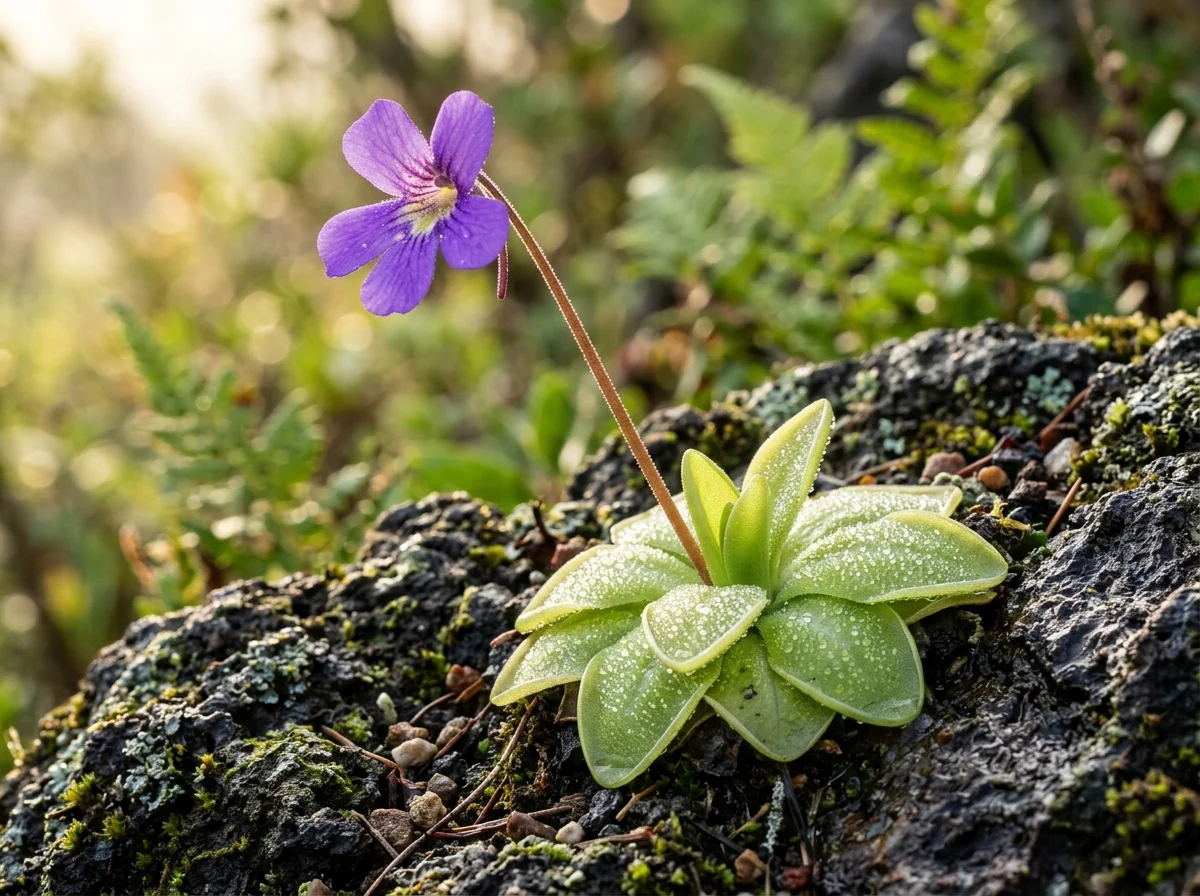
Pinguicula moranensis, the Mexican butterwort or Moran butterwort, is a rosette-forming carnivorous plant in the family Lentibulariaceae. It grows on limestone bluffs and cloud forest rock faces in Mexico and Guatemala, where it clings to damp, mineral-poor rock rather than rooting in deep soil. Its broad leaves are covered in tiny glands that produce sticky mucilage, which traps small insects, and digestive enzymes that break them down. The plant is a lithophyte and sometimes an epiphyte, so a free-draining, airy medium suits it better than a wet peat bog.
It is one of the easiest Mexican butterworts for a windowsill, and it makes an effective living flypaper for houseplants. For a comparison with sundews, see Drosera capensis, which tolerates wetter conditions all year.
Seasonal Heterophylly: Two Plants in One
Mexican Pinguicula are heterophyllous, meaning they produce two different kinds of leaves during the year. Care must follow this cycle, and the first reference table above summarises it.
Summer Carnivorous Phase
In warm, bright months the plant forms broad, flat leaves that glisten with mucilage and digest trapped insects. Give it 12-14 hours of bright light at about 120-200 PPFD and keep the base reservoir at a constant 1-2 cm. The substrate should stay evenly damp through capillary action, and misting is rarely needed.
Winter Non-Carnivorous Succulent Phase
As light and temperature fall, the plant makes tight, compact, non-sticky succulent leaves that store water. This is the phase in which plants are most often lost, because a wet substrate and cool, still air rot the crown. Let the substrate dry to near-dry, empty the dish or fill it only when the medium is bone dry, and mist sparingly every 10-14 days in the morning so the surface dries before night. Keep the light bright for 8-10 hours and keep air moving. The seasonal cycle of the rock mount is covered in the Pinguicula rock setup guide, and the dormancy requirements guide explains how this differs from the cold rest of Venus flytraps and Sarracenia.
Transitions
Change the water level and light gradually over two to three weeks in each direction. A sudden switch, especially into a wet winter, is a common cause of failure.
Substrate and Planting
The best medium is open and mineral-based: 60% volcanic pumice, 20% coarse silica sand and 20% perlite. It drains quickly, holds a little moisture and keeps the crown dry. Rinse the pumice and sand in RO water before use to remove dust and soluble minerals. Plant the rosette so the crown sits at or just above the surface, never buried, and press the roots into the mix without compacting it.
Alternatively, mount the plant on porous feather rock or pumice that stands in a shallow dish, so the stone wicks water upward while the crown stays drier than it would in a pot. The Pinguicula rock setup guide explains rock choice, carving shallow pockets and securing the roots. For a broader look at media for carnivorous plants, and why dense peat mixes work against this species, see the carnivorous plant substrate guide.
Light
Aim for 120-200 PPFD. In a window, that means bright indirect light or a few hours of gentle morning sun. Under grow lights, place the fixture 20-40 cm above the plant. Use 12-14 hours in summer and 8-10 hours in winter. A rosette that stays flat and pale in summer needs more light, and leaves that curl or go crisp indicate too much heat or light on bare rock. A pink or reddish tint in strong light is normal.
Water Quality: Zero Minerals
Use RO, distilled or rain water, kept under 30 ppm TDS. Dissolved minerals in tap water concentrate as water evaporates from the substrate and the rock face. They form a white crust, block the capillary channels and burn the fine roots. Test the reservoir and runoff monthly with a TDS pen. The carnivorous water TDS calculator helps you check blends and estimate how quickly minerals build up in your pot. Flush the substrate from the top with RO water every few months, and never use fertilizer.
Feeding and Fungus Gnat Control
The plant catches its own food. In a room with fungus gnats or fruit flies, the sticky summer leaves will usually feed it, and old leaves covered in carcasses wither and are replaced by new ones. If prey is scarce, place a few thawed or crushed tiny insects on a leaf in summer. Do not feed in winter, and never feed the substrate.
Mexican butterworts make useful flypaper beside houseplants, but they only catch adult gnats and do not kill the larvae in damp soil. Combine them with BTI and a dry-down cycle on the host plants, as described in carnivorous plants for fungus gnats. Trapping drops in winter, when the leaves are non-sticky.
Temperature, Humidity and Airflow
The plant grows well at 20-28°C in summer and 10-18°C in winter, and survives short dips to about 5°C. Moderate humidity of 40-70% is enough, and airflow matters more than high humidity. For an enclosed display, use ventilation so the surface does not stay saturated. The carnivorous plant terrarium build guide explains how to ventilate a terrarium and separate plants with different winter needs.
Propagation by Leaf Pullings
- Choose healthy leaves. Select plump, firm leaves from the outside of the rosette, ideally the thick succulent leaves from the winter rosette or early spring.
- Pull cleanly. Grip the leaf at its base and pull sideways with a gentle rocking motion so the white base comes away with the leaf. A torn leaf rarely roots.
- Lay the leaves flat. Place them on a damp, gritty mix of pumice, sand and perlite, base touching the medium. Do not bury them.
- Keep them humid and bright. Use RO water, bright light and a loosely covered container with some airflow.
- Wait for plantlets. Tiny plantlets form at the base in four to eight weeks. Remove old leaf remnants once they rot, and move plantlets to their own pots when they have a few leaves.
Not every leaf will take, so pull several. Mature plants also produce offsets that can be divided in spring.
Flowering
Healthy mature plants produce slender stalks with pink to purple flowers in late winter and spring, after a cool, drier winter rest with a shorter photoperiod. Strong light and a clean root zone encourage flowering. Do not fertilize to force blooms.
Maintenance Routine
- Weekly: check the water dish in summer, remove dead leaves and look for algae or white crust.
- Monthly: check TDS of the reservoir and runoff, and rinse the surface with RO water.
- Every 6-12 months: flush the substrate with RO water, and repot in fresh pumice mix in early spring before rapid growth.
Troubleshooting Summary
| Symptom | Likely cause | Quick fix |
|---|---|---|
| Crown turns soft, brown or black in winter | Wet substrate and still air in the succulent phase | Let the substrate dry, remove rotted leaves and improve airflow |
| Leaves not sticky in summer | Low light, dry substrate or mineral build-up | Raise light, keep the dish at 1-2 cm and flush with RO water |
| Leaf tips brown and crisp | Mineral salts or heat | Flush with RO water and move out of hot sun |
| White crust on the substrate | Evaporating minerals from tap water | Flush the pot and switch to RO or distilled water |
| Green film on the surface | Constant wetness with strong light | Lower the water level, shade the surface and add airflow |
Related Resources
Mount the plant with the Pinguicula rock setup guide, choose a medium with the carnivorous plant substrate guide, plan an enclosure with the carnivorous plant terrarium build guide, use it for pest control with carnivorous plants for fungus gnats, compare winter care in the dormancy requirements guide, check your water with the carnivorous water TDS calculator, and meet a companion in the profile for Drosera capensis.
Recommended next actions
Next Best Actions
Use calculators and guides to turn this plant profile into a practical care routine.
Calculator
Carnivorous Plant Water TDS Calculator: Safety & Dilution
Rate your water's TDS for carnivorous plants, calculate how much tap water can be blended with RO or distilled water to reach a safe target, and estimate how fast minerals build up in a pot.
Plant Guide
Cape Sundew
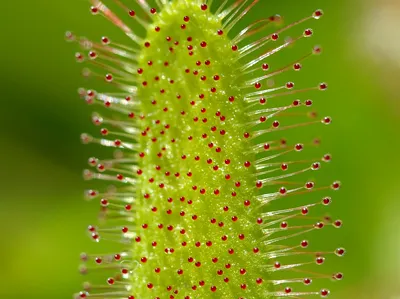
Drosera capensis, the Cape sundew, is a fast-growing, forgiving carnivorous plant with long sticky red-tipped leaves that curl around prey, grows all year without dormancy and doubles as a living flypaper.
Topic Guide
Carnivorous Plant Substrate Guide: Ingredients, Ratios & Zero Fertilizer
Master carnivorous plant substrate recipes: 50/50 peat-perlite/silica sand ratios, zero-fertilizer rules, rinsing minerals, and live sphagnum moss.
Topic Guide
How to Build a Carnivorous Plant Terrarium: Bog Layering & Drainage
Build a carnivorous bog terrarium with LECA drainage, mineral-free peat mix, RO water, species zoning, ventilation, and strong LED lighting.
Topic Guide
Fungus Gnats
Learn everything about fungus gnats for your indoor and aquarium plants. Expert care tips, troubleshooting, and related guides.
Topic Guide
Water Quality for Houseplants
Compare tap, filtered, distilled, and rainwater for houseplants. Learn which water is best for sensitive plants and how to prevent mineral buildup.
Structured Plant Data
Plant Data Profile
The following data is extracted directly from our botanical knowledge graph for accuracy and transparency.
Growth Characteristics
Growth Rate
moderate in summer, slow in winter
Mature Height
2-4 inches (rosette); flower stalks 10-15 cm
Mature Spread
4-6 inches
Life Cycle
Perennial
Flowering Season
Late winter to spring
Container Friendly
yes
Indoor Capable
yes
Environmental Parameters
| Parameter | Recommended | Survivable |
|---|---|---|
| Temperature | Summer 20-28°C (68-82°F); winter 10-18°C (50-64°F) | 5-35°C (41-95°F) |
| Humidity | 40-70% | 30-90% with good airflow |
| Soil PH | 5.5-7.0 (mineral-free medium) | 5.0-7.5 |
Lighting
Description
Bright indirect to moderate light, about 120-200 PPFD at the leaves. Morning sun or strong LED grow lights suit it, and hot afternoon sun on bare rock should be avoided.
Nutrients
Nitrogen Demand
low
Phosphate Demand
low
Potassium Demand
low
Micronutrient Notes
Gets its nutrients from prey digested on its sticky leaves. Salts in the substrate and water harm the roots.
Fertilizer Frequency
None. Do not fertilize the substrate or reservoir.
Organic Options
Live or crushed tiny insects such as fungus gnats or fruit flies during the summer carnivorous phase only.
Relationships
-
Water Quality
Requirement | Strength 10
Needs RO, distilled or rain water under 30 ppm TDS, because evaporating minerals clog capillary pores and burn roots.
-
Winter Dryness
Requirement | Strength 9
The winter succulent phase needs a near-dry substrate and sparing morning mist to prevent crown rot.
-
Substrate Drainage
Requirement | Strength 9
Pumice, sand and perlite or a wicking rock keep the crown drier than dense peat does.
-
Fungus Gnats
Benefit | Strength 7
Sticky summer leaves catch adult fungus gnats, but the plant does not kill larvae in soil.
-
Crown Rot
Vulnerability | Strength 8
Wet crowns in cool, still winter air lead quickly to rot.
Mexican Butterwort vs Other Common Carnivorous Plants
| Plant | Winter Pattern | Water Regime | Gnat Capture |
|---|---|---|---|
| Pinguicula moranensis | Succulent rosette, no cold rest | Damp in summer, near-dry in winter | Excellent in summer |
| Drosera capensis | No dormancy; slows slightly | Moist, tolerates standing water | Excellent all year |
| Dionaea muscipula | Cold dormancy for 3-4 months | Barely damp in winter | Poor |
| Nepenthes ventrata | No dormancy; keep warm | Consistently moist | Poor |
Troubleshooting & Diagnostics Guide
1 Crown turns soft, brown or black in winter
Diagnosis: Wet substrate with cool, still air during the succulent phase
Treatment: Let the substrate dry nearly out, cut away rotted leaves with clean scissors, improve airflow and mist only sparingly in the morning.
Prevention: Lower the water level gradually in autumn and keep the dish dry through winter.
2 Leaves stay small and not sticky in summer
Diagnosis: Low light, a dry substrate or mineral build-up
Treatment: Raise light to 120-200 PPFD for 12-14 hours, keep a 1-2 cm reservoir and flush the pot with RO water.
Prevention: Use RO or distilled water and keep the plant in bright light.
3 White or grey crust on the substrate surface or rock
Diagnosis: Dissolved minerals concentrating as water evaporates
Treatment: Flush slowly from the top with RO water, brush off surface crust and check runoff TDS.
Prevention: Use water under 30 ppm TDS and flush every few months.
4 Leaf tips brown or crisp
Diagnosis: Salt stress or heat from bare rock in direct sun
Treatment: Flush with RO water, move to bright indirect light and add airflow.
Prevention: Avoid hot afternoon sun and tap water.
5 Green algae or slime on the substrate surface
Diagnosis: Constant surface wetness combined with strong light
Treatment: Lower the water level, shade the surface, brush gently under RO water and increase airflow.
Prevention: Let the surface dry slightly between top-ups and keep light off the reservoir.
6 Fungus gnats hover around the plant
Diagnosis: Constantly wet organic material such as sphagnum or dead leaves
Treatment: Remove dead leaves, let the surface dry slightly and top with a thin layer of perlite or sand. Sticky leaves will catch adults.
Prevention: Keep the medium mineral-based and clear dead tissue promptly.
7 Leaf pullings rot without forming plantlets
Diagnosis: Medium too wet, leaves torn or buried, or still air
Treatment: Remove rotting leaves, use fresh gritty mix kept damp but not soggy and pull more leaves cleanly from the base.
Prevention: Lay leaves flat on the surface with some airflow and pull several for better odds.
8 Plant does not flower
Diagnosis: No cool, drier winter rest, or too little light
Treatment: Provide a cooler, drier winter with 8-10 hours of bright light and increase light gradually in spring.
Prevention: Follow the seasonal cycle and avoid fertilizer.
Authoritative Resources
For additional peer-reviewed information on plant diseases, toxicity, and care, consult these trusted botanical and agricultural extensions:
Glossary of Terms
- Heterophylly
- The production of two different leaf forms on one plant. Mexican Pinguicula make sticky carnivorous leaves in summer and compact succulent leaves in winter.
- Mucilage
- The sticky, sugary secretion produced by glands on butterwort leaves that traps small insects.
- Lithophyte
- A plant that grows on rock surfaces rather than in deep soil.
- Capillary Wicking
- The upward movement of water through the connected pores of a porous medium, such as pumice or feather rock, from a shallow reservoir.
- TDS (Total Dissolved Solids)
- The concentration of dissolved minerals in water, measured in ppm. Pinguicula moranensis needs water under 30 ppm.
Frequently Asked Questions
How do I propagate Pinguicula moranensis from leaf pullings?
Why are the leaves of my Mexican butterwort turning pink or red?
How do I get Pinguicula moranensis to flower?
How many fungus gnats can a Pinguicula moranensis catch?
What are the most common winter watering mistakes?
Does Pinguicula moranensis go dormant like a Venus flytrap?
Can I use tap water on a Mexican butterwort?
Can I grow Pinguicula moranensis on a rock?
Why are the leaves no longer sticky?
Can I grow Pinguicula moranensis with sundews?
Is Pinguicula moranensis safe around pets?
Sources & References
-
Source: carnivorousplants.org
-
Source: kew.org
-
Source: missouribotanicalgarden.org
Explore More