How to Convert an Aquarium into a Paludarium
Converting a standard aquarium into a paludarium involves careful planning to successfully combine aquatic and terrestrial habitats. This guide explains whether a paludarium can hold fish, how an aquarium can become a terrarium instead, how to build your own paludarium step by step, and how hard maintenance really is. It covers land and water ratios, boundaries, filtration for lower water levels, water volume estimates for common US tank sizes, substrates, and plants, with reference tables for comparison, stocking, upkeep, and troubleshooting.
Quick Answer
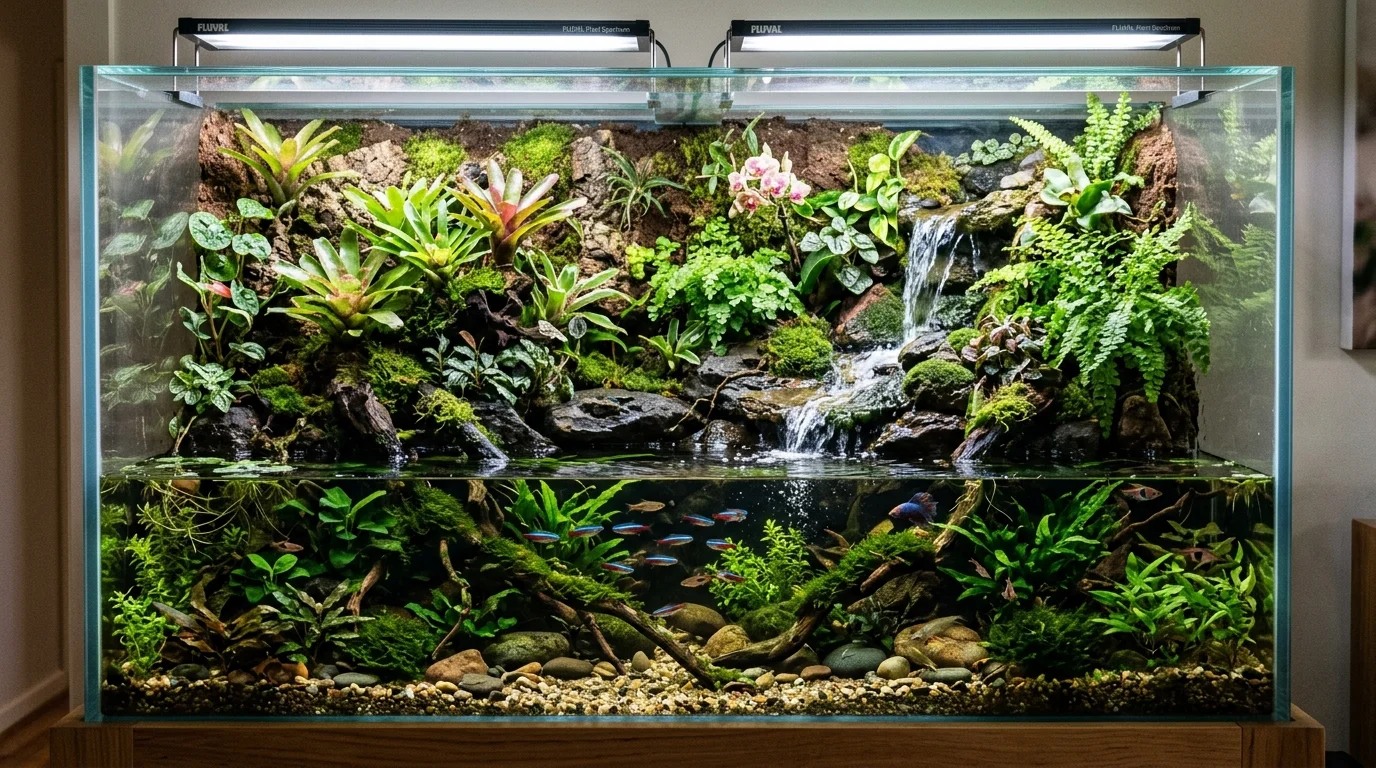
When converting an aquarium to a paludarium, plan the terrestrial layout carefully to ensure adequate usable water volume remains.
Key Takeaways
- Yes, a paludarium can hold fish: the water zone works like a shallow aquarium, but you should stock small, peaceful species based on actual water volume, not rated tank size.
- An aquarium converts easily into a terrarium by adding a drainage layer, mesh screen, soil, and a ventilated lid.
- Building a paludarium means planning the land-to-water ratio, building a secure boundary, adapting filtration, and cycling the water before adding fish.
- Taller aquariums are generally better suited for paludarium conversions due to increased vertical space.
- Water volume is significantly reduced in a paludarium and must be recalculated accurately to size heaters and filters and dose conditioners.
- Paludariums are moderately difficult to maintain, with roughly 30 to 60 minutes of weekly care once established.
Evaluating the Aquarium
Converting a standard fish tank into a paludarium is an excellent way to enjoy both aquatic and terrestrial environments in one display. Before starting, evaluate your existing aquarium. Fill it with water and let it sit for 24 hours to confirm the silicone seams are sound, then drain it and wipe it clean with plain water or a diluted vinegar solution (avoid soaps and glass cleaners). Consider the height too. Taller tanks, such as a 20-gallon high (about 24 x 12 x 16 inches), provide sufficient vertical room for terrestrial plants to grow above the water line, while long, low tanks leave little growing space. Finally, remember that water weighs about 8.3 pounds per US gallon and wet soil and rock add even more, so make sure your stand is rated for the finished weight.
Can I Turn My Aquarium into a Terrarium?
Yes. A glass aquarium is one of the most popular starting points for a terrarium because it is strong, watertight, and widely available secondhand. A terrarium removes the standing-water zone (or keeps only a small water dish) and focuses on soil, plants, and humidity. If you do not want fish or a water feature, converting to a terrarium is simpler than building a paludarium. The main differences to plan for are:
- Drainage: An aquarium has no drain hole, so add a 1 to 2 inch drainage layer of LECA, hydro balls, or lava rock, then separate it from the soil with a mesh screen so the soil does not sink into the gaps.
- Substrate: Use a soil mix of coco coir, orchid bark, and sphagnum moss or a ready-made bioactive substrate about 3 to 4 inches deep. Avoid potting mixes with added fertilizer pellets, pesticides, or wetting agents.
- Ventilation: A solid glass lid traps humidity but can lead to mold and stale air. A screen top or partly open lid suits drier setups, while a mostly closed lid suits tropical builds.
- Lighting: Use full-spectrum LED lights, typically about 6500K, on a timer for 8 to 10 hours per day. Many planted-aquarium LEDs work well.
If you later want to add a stream, pond, or fish, you can convert the terrarium into a paludarium by adding a waterproof boundary and filtration. The comparison table below summarizes how aquariums, terrariums, and paludariums differ.
Can a Paludarium Have a Fish Tank?
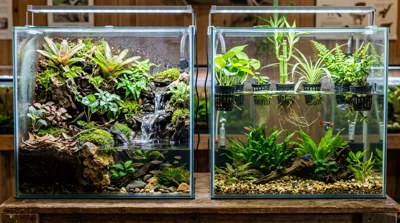
Yes, and in practice most paludariums are built inside a fish tank. The water section of a paludarium works like a shallow aquarium, so it can house fish, shrimp, and snails. The key difference is that your water volume is much smaller than the tank's rated size, which affects stocking and water quality. Keep these points in mind:
- Choose small, peaceful species. Nano fish such as ember tetras, celestial pearl danios, Endler's livebearers, and white cloud mountain minnows suit shallow water. Avoid goldfish, cichlids, and other large, messy fish.
- Stock by actual water volume. Calculate your real water volume and stock conservatively, because small volumes build up ammonia quickly.
- Cycle the water first. Run the filter and cycle the water for about 4 to 6 weeks, until ammonia and nitrite read 0 ppm, before adding fish.
- Match temperatures. Pick fish that tolerate the same temperature range as your plants, and use a heater sized for your actual water volume (a common guideline is 3 to 5 watts per gallon).
- Secure the lid. Many fish jump, and a gap-free lid also keeps humidity high.
- Check compatibility. Fish may eat tadpoles or shrimplets, and some amphibians or crabs may prey on small fish. Research each species before combining them.
The species table below lists small fish and invertebrates commonly used in paludarium water zones.
How Do I Make My Own Paludarium?
Building a paludarium from an aquarium follows a clear sequence. Here is the overall process, with details for each stage below.
- Plan your land-to-water ratio and sketch the layout.
- Leak-test and clean the tank.
- Build the land boundary and any background.
- Install the filter, heater, and lighting.
- Position hardscape such as driftwood and rocks.
- Add the drainage layer, mesh screen, and substrates.
- Fill the water zone slowly and start the cycle.
- Plant the terrestrial, marginal, and aquatic zones.
- Install the lid, set the lights on a timer, and monitor temperature and humidity.
- Add livestock only after the water is cycled and the plants have settled in.
Designing the Land/Water Split
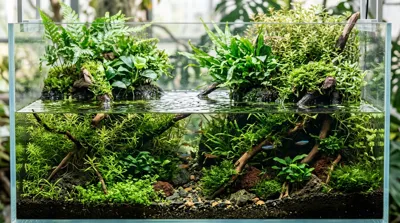
The first major design decision is the ratio of land to water. Consider what animals and plants you intend to keep. A setup for fish and shrimp may suit a balanced 50:50 or water-heavy layout, a habitat for terrestrial frogs may suit mostly land, and semi-aquatic turtles need far more water than a typical converted tank allows. Sketch out your layout, deciding whether the land will form a bank along the back, sit on one side, or act as a central island. The ratio table below lists common starting points.
Creating the Land Boundary
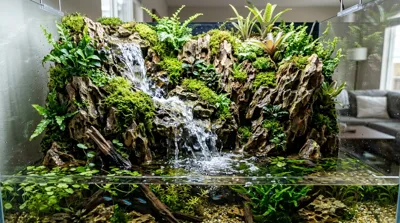
You must establish a structural boundary to hold the terrestrial substrate above the water. Popular methods include siliconing a glass or acrylic divider into the tank, building a false bottom framework using plastic egg crate, or sculpting a barrier using aquarium-safe expanding polyurethane foam and rocks. Use only 100% silicone labeled aquarium-safe (avoid bathroom or kitchen silicone, which often contains fungicides) and allow it to cure for at least 24 to 48 hours, longer for thick beads, until there is no vinegar smell. Whichever method you choose, it must be secure enough to prevent the land substrate from collapsing into the aquatic zone.
Filtration, Heating, and Circulation
Because a paludarium only partially fills the tank, standard Hang-on-Back filters often will not reach the water or will create excessive splashing. Internal submersible filters, small canister filters, or specialized paludarium filters are usually required. Ensure that the water circulates adequately to prevent stagnation and maintain healthy water parameters for aquatic life. A small pump can also drive a waterfall or stream feature. Use a submersible heater suited to your shallow water depth, and plug all equipment into a GFCI outlet with drip loops in the cords.
Recalculating Water Volume
Once you have planned the land and water zones, you must account for the drastically reduced water capacity. The physical space taken up by the land foundation and the lower overall water depth mean your 20-gallon tank will no longer hold 20 gallons of water. For example, a 20-gallon high tank (24 x 12 inches) with half the footprint as water at a depth of 6 inches holds about 3.7 gallons (864 cubic inches divided by 231). It is important to calculate the new water volume so that you can correctly dose water conditioners and appropriately size your heater and filter. The table below shows estimates for common US tank sizes.
Substrate and Plants
With the hardscape and boundary in place, you can add your terrestrial and aquatic substrates. Use a high-quality bioactive substrate for the land portion to support healthy plant growth and microfauna, and fine gravel, sand, or aquarium soil in the water zone. Finally, select appropriate paludarium plants, placing moisture-loving marginal plants near the water's edge and true terrestrial plants higher up on the land structure. Popular choices include java fern, anubias, pothos, peace lily, ferns, mosses, bromeliads, fittonia, and creeping fig.
Temperature, Humidity, and Lighting
Most tropical paludariums run at about 72 to 82 degrees Fahrenheit with 60 to 90 percent humidity on the land side. Use full-spectrum LED lighting on a timer for 8 to 10 hours per day, and monitor conditions with a digital thermometer and hygrometer rather than guessing.
Are Paludariums Hard to Maintain?
Paludariums are moderately difficult. They are more demanding than a basic fish tank or terrarium because you are managing two systems at once: a water system (filtration, water changes, the nitrogen cycle) and a humid land system (misting, pruning, mold control). The good news is that a well-planned, established paludarium can be fairly stable, and many hobbyists spend roughly 30 to 60 minutes per week on routine care. New setups need more attention for the first few months while plants root and the water cycle matures.
- What is easy: Hardy plants grow quickly in the humid air, the water zone buffers temperature swings, and a bioactive cleanup crew of springtails and isopods helps control mold and waste.
- What takes effort: Balancing humidity against ventilation, keeping the land boundary sealed, controlling algae, and keeping water parameters stable in a small volume.
- What reduces work: Choose hardy plants, avoid overstocking, use a timer for lights, and keep a simple maintenance routine.
The schedule and troubleshooting tables below outline typical tasks and fixes.
Frequently Asked Questions
Can a paludarium have a fish tank?
Yes. Most paludariums are built inside a standard glass fish tank, and the water zone can house fish. Choose small, peaceful species, stock based on your actual water volume (not the tank's rated gallons), cycle the water before adding fish, and use a tight lid because many fish jump.
How do I make my own paludarium?
Plan the land-to-water ratio, test your tank for leaks, build a land boundary (glass divider, egg crate false bottom, or hardscape and foam), install the filter, heater, and lighting, add hardscape and substrate, fill the water zone slowly, and plant it. If you plan to keep fish, cycle the water for about 4 to 6 weeks before stocking.
Can I turn my aquarium into a terrarium?
Yes. A glass aquarium makes a good terrarium. Because it has no drain hole, add a 1 to 2 inch drainage layer of LECA or lava rock under a mesh screen, then a soil layer of 3 to 4 inches. Use a screen or partly open lid to control ventilation and prevent mold.
Are paludariums hard to maintain?
They are moderately difficult. You manage both a water system (filtration, water changes, nitrogen cycle) and a humid land system (misting, pruning, mold control). Once established, most keepers spend roughly 30 to 60 minutes per week on routine care, though new setups need more attention.
Can any aquarium be converted into a paludarium?
Most standard glass aquariums can be converted. However, tanks with more height, such as a 20-gallon high, provide better vertical space for the terrestrial plants and hardscape above the water line.
How do I separate the land and water zones?
Common methods include using a glass or acrylic divider siliconed into place, building a false bottom out of egg crate, or creating a barrier using aquarium-safe expanding foam and carefully placed hardscape. A mesh screen between the soil and water zone helps keep substrate from washing into the water.
Can I reuse my existing aquarium filter?
It depends on the filter design and your new water depth. Hang-on-back (HOB) filters often require a high water level to function properly. Internal submersible filters or small canister filters are frequently better suited for the lower water levels in a paludarium.
Do I need a lid when converting an aquarium into a paludarium?
A lid is highly recommended to maintain the elevated humidity required by most terrestrial paludarium plants and to prevent livestock such as fish, crabs, or frogs from escaping. Leave some ventilation, such as a screen strip, to reduce stagnant air and mold.
How much of the tank should be water in a paludarium?
There is no fixed rule. A common starting point is a 50:50 land-to-water footprint for small fish and plants. Land-heavy builds (about 75% land) suit amphibians, while fish-focused builds may be 25% land and 75% water.
What temperature and humidity does a paludarium need?
Most tropical paludarium setups run around 72 to 82 degrees Fahrenheit with 60 to 90 percent humidity on the land side. Exact needs depend on your plants and animals, so research each species and monitor with a digital thermometer and hygrometer.
Is it safe to use silicone and expanding foam in a paludarium?
Use 100% silicone sealant labeled aquarium-safe. Avoid bathroom or kitchen silicone, which often contains fungicides that can harm fish and amphibians. Expanding foam should be a product that is non-toxic once fully cured, and you should avoid pest-block formulas.
Explore More
Related Articles
Related Plant Guides
No specific plant guides found matching this topic.
Recommended next actions
Continue Exploring
Dive deeper into related plant care tools and profiles.
Topic Guide
What Is a Paludarium? Design, Anatomy, and Ecosystem Setup
Learn what a paludarium is, how land and water zones work together, and how to plan drainage, circulation, substrate, planting, and maintenance.
Topic Guide
Paludarium Plants: Choosing Plants for Land & Water Zones
Learn how to choose paludarium plants by land, emergent, humid, and aquatic zones, with guidance on light, moisture, growth, and maintenance.
Topic Guide
Emersed vs Submerged Plants in a Paludarium
A practical guide to the physiological and morphological differences between emersed and submerged aquatic plants, including cuticles, stomata, leaf structure, gas exchange, transition shock, and humidity acclimation.
Topic Guide
Paludarium Water Volume: Calculating Your Usable Aquatic Space
A guide to determining the true usable water volume in a paludarium setup, with worked examples, displacement estimates, and equipment sizing.
Topic Guide
Water Quality for Houseplants
Compare tap, filtered, distilled, and rainwater for houseplants. Learn which water is best for sensitive plants and how to prevent mineral buildup.
Topic Guide
Paludarium Lighting Guide
A practical engineering guide to paludarium lighting covering plant-level PAR targets, terrestrial and submerged gradients, photoperiod, spectrum, fixture elevation, optical losses, heat and evaporation.