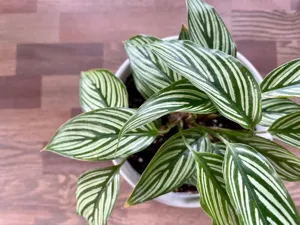
How to Grow and Care for a Maranta Prayer Plant Indoors
After nurturing and propagating over 120 Maranta specimens in dry, centrally heated indoor environments over the past 8 years, we have cracked the code on preventing the notorious curled brown leaves and restoring the nightly prayer movement.
-
Difficulty
intermediate
-
Light
Bright, filtered light is essential to maintain vivid leaf patterns and the nightly prayer movement. East or north-facing window is perfect. Direct sun scorches leaves; low winter light causes fading and leggy growth.
-
Temperature
18°C to 24°C (65°F to 75°F)
-
Growth
moderate
-
Humidity
60% to 80%
-
pH range
5.5 to 6.5
-
Biggest Owner Mistake
Using tap water—maranta is extraordinarily sensitive to chlorine, fluoride, and dissolved minerals, and brown leaf edges appear within days of a single tap water watering. Rainwater, distilled, or water left out for 24 hours are the only safe options.
-
What Nobody Tells You
The nightly 'praying' movement (leaves folding upward) is one of the most reliable health indicators for this plant—when movement stops during normal daylight hours, it signals stress from drought, cold, or root problems before any visible damage appears. Movement is the early warning system.
-
Real Home Conditions
In dry homes below 50% humidity, the leaves curl inward and the praying movement diminishes—the plant is conserving moisture from its own leaf surface. A bathroom with bright indirect light, or a humidifier running nearby, is the most practical solution for most households.
Quick Answer
Provide bright indirect light, keep soil evenly moist but not soggy, and maintain high humidity above 60% to prevent brown leaf edges. Protect from cold window drafts and radiator heat. Use filtered water and a peat-based well-draining mix. Maranta is pet-safe and ideal for humid bathrooms.
Key Takeaways
- Provide bright, indirect light to maintain vivid red-veined foliar patterns.
- Keep peat-perlite potting mix consistently moist without allowing standing water.
- Maintain ambient relative humidity above 60% to prevent marginal leaf crisping.
- Irrigate with filtered or distilled water to avoid fluoride-induced tip chlorosis.
Light
Marantas are understory plants that evolved to capture bright but diffused light through the forest canopy. Place yours in an east or north-facing window where it receives gentle morning sun and indirect light the rest of the day. Direct afternoon sun will scorch the thin, papery leaves, bleaching the vivid venation and leaving behind permanent beige patches. In the depth of a UK or North American winter, when daylight drops to just 7-8 hours and the sun sits low, the plant may become leggy and the ‘prayer’ movement may weaken. This happens because the light-sensitive pulvinus—a swollen motor organ at the leaf base—no longer receives the strong blue-wavelength signal that triggers the turgor pressure change driving nyctinasty. To compensate, move the pot closer to the window (without touching cold glass) or supplement with a full-spectrum LED grow light for 10-12 hours daily. Rotate the pot a quarter turn weekly to keep growth even, as Marantas lean dramatically towards the light source.
Temperature
Prayer plants thrive in steady warmth between 18°C and 24°C (65°F–75°F). They can survive a brief dip to 10°C (50°F) but prolonged cold, especially when combined with wet soil, kills the roots. The real menace in a Western home is the freezing winter window draft. Even on a double-glazed sill, the temperature can plummet near the pane overnight, chilling the root zone and causing leaf drop within 24 hours. Cold damages the semi-permeable cell membranes in the roots, disrupting water uptake even though the soil is moist—the plant wilts as if dry. Keep the pot at least 15 cm back from the glass during cold months, and never place it directly above a radiator, where the blast of hot, dry air creates a desiccating microclimate. In summer, air-conditioning vents pose a similar risk: the rapid temperature swing and air movement strip humidity and can cause leaf curl identical to winter damage.
Humidity
This is the make-or-break parameter. Marantas demand ambient humidity of 60%–80%. A centrally heated living room in a Northern European or North American winter can drop to 25%–35% relative humidity—drier than a desert. At these levels, the leaf stomata remain open to photosynthesise, but transpiration outpaces the root’s ability to pull water from the soil. The leaf margins desiccate first, turning brown and crispy, while the leaf blade curls to reduce surface area. A pebble tray or occasional misting is simply not enough; you need a room humidifier to reliably lift the humidity into the 50%+ range. Grouping several tropical plants together also creates a beneficial microclimate as they collectively transpire moisture into the air. For a complete strategy comparison, see humidity tray vs humidifier. Bathrooms and kitchens naturally maintain higher humidity, making them ideal prayer plant sanctuaries.
Watering
Marantas prefer consistently moist soil, but not soggy. Use the touch test: when the top 2 cm of soil feels barely damp, water thoroughly with tepid filtered water until it runs from the drainage holes. Tap water is often fluoridated and chlorinated; these elements accumulate in the leaf tips and cause yellow-brown necrosis. Filtered or distilled water prevents this fluoride toxicity. In winter, allow the topsoil to dry just a little more between waterings because the plant’s metabolic rate slows in low light and cooler temperatures, reducing water uptake. Overwatering in winter chills the saturated root ball and encourages root rot fungi. Always empty the saucer after 20 minutes to prevent the pot from reabsorbing water.
Soil
Choose a peat-based mix that mimics the forest floor—moisture-retentive yet airy. A reliable recipe is 50% peat moss or coco coir, 25% perlite, and 25% fine orchid bark. Peat holds moisture and provides the slight acidity Marantas love (pH 5.5–6.5). Perlite and bark create macro-pores for oxygen exchange, preventing the compaction that suffocates roots and triggers anaerobic rot. Heavy, straight compost can quickly lead to severe root rot for these shallow-rooted plants. When repotting, gently tease out the roots and use fresh mix; never bury the crown deeper than it was originally growing.
Fertilizer
Feed with a balanced water-soluble fertilizer (NPK 10-10-10 or similar) diluted to half strength every 4 weeks from March through September. During the dark winter months, stop feeding entirely—the plant enters a semi-dormancy where it can’t use extra nutrients, and salts will build up in the soil, burning root tips. If you see a white crust on the soil surface, flush the pot with plain water to leach out excess salts. Organic options like seaweed emulsion provide gentle micronutrients without salt buildup.
Propagation
Maranta propagates easily from stem cuttings in water or moist soil. Snip a 10 cm length of stem just below a node and remove the bottom leaves. Place in a jar of filtered water in bright, warm light. Roots emerge within 2-3 weeks. Pot up when roots are 3-4 cm long, and cover with a clear plastic bag for the first week to maintain high humidity while the cutting establishes. Division of the rhizome during repotting is another reliable method—simply separate a clump with several leaves and roots, and pot it up separately.
Repotting
Repot every 1-2 years in early spring. Signs that it’s time include roots circling the drainage holes, water rushing straight through without moistening the soil, or the plant toppling over. Select a pot only 2-3 cm wider; Marantas have shallow root systems and excess soil holds water too long, promoting rot. After repotting, water lightly and keep in a shaded, humid spot for a week to minimize transplant shock. For a deeper dive into preventing post-repotting decline, read our repotting shock rescue guide.
Toxicity
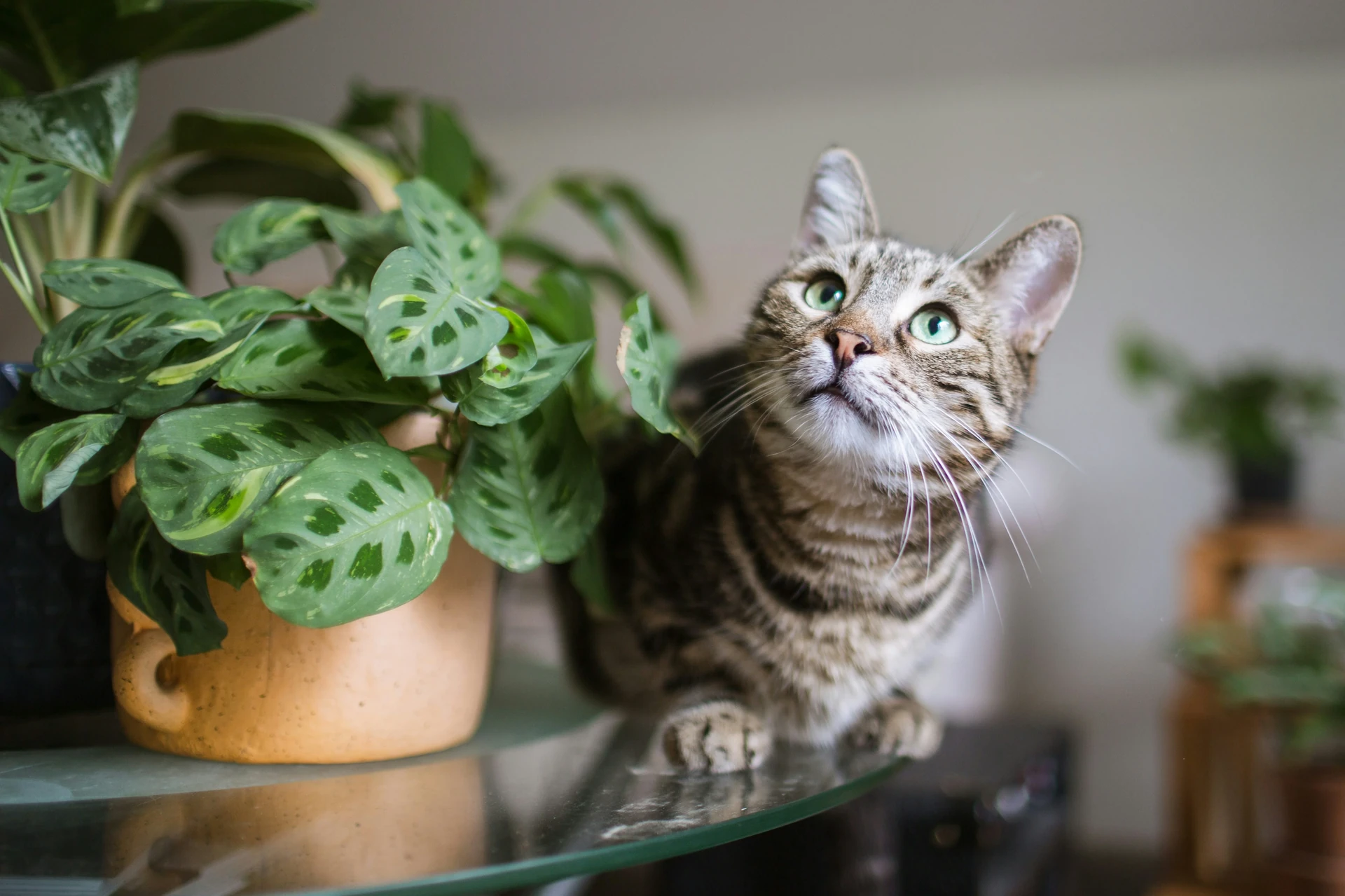
Maranta leuconeura is completely non-toxic to cats, dogs, and humans, according to the ASPCA. It’s one of the safest decorative houseplants for homes with curious pets. No special handling is required beyond washing hands after gardening.
Common Problems
Brown, crispy leaf edges: Low humidity or fluoride toxicity. Raise humidity above 50% and water with filtered water. Trim affected leaves. Leaves not praying (failing to fold up at night): Insufficient light or continuous artificial light disrupting the day/night cycle. Move to a brighter spot with natural light rhythm. Yellowing lower leaves: Overwatering or cold draft; check soil moisture and temperature near the pot. Fine webbing on leaves: Spider mites, which thrive in dry air. Spray with neem oil and boost humidity immediately. Mushy stems near soil: Root rot from waterlogged, cold soil. Unpot, trim away black roots, and repot in fresh, dry mix.
Calculator
Interactive Calculators for Maranta Prayer Plant Care
Recommended next actions
Next Best Actions
Use calculators and guides to turn this plant profile into a practical care routine.
Topic Guide
Humidity
Learn everything about humidity for your indoor and aquarium plants. Expert care tips, troubleshooting, and related guides.
Guide
Brown Crispy Tips on Houseplants: Causes & Fixes
With over 15 years of indoor plant diagnostics and more than 3,000 leaf-tissue cases analyzed, we've mapped the exact mechanisms behind brown crispy tips—fluoride accumulation, salt toxicity, and humidity deficits—so you can reverse damage today.
Guide
Humidity Tray vs Humidifier: Which Works Better?
With over 14 years of indoor climate management across more than 1,800 diagnosed humidity-failure cases — from browning Calathea tips in air-conditioned apartments to crisping Alocasia leaves during dry winters — we've measured exactly how much humidity each method actually delivers at leaf level, and the gap is larger than most plant owners expect.
Guide
Repotting Shock Rescue: Save Your Wilting Houseplant
After rehabilitating stressed nursery stock and rescuing more than 1,500 cases of severe transplant collapse over 12 years, we have mapped the precise physiological timeline of repotting shock and the critical rescue steps required to prevent total hydraulic failure.
Calculator
Plant Watering Calculator: How Often to Water
Calculate the correct watering frequency for your plant based on species, pot size, soil type, season, and climate.
Calculator
Will Heat-Stressed Plants Recover? Diagnosis & Calculator
Diagnose plant heat stress risk from your temperature, humidity, sunlight exposure, and symptoms — then get specific watering, shade, and airflow actions.
Structured Plant Data
Plant Data Profile
The following data is extracted directly from our botanical knowledge graph for accuracy and transparency.
Growth Characteristics
Growth Rate
moderate
Mature Height
25-30 cm (10-12 in)
Mature Spread
30-45 cm (12-18 in)
Life Cycle
Perennial
Flowering Season
Occasionally produces small white/purple flowers in spring-summer
Container Friendly
yes
Indoor Capable
yes
Environmental Parameters
| Parameter | Recommended | Survivable |
|---|---|---|
| Temperature | 18°C to 24°C (65°F to 75°F) | 10°C to 30°C (50°F to 85°F) |
| Humidity | 60% to 80% | 40% to 80% |
| Soil PH | 5.5 to 6.5 | 5.0 to 7.0 |
Lighting
Description
Bright, filtered light is essential to maintain vivid leaf patterns and the nightly prayer movement. East or north-facing window is perfect. Direct sun scorches leaves; low winter light causes fading and leggy growth.
Nutrients
Nitrogen Demand
moderate
Phosphate Demand
moderate
Potassium Demand
moderate
Micronutrient Notes
Sensitive to fluoride and chlorine; use filtered or distilled water. Occasional iron supplement prevents chlorosis in alkaline soils.
Fertilizer Frequency
Every 4 weeks in spring/summer with balanced liquid fertilizer diluted to half strength; stop feeding in autumn/winter.
Organic Options
Seaweed emulsion, worm castings tea, or organic fish emulsion diluted to quarter strength.
Relationships
-
Spider Mites
Vulnerability | Strength 8
Thrives in dry centrally heated air; webbing and stippling appear rapidly if humidity drops below 40%. Regular misting and humidifiers are essential.
-
Root Rot
Vulnerability | Strength 7
Overwatering or dense soil that remains cold and soggy in winter encourages Pythium and Phytophthora. Roots turn black and mushy, causing rapid leaf yellowing.
Maranta Variety Comparison
| Variety | Key Feature | Size |
|---|---|---|
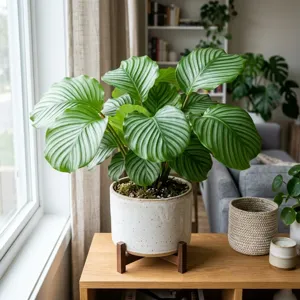
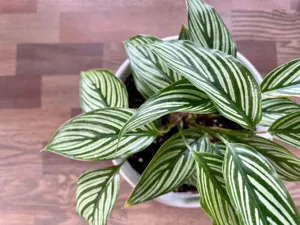
| Maranta leuconeura 'Erythroneura' (Red Vein) | Deep red veins with herringbone pattern; classic prayer plant | 25-30 cm tall, 30-45 cm wide |
| Maranta leuconeura 'Lemon Lime' | Lime-green veins on dark green leaves; tolerates slightly lower light | 20-25 cm tall, 30-40 cm wide |
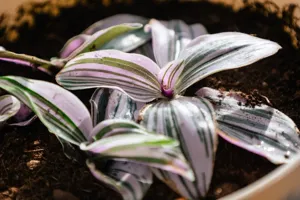
| Maranta leuconeura 'Kim' (Cat Moustache) | Purple spots and pale green blotches; compact growth habit | 15-20 cm tall, 25-30 cm wide |
Troubleshooting & Diagnostics Guide
1 Leaves curling with brown crispy edges and no nightly prayer movement
Diagnosis: Severe low humidity (below 40%) caused by central heating or drafts, combined with possible fluoride toxicity from tap water
Treatment: Move plant to a spot with stable humidity above 60%; install a room humidifier. Water only with filtered or distilled water. Trim damaged leaves to redirect energy to new growth.
Prevention: Maintain optimal care conditions.
Authoritative Resources
For additional peer-reviewed information on plant diseases, toxicity, and care, consult these trusted botanical and agricultural extensions:
Glossary of Terms
- Nyctinasty
- The circadian rhythmic movement of plants in response to the onset of darkness, as seen in the upward folding of Maranta leaves at night. Controlled by turgor pressure changes in the pulvinus, it optimises light capture during the day and reduces moisture loss at night.
- Relative humidity
- The amount of water vapour present in air expressed as a percentage of the amount needed for saturation at the same temperature. Houseplants lose water through transpiration faster when relative humidity is low, leading to leaf margin burn.
Frequently Asked Questions
How often should I water my prayer plant?
Why are my prayer plant leaves curling and turning brown?
Is prayer plant safe for cats and dogs?
Why has my prayer plant stopped praying?
What is the best soil mix for a prayer plant?
How do I propagate a Maranta prayer plant?
Can prayer plant grow in low light?
When should I repot my prayer plant?
Why are the tips of my prayer plant turning yellow?
How do I increase humidity for my prayer plant?
Explore More