How to Grow and Care for Tradescantia Zebrina (Inch Plant) Indoors
Tradescantia zebrina
After cultivating over 250 Tradescantia zebrina plants in draughty Victorian flats and centrally heated modern apartments across the UK and Northern Europe over the past 9 years, we have perfected the techniques to maintain dense, metallic-purple foliage all year.
-
Light
Needs bright indirect light to maintain its distinctive purple and silver striped leaves. Too little light causes the stems to stretch and the color to revert to plain green.
-
Temperature
18°C to 24°C (65°F to 75°F)
Growth
fast
pH Range
6.0 to 7.0
-
Biggest Owner Mistake
Overwatering because the soft, trailing stems look like they need consistent moisture—but the stems are slightly succulent and rot quickly in saturated soil. Let the top inch of soil dry out between waterings, and ensure the pot drains freely.
-
What Nobody Tells You
The silver stripes and purple underside are both light-dependent pigments that fade significantly in dim conditions—in low light, both colors mute toward a plain, dark green. Moving it to bright indirect light brings the full color contrast back in new growth within a few weeks.
-
Real Home Conditions
In dry indoor air, leaf edges develop a persistent brown crispiness and the purple underside loses saturation, making the plant look dull and stressed. It tolerates average household conditions but rewards better humidity with noticeably richer color and fewer brown edges.
Quick Answer
Place in bright indirect light and water when the top 2-3 cm of soil dry out. Maintain humidity above 40% and protect from cold windowsill drafts. Prune leggy stems back to a node and root cuttings to maintain dense growth. Mildly toxic to pets.
Light
The metallic purple and silver stripes on Tradescantia leaves are a direct product of bright, indirect light. The purple pigment, a type of anthocyanin, acts as a natural sunscreen and develops most intensely when the plant receives plenty of photons but not direct scorching rays. In a typical Northern hemisphere winter, daylight can dwindle to 7-8 hours of weak, low-angle sun. The plant immediately detects the drop in light intensity and activates a survival response: it reallocates energy to stem elongation, trying to outgrow the shade. This is etiolation—the stems become thin, the internodes stretch to 10 cm or more, and the leaves remain small and entirely green because anthocyanin production ceases when light is insufficient. To prevent this, place your Tradescantia in an east or west-facing window where it gets bright, filtered light. During winter, move it as close to the glass as possible without letting the leaves touch the cold pane, or add a full-spectrum LED grow light for 10-12 hours a day. Rotate the pot weekly to keep growth even; these plants lean fiercely toward light.
Temperature
Tradescantia thrives in a steady 18°C to 24°C (65°F–75°F). It can survive brief drops to 10°C (50°F), but sustained cold causes the cell membranes in the leaves to rupture, leading to translucent, water-soaked patches that quickly turn brown and crisp. The biggest threat in a Western home is the winter windowsill microclimate. On a night when outdoor temperatures plummet to -5°C, the temperature directly against a single-glazed or even double-glazed pane can fall below 10°C. The roots, cooled in their damp pot, stop functioning, and the plant drops leaves rapidly. Simultaneously, a radiator under the sill blasts hot, ultra-dry air over the foliage, accelerating transpiration and crisping the leaf edges. Move the plant at least 15 cm back from freezing glass in winter and shield it from direct radiator heat. In summer, air-conditioning vents create similar cold drafts; keep the plant out of the direct airflow.
Humidity
This plant adapts well to average indoor humidity levels of 40%–60%. However, during winter, central heating can drop ambient humidity to 30% or lower. At that point, the leaf tips desiccate, turning brown and papery. The mechanism is simple: dry air pulls water vapour out of the leaf stomata faster than the roots can replace it, and the delicate tip cells die first. A humidity tray filled with pebbles and water placed under the pot can raise the local moisture level slightly, but a small room humidifier is far more effective. Misting is largely pointless because the water evaporates within minutes in dry heated air. Grouping plants together creates a beneficial microclimate as they collectively transpire moisture.
Watering
Water thoroughly with tepid filtered water when the top 2–3 cm of the potting mix feels dry to the touch. Tradescantia is susceptible to fluoride and chlorine damage, which appears as brown leaf tips. Let the water run through the drainage holes, then discard the excess. In winter, the plant’s water usage drops dramatically—you may only need to water every 10–14 days. Overwatering in low light and cool temperatures is the fastest way to kill this plant. Soggy soil excludes oxygen; anaerobic bacteria and Pythium fungi attack the roots, turning them black and mushy. The first visible sign is often soft, drooping stems that remain green but collapse. If you catch this early, unpot the plant, trim away all rotted roots, and repot in fresh, dry mix. Read our root rot rescue guide for a step-by-step recovery plan.
Soil
The ideal mix is fast-draining and light. A good recipe is 70% standard all-purpose potting soil combined with 30% perlite or pumice. This creates the large air pores that roots need for respiration. Heavy, compacted soil stays wet too long and suffocates the roots, leading to the stem rot that often plagues Tradescantia in winter. The soil pH should be slightly acidic to neutral (6.0–7.0); highly alkaline soil ties up micronutrients and can cause yellowing.
Fertilizer
Feed every 4 weeks from March to August with a balanced liquid houseplant fertilizer (10-10-10 or 20-20-20) diluted to half strength. Tradescantia is not a heavy feeder; excess nitrogen encourages soft, rapid growth that is even more susceptible to etiolation. Do not fertilize at all during autumn and winter. The plant naturally slows its growth in response to shorter days, and adding nutrients forces weak, elongated stems. Salt buildup is a common issue; flush the soil with plain water every 2–3 months to prevent brown leaf tips.
Propagation
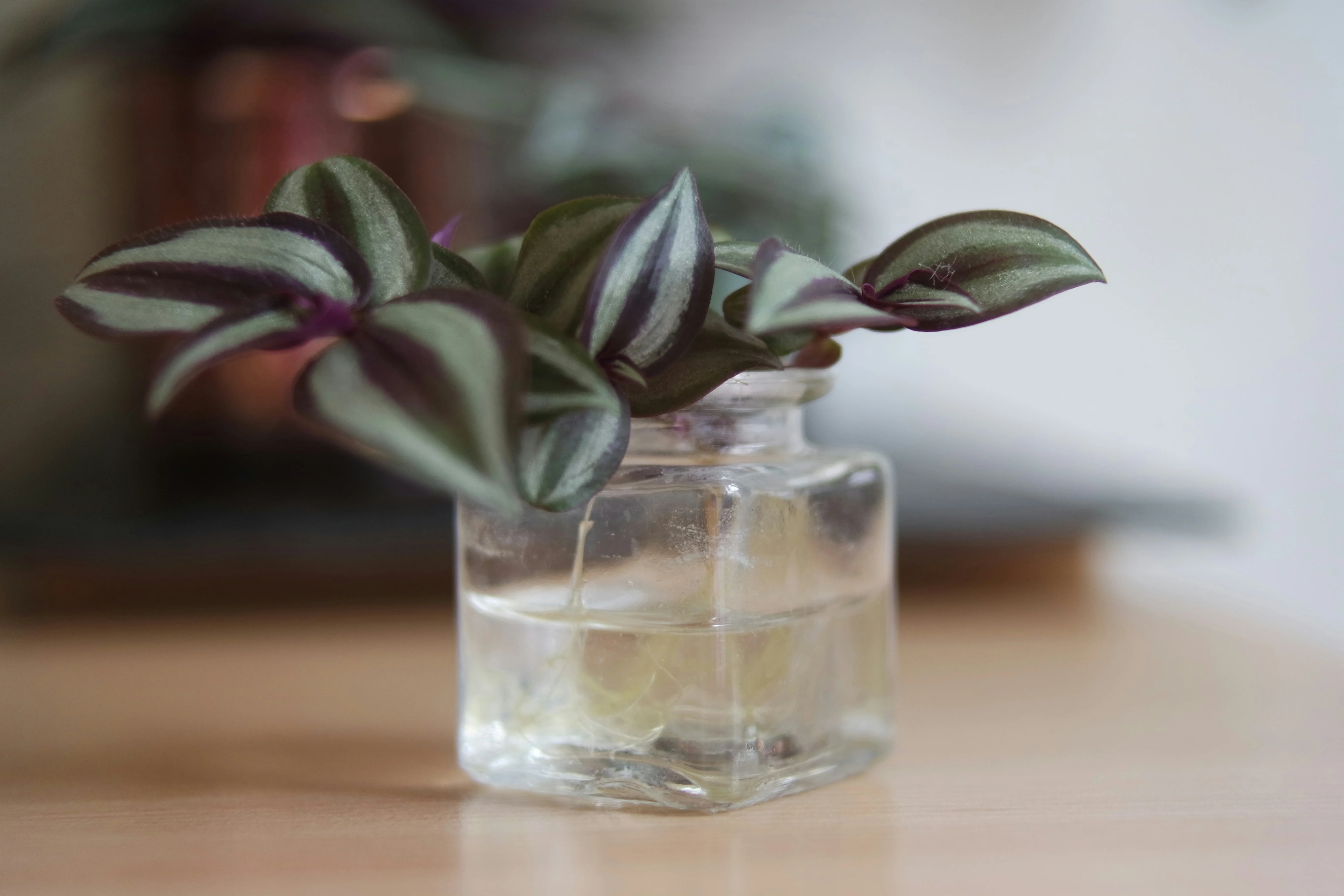
This is one of the easiest plants to propagate. Snip a healthy stem just below a node, remove the bottom couple of leaves, and place the cutting in a jar of water. Roots will appear in as little as 4–7 days in a warm, bright spot. Once the roots are 2–3 cm long, plant several cuttings together into a small pot with moist, well-draining soil. Planting multiple stems creates an instantly full, bushy display. Pinching the tips of the cuttings early on encourages branching from the base.
Repotting
Tradescantia grows rapidly and may need repotting every year in spring. Look for roots circling the pot or emerging from the drainage holes. The plant tolerates being slightly root-bound, so only move up one pot size. After repotting, water lightly and keep the plant in a shaded spot for a few days. Because the stems are fragile, handle them by the root ball to avoid snapping. For more on preventing post-repotting decline, see our repotting shock rescue guide.
Toxicity
Tradescantia zebrina is mildly toxic to cats and dogs if ingested, causing irritation of the mouth and digestive tract. Its sap can also cause contact dermatitis in sensitive individuals, so it’s best to wear gloves when pruning heavily and to keep the plant out of reach of pets.
Common Problems
Leggy, bare stems with pale green leaves: Insufficient light. Prune back to a node and move to a brighter location. The cuttings will root quickly, filling the pot out again. Brown, crispy leaf edges: Low humidity, under-watering, or fluoride toxicity. Raise humidity, water more consistently, and use filtered water. Soft, rotting stems at soil level: Root rot from overwatering or heavy soil. Unpot, trim rotted tissue, and repot in fresh dry mix. Faded or completely green leaves: Not enough bright indirect light. Increase light intensity gradually. Pests: Spider mites and aphids occasionally appear in very dry air; treat with insecticidal soap or neem oil.
Recommended next actions
Next Best Actions
Use calculators and guides to turn this plant profile into a practical care routine.
Calculator
Plant Watering Calculator: How Often to Water
Calculate the correct watering frequency for your plant based on species, pot size, soil type, season, and climate.
Guide
Leggy Houseplants: Causes of Etiolation & How to Fix Them
With over 13 years of plant growth diagnostics and more than 2,100 etiolation and light-deficiency cases assessed across species from compact succulents to large-leafed tropicals, we've developed a precise protocol for diagnosing the cause of leggy growth, correcting it without shocking the plant, and preventing recurrence through light and pruning management.
Guide
Repotting Shock Rescue: Save Your Wilting Houseplant
After rehabilitating stressed nursery stock and rescuing more than 1,500 cases of severe transplant collapse over 12 years, we have mapped the precise physiological timeline of repotting shock and the critical rescue steps required to prevent total hydraulic failure.
Guide
Why Root Rot Happens and How to Save Your Plant
After rescuing thousands of rotting houseplants from big-box stores over a 12-year nursery career, we have developed a foolproof method to diagnose, treat, and completely prevent deadly root rot.
Calculator
Neem Oil Spray Calculator: Right Dilution Ratio for Plants
Calculate the correct neem oil dilution ratio for your spray bottle size, plant type, and pest severity — safely and without burning leaves.
Calculator
Plant Light Calculator: Find the Best Window for Your Plant
Determine the ideal indoor light placement for your plant based on species, window direction, and seasonal light availability.
Structured Plant Data
Plant Data Profile
Care values below are generated from the plant JSON fields so users and crawlers can read the structured plant profile directly on the page.
Growth Characteristics
Growth Rate
fast
Mature Height
Trails up to 60-90 cm (2-3 ft)
Mature Spread
30-45 cm (12-18 in) in a pot
Life Cycle
Perennial
Flowering Season
Occasional small pink or white flowers in spring-summer
Container Friendly
yes
Indoor Capable
yes
Environmental Parameters
| Parameter | Recommended | Survivable |
|---|---|---|
| Temperature | 18°C to 24°C (65°F to 75°F) | 10°C to 30°C (50°F to 85°F) |
| Humidity | 40% to 60% | 30% to 70% |
| Soil PH | 6.0 to 7.0 | 5.5 to 7.5 |
Lighting
Description
Needs bright indirect light to maintain its distinctive purple and silver striped leaves. Too little light causes the stems to stretch and the color to revert to plain green.
Nutrients
Nitrogen Demand
moderate
Phosphate Demand
moderate
Potassium Demand
moderate
Micronutrient Notes
Sensitive to fluoride and chlorine; use filtered water if possible. Occasional iron supplement helps maintain purple pigmentation.
Fertilizer Frequency
Every 4 weeks spring to summer with balanced liquid fertilizer diluted to half strength; none in winter.
Organic Options
Seaweed extract, compost tea, or diluted worm castings.
Relationships
-
Etiolation
Vulnerability | Strength 9
Insufficient light triggers extreme stem elongation, pale leaves, and loss of purple color. The plant prioritizes reaching light over maintaining pigment.
-
Root Rot
Vulnerability | Strength 7
Overwatering or heavy soil that stays wet, especially in winter, leads to mushy stems and blackened roots.
Tradescantia Variety Comparison
| Variety | Key Feature | Size |
|---|---|---|
| Tradescantia zebrina (Inch Plant) | Classic silver and purple stripes; fast-growing cascading vine | Trails 60-90 cm |
| Tradescantia fluminensis 'Tricolor' | Cream, green, and pink variegated leaves; needs brighter light | Trails 50-80 cm |
| Tradescantia pallida 'Purple Heart' | Solid deep purple foliage; more tolerant of direct sun | Trails 40-60 cm |
Troubleshooting Guide
1 Long, bare stems with small, entirely green leaves spaced far apart
Cause: Etiolation from insufficient light combined with warm indoor temperatures; the plant is stretching for a light source.
Prune back bare stems to a node and move the plant to a brighter spot with indirect sunlight. Add a grow light in winter if natural light is lacking.
Glossary of Terms
- Etiolation
- The process by which a plant grown in insufficient light develops abnormally elongated, pale stems and small leaves as it directs energy towards reaching a light source, often at the expense of pigment production.
- Node
- The point on a plant stem where leaves, buds, and aerial roots emerge. In propagation, cutting just below a node ensures the presence of meristematic tissue that can produce new roots.