Bucephalandra Care Guide: Attachment, Emergent Growth & Color
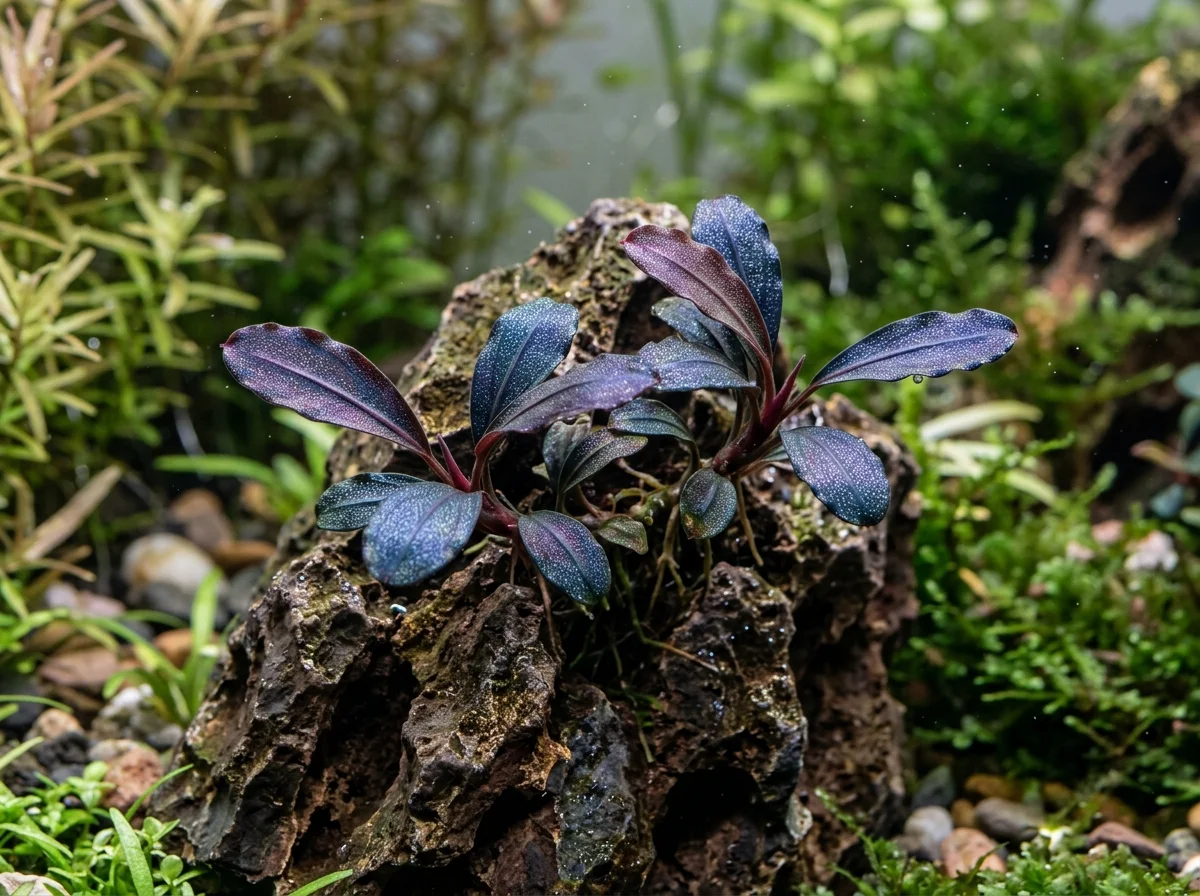
A slow-growing Bornean rheophyte that must be attached to rock or wood, never buried, and rewards stable water with metallic, iridescent foliage.
-
Difficulty
Medium
-
Light
Bright indirect
-
Temperature
18-25°C (64-77°F)
-
Growth
Moderate
-
Expert Insight
Master-grower data coming soon.
-
Common Mistake
Real-world care data coming soon.
-
Environment
Real-world conditions coming soon.
Quick Answer
Bucephalandra is a slow-growing Bornean rheophyte that must be attached to stone or wood and never buried, since a buried rhizome rots within one to two weeks. Keep water stable at pH 6.0 to 7.2 with low to medium light of 50 to 150 PPFD. Micro-dose chelated iron for color, and expect leaf loss when moving emergent plants into water.
Key Takeaways
- Never bury the rhizome; attach Bucephalandra to stone or wood with the growing tip uncovered.
- Expect leaf loss when moving emergent plants into water, and let new submersed leaves develop from the rhizome.
- Keep water stable at pH 6.0 to 7.2 with TDS 80 to 180 ppm and low to medium light of 50 to 150 PPFD.
- Micro-dose chelated iron (Fe-EDDHA or Fe-DTPA) alongside potassium to bring out metallic color and prevent pinholes.
- In paludariums, place Bucephalandra on splash zones or drip walls where humidity stays at 80 to 95 percent and roots sit in moving water.
Overview
Bucephalandra is a genus of slow-growing aroids from Borneo, grown for its compact habit and iridescent, metallic leaves. It is a rheophytic lithophyte, which means it evolved clinging to rock in fast-flowing streams rather than rooting in soil. Almost every failure with this plant comes from ignoring that fact.
Natural Rheophyte Ecology
Bucephalandra evolved along rocky tropical streams on basalt and sandstone, where seasonal flash floods submerge it for weeks and dry or humid periods leave it emergent. Specialized holdfast roots secrete natural adhesives that grip smooth volcanic rock, dragon stone, or driftwood. The plant does not root into loose terrestrial soil, and trying to make it do so is the most common mistake in cultivation.
- Fast, oxygen-rich water around the roots
- Hard, inert surfaces for anchoring
- Alternating submerged and emergent phases
The Cardinal Rule of Rhizome Planting
Never bury the rhizome. Burying it in gravel, sand, or soil starves it of oxygen and causes anaerobic rot, with black, mushy tissue appearing within 7 to 14 days. Attach the plant to hardscape instead.
Superglue Gel vs Thread or Wire
Cyanoacrylate gel is the quickest method, holding the plant immediately. Apply small spots to the roots and the rhizome underside, and never cover the growing tip. Thread or wire is slower but chemical-free, and the plant's own holdfast roots will take over within a few weeks, at which point the tie can be removed.
- Choose a rough stone or textured wood surface.
- Pat the plant and the contact area dry.
- Apply small spots of gel to the roots and rhizome underside, or tie with thread.
- Keep the growing tip fully exposed.
- Place the plant in flowing, oxygenated water.
Submersed vs Emergent Cultivation
Emergent Paludarium Splash Zone
In a paludarium, Bucephalandra thrives on waterfall spray ledges and drip walls where a constant moving film keeps local relative humidity at 80 to 95 percent while the roots sit in moving, oxygen-rich water. Setting the land and water zones correctly matters here, so see our guide to the paludarium water-land barrier, and use the paludarium land-to-water ratio calculator to plan the layout. If you are deciding between setups, compare riparium vs paludarium designs.
Flow keeps the roots oxygenated and the splash zone wet, which is covered in our guide to paludarium water circulation pumps. A textured, moisture-holding surface helps too, and paludarium moss makes an excellent companion on drip walls.
The Emergent-to-Submersed 'Buce Melt'
Most commercial Bucephalandra is grown emergent. When it is moved into a fully submersed tank, osmotic and moisture shifts trigger leaf shedding, known as buce melt. The plant is not dying: the rhizome survives and produces new submersed leaves within weeks. Slow drip acclimation and constant air humidity during the transition reduce the collapse.
Water Chemistry and Lighting
Bucephalandra does best in stable, soft to moderately hard water. Stability matters more than chasing exact numbers.
| Parameter | Target |
|---|---|
| pH | 6.0 to 7.2 |
| TDS | 80 to 180 ppm |
| GH | 3 to 6 |
| KH | 1 to 4 |
| Light | 50 to 150 PPFD |
Light should stay low to medium. Slow-growing leaves are vulnerable to staghorn, spot, and black beard algae (BBA) when exposed to high direct light, so favor stable moderate light over intensity.
Heavy Iron and Micronutrient Uptake
Metallic blue, purple, copper, and oil-slick sheens depend on a steady supply of iron. Micro-dose chelated iron such as Fe-EDDHA or Fe-DTPA in small, frequent amounts rather than occasional heavy doses. Also provide potassium and balanced trace elements, since slow growers show deficiency as pinholes in older leaves and pale, faded color.
Bucephalandra vs Anubias
Bucephalandra is often compared with Anubias nana. Anubias is tougher and more tolerant of brighter light and fluctuating conditions, while Bucephalandra offers more varied color and finer texture but is slower and less forgiving. Both must be attached to hardscape with the rhizome exposed.
Popular Varieties
Named varieties differ in leaf size, color, and light preference. 'Godzilla' is large and dark with a metallic sheen, 'Kedagang' is bronze-green with bluish iridescence, 'Brownie Ghost' is small with pale dotting on brown leaves, and 'Deep Purple' shows purple-green tones with iridescent dots. Color expression varies with light, iron, and the individual plant.
Livestock Compatibility
Bucephalandra is safe with freshwater dwarf shrimp, whose biofilm grazing benefits from its textured leaves. Avoid copper-based products. It is also generally compatible with crabs such as those described in our vampire crab paludarium guide, provided the plant is firmly attached so it is not dislodged.
Propagation
Divide the rhizome with a sterile blade, making sure each piece has at least two or three leaves and some roots. Reattach each section immediately to its own surface. Growth is slow, so expect establishment to take weeks to months.
Common Problems
Black, mushy rhizome means burial or oxygen-poor conditions. Sudden leaf melt after purchase is a normal transition. Pinholes in older leaves point to potassium deficiency, pale color points to iron or light, and algae on leaf margins points to excess light or unstable nutrients.
Recommended next actions
Next Best Actions
Use calculators and guides to turn this plant profile into a practical care routine.
Calculator
Paludarium Water Volume & Land Ratio Calculator
Calculate net paludarium water volume, land and water surface areas, false bottom void capacity, and minimum pump flow in metric or imperial units.
Plant Guide
Anubias Nana
Anubias Nana is a hardy, slow-growing, low-light epiphyte perfect for beginner aquariums and aquascaping.
Topic Guide
Paludarium Moss: How to Attach, Hydrate, and Maintain Moss
A technical guide to using moss across terrestrial, splash, transition, and submerged paludarium zones, covering attachment mechanics, hydration, PAR, airflow, algae control, and maintenance.
Topic Guide
Paludarium Water Pumps: Sizing, Waterfall Plumbing & Circulation
Size and plumb paludarium pumps: GPH vs head height calculation, hidden pump chambers, drip wall plumbing, avoiding dead zones, and pump maintenance.
Topic Guide
Building a Paludarium Land-to-Water Barrier: Drainage, Foam & Mesh
Build a leak-proof paludarium land-to-water barrier: false bottom eggcrate construction, expanding foam waterproofing, geotextile mesh, and soil wicking prevention.
Topic Guide
Riparium vs Paludarium: Structural & Ecosystem Differences Explained
Riparium vs Paludarium comparison: open water volume vs terrestrial land area, hanging planters vs false bottoms, animal stocking, and maintenance differences.
Popular Bucephalandra Varieties Compared
| Feature | Godzilla | Kedagang | Brownie Ghost | Deep Purple |
|---|---|---|---|---|
| Leaf size | Large | Medium | Small to medium | Medium |
| Leaf color | Dark green with a metallic sheen | Bronze-green with bluish iridescence | Brown to bronze with pale dotting | Deep purple-green with iridescent dots |
| Growth rate | Slow | Slow | Very slow | Slow |
| Light preference | Low to medium | Low to medium | Low to medium | Medium |
| Color depends on | Light and stable water | Iron and stable water | Light and iron | Iron and moderate light |
| Best use | Focal point on a large rock | Mid-ground accent | Detail accent in nano setups | Color accent near moderate light |
Troubleshooting & Diagnostics Guide
1 Rhizome turning black, soft, or mushy
Diagnosis: Anaerobic rhizome rot from burial in substrate
Treatment: Lift the plant and cut away every soft or discolored section back to firm tissue. Reattach the healthy remainder to rock or wood with the rhizome fully exposed and roots in flowing water.
Prevention: Never plant the rhizome in gravel, sand, or soil. Attach it to hardscape and keep the rhizome clear of substrate.
2 Sudden leaf melt after purchase or transfer
Diagnosis: Emergent-to-submersed transition ('Buce melt')
Treatment: Leave the rhizome and roots intact and keep water stable. Remove fully collapsed leaves to protect water quality. New submersed leaves will develop from the rhizome tip.
Prevention: Acclimate with slow drip and high air humidity, and avoid abrupt changes in temperature, light, or water chemistry.
3 Pinholes in older leaves
Diagnosis: Potassium deficiency
Treatment: Dose a potassium source or a balanced liquid fertilizer at label-recommended rates. Do not expect existing holes to close.
Prevention: Maintain a steady, modest fertilization schedule rather than relying on tank waste alone.
4 Pale, faded, or dull iridescent coloration
Diagnosis: Iron or micronutrient deficiency, or insufficient light
Treatment: Micro-dose chelated iron (Fe-EDDHA or Fe-DTPA) in small steady amounts and confirm light is in the 50 to 150 PPFD range.
Prevention: Provide a consistent micronutrient supply and avoid abrupt swings in light or fertilizer.
5 Black beard algae on leaf margins
Diagnosis: Excess light and unstable nutrients on slow-growing foliage
Treatment: Reduce light intensity or duration, improve flow, remove heavily affected leaves, and spot-treat with an appropriate algae control product.
Prevention: Keep light low to medium, avoid nutrient swings, and maintain stable, well-circulated water.
6 Stunted, deformed, or curled new leaves
Diagnosis: Nutrient imbalance, unstable water parameters, or damage to the growing tip
Treatment: Check that the growing tip was not covered by glue or debris, stabilize water parameters, and provide balanced micronutrients.
Prevention: Keep parameters consistent and spot-dose adhesive away from the growth point.
7 Plant repeatedly detaching from stone or wood
Diagnosis: Insufficient attachment or disturbance from livestock or flow
Treatment: Reattach using thread, wire, or small spots of gel on the roots and underside. Leave the tip uncovered.
Prevention: Secure the plant firmly until holdfast roots establish, and monitor for crab or fish disturbance.
8 Leaves browning and drying in emergent setups
Diagnosis: Low local humidity or a dry, still root zone
Treatment: Raise local humidity to 80 to 95 percent and ensure roots remain in moving, moist conditions. Trim dried leaves.
Prevention: Position plants on splash zones or drip walls where a continuous moisture film is maintained.
9 Brown or green hair algae coating the leaves
Diagnosis: Excess nutrients with insufficient flow
Treatment: Increase circulation, reduce feeding or fertilizer, and manually remove algae.
Prevention: Maintain balanced fertilization and good flow across all attached plants.
Authoritative Resources
For additional peer-reviewed information on plant diseases, toxicity, and care, consult these trusted botanical and agricultural extensions:
Glossary of Terms
- Rheophyte
- A plant adapted to fast-flowing streams, often subject to seasonal submersion. Bucephalandra evolved on rocky Bornean river margins.
- Lithophyte
- A plant that grows on rock rather than in soil. Bucephalandra attaches to stone using specialized roots.
- Rhizome
- A woody, creeping stem from which leaves and roots arise. In Bucephalandra it must remain exposed to avoid rot.
- Holdfast Roots
- Adhesive anchoring roots that grip rock or wood. They replace the need for soil rooting.
- Buce Melt
- Leaf shedding that occurs when emergent-grown plants transition to submersed conditions.
- Emergent Growth
- Growth with leaves above water, supplied by humid air and wet roots.
- Spathe
- The hooded bract surrounding an aroid flower spike.
- Cyanoacrylate Gel
- A fast-curing adhesive commonly used to attach aquatic epiphytes and lithophytes to hardscape.
- PPFD
- Photosynthetic photon flux density, the amount of usable light reaching the plant per second.
- Fe-EDDHA
- A highly stable chelated iron form used to supply iron over a wide pH range.
- Fe-DTPA
- A chelated iron form that is effective in moderate pH ranges and commonly used in aquarium fertilizers.
- Riparium
- A setup where plant roots sit in water while leaves grow above it.
- Paludarium
- An enclosure combining aquatic and terrestrial zones.
- GH and KH
- General hardness and carbonate hardness, two measures of dissolved minerals that affect plant nutrition and pH stability.
Frequently Asked Questions
Should I glue or tie Bucephalandra to stone?
Can Bucephalandra grow completely emergent on a moss wall?
Should I trim the flowering spathe?
Why is my Bucephalandra dropping leaves after shipping?
How do I propagate Bucephalandra by rhizome division?
Is Bucephalandra safe with freshwater dwarf shrimp?
Is Bucephalandra compatible with vampire crabs?
Why is my Bucephalandra rhizome turning black and mushy?
How much light does Bucephalandra need?
Does Bucephalandra need CO2?
Why do my Bucephalandra leaves have tiny holes?
How do I get deep blue, purple, and copper colors?
Explore More