Riparium vs Paludarium: Structural & Ecosystem Differences Explained
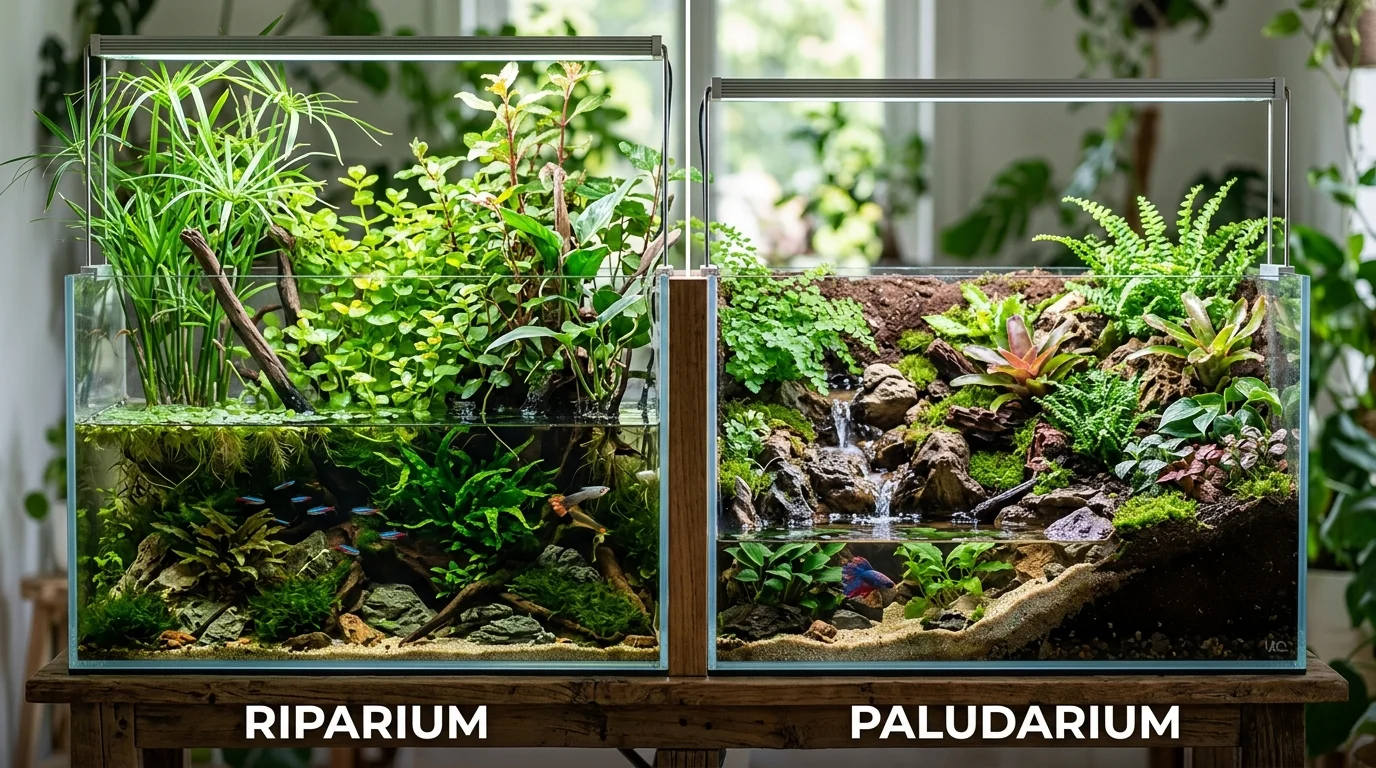
Riparium and paludarium are often used as if they meant the same thing, but they are structurally and ecologically different. A paludarium contains both land and water and needs barriers, drainage and moisture-gradient management. A riparium is essentially an aquarium whose plants grow up out of the water, with no soil land mass at all. This guide compares the two across construction complexity, filtration, plant selection, fauna compatibility, lighting and maintenance. It also covers converting an existing fish tank into a riparium, why dart frogs and vampire crabs belong in a paludarium rather than a riparium, and how to troubleshoot the most common failures of each design.
Quick Answer
A paludarium is a true dual-realm build with a real land mass (often 30 to 60% of the tank) above a permanent water zone, so it suits semi-aquatic animals and terrestrial humidity plants. A riparium is a riverbank simulation: 75 to 90% open water, with emergent plants growing out of the water from hanging planters, trellis rafts or suction cups while their roots feed directly in the water column. Choose a paludarium for animals and layered landscapes. Choose a riparium for easy construction, strong nutrient export and low algae.
Key Takeaways
- A paludarium has a real land mass (typically 30 to 60% of the tank) and a permanent aquatic zone, while a riparium maximizes open water (75 to 90%) and has no soil land at all.
- A riparium is far simpler to build: no false bottom, no foam, no geotextile and no drain tube, just a standard tank, hanging planters and aquatic filtration.
- Emergent plant roots hanging in the water column take up nitrate and phosphate aggressively, which is why a mature riparium tends to resist algae far better than a typical planted tank.
- Semi-aquatic animals such as dart frogs, newts and vampire crabs need dry land, so they belong in a paludarium. A riparium suits fish and shrimp.
- Emergent canopies shade the water and sit close to the light, so plan lighting height and photoperiod around the leaves, not just the water surface.
Riparium vs Paludarium: The Core Difference
The two terms are used interchangeably in hobby forums, but they describe different ecosystems. A paludarium is a dual-realm biotope: a permanent aquatic zone and a physical terrestrial land mass in the same enclosure. A riparium simulates a riverbank margin: the tank is mostly water, and plants grow emergently, with their leaves in the air and their roots hanging in the water. Pick the wrong one and you will fight the design for its whole life, so settle this before you buy a tank or a single plant.
If you already know you want land, start with the paludarium land-to-water ratio calculator to size each zone. If you want a water-dominant tank with plants on top, you are building a riparium and most of that calculation does not apply.
Defining Characteristics and Ecosystem Focus
The Paludarium: A True Dual-Realm Biotope
A paludarium contains an extensive terrestrial land mass, commonly 30 to 60% of the tank volume, built over a false bottom of eggcrate or a sculpted foam and stone structure, plus a permanent water zone. The land holds real substrate, moss, ferns and terrestrial humidity plants. Because there is dry land, the tank can support semi-aquatic fauna such as frogs, newts and crabs. The defining feature is the moisture gradient running from standing water through damp shoreline to well-aerated substrate.
The Riparium: A Riverbank Margin Simulation
A riparium maximizes open water, typically 75 to 90% aquatic depth. Plants are supported at the surface by hanging suction cups, trellis rafts, rim-mounted planters or submerged riparium planters, and they grow emergently out of the water. Their roots dangle directly in the water column. There is zero terrestrial soil mass, so there is no land to wick, drain or rot. The tank behaves like an aquarium with a living green canopy.
Engineering and Construction Complexity
Paludarium: High Complexity
A paludarium is a construction project. You will need false bottom risers, silicone or foam barriers, geotextile separation, a hidden siphon or drain tube, and careful moisture-gradient management so the soil does not go anaerobic. The central engineering problem is keeping saturated water away from porous soil. Our guide to the paludarium land-to-water barrier covers the capillary break, eggcrate false bottoms, foam shorelines and access pipes in detail.
Riparium: Low to Moderate Complexity
A riparium needs no land building and no expanding foam. It relies on a standard aquarium tank, hanging trellis cups or floating rafts, and ordinary aquatic filtration. The effort goes into choosing planters, matching plants to the water line, and managing light, not into waterproofing or drainage.
Water Filtration and Biological Purification
Riparium: Strong Nutrient Export
Emergent plants in a riparium have two advantages over fully submersed plants. Their foliage can draw carbon dioxide directly from the air, so it is never limited by dissolved CO2, and their large bare root masses sit directly in the water column, where they absorb nitrate (NO3-) and phosphate (PO4 3-). Hobbyists often cite uptake rates several times (commonly 3 to 4x) those of submersed plants. Exact figures vary with species, root mass, light and nutrient load, but the direction is reliable: a mature riparium exports nutrients efficiently and greatly suppresses algae.
Paludarium: A Balancing Act
A paludarium has a smaller water volume and a land mass that can leak into it. Terrestrial runoff, soil leaching and tannins can stain or enrich a small pool, and the filter has to cope with a modest volume of water that is also being fed by the land. Stable water quality depends on isolating the substrate from the pool, running mechanical and biological filtration sized for the true water volume, and planning water movement. If your build has a stream or waterfall, see our guide to paludarium water circulation pumps for sizing and hiding the pump.
Plant Selection Breakdown
Riparium Plants
Riparium plants must tolerate wet roots all the time. The usual choices are marginal and bog plants with heavy water tolerance:
- Cyperus (umbrella palm and dwarf papyrus types)
- Spathiphyllum (peace lily)
- Acorus (sweet flag)
- Syngonium (arrowhead vine)
- Echinodorus (Amazon swords grown emersed)
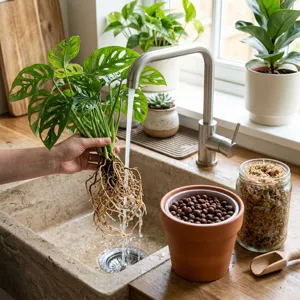
Rinse all soil from the roots before placing a nursery plant in a riparium, and never bury the crown, which should stay above the water line.
Paludarium Plants
A paludarium has two plant zones. On land, use true terrestrial humidity lovers such as Fittonia, Maranta, mosses and mini-ferns. At the water margin, use plants that thrive with wet feet, such as Bucephalandra, Anubias nana and Cryptocoryne, attached to rock or wood with the rhizome exposed. For carpets and walls, see our guide to paludarium moss.
Riparium vs Paludarium Technical Comparison
| Feature | Riparium | Paludarium | Practical Impact |
|---|---|---|---|
| Water volume | 75 to 90% of the tank | 40 to 70% of the tank | Riparium is more stable and forgiving; paludarium water parameters shift faster |
| Land area | None | 30 to 60% of the tank | Only a paludarium offers dry land for animals and terrestrial plants |
| Plant growth form | Emergent, roots in water | Terrestrial on land, marginal at the water line | Determines plant list and lighting height |
| Construction | Hanging planters, rafts, suction cups | False bottom, foam or stone barriers, geotextile, drain tube | Paludarium takes far longer and more skill to build |
| Filtration | Standard aquarium filter plus root uptake | Filter plus barrier and moisture-gradient management | Riparium cleans itself faster; paludarium needs closer monitoring |
| Algae risk | Low once roots are established | Moderate; depends on runoff and light | Riparium is easier to keep clear |
| Fauna | Fish, shrimp, snails | Frogs, newts, crabs plus fish in the water zone | Choose by animal, not by looks |
| Maintenance | Water changes, pruning, root trimming | Water changes, drainage checks, humidity control | Paludarium is more hands-on |
Plant and Fauna Compatibility Matrix
| Ecosystem Type | Best Suited Fauna | Ideal Marginal Plants | Key Failure Risk |
|---|---|---|---|
| Riparium | Small community fish, shrimp, snails | Cyperus, Spathiphyllum, Acorus, Syngonium, Echinodorus | Overgrown roots and canopy shade, or fish jumping through the open top |
| Paludarium | Dart frogs, newts, vampire crabs, small fish in the water zone | Anubias, Bucephalandra, Cryptocoryne at the margin; Fittonia, Maranta, mosses and mini-ferns on land | Anaerobic soil rot from capillary wicking, and animals trapped by steep walls |
Fauna: Which Build Fits Which Animal
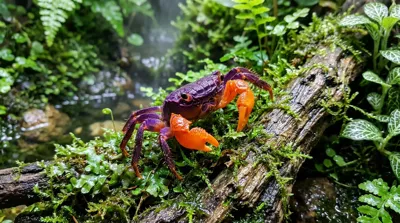
The animals decide the build. Frogs, newts and crabs need dry land, humidity and a way out of the water. A riparium has no land, so it is an aquarium for aquatic animals. A paludarium suits semi-aquatic species, especially crabs: our vampire crab paludarium guide covers the land area, humidity and substrate they need. In any build with animals that climb or burrow, design gentle exits from the water so nothing drowns against a sheer wall.
Lighting for Emergent Canopies
In a riparium the leaves, not the water surface, are what the light has to reach. Hang or mount the fixture high enough that the tallest foliage does not touch or sit within a hand's width of the diodes, and rotate or prune plants that grow toward the light. The canopy shades the water, which is part of why algae drops, but it also means floating and submersed plants will struggle. In a paludarium, light has to cover both the land and the water, so a fixture with a wide, even spread works best and the tallest terrestrial plants should be placed where they do not shade the shoreline. A photoperiod of roughly 8 to 10 hours suits most builds, so start there and adjust to plant response.
Algae Control in Each Build
A riparium controls algae by competition: root masses take up nitrate and phosphate, and the canopy reduces light on the water. Keep enough root surface in the water, trim dead roots, and do not overfeed fish. A paludarium controls algae by isolation and balance: keep soil from leaching into the pool, avoid direct sunlight, and keep the water volume turning over with proper circulation.
Which One Should You Build?
- Build a riparium if you want fish or shrimp, a simple build, low algae and a green canopy without any land construction.
- Build a paludarium if you want frogs, newts or crabs, layered terrain, mosses and a waterfall or stream, and you are happy to do the construction.
Common Mistakes to Avoid
- Keeping land animals in a riparium: With no dry land, semi-aquatic animals cannot rest or feed properly.
- Planting soil-grown plants with soil still on the roots: Soil in a riparium fouls the water.
- Burying crowns under water: Emergent plants rot if the crown stays submerged.
- Skipping the barrier in a paludarium: Soil touching the pool wicks water upward and turns anaerobic.
- Leaving the top of a riparium open to jumpers: Fish can leap through gaps around planters.
Frequently Asked Questions
Can I convert an existing fish tank into a riparium?
Yes, and it is one of the easiest ways to start. Keep the tank, filter and heater, then add hanging planters, suction-cup cups or a trellis raft at the water surface. Rinse all soil from the roots of the plants you add, place the crowns above the water line, and give the plants a few weeks to establish root systems before judging the water quality. Keep a lid or mesh around the planters if your fish jump.
Can I keep dart frogs in a riparium?
No. Dart frogs are terrestrial and need dry land, humidity and hiding places. A riparium has no land mass, so frogs would have nowhere to rest or feed. Keep dart frogs in a paludarium or a proper vivarium.
Can I keep vampire crabs in a riparium?
No. Vampire crabs spend most of their time on land and need a dry area, damp substrate and an easy way out of the water. A riparium gives them none of that, and they may drown. A paludarium built for crabs is the right choice.
What plants work best in a riparium?
Marginal and bog plants with heavy water tolerance work best, including Cyperus, Spathiphyllum, Acorus, Syngonium and emersed Echinodorus. Wash the soil off the roots and keep the crown above the water line.
How should I light an emergent canopy?
Aim the light at the leaves, not just the water. Mount the fixture high enough that foliage cannot touch it or sit within a hand's width of the diodes, prune plants that grow toward it, and start with an 8 to 10 hour photoperiod. Adjust if the plants stretch or scorch.
How does a riparium control algae?
Emergent plants have large root masses in the water that absorb nitrate and phosphate, which starves algae of nutrients, and the canopy shades the water. Keep enough root mass in the water, avoid overfeeding and do regular water changes while the plants establish.
Is a riparium easier than a paludarium?
Yes. A riparium needs no false bottom, foam, geotextile or drain tube, and it uses standard aquarium equipment. A paludarium requires construction, waterproofing and moisture-gradient management. See the guide to the paludarium land-to-water barrier for what that involves.
How much land should a paludarium have?
Many builds use 30 to 60% land, depending on the animals and plants. Crabs and frogs need more land, and fish-focused builds need less. The paludarium land-to-water ratio calculator can help you size each zone.
Do I need a filter in a paludarium or riparium?
Yes in both. A riparium uses a standard aquarium filter and benefits from root uptake. A paludarium needs a filter sized for the true water volume, and any stream or waterfall needs a pump that you can reach without dismantling the scape.
Can I combine both styles in one tank?
Yes. Many builders make a paludarium with a deep water section and hang emergent plants over it, which gives both land and a riparium-style margin. Keep the land and water separated by a capillary break so the soil does not wick water from the pool.
Explore More
Related Articles
Related Plant Guides
No specific plant guides found matching this topic.
Recommended next actions
Continue Exploring
Dive deeper into related plant care tools and profiles.
Calculator
Paludarium Water Volume & Land Ratio Calculator
Calculate net paludarium water volume, land and water surface areas, false bottom void capacity, and minimum pump flow in metric or imperial units.
Plant Guide
Anubias Nana
Anubias Nana is a hardy, slow-growing, low-light epiphyte perfect for beginner aquariums and aquascaping.
Plant Guide
Bucephalandra
A slow-growing Bornean rheophyte that must be attached to rock or wood, never buried, and rewards stable water with metallic, iridescent foliage.
Topic Guide
Paludarium Moss: How to Attach, Hydrate, and Maintain Moss
A technical guide to using moss across terrestrial, splash, transition, and submerged paludarium zones, covering attachment mechanics, hydration, PAR, airflow, algae control, and maintenance.
Topic Guide
Paludarium Water Pumps: Sizing, Waterfall Plumbing & Circulation
Size and plumb paludarium pumps: GPH vs head height calculation, hidden pump chambers, drip wall plumbing, avoiding dead zones, and pump maintenance.
Topic Guide
Building a Paludarium Land-to-Water Barrier: Drainage, Foam & Mesh
Build a leak-proof paludarium land-to-water barrier: false bottom eggcrate construction, expanding foam waterproofing, geotextile mesh, and soil wicking prevention.