Philodendron Birkin Care: Stop Leaves Reverting to Green
Philodendron 'Birkin'
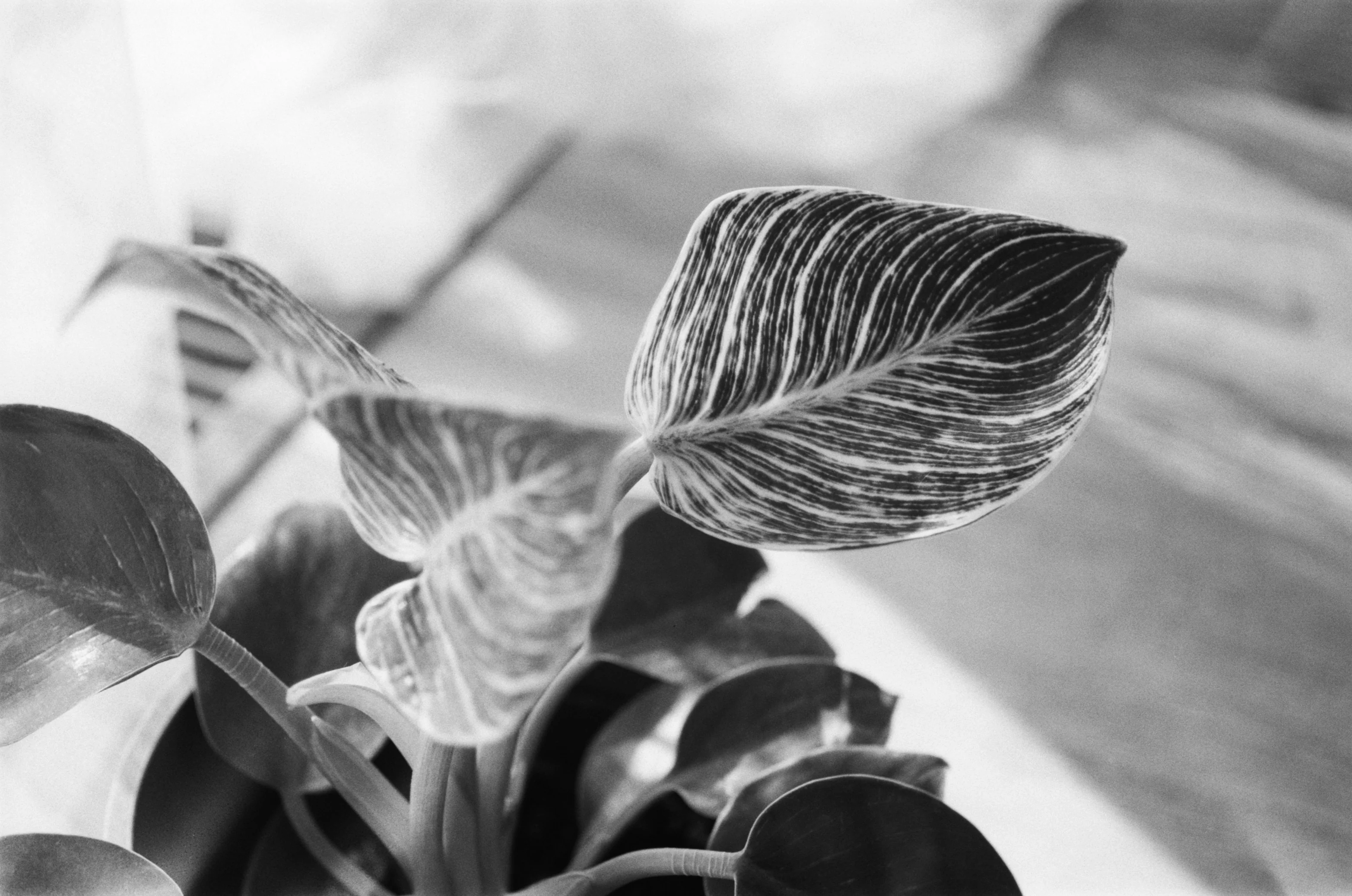
The Philodendron Birkin is a stunning, compact plant famous for its dark green leaves painted with pure white pinstripes. Because its genetics are unstable, it often surprises growers with half-red leaves.
-
Light
Requires bright, indirect light to maintain its striking white stripes. If kept in low light, the new leaves will emerge solid green. Direct sun will scorch the white sections.
-
Temperature
65°F - 85°F (18°C - 29°C)
Growth
moderate
pH Range
5.5 - 6.5
-
Biggest Owner Mistake
Expecting consistent pinstripe variegation on every leaf—Birkins are genetically unstable mutations that frequently produce half-moon leaves, fully green leaves, or leaves with irregular markings. This reversion is not caused by poor care and can't be prevented, only managed by cutting back to the last well-variegated leaf.
-
What Nobody Tells You
The Birkin originated as a spontaneous mutation of Philodendron 'Rojo Congo', which is why fully reverted plants start producing the broader, plain green leaves of its parent. Cutting back to a node showing the pinstripe pattern is the only way to encourage variegated regrowth.
-
Real Home Conditions
In low light, the white pinstripes fade completely and new leaves emerge solid dark green, because the plant produces no variegation pigment without adequate light. Bright indirect light is the primary factor in how much white shows on new growth.
Quick Answer
The Philodendron Birkin requires bright, indirect light to maintain its white stripes; in low light, it will turn solid green. Water only when the top 3 inches of soil are dry, and never expose the white leaves to direct sun.
Overview
The Philodendron 'Birkin' is a modern houseplant superstar. Just a few years ago, it was considered an expensive, ultra-rare collector's item; today, it is widely available and universally loved. It is famous for its striking variegation: the dark green, glossy leaves are heavily striped with bright white, cream, and yellow pinstripes.
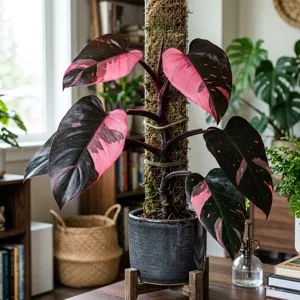
What makes the Birkin incredibly unique is its origin. It was not found in the wild; it is a spontaneous genetic mutation (a "sport") that occurred in a greenhouse growing the Philodendron 'Rojo Congo' (a plant with massive, dark burgundy-red leaves). Because its genetics are highly unstable, the Birkin is full of surprises. While the new leaves usually emerge pure white and slowly harden into green with white stripes, the plant will frequently push out leaves that are completely solid green, splashed with pink, or even perfectly split half-white and half-red as it attempts to revert to its Rojo Congo roots.
Light Requirements: Keeping the Stripes
Light is the absolute most critical factor in caring for a Birkin. The white stripes on the leaves contain zero chlorophyll. To produce heavily striped, brilliant white leaves, the plant needs significant amounts of bright, indirect light to compensate for the lack of photosynthetic tissue. An east-facing window is ideal.
If you place the Birkin in a low-light room, it will enter a survival state. It will completely stop producing white stripes and push out solid green leaves to capture whatever little light is available. Conversely, do not place it in blazing, direct afternoon sun, as the delicate white sections will instantly bleach and scorch.
Watering Strategy
The Birkin is highly forgiving of under-watering but completely intolerant of over-watering. Allow the top 2 to 3 inches of the potting soil to dry out completely before you water. If you stick your finger in the soil and it feels damp, wait a few more days.
When the soil is dry, soak the pot thoroughly until water flows out the bottom drainage holes. Ensure the pot does not sit in a saucer of stagnant water afterward. If the plant is overwatered, the root system will suffocate, and the first symptom will be the bright white sections of the leaves turning brown, mushy, and translucent.
Temperature and Humidity
Typical household temperatures between 65°F and 85°F (18°C - 29°C) are perfect. As a tropical plant, it hates the cold. Keep it far away from drafty winter windows and air conditioning vents. While it naturally thrives in the high humidity of a greenhouse, its thick, slightly waxy leaves allow it to adapt perfectly well to the standard 40-50% humidity found in most centrally heated homes.
Soil and Potting
Because the thick roots are susceptible to rot, standard, heavy potting soil will eventually kill the plant. You must use a chunky, fast-draining aroid mix. Combine standard indoor potting soil with 30-40% perlite and coarse orchid bark. This ensures that excess water drains away instantly and provides the roots with plenty of oxygen.
Pruning and Reversion
Because the Birkin's mutation is unstable, it is constantly trying to revert to a solid green plant. If the plant pushes out a vine or a section that produces three or four completely solid green leaves in a row, the white genetics on that section have likely been permanently lost. To save the variegation, use sterile scissors to cut the stem back to the last leaf that had good white stripes. This forces the plant to activate a new growth node that hopefully still contains the variegated genetics.
Toxicity
Like all plants in the Araceae family, the Philodendron Birkin contains insoluble calcium oxalate crystals. If chewed by cats, dogs, or humans, these microscopic crystals embed in the soft tissues of the mouth and throat, causing severe burning, swelling, excessive drooling, and vomiting. Keep the plant safely out of reach of curious pets.
Recommended next actions
Next Best Actions
Use calculators and guides to turn this plant profile into a practical care routine.
Guide
Why Do My Houseplants Have Brown, Crispy Tips?
With over 15 years of indoor plant diagnostics and more than 3,000 leaf-tissue cases analyzed, we've mapped the exact mechanisms behind brown crispy tips—fluoride accumulation, salt toxicity, and humidity deficits—so you can reverse damage today.
Guide
Stem Rot vs Root Rot in Houseplants
With over 15 years of indoor plant diagnostics and more than 3,000 rot and fungal collapse cases assessed across aroids, succulents, and tropical houseplants, we've built a three-way framework that distinguishes stem rot, root rot, and crown rot by their above-soil presentation alone — so you know within minutes whether rescue is viable and exactly what to do.
Guide
ZZ Plant Care Guide: Growing Zamioculcas Zamiifolia Indoors
After growing ZZ plants across offices, low-light apartments, and sun-drenched rooms for over eight years, we have worked out exactly how this rhizome-powered survivor operates — and why the growers who kill it are almost always doing one specific thing wrong.
Calculator
Sunlight Calculator
Determine the ideal indoor light placement for your plant based on species, window direction, and seasonal light availability.
Calculator
Neem Oil Spray Calculator
Calculate the correct neem oil dilution ratio for your spray bottle size, plant type, and pest severity — safely and without burning leaves.
Quiz
Get My Plant Map
Answer a short placement quiz for direction, room, light, and care-fit recommendations.
Structured Plant Data
Plant Data Profile
Care values below are generated from the plant JSON fields so users and crawlers can read the structured plant profile directly on the page.
Growth Characteristics
Growth Rate
moderate
Mature Height
2-3 feet indoors
Mature Spread
2 feet wide
Life Cycle
Perennial
Flowering Season
Rarely flowers indoors
Container Friendly
yes
Indoor Capable
yes
Environmental Parameters
| Parameter | Recommended | Survivable |
|---|---|---|
| Temperature | 65°F - 85°F (18°C - 29°C) | 55°F - 90°F (13°C - 32°C) |
| Humidity | 40% - 60% | 20% - 80% |
| Soil PH | 5.5 - 6.5 | 5.0 - 7.0 |
Lighting
Description
Requires bright, indirect light to maintain its striking white stripes. If kept in low light, the new leaves will emerge solid green. Direct sun will scorch the white sections.
Nutrients
Nitrogen Demand
moderate
Phosphate Demand
low
Potassium Demand
moderate
Micronutrient Notes
Do not over-fertilize, as it can cause the delicate white variegation to burn.
Fertilizer Frequency
Once a month during spring and summer with a balanced liquid fertilizer diluted to half strength.
Organic Options
Monthly top dressing of worm castings.
Relationships
-
Root Rot
Vulnerability | Strength 7
Susceptible to root rot if potted in heavy, dense soil that holds water for too long.
Popular Self-Heading Philodendrons
| Variety | Leaf Color | Growth Speed |
|---|---|---|
| Birkin | Dark green with white stripes | Moderate |
| Rojo Congo | Dark burgundy / Red stems | Fast |
| Prince of Orange | Neon orange fading to green | Moderate |
Glossary of Terms
- Sport
- A sudden genetic mutation in a plant that causes a morphological difference, such as variegation. The Birkin is a sport of the Rojo Congo.
- Self-Heading
- A growth habit in Philodendrons where the plant grows upright on a thick, self-supporting trunk, rather than climbing or trailing via vines.
Scientific References
- Aroid Cultivation
- Philodendron Care Guide