Can I Grow Rare Plants in My Climate?
Rare plants can work in the right climate or with the right indoor setup. Learn how to compare temperature, humidity, light, and seasons before buying, and discover when to use a greenhouse, tent, or cabinet.
Quick Answer
Yes, if you can match the plant's temperature, humidity, light, and seasonal needs within a reasonable range. If not, grow it indoors with climate control, in a greenhouse, or choose a species that naturally fits your local conditions instead. For best results, we suggest keeping an eye on the plant's response throughout the active growing season.
Key Takeaways
- Assess your local climate against the natural environmental range of the species.
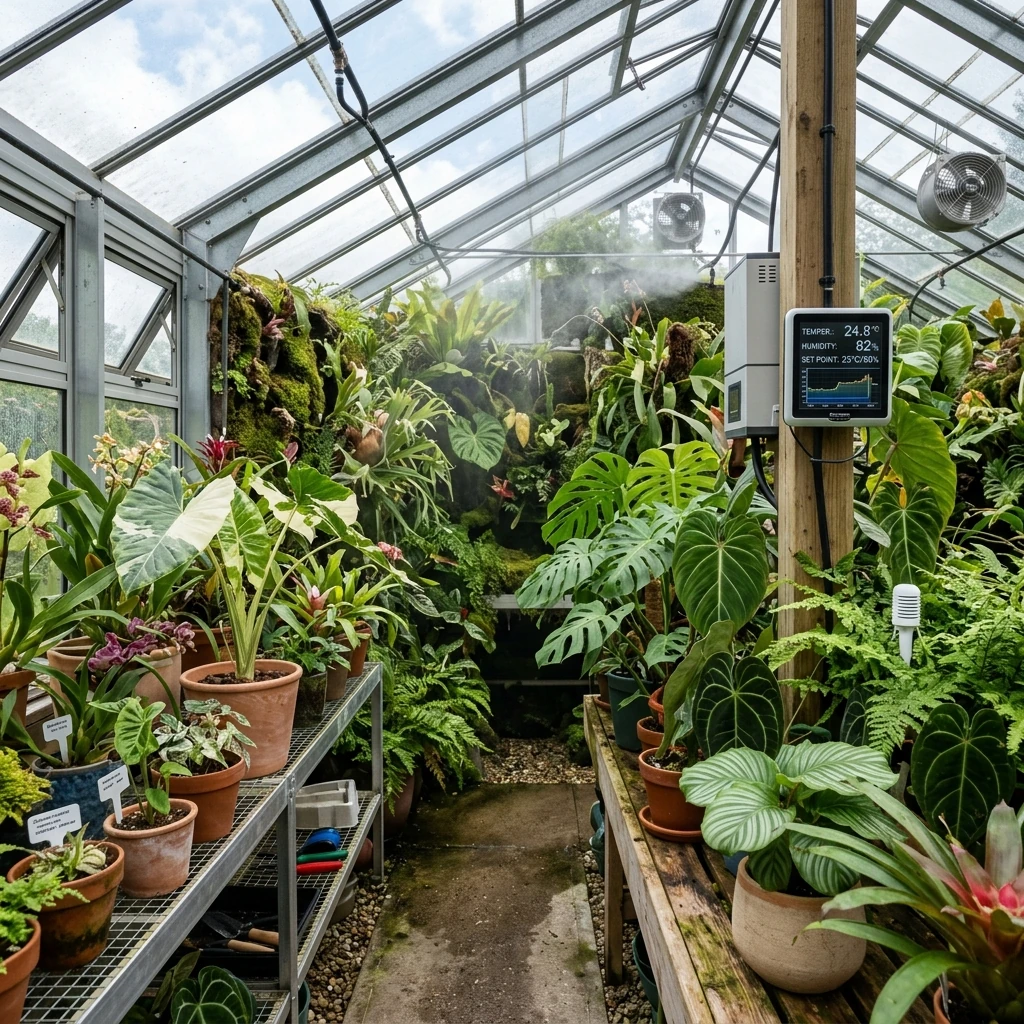
- Utilize indoor greenhouse cabinets to stabilize tropical humidity and warmth.
- Install high-PAR grow lights to compensate for regional solar deficits.
- Start with resilient rare hybrids before attempting delicate wild species.
Rare plants are not rare because gardeners dislike them; they are rare because they often come from narrow environmental niches. A collector plant may want warm nights, consistently high humidity, filtered light, or a seasonal rhythm that does not match your region. The question is not simply whether the plant is hardy in your state or province. The real question is whether your local climate or indoor environment can approximate the conditions the plant evolved to expect.
Key Takeaways
- Every rare plant has specific temperature, humidity, light, and seasonal needs based on its native habitat.
- Hardiness zones (like USDA) are useful for outdoor tolerance but do not capture indoor microclimate factors.
- You can modify your growing environment with tools like humidifiers, grow lights, and enclosures to expand your options.
- Honest climate matching before purchase prevents disappointment and plant loss.
- Start with less demanding rare plants and build up to more sensitive species as you gain experience.
Introduction
Collectors often lose plants because they buy for novelty instead of compatibility. A plant that looks perfect on social media may require a climate you cannot realistically provide for eleven months of the year. Good rare-plant growing starts with honest climate matching. That means comparing your local weather, your indoor microclimate, and the plant's native habitat before money changes hands. This guide walks you through every factor—temperature, humidity, light, seasonality, and protection options—so you can make informed decisions and enjoy your collection without constant stress.
Why It Matters
Climate mismatch creates a chain reaction. Low humidity can desiccate leaves. Cold nights can slow metabolism. Excess summer heat can stress roots. Too little light can stretch growth and weaken the plant. Some species will survive a mismatch for a while and then gradually decline, which makes the problem harder to diagnose. Matching climate up front is cheaper and kinder than rescuing a struggling plant later. Additionally, many rare plants have narrow tolerance ranges; a deviation of just a few degrees or a drop in humidity can trigger leaf drop, root rot, or pest infestations. Understanding your own growing space's limits is the foundation of successful rare plant care.
| Plant requirement | Your condition | Compatibility | What to do |
|---|---|---|---|
| Warm nights (18–24°C / 65–75°F) | Cool winter room (10–15°C / 50–59°F) | Low | Use indoor heat or choose a plant that tolerates cooler nights |
| High humidity (70%+) | Dry household air (30–40%) | Moderate to low | Add a humidifier, group plants, or use an enclosed cabinet |
| Bright filtered light (200–400 µmol/m²/s) | Strong direct sun (800+ µmol/m²/s) | Moderate | Provide shading with sheer curtains or move indoors |
| Cool dormant season (10–15°C) | Warm indoor home year-round (21–24°C) | Low | Choose a species without strict dormancy or create a cooler microclimate |
Science Behind It
Plants evolved with specific ranges of temperature, water availability, daylight duration, and humidity. Those variables affect photosynthesis, respiration, transpiration, and flowering cues. A plant from cloud forest conditions, for example, may be adapted to frequent moisture and stable temperatures, while a desert plant may need heat, bright light, and low humidity. The closer your growing space resembles the native habitat, the easier the plant is to maintain.
Hardiness zones are useful, but they are not the whole story. USDA Hardiness Zones describe winter temperature tolerance for outdoor plants, not humidity or indoor conditions. Many rare plants are not garden-hardy in any conventional sense, but they can still be grown successfully in controlled microclimates. That is why a greenhouse or indoor cabinet often changes the game more than geography alone. Understanding the physiological limits of a species—for instance, its ability to handle temperature fluctuations or low humidity—allows you to anticipate problems before they appear.
Step-by-Step Guide
1. Learn the plant's native conditions
Before buying, find out where the plant comes from. Is it a cloud forest epiphyte, an understory tropical, a high-altitude species, or a dry-season plant from a warmer region? Native habitat gives clues about what the plant wants more than a simple 'rare' label does. Look for climate data such as average temperature range, rainfall, humidity, and elevation. Many online databases and specialist nurseries provide this information.
2. Compare temperature and humidity realistically
Measure the environment you can actually provide. A plant that wants 21–29°C (70–85°F) and 70 percent humidity is very different from one that can handle 13–35°C (55–95°F) and dry air. Don't guess; use your home conditions, not the best possible day of the year. Take readings at different times of day and in different seasons to understand the full range.
3. Decide whether you need a microclimate
If your conditions are close but not perfect, you may be able to tweak them with grouping, humidity trays, lights, a cabinet, or a greenhouse. If the plant needs conditions your house cannot provide, don't force it outdoors or into an unsuitable room. Consider the cost and effort of creating a controlled environment versus choosing a more adaptable species.
4. Buy the easiest plant form
Starter plants with established roots are easier than cuttings or very young seedlings. The more demanding the species, the more important it is to begin with a healthy plant that already has a functioning root system. Avoid importing plants that require immediate high humidity if you cannot provide it.
5. Start with a trial period
Before investing in a large collection, test with one or two individuals. Observe how they respond to your environment over a few months. If they thrive, you can expand. This approach reduces risk and builds confidence.
| Setup | Strengths | Weaknesses | Best Use |
|---|---|---|---|
| Indoor windowsill | Easy access, protected from weather, low cost | Light may be too weak, humidity often low | Shade-loving tropicals and small rare plants that tolerate average home conditions |
| Grow tent | Controlled light and humidity, reflective walls | Costs more, takes space, requires ventilation | High-value rare plants that need stable conditions |
| Greenhouse (heated) | Best climate control for many collectors, natural light | Seasonal overheating possible, high initial investment | High-humidity and warm-loving species, especially in cooler climates |
| Outdoor bed (in-ground) | Natural light and airflow, low maintenance | Climate is least controlled, pests and weather risks | Hardy rare species matched to your USDA zone |
Climate Considerations
Climate is not just your city's average temperature. It is also seasonal swing, night lows, humidity, wind, and light intensity. A rare plant that can survive in a warm climate may still fail if the air is dry or the winter nights are too cold. If you live in a region with strong seasonal change, indoor growing may be more reliable than an outdoor bed. If you live in a very wet or very dry climate, microclimate control becomes even more important. For example, in the humid southeastern US (Zone 8–9), many tropicals can grow outdoors in summer but need winter protection. In arid regions like the southwestern US (Zone 7–9), humidity is the main challenge.
For gardeners in the UK, Ireland, and Western Europe, oceanic climates bring mild winters and cool summers, but humidity can be moderate. A greenhouse often extends the growing season significantly. In Australia and New Zealand, climate varies from subtropical to temperate; matching plant choices to your specific region is essential.
| Climate issue | Effect on rare plants | Practical response |
|---|---|---|
| Low humidity (below 40%) | Leaf edge crisping, poor growth, increased pest susceptibility | Humidifier, grouping, or enclosed cabinet; misting is usually insufficient |
| Cold winter nights (below 10°C / 50°F) | Slow growth, root stress, leaf drop | Move indoors, heat the space, or insulate with bubble wrap |
| High summer heat (above 32°C / 90°F) | Wilt, sunburn, accelerated drying | Shade cloth, filtered indoor light, increase ventilation |
| Strong seasonal light changes | Growth stalls or stretches | Supplement with grow lights during dark months |
| Drafts from windows or doors | Temperature fluctuations, leaf damage | Place plants away from drafty areas or use weather stripping |
USDA Hardiness Zones and Rare Plants
While many rare plants are grown indoors, understanding your USDA Zone helps you anticipate outdoor conditions for seasonal moves and greenhouse heating needs. The table below maps typical zone characteristics to recommendations.
| USDA Zone | Typical Winter Low (°C / °F) | Heating Season | Recommendation for Rare Plants |
|---|---|---|---|
| 3–5 (Cold) | -40 to -15°C / -40 to 5°F | Long, 6–8 months | Grow exclusively indoors or in a heated greenhouse; avoid outdoor culture except hardy species. |
| 6–7 (Temperate) | -15 to -1°C / 5 to 30°F | Moderate, 4–5 months | Use unheated greenhouse with frost protection; bring sensitive plants indoors for winter. |
| 8–9 (Warm) | -1 to 4°C / 30 to 40°F | Short, 2–3 months | Many tropicals can grow outdoors in summer; provide winter protection or move indoors. |
| 10+ (Hot) | Above 4°C / 40°F | Minimal | Outdoor culture possible year-round for many rare plants; watch for excessive heat and humidity issues. |
Seasonal Advice
Rare plants often need different management across the year. In spring and summer, growth may speed up and watering frequency can increase. In fall and winter, many species slow down or need a dry rest period. Some rare plants actually prefer a seasonal cycle, while others need steadier conditions. Understanding which category your plant falls into helps you avoid accidental overwatering or premature repotting during the wrong season. For example, many Dendrobium orchids require a cooler, drier winter to initiate flowering, while Monstera species grow year-round if conditions are stable. Always research the specific seasonal rhythm of your plant.
| Season | Watering Frequency | Fertilizer | Light | Temperature |
|---|---|---|---|---|
| Spring | Increase gradually as growth resumes | Start feeding at half strength | Increase if natural light improves | Maintain stable; watch for cold nights |
| Summer | Water more often; monitor drying rate | Full strength every 2–4 weeks | Provide shade during hottest part of day | Protect from extreme heat; ventilate |
| Autumn | Reduce gradually as growth slows | Reduce or stop | Watch for reduced daylight; consider supplemental light | Begin to protect from cold drafts |
| Winter | Water sparingly; let soil dry more | Stop fertilizing | Use grow lights if needed | Keep above minimum temperature; avoid cold windows |
Common Mistakes
- Buying a rare plant based on appearance alone without checking native habitat.
- Assuming a plant that survives one season outdoors is fully climate-appropriate.
- Overwatering a slow-growing rare plant because it 'looks dry'—check root zone instead.
- Putting a humidity-loving species in a dry room and hoping it adapts—it will not.
- Ignoring night temperatures, which matter as much as daytime highs for many species.
- Not quarantining new plants and introducing pests to your collection.
- Using garden soil instead of a well-draining mix suited for rare plants.
| Buying question | Good sign | Warning sign |
|---|---|---|
| Does the species match your zone or indoor conditions? | Yes, or it is clearly intended for indoor culture with known requirements | Only survives far outside your climate without extensive protection |
| Does the plant need extreme humidity (>60%)? | Your home can support it or you have a setup | Your room is dry and unmodified |
| Is the plant established? | Healthy roots visible, steady new growth | Weak cutting with little root mass or signs of shock |
| Can you supply adequate light? | Bright filtered light or grow lights available | Dark room with no supplementation |
| Are there pests or disease? | Clean leaves, no webbing or sticky residue | Visible bugs, spots, or mold |
Expert Tips
Think in terms of microclimates, not just climate zones. A small cabinet, shelf, tent, or greenhouse may allow you to grow something outside your normal conditions. Grouping plants together can also raise local humidity and reduce stress. If a plant is expensive or hard to replace, buy the environmental support first and the plant second. That order saves a lot of disappointment.
Another expert tip is to look for plants that are 'rare' because they are unusual in the market rather than impossible to grow. Some collector plants are demanding but not truly climate exclusive. Those are often the best place to start because they still reward care without requiring an advanced setup from day one. Also, consider using a thermostatically controlled heat mat for tropical species that need warm roots, especially in cool rooms.
| Option | Initial Cost (USD/GBP/EUR) | Climate Control Level | Best For |
|---|---|---|---|
| Windowsill only | $0–20 | Low | Tolerant rare plants like some succulents or hoyas |
| Grow lights plus shelf | $50–150 | Moderate | Light-demanding indoor species like variegated monsteras |
| Humidifier plus grouping | $40–100 | Moderate | Humidity-sensitive tropicals like calatheas or ferns |
| Grow tent or cabinet (basic) | $200–500 | High | Collector-grade rare plants like anthuriums or orchids |
| Heated greenhouse (small) | $500–2000+ | Very high | Extensive collections and year-round outdoor growing |
Buying Guide
When choosing a rare plant, ask what conditions it actually needs rather than asking whether it is 'hard to grow.' Look for source information from growers who describe temperature, humidity, and light. Prioritize plants with healthy root systems and clear care history. Avoid impulse buys that arrive from a warm greenhouse if you know your home is much cooler or drier than the shipping environment. If possible, buy from local growers who have already acclimated the plant to your region—this reduces transplant shock significantly.
Maintenance Guide
Maintenance for rare plants is mostly about consistency. Keep the light level stable, avoid frequent moves, and monitor humidity and temperature with a basic meter if the plant is sensitive. Many rare plants do best when you water a little more carefully and fertilize more lightly than common houseplants. Growth can be slow, so patience matters. A plant that looks unchanged for a while may still be establishing its root system underground. Repot only when necessary, and always use a mix appropriate for the plant type—many rare plants need extra bark or perlite for drainage.
Troubleshooting
If a rare plant declines after purchase, start with the environment. Look at light, humidity, temperature, watering, and root health before assuming the plant is doomed. If leaves brown at the edges, the air may be too dry. If growth stalls, light may be inadequate or temperatures may be out of range. If the plant rots, the potting mix or watering frequency is probably too heavy for that species. Rare plants usually reveal their needs through consistent patterns, not dramatic overnight failure.
| Symptom | Likely Cause | Best Next Step |
|---|---|---|
| Leaf edges crisp and brown | Humidity too low or irregular watering | Add humidity support (humidifier, pebble tray), water thoroughly when dry |
| Leaves yellow and drop | Too wet (overwatering) or too cold | Check roots for rot; reduce watering; ensure temperature is above minimum |
| Stretchy, weak growth (etiolation) | Insufficient light | Move to brighter spot or add grow lights |
| No new growth for months | Seasonal slowdown or stress from repotting | Stabilize conditions; be patient; check root health |
| Spots or sticky residue | Pests (scale, mealybugs, spider mites) | Isolate; treat with insecticidal soap or neem oil; increase humidity to deter mites |
Frequently Overlooked Facts
Many rare plants are not difficult because they are fussy; they are difficult because their ideal environment is uncommon indoors. Another overlooked fact is that 'indoor safe' does not mean 'easy.' A plant can be compact and beautiful while still needing excellent light and humidity. The last overlooked fact is that your local climate may be close enough for a plant to survive outdoors only during a small part of the year, which still does not make it a full-time outdoor candidate. Also, many collectors underestimate the importance of air circulation—stagnant air can promote fungal diseases, especially in high humidity.
Common Myths
- Myth: If a plant is rare, it must be difficult to grow. Reality: Rarity often reflects supply and demand, not difficulty. Some rare plants are as easy as common ones.
- Myth: You can acclimate any plant to your home conditions with time. Reality: Some plants have strict physiological limits; they cannot adapt to extreme conditions.
- Myth: Misting increases humidity significantly. Reality: Misting raises humidity only momentarily; use a humidifier or pebble tray for lasting effect.
- Myth: Rare plants need constant feeding. Reality: Over-fertilization can burn roots; most rare plants prefer light feeding during active growth only.
- Myth: All tropical plants need the same high humidity. Reality: Some tropical plants, like certain Hoya species, tolerate average home humidity well.
When NOT To
- Do not buy a rare plant if you cannot provide its minimum temperature and humidity—it will decline and waste your money.
- Do not attempt outdoor growing if your winters are freezing unless the plant is proven hardy or you have a greenhouse.
- Do not start with a notoriously difficult species like Anthurium warocqueanum or Medinilla magnifica if you are a beginner with limited climate control.
- Do not invest in a large collection before testing a few plants in your environment for at least one full seasonal cycle.
- Do not ignore pest prevention—rare plants are often more susceptible and harder to replace.
| Your Situation | Recommendation | Reason |
|---|---|---|
| You have a heated greenhouse or grow tent | Yes, for most species | You can control temperature, humidity, and light precisely. |
| You have a bright windowsill and average home humidity (40–50%) | Choose species that tolerate these conditions (e.g., some Hoya, Sansevieria, Zamioculcas) | Avoid plants that need high humidity or strong light. |
| You have a cool, dim room in winter | Choose plants that tolerate low light and cooler temperatures (e.g., Aspidistra, Spathiphyllum) | Avoid tropicals that need warmth and bright light. |
| You travel frequently and cannot monitor daily | Choose drought-tolerant species or invest in automated watering and climate control | Rare plants often need consistent care; neglect can be fatal. |
| You are new to rare plants | Start with easier 'rare' plants like Monstera obliqua (Peru form) or Philodendron gloriosum (which are forgiving) | Build experience before tackling finicky species. |
Summary
You can grow rare plants in your climate if you honestly match the plant's needs to the conditions you can provide. The more the plant's native habitat differs from your home, the more you need to rely on microclimate tools, careful placement, and seasonal adjustments. The best rare-plant growers are not the ones with the most luck; they are the ones who choose plants that fit their environment and then keep conditions steady. By understanding temperature, humidity, light, and seasonal rhythms, and by using appropriate setups like grow tents or greenhouses, you can expand your growing possibilities. Start small, observe carefully, and gradually build your collection—your plants will reward your patience.
Recommended next actions
Next Best Actions
Move from reading to action with related calculators, plant profiles, and quiz-based recommendations.
Guide
5 Best Entry-Level Plants for First-Time Owners
Having coached 2,000+ first-time plant owners across the US and Europe, I'll show you the 5 plants that forgive central heating, dim flats, and erratic watering—and how to keep them thriving.
Guide
Beginner Botanical Toolkit: 10 Essential Growing Tools
After setting up over 1,000 beginner plant corners in western apartments, I'll share the 10 tools that actually matter—and which ones you can skip—so you don't waste money on useless gadgets.
Guide
Apartment Balcony Garden: Complete How-To Guide
A balcony can become a productive garden if you plan for sun, wind, weight, and water. This guide helps apartment growers build a space that looks good and actually works, with practical advice from an experienced urban gardener.
Frequently Asked Questions
How do I know if a rare plant will survive here?
What climate factors matter most for rare plants?
Can I grow tropical rare plants indoors?
Do greenhouses make rare plants easier to grow?
Should I buy a rare plant if my climate is wrong?
What is the best way to increase humidity for rare plants?
How do I protect rare plants from cold drafts?
Can I grow rare plants outdoors in summer and bring them inside?
Do rare plants need grow lights in winter?
What are the easiest rare plants for beginners?
Explore More