Can You Grow Edible Fig Trees (Ficus carica) Indoors?
Learn how to grow edible fruit-bearing fig trees in containers. Expert tips on overwintering, dormancy, light requirements, and choosing compact varieties.
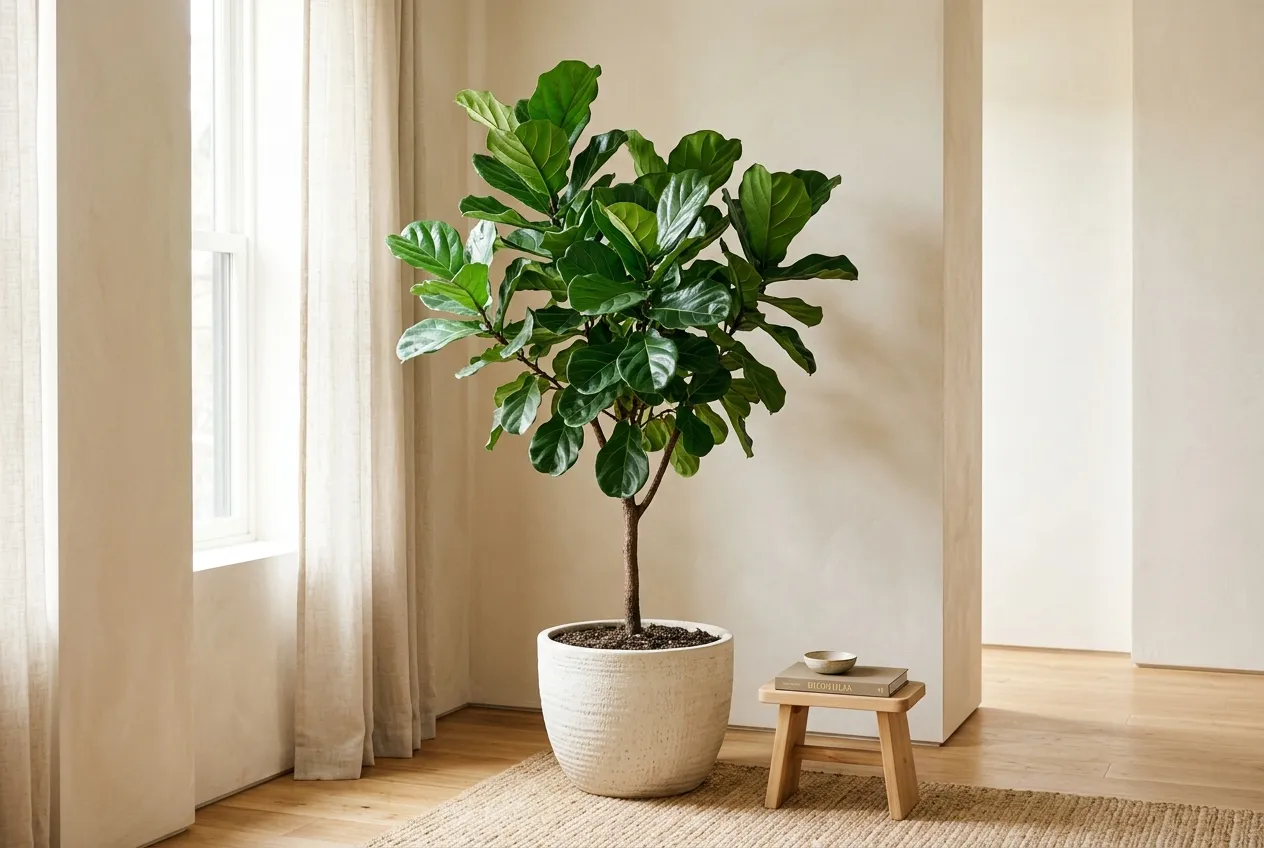
Quick Answer
Edible fig trees (Ficus carica) can be grown in containers, but they are not ideal year-round houseplants. They need full outdoor sun—about 8 hours or more during the growing season—to produce and ripen fruit, then naturally lose their leaves and enter winter dormancy. Grow container figs outdoors during the growing season and overwinter dormant trees in a cool, protected, unheated space. Compact varieties such as 'Brown Turkey', 'Chicago Hardy', and 'Petite Negra' can work well in containers.
Key Takeaways
- Edible figs need abundant direct sunlight to produce and ripen fruit—aim for 8+ hours of direct outdoor sun during the growing season.
- They are deciduous, meaning they drop all their leaves in autumn and enter winter dormancy—this is normal and necessary for fruiting.
- Choose naturally compact varieties like 'Brown Turkey', 'Chicago Hardy', or 'Petite Negra' for container growing.
- Store container figs in an unheated garage, shed, or basement during winter dormancy with minimal watering—temperatures around 30–45°F (-1–7°C) are a practical target.
- Move figs back outside in spring after the last frost; they will leaf out and produce fruit on new growth.
Quick Facts
- Light requirement Full sun (aim for 8+ hours direct) outdoors during growing season
- Winter dormancy temperature Cool, frost-protected conditions; approximately 30–45°F (-1–7°C) is a practical target
- Watering during growing season Frequent, often daily during hot summer periods—check soil moisture regularly
- Watering during dormancy Very sparingly—only when needed to prevent the root ball from becoming completely dry
- Fertilizer Balanced fertilizer during active growth; follow product label and reduce as dormancy approaches
- Best container varieties 'Brown Turkey', 'Chicago Hardy', 'Petite Negra'
What Should I Do?
You want to grow figs indoors year-round in a living room
You live in a cold climate but want to grow figs
Your fig tree drops all its leaves in autumn
Your fig tree is not producing fruit
You have limited outdoor space but want to grow figs
You're bringing your fig inside for winter (and it still has leaves)
Container Fig Varieties: Which Is Right for You?
| Variety | Growth Habit | Cold Tolerance / Winter Notes | Fruit Description | Best For |
|---|---|---|---|---|
| Brown Turkey | Compact to moderate; responds well to container growing | Cold-hardy cultivar, but container roots require winter protection in freezing climates | Medium, sweet with reddish-brown skin | Container growing, reliable producer |
| Chicago Hardy | Compact; well-suited to containers | Very cold-hardy cultivar; container roots still need winter protection in freezing climates | Small to medium, dark purple skin | Colder climates, exceptional cold tolerance |
| Petite Negra | Dwarf; excellent for small containers and patios | Moderate cold tolerance; protect container roots from freezing | Small, black skin, very sweet | Small spaces, patios, and balconies |
| Celeste | Moderate; responds well to container pruning | Cold-hardy cultivar; container roots require winter protection | Small, sugar-sweet with light brown skin | Hot climates, sweet fruit |
| Kadota | Vigorous; needs larger container | Less cold-hardy; may need more winter protection | Medium to large, green skin, amber flesh | Mild climates, preserves |
Choosing a Container Variety
Edible fig trees can grow over 20 feet tall in the ground. To grow them in a pot, you must select varieties that adapt well to root restriction. Brown Turkey, Petite Negra, and Chicago Hardy are excellent, naturally compact choices that perform well in containers. Dwarf varieties like 'Petite Negra' can thrive in smaller pots, while larger varieties may need larger containers to support their growth.
Fig trees have varied cold tolerance. 'Chicago Hardy' is exceptionally cold-hardy, while 'Brown Turkey' tolerates cold conditions but still requires winter protection for container roots. Choose a variety suited to your climate and winter storage conditions.
The Light Challenge
Figs are sun-worshippers. It is nearly impossible to provide enough light for them to set and ripen fruit inside a typical living room. Therefore, container figs must spend their spring and summer outside on a sunny patio, balcony, or rooftop receiving abundant direct sunlight—aim for at least 8 hours where practical. South-facing locations are ideal.
Without sufficient light, fig trees may grow vigorously but produce little to no fruit. While some growers attempt to supplement with strong grow lights, the cost and energy required often outweigh the benefits compared to moving the plant outdoors during the growing season.
Potting and Soil
Choose a container large enough to support the tree's mature size and provide adequate root volume. Many growers use containers in the 15–20 gallon (60–75 liter) range for established trees, while smaller varieties can be maintained in smaller pots with more frequent root management. Heavy terracotta or plastic pots work well; terracotta helps regulate moisture but requires more frequent watering. Use a well-draining potting mix amended with perlite or sand to prevent waterlogging. Figs are adaptable to soil pH but prefer slightly acidic to neutral (pH 6.0–7.0).
Repotting: Repot container figs every 2–3 years in early spring before new growth emerges. Prune up to 20–30% of the root mass and refresh the top few inches of soil to prevent salt buildup.
Watering and Feeding
In a container baking in the summer sun, a large fig tree will transpire massive amounts of water. You may need to water the pot frequently during hot periods. Check soil moisture regularly—water when the top inch feels dry. Never let the pot completely dry out during the growing season, but avoid waterlogging. Apply water at the base of the plant, avoiding wetting the foliage excessively to prevent fungal issues.
Figs benefit from regular feeding during active growth. Apply a balanced, slow-release granular fertilizer in early spring as new growth emerges. Some growers supplement with a liquid fertilizer high in potassium during fruiting to support fruit quality. Reduce or stop fertilizing in late summer to help the plant prepare for dormancy. Always follow the product label for dosage and frequency.
Winter Dormancy
This is where indoor gardeners often get confused. As autumn approaches and temperatures drop, your fig tree's leaves will turn yellow and fall off. The tree is not dying—it is going to sleep.
Figs are deciduous trees that naturally enter winter dormancy as temperatures fall. This period of rest is an important part of their seasonal growth cycle. A warm living room is usually a poor winter location for a dormant fig. Warm temperatures combined with insufficient light can encourage weak, elongated growth before the plant is ready to resume active growth.
How to Overwinter: Once all the leaves have dropped, move the pot into an unheated garage, shed, or basement where temperatures stay cool and frost-protected (approximately 30–45°F / -1–7°C is a practical target). It does not need light during this time. Water very sparingly—just enough to prevent the roots from completely drying out. Do not fertilize during dormancy. In early spring after the threat of frost has passed, move it back outside into the sun.
Important: In warmer climates (USDA zones 8–10), figs can remain outdoors year-round with minimal winter protection. In colder zones, winter storage is essential.
When Will a Container Fig Produce Fruit?
A healthy container fig can produce fruit in its second or third year, though this varies by variety, growing conditions, and the size of the tree. Some fig varieties produce a 'breba' crop in spring on old wood, followed by a main crop on new wood later in the season. Others produce only a main crop. If your tree is growing vigorously but not fruiting, the most common causes are insufficient light (aim for 8+ hours of direct sun), inadequate feeding during the growing season, or simply being too young. Be patient—consistent care and favorable conditions will eventually lead to fruit.
Pests and Diseases
Container fig trees are relatively pest-resistant but can occasionally encounter issues:
- Spider mites: Especially in dry, hot conditions. Increase humidity and use insecticidal soap if needed.
- Scale insects: Small, immobile bumps on stems and leaves—scrape off or treat with horticultural oil.
- Fungal leaf spot: Often caused by overhead watering. Water at the base and improve air circulation.
- Root rot: Caused by overwatering. Ensure proper drainage and avoid waterlogged soil.
Pruning and Training
Prune container figs in late winter while the tree is dormant. Remove dead, diseased, or crossing branches. Shape the tree to an open vase or espalier form to maximize light penetration. Pruning also encourages new fruiting wood. Be aware that figs produce fruit on both old wood (breba crop) and new wood (main crop). Pruning timing affects which crop you'll harvest.
Frequently Asked Questions
Can you grow edible fig trees indoors as houseplants?
What is the best fig variety for container growing?
How much sun do fig trees need to produce fruit?
Can a fig tree produce fruit indoors?
Why is my fig tree dropping all its leaves in autumn?
Where should I store my fig tree in winter?
How often should I water my fig tree in winter dormancy?
Do I need to fertilize my fig tree in winter?
Can I bring my fig tree inside during winter if it still has leaves?
Sources & References
-
Source: extension.uga.edu
Type: extension
-
Source: hort.extension.wisc.edu
Type: extension
-
Source: extension.umn.edu
Type: extension