Growing Dwarf Trees Indoors: Citrus, Figs, Olives & More
Learn how to successfully grow dwarf fruit trees and ornamental trees indoors. Expert advice on light, soil, watering, and overwintering for indoor trees.
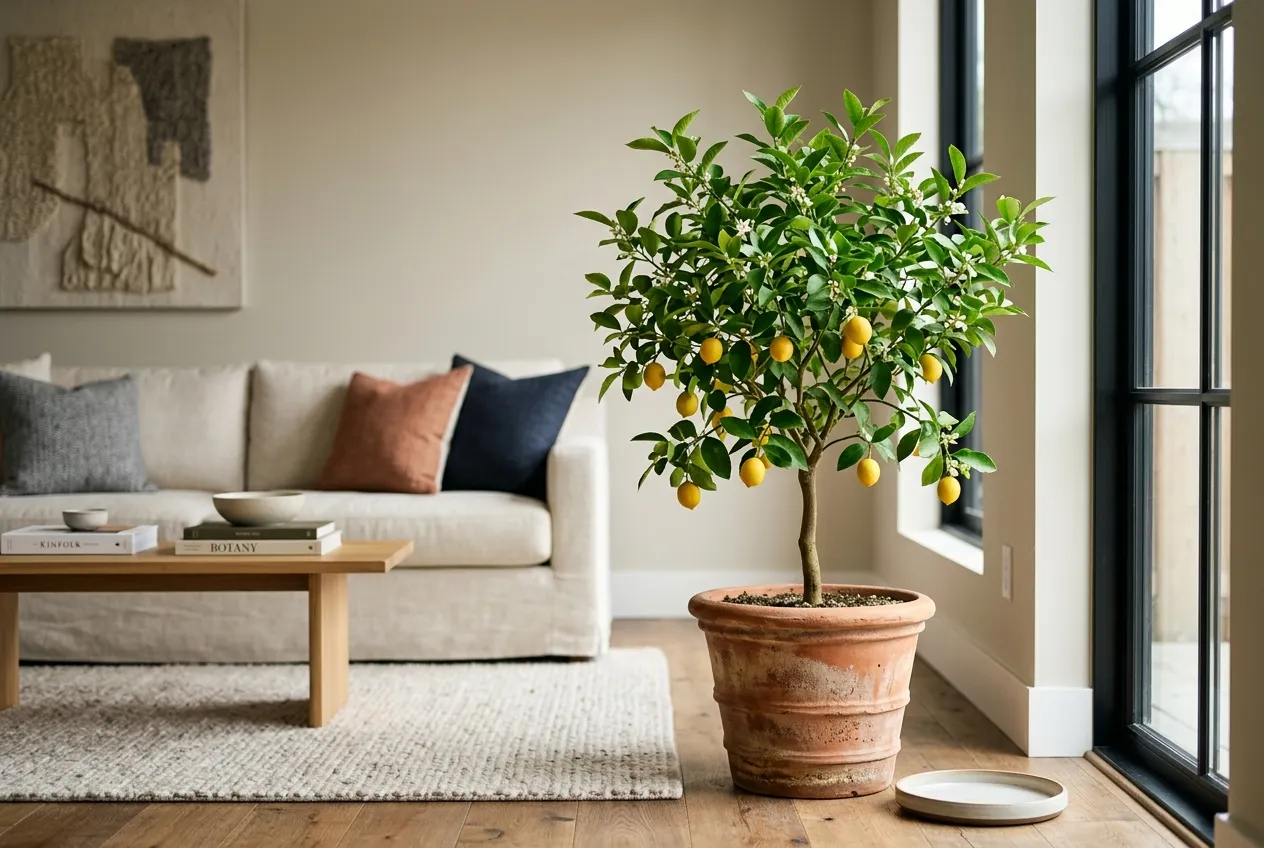
Quick Answer
Growing dwarf trees indoors (like Meyer Lemons, Calamondin oranges, Dwarf Olives, or Dwarf Figs) requires bright, direct light — the brightest south- or west-facing window, supplemented with a strong LED grow light in winter. Use deep pots with excellent drainage and a well-aerated citrus or cactus mix. Water when the top 2–3 inches of soil are dry, adjusting for species. Fertilize during the spring and summer growing season, provide good air circulation, and watch for spider mites and scale.
Key Takeaways
- Fruit-bearing trees need very bright light; supplement with grow lighting if natural light is limited.
- Always use pots with multiple drainage holes and well-aerated soil; trees do not tolerate consistently wet soil.
- Watering needs vary by species—citrus prefers more consistent moisture, while olives tolerate drier conditions between waterings.
- Avoid placing trees near heating or air conditioning vents, which cause rapid leaf drop and stress.
- Dwarf citrus trees are heavy feeders—use a specialized citrus fertilizer during the growing season; olives and figs need less frequent feeding.
Quick Facts
- Light requirement Bright, direct sunlight; at least 6 hours daily where practical; supplement with grow lights in winter for fruiting species
- Watering Water thoroughly when upper soil layer is dry to the appropriate depth for the species; never let pot sit in water
- Soil Well-draining, aerated mix (citrus or cactus mix with extra perlite/pumice)
- Fertilizer Citrus: citrus-specific fertilizer during growing season; olives/figs: balanced fertilizer, less frequently
- Humidity Moderate; avoid dry drafts; use a humidifier if indoor air is very dry
- Common pests Spider mites, scale, mealybugs; improve air circulation and inspect regularly
What Should I Do?
Leaves turning yellow and dropping, soil is wet
Leaf edges browning and crispy, air is dry
Leaves have sticky residue or tiny webs
Plant drops all leaves suddenly
Citrus tree flowers but no fruit sets
Popular Container Trees for Indoors: Comparison
| Tree | Light Needs | Watering | Fruiting | Difficulty |
|---|---|---|---|---|
| Meyer Lemon | Very high; requires grow light in winter | Keep evenly moist but not soggy; allow slight drying | Prolific; fragrant flowers | Moderate – needs consistent care |
| Calamondin Orange | High; tolerates some shade but fruits best with good light | Allow moderate drying between waterings | Heavy producer of sour fruits | Easier than other citrus |
| Dwarf Olive | Very high; needs full sun or strong grow light | Allow more drying between waterings; drought-tolerant | May produce olives with enough light and seasonal cues | Moderate; needs excellent drainage |
| Dwarf Fig | High; prefers bright indirect to direct sun | Water when top inch is dry; less in winter | Can produce figs with good care | Moderate; prone to leaf drop if stressed |
| Ficus Audrey (tree-form houseplant) | Bright indirect light; tolerates some shade | Allow top 2 inches to dry | Does not fruit indoors | Easy; good for beginners |
Choosing the Right Indoor Tree
Not all trees can survive indoors. You must select varieties explicitly grafted onto dwarfing rootstock or naturally adapted to container life. The most successful indoor trees include:
- Meyer Lemon (Citrus × meyeri): Highly adaptable, produces fragrant flowers and sweet-tart lemons. Needs very bright light.
- Calamondin Orange (Citrus × microcarpa): Very resilient indoors, produces small, sour fruits excellent for marmalade. Tolerates lower light better than other citrus.
- Dwarf Olive Tree (Olea europaea): Provides a beautiful silvery-green Mediterranean aesthetic; requires intense light and excellent drainage.
- Dwarf Fig (Ficus carica): Can produce edible figs indoors with adequate light and consistent care.
- Ficus Audrey (Ficus benghalensis): A tree-form houseplant and a trendy, easier-to-care-for alternative to the Fiddle Leaf Fig; tolerates lower light but still prefers bright indirect light.
The Light Problem
The single biggest reason indoor trees struggle is insufficient light. A sunny living room still only provides a fraction of the light a tree would receive outdoors. Place your tree directly in front of a South or West-facing window. For citrus and olives, you will almost certainly need to supplement with a strong LED grow light during the winter months. Aim for at least 6 hours of direct light where practical, and consider 12–16 hours of supplemental light in darker climates.
Watering by Species
Watering needs vary by tree type. As a general rule, water thoroughly when the upper layer of the growing medium has dried to the appropriate depth for the species and pot size. Allow more drying between waterings for drought-tolerant trees such as olives, while avoiding prolonged dryness in citrus. Never let the pot sit in standing water.
- Citrus: Water when the top 2 inches of soil are dry; keep consistently moist but not soggy.
- Olive: Allow the top 3 inches to dry; olives tolerate drier conditions.
- Fig: Water when the top inch is dry; reduce in winter.
- Ficus Audrey: Allow the top 2 inches to dry.
Soil and Potting
Use a well-draining, aerated potting mix—a citrus or cactus mix amended with extra perlite or pumice works well. Avoid standard potting soil, which holds too much moisture. Choose a sturdy container appropriately sized for the tree and its root system, with adequate drainage holes. Avoid unnecessarily oversized containers because excess wet soil can increase root-rot risk. Terracotta or unglazed clay pots help wick excess moisture.
Fertilizing for Fruit and Growth
Dwarf citrus are relatively heavy feeders and generally benefit from a fertilizer formulated for citrus during active growth. Follow the product label for dosage and frequency. Olives and figs generally need less frequent feeding than actively fruiting citrus; use a balanced fertilizer according to the product label during active growth. Reduce or stop fertilizing in winter when growth slows.
Managing Humidity and Airflow
Stagnant indoor air promotes spider mites and scale insects. Run a small oscillating fan in the room to improve air circulation and discourage pests. During winter when central heating dries out the air, a humidifier can help prevent leaf crisping and blossom drop. Avoid misting as a primary humidity strategy; it's not reliably effective and can leave foliage wet.
Overwintering and Seasonal Care
Indoor trees often go semi-dormant in winter. Reduce watering and stop fertilizing, but maintain as much light as possible. If you move your tree outdoors in summer, gradually acclimate it to direct sun to prevent sunburn. Bring it back inside before temperatures drop below 50°F (10°C).
Common Pests and Diseases
- Spider mites: Fine webbing and stippled leaves. Increase humidity, wipe leaves, and apply insecticidal soap or horticultural oil.
- Scale: Brown or white bumps on stems and leaves. Scrape off or treat with horticultural oil.
- Root rot: Yellowing leaves, wilting, and mushy roots. Prevention is key: use well-draining soil and avoid overwatering.
Frequently Asked Questions
How much light does a dwarf citrus tree need indoors?
How often should I water my indoor dwarf tree?
Why are the leaves on my dwarf lemon tree turning yellow?
Can I grow a dwarf olive tree indoors?
Why is my indoor tree dropping all its leaves?
Do indoor dwarf trees need fertilizer?
How do I pollinate my indoor lemon tree to get fruit?
Sources & References
-
Source: edis.ifas.ufl.edu
Type: extension
-
Source: extension.umn.edu
Type: extension
-
Source: hgic.clemson.edu
Type: extension
-
Source: extension.uga.edu
Type: extension