Indoor Olive Tree Care Guide
Grow a healthy indoor olive tree with the sunlight, well-draining soil and watering routine it needs to avoid leaf drop and root rot.
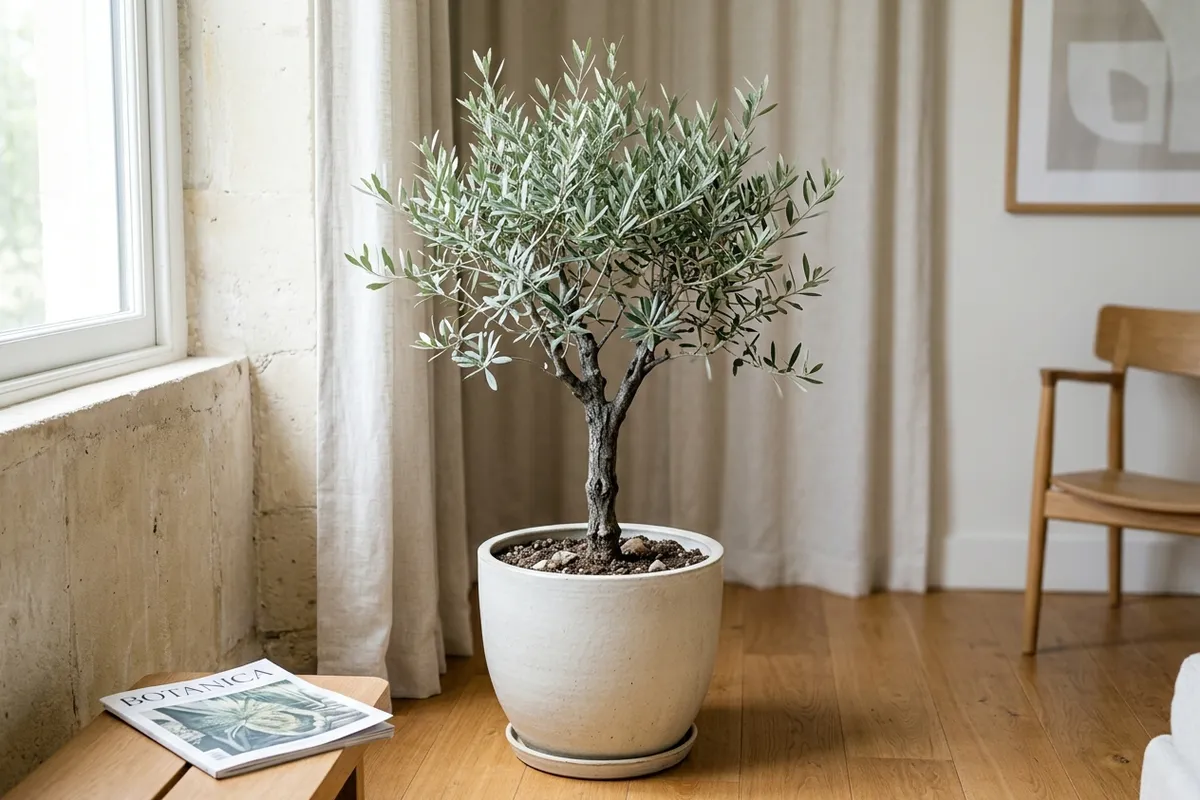
-
Difficulty
Medium
-
Light
Bright indirect
-
Temperature
18-25°C (64-77°F)
-
Growth
Moderate
-
Expert Insight
Master-grower data coming soon.
-
Common Mistake
Real-world care data coming soon.
-
Environment
Real-world conditions coming soon.
Quick Answer
Indoor Olive Trees need full sun (6+ hours daily), well-draining soil, and watering only once the top few inches of soil dry out. Leaf drop most often results from insufficient light or overwatering rather than pests. Native to dry Mediterranean climates, olive trees tolerate underwatering far better than consistently wet roots.
Key Takeaways
- Place near the sunniest window available; olive trees need intense light.
- Use a well-draining soil mix amended with grit or perlite.
- Water only after the top few inches of soil have dried out.
- Move outdoors in summer where possible to boost overall vigor.
- Leaf drop usually points to low light or overwatering, not pests.
Overview
Olive Tree (Olea europaea) is a long-lived Mediterranean evergreen tree valued for its silvery foliage, drought tolerance, and, under suitable conditions, edible olives. It is fundamentally a high-light plant and performs best with abundant direct sunlight, excellent drainage, and a pronounced dry period between waterings. Indoor cultivation is possible, but maintaining sufficient light and providing an appropriate seasonal rest are the main challenges.
Watering
Allow the growing medium to dry substantially between waterings, then water deeply until excess drains freely from the container. Olive Trees are adapted to periods of drought and are more likely to suffer from consistently wet roots than from being allowed to dry moderately between waterings. Watering frequency depends on light, temperature, pot size, soil composition, and season. Reduce watering significantly during cooler or darker periods when growth slows.
Light
Provide Olive Tree with as much direct sunlight as practical, ideally several hours of strong sun each day. A south-facing or similarly unobstructed window is preferable indoors, although even a very bright windowsill may provide less light than the tree would receive outdoors. Plants moved from lower light should be acclimated gradually to intense direct sun to reduce the risk of leaf scorch.
Soil
Use a sharply draining growing medium that allows excess water to leave the root zone quickly. A Mediterranean, cactus, or other mineral-rich container mix can work well when it provides both drainage and adequate root support. Avoid heavy, moisture-retentive soil and oversized containers, which can keep the root zone wet for too long. Always use a container with unobstructed drainage holes.
Temperature
Olive Trees prefer warm conditions during active growth but benefit from cooler temperatures during their winter rest. Established plants are considerably more cold tolerant than tropical houseplants, but prolonged freezing conditions can damage foliage and young growth. Container-grown trees are more vulnerable to cold because their roots are less insulated than those of plants growing in the ground. Protect young or potted trees when temperatures approach their cold-tolerance limit.
Humidity
Olive Trees naturally thrive in low to average humidity and do not require supplemental moisture or misting. Their Mediterranean heritage makes them exceptionally resilient to dry indoor air, provided they receive maximum direct sunlight and excellent airflow.
Fertilizer
Feed Olive Tree during active growth with a balanced fertilizer suitable for woody container plants, following the product instructions. Container-grown trees may benefit from regular feeding because repeated watering can gradually deplete available nutrients. Avoid excessive fertilizer, particularly when light is inadequate, and reduce or stop feeding during the winter rest.
Repotting
Repot Olive Tree when roots have substantially filled the container, the growing medium has deteriorated, or the tree has become unstable. Choose a container only moderately larger than the previous one and use a sharply draining mix. Because olive trees tolerate some root restriction and grow relatively slowly, frequent repotting is unnecessary. Spring, as active growth resumes, is generally a suitable time for major container work.
Growth
Olive Tree is a slow- to moderate-growing woody evergreen that develops a branching trunk and narrow, leathery leaves with silvery undersides. Young container plants can remain relatively compact with appropriate pruning, while established outdoor trees can eventually become substantial landscape specimens. Growth is strongest with abundant sunlight and warmth and naturally slows during cooler winter conditions.
Pruning
Pruning can be used to maintain a manageable container size, shape the canopy, remove weak or crossing branches, and encourage a useful branching structure. Remove dead, damaged, or poorly positioned growth with clean tools. Avoid excessive pruning at once, particularly on young or stressed trees. If fruit production is desired, pruning should preserve enough healthy flowering wood while maintaining an open canopy.
Flowering
Olive Trees produce small, inconspicuous flowers, typically in clusters arising from the previous season's growth. Flowering is encouraged by strong light, a healthy mature plant, and appropriate seasonal conditions. Container-grown indoor trees may flower poorly or not at all if light is insufficient or the plant does not experience a suitable seasonal cycle. Successful fruiting also depends on cultivar, pollination conditions, temperature, and overall plant maturity.
Fruiting
Olive Trees can produce fruit when mature and grown under sufficiently bright conditions, but indoor container plants may produce little or no fruit. Fruit development requires successful flowering and pollination as well as adequate sunlight and plant resources. Some cultivars are more productive or self-fertile than others, while multiple compatible trees can improve pollination in suitable outdoor conditions. Fruit production should not be treated as an expectation for a typical indoor specimen.
Dormancy
Olive Trees enter a period of reduced growth during cooler, shorter days. This seasonal rest is useful for maintaining the plant's natural growth cycle and can support flowering in mature plants. During this period, reduce watering because the plant uses less moisture, and stop or greatly reduce fertilizer. Avoid placing the tree in a warm, dark location and instead maintain the brightest practical light while protecting it from unsuitable cold.
CommonProblems
Leaf drop, yellowing, and weak growth can result from insufficient light, excessive watering, poor drainage, sudden environmental changes, or seasonal adjustment. Sparse growth indoors is often a light problem rather than a fertilizer deficiency. Persistent wet soil can cause root problems, while dry brown foliage can result from severe drought or environmental stress. Examine light exposure, root-zone moisture, drainage, and recent changes in conditions before changing several care factors simultaneously.
SeasonalCare
During spring and summer, Olive Tree generally benefits from its brightest light, more active watering, and appropriate feeding as growth increases. In autumn and winter, growth naturally slows and water use declines. Reduce watering and fertilizer accordingly while continuing to provide strong light. Avoid moving the plant suddenly between very different environments, particularly when transitioning it between indoor and outdoor conditions.
OutdoorCare
Olive Tree is particularly well suited to outdoor cultivation in climates with abundant sunlight, well-draining soil, and suitable winter temperatures. Plant it in full sun with excellent drainage and avoid low areas where water collects. Container-grown trees can be moved outdoors during favorable weather but should be acclimated gradually to stronger sunlight. In colder climates, protect container plants during freezing conditions because roots in containers are more exposed to temperature extremes.
Propagation
Olive Trees can be propagated from seeds or suitable semi-hardwood cuttings, although propagation from seed may produce plants that differ from the parent and can take a long time to reach fruiting maturity. Cuttings from healthy parent plants are generally preferred when preserving cultivar characteristics is important. Propagation requires patience, warmth, suitable moisture, and good drainage while new roots develop.
Toxicity
Olive Tree is generally considered non-toxic to cats and dogs. The ripe fruit is edible when properly prepared, although ornamental plants should not be assumed to produce fruit suitable for eating unless the cultivar and growing conditions are appropriate. Normal precautions still apply when using fertilizers, pesticides, or other garden products around pets and children.
Olive Tree Growing Conditions
| Growing Situation | Light | Watering | Container | Fruiting Potential |
|---|---|---|---|---|
| Indoor | Brightest available direct light | Allow substantial drying between waterings | Well-draining pot with drainage holes | Low to moderate |
| Outdoor Container | Full sun | Deep watering followed by substantial drying | Large, heavy pot with excellent drainage | Moderate to high with suitable conditions |
| Outdoor Ground | Full sun | Deep but infrequent once established | Not applicable | Highest |
Troubleshooting & Diagnostics Guide
1 Why are the leaves on my olive tree turning yellow?
Diagnosis: Overwatering or poor drainage
Treatment: Reduce watering; ensure soil is well-draining; allow topsoil to dry.
Prevention: Water only when top 2 inches are dry.
2 Why is my olive tree dropping leaves?
Diagnosis: Shock from relocation or cold drafts
Treatment: Keep in stable environment; avoid drafts; ensure adequate light.
Prevention: Acclimate slowly to changes.
3 Why isn't my olive tree fruiting?
Diagnosis: Insufficient light or lack of cross-pollination
Treatment: Provide full sun; consider getting a second tree for pollination.
Prevention: Give at least 6 hours direct sun.
Authoritative Resources
For additional peer-reviewed information on plant diseases, toxicity, and care, consult these trusted botanical and agricultural extensions:
Frequently Asked Questions
How much sunlight does an Olive Tree need?
How often should I water an Olive Tree?
Can an Olive Tree grow indoors?
How big does an Olive Tree get indoors?
Does an Olive Tree need winter dormancy?
Why is my indoor Olive Tree losing leaves?
Can an Olive Tree produce olives indoors?
When should I prune an Olive Tree?
Can Olive Trees grow in pots?
How cold can an Olive Tree tolerate?
Does an Olive Tree need high humidity?
Is an Olive Tree safe for cats and dogs?
Explore More