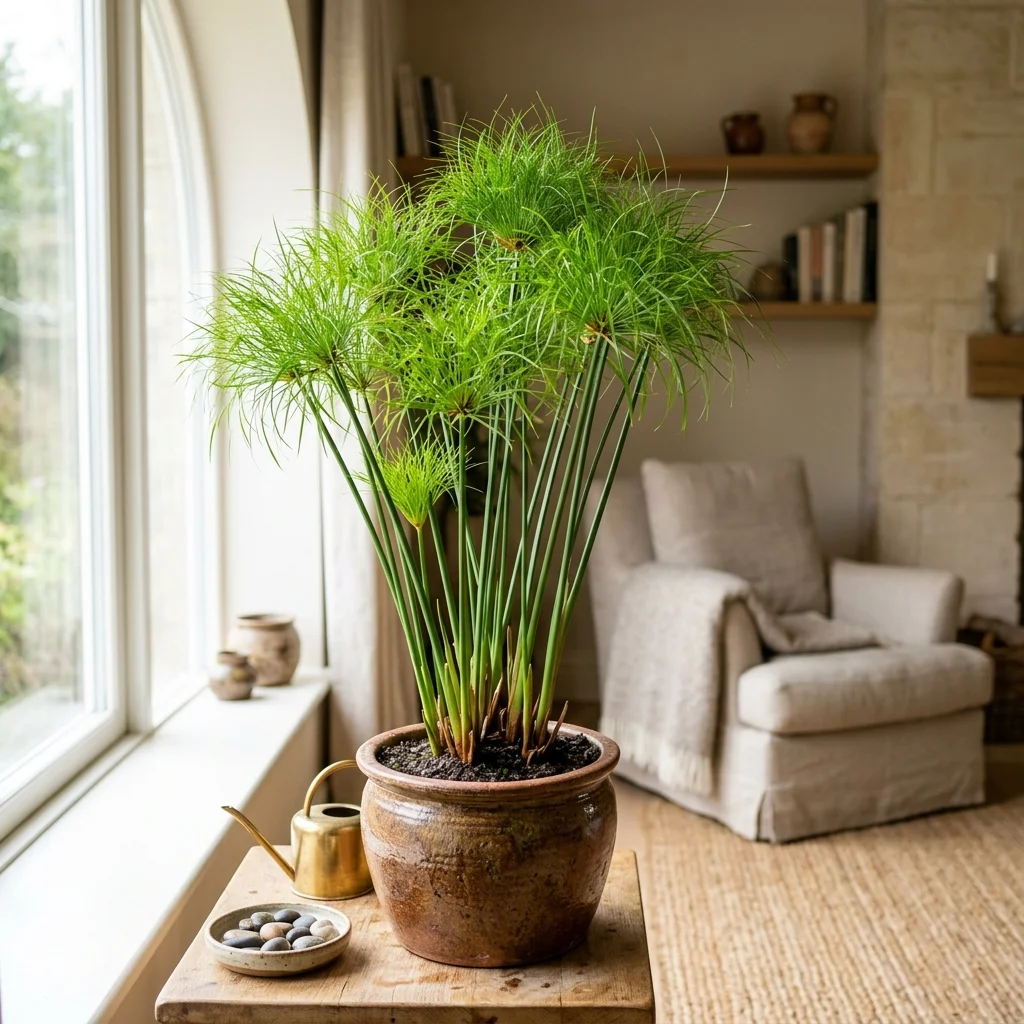
Papyrus Care Guide: Light, Watering & Growing Tips
Expert care guide and diagnostic data for the Papyrus. Learn how to properly water, light, and troubleshoot common issues.
-
Difficulty
Medium
-
Light
Bright indirect
-
Temperature
65°F - 85°F (18°C - 29°C)
-
Growth
Moderate
-
Expert Insight
Master-grower data coming soon.
-
Common Mistake
Real-world care data coming soon.
-
Environment
Real-world conditions coming soon.
Quick Answer
Unlike most houseplants, Papyrus needs to stay constantly wet, so keep the pot sitting in a saucer of standing water at all times. Provide full sun to partial shade and very warm temperatures for the strongest, healthiest stems. Our experience shows that providing a stable environment helps the plant establish a strong root system faster.
Key Takeaways
- Keep pot bases permanently submerged in standing water as an emergent wetland sedge.
- Provide full, unfiltered sun to very bright light to prevent stem lodging.
- Never allow potting substrate to dry out, which causes irreversible stem browning.
- Feed with a balanced liquid fertilizer every 2 to 4 weeks during the growing season.
Overview
Cyperus papyrus is a true emergent aquatic sedge native to tropical Africa and Madagascar. It requires constant standing water, bright light, and warm temperatures to thrive.
Watering
Keep roots permanently submerged in water. Never allow the soil to dry out.
Light
Provide full sun to bright indirect light. Shade causes stem drop and etiolation.
Temperature
Maintain temperatures above 10°C. Frost will kill foliage; protect rhizomes in mild climates.
Humidity
As an aquatic marsh plant, Cyperus papyrus requires abundant ambient moisture and consistently wet root conditions. Providing higher humidity around the umbrella-like bracts helps prevent tip browning, especially when overwintering indoors away from natural water features.
Structured Plant Data
Plant Data Profile
The following data is extracted directly from our botanical knowledge graph for accuracy and transparency.
Environmental Parameters
| Parameter | Recommended | Survivable |
|---|---|---|
| Temperature | 65°F - 85°F (18°C - 29°C) | 40°F - 95°F (4°C - 35°C) |
Relationships
-
Cyperaceae
Belongs To Family
-
Poales
Belongs To Order
-
Wetland Soil
Recommended Soil
-
Constant Water
Watering Profile
-
Tropical Africa
Native Region
-
Madagascar
Native Region
-
Lotus
Shares Habitat With
Troubleshooting & Diagnostics Guide
1 Browning tips on the 'umbels' (leaves)
Diagnosis: Underwatering
Treatment: Submerge the pot in a container of water. This is a bog plant and cannot be overwatered.
Prevention: Keep the pot sitting in water at all times.
2 Stems folding or snapping
Diagnosis: Wind damage or weak growth from low light
Treatment: Prune broken stems at the base. Move to a brighter location.
Prevention: Provide full sun to strengthen stems.
Authoritative Resources
For additional peer-reviewed information on plant diseases, toxicity, and care, consult these trusted botanical and agricultural extensions:
Frequently Asked Questions
How much water does papyrus need?
Can papyrus grow in soil without standing water?
Why are my papyrus stems turning brown and drooping?
What light does papyrus need?
Can papyrus survive winter outdoors?
How do I propagate papyrus?
Does papyrus need fertilizer?
Why is my papyrus growing slowly?
Can papyrus be grown indoors?
Is papyrus invasive?
What pests affect papyrus?
How tall does papyrus grow?
Explore More