Bunny Ear Cactus Care Guide: Light, Watering & Growing Tips
Expert care guide and diagnostic data for the Bunny Ear Cactus. Learn how to properly water, light, and troubleshoot common issues.
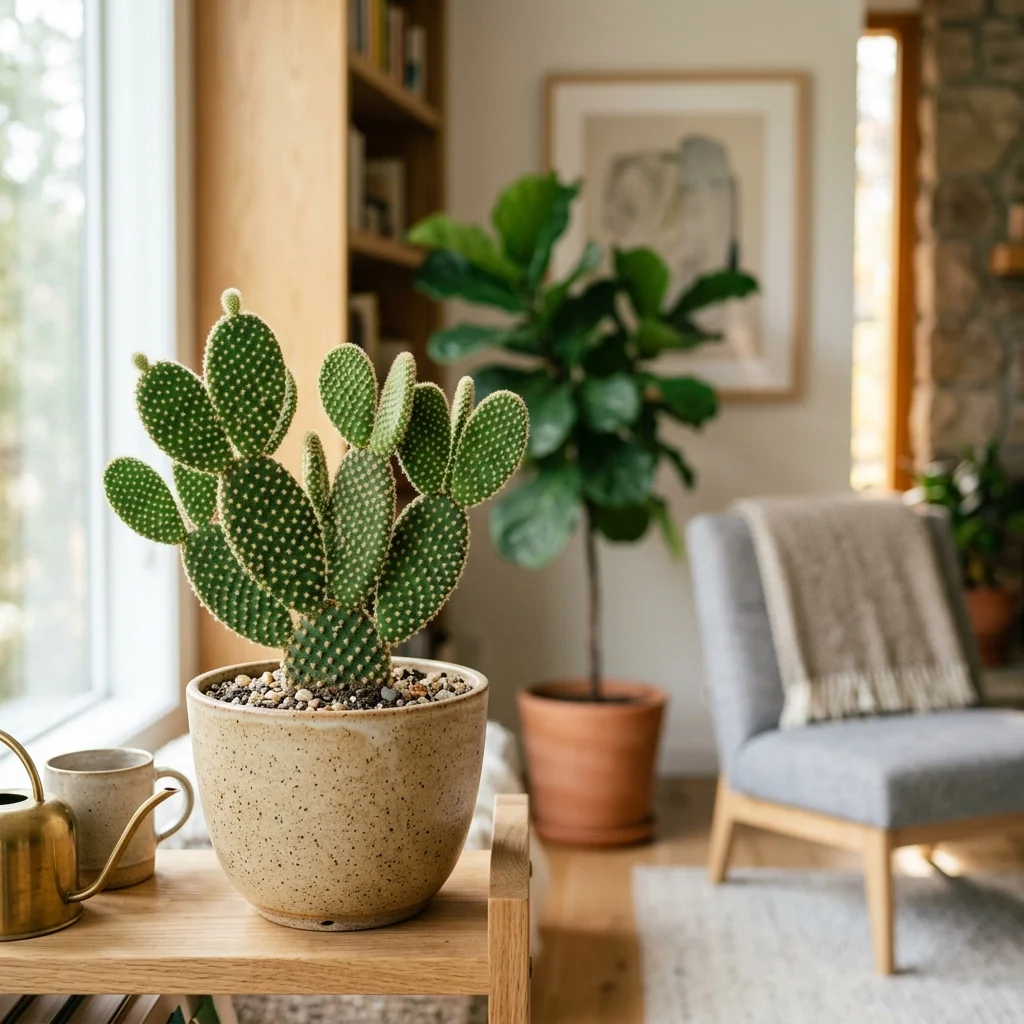
-
Difficulty
Medium
-
Light
Bright indirect
-
Temperature
70°F - 90°F (21°C - 32°C)
-
Growth
Moderate
-
Expert Insight
Master-grower data coming soon.
-
Common Mistake
Real-world care data coming soon.
-
Environment
Real-world conditions coming soon.
Quick Answer
Opuntia microdasys, or Bunny Ear Cactus, needs full direct sunlight for at least six hours daily and a fast-draining cactus mix. Water only when soil is completely dry, reducing further in winter. Handle with extreme care since fine glochids irritate skin severely on contact, and never touch the pads with bare hands.
Key Takeaways
- Provide full, direct sunlight for at least 6 hours daily.
- Use a fast-draining cactus mix and water only when soil is fully dry.
- Handle carefully, since fine glochids can irritate skin on contact.
- Reduce watering further during winter dormancy to help prevent rot.
Overview
Opuntia microdasys, commonly known as the Bunny Ear Cactus, is a desert succulent shrub native to Mexico. It is prized for its flat, pad-like stems covered in tiny golden glochids rather than traditional spines.
Watering
Water Bunny Ears Cactus thoroughly and allow the potting mix to dry out completely between waterings. During winter dormancy, reduce watering to near zero and never allow the soil to stay wet.
Light
Full sun to bright indirect light. Acclimate gradually to prevent sunburn on pads moved from shade.
Soil
Very well-draining mineral mix. Use a cactus-specific substrate high in pumice, coarse sand, or perlite.
Temperature
Can survive brief light freezes to -5°C if kept completely dry. Prolonged wet and cold is fatal.
Propagation
Pads root easily when placed on dry soil. Allow the cut end to callus for several days before planting.
Humidity
Bunny Ears Cactus requires low humidity and dry, warm air to thrive. Avoid humid spaces such as kitchens and bathrooms, ensuring continuous air circulation to protect the cladodes from fungal blight.
Structured Plant Data
Plant Data Profile
The following data is extracted directly from our botanical knowledge graph for accuracy and transparency.
Environmental Parameters
| Parameter | Recommended | Survivable |
|---|---|---|
| Temperature | 70°F - 90°F (21°C - 32°C) | 45°F - 100°F (7°C - 38°C) |
Relationships
-
Cactaceae
Belongs To Family
-
Opuntia
Belongs To Genus
-
Desert Succulent
Watering Profile
-
Cactus Mineral Mix
Soil Profile
-
Light Full Sun
Light Profile
-
Mexico
Native Region
-
Echinocactus
Shares Care With
-
Mammillaria
Shares Care With
Troubleshooting & Diagnostics Guide
1 Pads drooping or falling off
Diagnosis: Overwatering or physical trauma
Treatment: Stop watering and allow the soil to dry out completely. Fallen healthy pads can be propagated.
Prevention: Handle carefully to avoid dislodging pads and water only when soil is bone dry.
2 Pale, elongated new pads
Diagnosis: Etiolation (Insufficient light)
Treatment: Gradually introduce the plant to more direct sunlight. Elongated pads can be pruned.
Prevention: Place in the brightest window available.
Authoritative Resources
For additional peer-reviewed information on plant diseases, toxicity, and care, consult these trusted botanical and agricultural extensions:
Frequently Asked Questions
How often should I water my Bunny Ear Cactus?
Why is my Bunny Ear Cactus turning yellow and mushy at the base?
Can Bunny Ear Cactus survive frost?
What soil is best for Bunny Ear Cactus?
Why are the pads turning white or brown?
How do I propagate Bunny Ear Cactus?
Are the glochids dangerous?
Why is my Bunny Ear Cactus growing tall and thin instead of branching?
Should I fertilize my Bunny Ear Cactus?
Can I grow Bunny Ear Cactus indoors?
Why are new pads small and misshapen?
How do I remove glochids from my skin?
Explore More