How Do I Build a Terrarium?
Terrariums look delicate, but they are simple when you build them layer by layer. This guide shows how to choose the right container and plants so the mini ecosystem stays healthy. Perfect for beginners and plant lovers.
Quick Answer
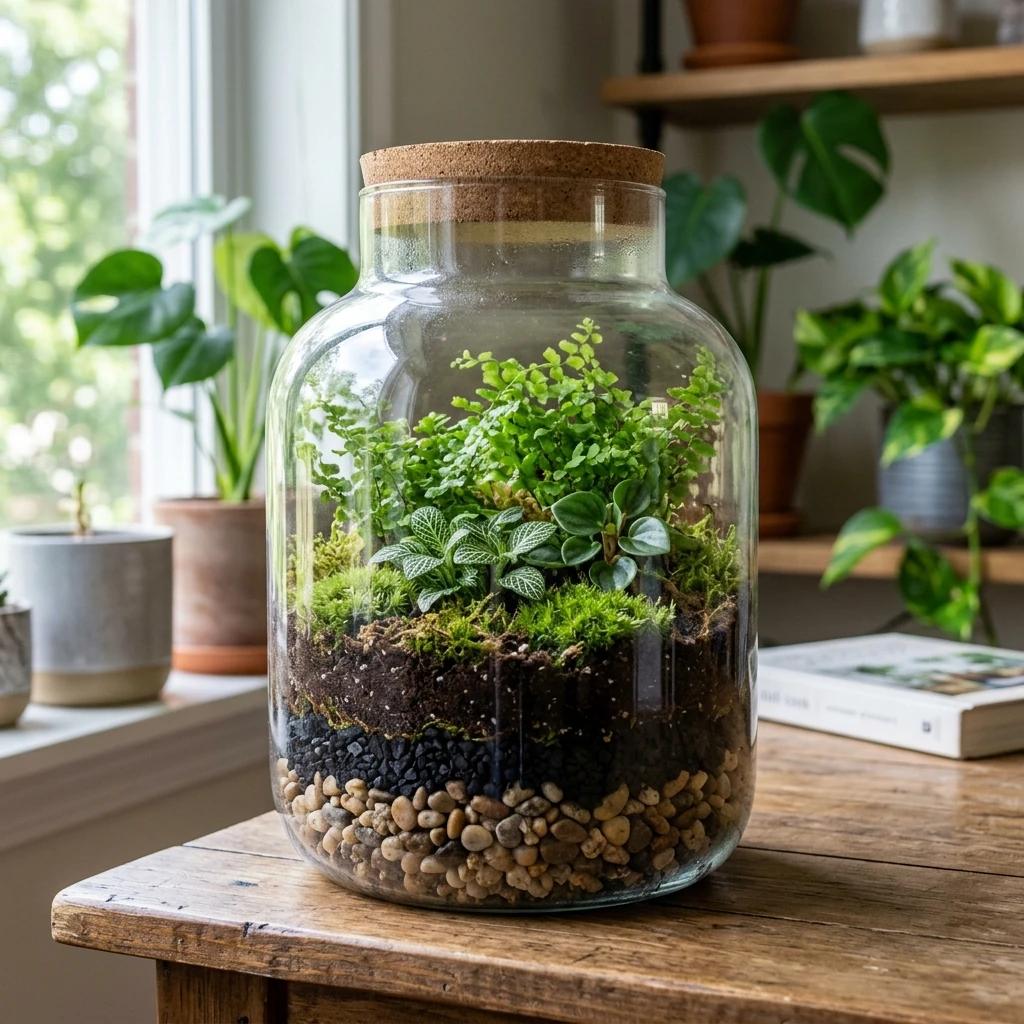
Choose a clear glass container, add a drainage layer (pebbles), a charcoal layer, a barrier (mesh or sphagnum moss), and a light potting mix. Select small, slow-growing plants that match the humidity level—closed for tropicals, open for succulents. Water sparingly, place in bright indirect light, and enjoy your miniature garden.
Key Takeaways
- Construct a base layer using drainage gravel and horticultural charcoal.
- Place a permeable barrier mesh between the drainage aggregate and soil.
- Select slow-growing, humidity-adapted species for closed glass environments.
- Position in bright indirect light to prevent overheating inside the glass.
Terrariums are small planted worlds built inside glass containers. The basic formula is simple: drainage layer, growing medium, small plants, and careful watering. The biggest mistake is choosing plants that grow too fast or using too much water for the container size. I have built dozens of terrariums over the years, from tiny spice jars to large glass cloches, and I have learned that the secret is not complexity—it is patience and understanding the miniature ecosystem you are creating. A well-built terrarium can thrive for years with almost no maintenance, becoming a living piece of art. This guide will take you through every step, from choosing the right container to troubleshooting common problems, so you can create a beautiful, healthy terrarium that brings nature indoors.
Key Takeaways
- Choose a glass container with a lid for closed terrariums or an open bowl for succulents.
- Build layers: drainage (pebbles), charcoal, barrier (mesh or moss), then soil.
- Use small, slow-growing plants that match the humidity level—tropicals for closed, succulents for open.
- Water sparingly; closed terrariums need very little water once established.
- Place in bright, indirect light—never direct sun, which can cook the plants.
- Open terrariums need more frequent watering and airflow.
- Prune plants as they grow to keep the terrarium balanced.
Introduction
I still remember my first terrarium—a repurposed fishbowl with a spider plant, some moss, and a layer of gravel. It looked charming for a week, then the spider plant outgrew the bowl, and the moss turned brown. I had no idea what I was doing. But that failure sparked a curiosity that led me to study the miniature ecosystems we call terrariums. Today, I have terrariums that have been thriving for years, requiring nothing more than an occasional trim and a misting every few months. Building a terrarium is part gardening, part art, and part science. When you get the layers right, the plants happy, and the water balance perfect, you create a self-sustaining world. This guide will give you the knowledge to build a terrarium that lasts.
Why It Matters
Terrariums are more than just decorative objects. They bring a touch of nature indoors, improve mood, and can be a relaxing hobby. They are also an excellent way to grow plants in small spaces—apartments, offices, or rooms with limited natural light. A closed terrarium can even become a self-sustaining ecosystem, recycling water through condensation and evaporation. They are low-maintenance once established, making them ideal for busy people or those new to gardening. Additionally, building a terrarium is a creative outlet; you can design landscapes, play with textures, and create miniature worlds that reflect your style. Whether you are a seasoned gardener or a complete beginner, a terrarium is a rewarding project.
Science Behind It
A terrarium works by creating a controlled microclimate. In a closed terrarium, the container traps moisture. Water evaporates from the soil and plant leaves, condenses on the glass walls, and then drips back into the soil, creating a miniature water cycle. This means closed terrariums need very little watering—often only once every few months. The plants inside also produce oxygen through photosynthesis, and the soil microbes break down organic matter, recycling nutrients. Activated charcoal in the drainage layer helps filter impurities and prevent odors. In an open terrarium, there is more airflow, so the water cycle is less pronounced, and plants dry out faster. Understanding these principles helps you choose the right plants and manage watering correctly. The choice between open and closed is essentially about humidity control.
Step-by-Step Guide
1. Choose your container
Select a clear glass container. For closed terrariums, use a lidded jar, apothecary jar, or a glass cloche with a base. For open terrariums, use a bowl, dish, or wide-mouthed vase without a lid. Ensure the glass is clean and transparent. Size matters: larger containers are more forgiving with water balance; smaller ones dry out or get waterlogged quickly. Start with a medium-sized container (20–30 cm / 8–12 in diameter) for your first project.
2. Clean the container
Wash the container with warm, soapy water and rinse thoroughly. Dry with a lint-free cloth to avoid streaks. Any residue can affect the plants or cloud the glass, reducing light.
3. Add the drainage layer
Place a 2.5–5 cm (1–2 in) layer of small pebbles, gravel, or LECA (lightweight expanded clay aggregate) at the bottom. This creates a reservoir for excess water, keeping the soil from becoming waterlogged. For larger containers, use a thicker layer—up to 5–7.5 cm (2–3 in). Rinse the pebbles before adding to remove dust.
4. Add the charcoal layer
Sprinkle a thin layer (about 0.5–1 cm / 0.25–0.5 in) of horticultural activated charcoal over the pebbles. This helps absorb odors, filter impurities, and prevent mold and fungal growth. It is especially important in closed terrariums where air circulation is limited.
5. Add the barrier layer
Place a layer of fine mesh, sheer fabric, or sphagnum moss over the charcoal. This prevents the soil from mixing into the drainage layer, keeping the layers distinct and the drainage effective. If using sphagnum moss, moisten it slightly before adding.
6. Add the soil mix
Add a layer of potting mix suited to your plants. For tropical plants, use a light, well-draining indoor potting mix (with peat or coir and perlite). For succulents, use a cactus/succulent mix with extra sand or perlite. The soil layer should be 5–10 cm (2–4 in) deep, depending on the container and plant root depth. Create slopes or contours for visual interest.
7. Choose and prepare your plants
Select small, slow-growing plants. For closed terrariums: ferns (maidenhair, button), mosses, peperomias, pileas, and small begonias. For open terrariums: succulents (echeveria, haworthia, sedum) and air plants (tillandsia). Remove plants from their pots, gently shake off excess soil, and trim any dead or yellow leaves. If roots are circling, gently tease them apart.
8. Plant your terrarium
Using a long spoon, tweezers, or a chopstick, dig small holes in the soil and place your plants. Arrange them in a pleasing design—tall plants in the back, shorter ones in front, or a focal point in the center. Firm the soil gently around the roots. Add decorative elements like small rocks, driftwood, or figurines if desired.
9. Water carefully
Water gently using a spray bottle or a small watering can with a narrow spout. For closed terrariums, spray the soil and plants lightly—just enough to moisten the soil but not saturate it. A few tablespoons of water is often enough for a small terrarium. For open terrariums, water more thoroughly but allow excess to drain. The goal is to create a humid environment, not a swamp.
10. Place and monitor
Place your terrarium in bright, indirect light—near a north- or east-facing window is ideal. Avoid direct sunlight, which can magnify heat and cook the plants. For the first week, monitor condensation: if the glass is heavily fogged all day, wipe it and leave the lid off for a few hours to reduce moisture. If there is no condensation at all, add a little water.
Climate Considerations
Your home's climate affects how your terrarium behaves. In dry climates (arid zones, heated homes in winter), closed terrariums are easier to manage because they retain humidity. In humid climates, open terrariums may be better to prevent excessive moisture and mold. In temperate climates, you have flexibility. In Mediterranean climates with hot summers, avoid placing terrariums near windows that get intense afternoon sun—they can overheat. In oceanic climates with cool summers, closed terrariums may need less ventilation. For USDA zones 3–5, winter heating dries the air; closed terrariums are ideal. In zones 8–10, you may need to monitor temperature more carefully, as terrariums can get too warm. Always consider your indoor temperature and light when choosing a location.
| Feature | Open Terrarium | Closed Terrarium |
|---|---|---|
| Container type | Bowl, dish, no lid | Lidded jar, cloche, sealed |
| Humidity level | Low to moderate | High (80–100%) |
| Best plants | Succulents, cacti, air plants | Ferns, mosses, tropicals, peperomias |
| Watering frequency | Weekly to bi-weekly | Every 1–3 months (or less) |
| Airflow | Good | Limited |
| Maintenance | Moderate (watering, pruning) | Low (mostly monitoring) |
| Risk of mold | Low | Higher; needs monitoring |
Seasonal Advice
In spring and summer, growth is active; you may need to prune plants more often and check water levels. In autumn and winter, growth slows; reduce watering and avoid overfeeding. In winter, place terrariums away from cold drafts and radiators, which can dry them out or cause condensation issues. If your home gets very dry in winter, a closed terrarium will help retain moisture. In summer, watch for overheating—move terrariums away from windows if they get too hot. Seasonal light changes may require you to move the terrarium to a brighter or shadier spot.
Common Mistakes
- Using plants that grow too large or too fast for the container (e.g., ivy, spider plants).
- Overwatering—the number one killer of terrariums.
- Adding too much soil, leaving no room for the drainage layer.
- Placing in direct sunlight—the glass magnifies heat and can cook plants.
- Not using activated charcoal, leading to mold and odors.
- Choosing incompatible plants for the humidity level (e.g., succulents in a closed terrarium).
- Forgetting to clean the glass, reducing light.
Maintenance Schedule
- Daily: Check for condensation; if it covers the glass all day, vent for a few hours.
- Weekly: Rotate the terrarium for even light; remove any dead leaves; water if soil is dry (for open terrariums).
- Monthly: Trim overgrown plants; clean the glass with a soft cloth (no chemicals); check for pests.
- Every 6–12 months: If the terrarium is struggling, consider repotting or refreshing the soil, but most established terrariums need this rarely.
Buying Guide
When buying materials, look for horticultural charcoal (not BBQ charcoal) and small-sized pebbles. For soil, buy a quality indoor potting mix and add extra perlite if needed. For plants, choose from a reputable nursery; small 5–8 cm (2–3 in) pots are ideal. Tools: long tweezers, a small scoop, a spray bottle, and a soft cloth. Cost: a basic terrarium can be built for $20–50; more elaborate setups with decorative containers can cost $50–150. You can also repurpose old jars, fishbowls, or even lightbulbs for a budget-friendly project.
| Item | Budget Option | Premium Option | Notes |
|---|---|---|---|
| Container | Recycled jar ($0–5) | Glass cloche or apothecary jar ($20–50) | Any clear glass works |
| Drainage pebbles | $3–5 (bag) | $8–12 (decorative) | Small pebbles or LECA |
| Activated charcoal | $5–8 (small bag) | $10–15 | Horticultural grade |
| Sphagnum moss (barrier) | $5–8 | $10–15 | Optional but helpful |
| Potting mix | $5–8 | $10–15 (organic) | Match to plant type |
| Plants (3–4 small) | $10–15 | $20–40 (specialty) | Ferns, mosses, succulents |
| Tools (tweezers, spray bottle) | $5–10 | $15–25 | Long tweezers are useful |
| Total | $33–59 | $93–172 |
Expert Tips
I have learned that less is more in a terrarium. Use fewer plants than you think you need—they will grow and fill the space. Also, when watering, start with a tiny amount (a few tablespoons) and wait a day to see if the condensation is right. You can always add more water; you cannot easily remove it. I also recommend using a layer of sphagnum moss between the charcoal and the soil—it keeps the soil from mixing down and looks more natural if it shows through the glass. For a closed terrarium, I only water every 2–3 months. Finally, if you get mold, increase ventilation and remove affected leaves; often it clears up on its own.
Common Myths
- Myth: Terrariums are completely self-sufficient. Reality: They still need occasional maintenance and monitoring.
- Myth: You can use any plant in a terrarium. Reality: Only small, slow-growing plants suited to the humidity level work.
- Myth: You should water a terrarium like a regular potted plant. Reality: Terrariums need much less water; overwatering is the top killer.
- Myth: Terrariums need direct sunlight. Reality: Bright indirect light is best; direct sun cooks the plants.
- Myth: You do not need drainage because it is a closed system. Reality: Drainage prevents waterlogging, which is essential for root health.
When NOT To
- Do not build a closed terrarium if you are prone to overwatering—open terrariums are more forgiving.
- Do not use plants that are prone to pests or diseases—they can spread quickly in an enclosed space.
- Do not place a terrarium in a room that gets very hot (like a sunroom without AC)—the heat can be fatal.
- Do not build a terrarium with plants that have very different water needs—they will not all thrive.
- Do not forget to clean the glass periodically—dirty glass reduces light and looks unsightly.
Decision Guide
| Terrarium Type | Light Level | Recommended Plants | Plants to Avoid |
|---|---|---|---|
| Closed (high humidity) | Bright indirect | Maidenhair fern, button fern, mosses, pilea, peperomia, Fittonia | Succulents, cacti, any dry-loving plant |
| Closed (medium humidity) | Moderate indirect | Calathea (small), ivy (small), creeping fig | Ferns that need high humidity, succulents |
| Open (low humidity) | Bright indirect to direct (filtered) | Echeveria, haworthia, sedum, air plants (Tillandsia), cactus (small) | Ferns, mosses, moisture-loving tropicals |
| Open (medium humidity) | Moderate indirect | Small philodendrons, peperomia, Chinese evergreen (small) | Succulents (may rot if too humid), ferns |
Troubleshooting
| Problem | Likely Cause | Solution |
|---|---|---|
| Excessive condensation (all-day fog) | Too much water | Remove lid or vent for a few hours; wipe glass; reduce watering |
| Plants turning yellow/brown | Overwatering or poor drainage | Reduce watering; ensure drainage layer is effective; check for root rot |
| Mold or fungus on soil | Too much moisture, poor air circulation | Vent more; remove affected soil; add more charcoal; reduce watering |
| Plants leggy (stretching) | Not enough light | Move to brighter indirect light |
| Leaves wilting or curling | Underwatering (open terrarium) | Water gently and thoroughly; mist if needed |
| Pests (aphids, mites) | Introduced with plants | Isolate; treat with insecticidal soap; prune affected parts |
Frequently Overlooked Facts
Many people do not realize that the size of the container affects the water cycle—larger terrariums are more stable. Another overlooked fact is that you can use a terrarium to propagate small cuttings; they root well in the high humidity. Also, the charcoal layer is not just for odors—it also helps prevent fungal growth and absorbs excess nutrients. Finally, the glass of the terrarium should be cleaned with a soft cloth and water only; chemicals can damage plants if they drip into the soil.
Summary
Building a terrarium is a fun and creative project that brings a piece of nature into your home. The key steps are choosing the right container, building a proper drainage and soil system, selecting suitable plants, and managing water and light carefully. Open terrariums suit succulents and air plants; closed terrariums are perfect for tropicals and ferns. With the right setup, a terrarium can thrive for years with minimal maintenance. Do not overwater, avoid direct sun, and enjoy watching your miniature garden grow.
Recommended next actions
Next Best Actions
Move from reading to action with related calculators, plant profiles, and quiz-based recommendations.
Guide
How to Stop Cats and Dogs from Eating Houseplants
Pets and plants can coexist, but the setup has to be deliberate. This guide shows you how to block access, redirect behavior, choose safer plants, and train your pet—all without giving up your greenery.
Guide
Best Soil for Indoor Plants: Potting Mix Recipes & Guide
Learn how to build a well-aerated potting mix that balances moisture retention, drainage, and root-zone oxygen for different types of houseplants.
Guide
How to Keep Plants Alive While on Vacation: 7 Proven Methods
Before you leave, make watering easier, slow down drying, and reduce stress. This guide gives you simple vacation setups that work without hiring a plant sitter, from wick systems to humidity domes.
Frequently Asked Questions
What do I need to build a terrarium?
What plants work in a terrarium?
Do terrariums need drainage?
How often should I water a terrarium?
What is the difference between open and closed terrariums?
Can I use any glass container for a terrarium?
How do I clean the glass on my terrarium?
Do I need activated charcoal in a terrarium?
Can I put a terrarium in direct sunlight?
How do I stop mold in my closed terrarium?
Explore More