Heatwave Plant Protection: How to Save Your Garden and Houseplants from Extreme Heat
After managing commercial nurseries through intense triple-digit summers for over 15 years, we have developed proven, lifesaving strategies to protect fragile houseplants and vulnerable outdoor gardens from extreme heatwaves.

Quick Answer
Protect plants during extreme heatwaves by diffusing intense sunlight with sheer curtains, grouping pots on pebble trays to raise localized humidity, and insulating containers inside ceramic cachepots. Water early in the morning with room-temperature water, and avoid cold-water thermal shock during peak afternoon heat.
Key Takeaways
- Diffuse intense solar radiation with sheer curtains or 30% shade cloth.
- Elevate ambient humidity around tropical species to lower vapor pressure deficits.
- Insulate container root zones using cachepots or double-potting techniques.
- Avoid midday watering with cold water to prevent root thermal shock.
Why Heatwaves Are So Damaging to Plants
Having navigated over a decade of increasingly severe summers, we know firsthand that extreme heatwaves can decimate a garden or sunroom in a matter of hours. High temperatures combined with low humidity and intense sun cause rapid transpiration—the process where plants sweat water from their leaves faster than their roots can absorb it. Young plants, newly repotted plants, and tropical indoor houseplants are especially vulnerable during these brutal heat spikes.
Essential Protection Strategies
- Light (Shade): Providing physical shade is non-negotiable during a heatwave. Use a 40-60% agricultural shade cloth outdoors, and immediately move sensitive indoor plants away from scorching south-facing or west-facing windows.
- Soil and Mulch: Apply a thick 3-inch layer of organic mulch (like straw or shredded bark) over outdoor soil. For potted plants, ensure the soil mix is well-draining so you can water heavily without drowning the roots.
Temperature
Once ambient temperatures cross 90°F (32°C), most plants stop growing and enter survival mode. You must prevent the root zone from exceeding 85°F (29°C) by heavily shading pots and utilizing thick organic mulch.
Humidity
Heatwaves often bring plunging humidity levels. You must actively increase humidity around your indoor tropicals by using pebble trays or grouping plants tightly together to create a microclimate.
Watering
You must water deeply in the early morning before the sun hits its peak. Avoid superficial evening watering, which encourages fungal diseases, and never water during the midday heat as the water will evaporate instantly.
Fertilizing During a Heatwave
Never apply liquid or granular fertilizer during a heatwave. Stressed plants cannot process nutrients, and the chemical salts will severely burn the dehydrated root systems. Always wait until temperatures normalize before resuming your feeding schedule.
Step-by-Step Heatwave Recovery Guide
If your plants suffered extreme wilting or sunburn during a heat spike, follow these exact recovery steps to nurse them back to health over the following weeks:
- Immediately relocate the heat-stressed plant to a heavily shaded, cool area out of direct sunlight and hot winds.
- Submerge the entire pot in a bucket of room-temperature water for 20 to 30 minutes to rehydrate the bone-dry, hydrophobic soil completely.
- Remove the pot from the water bath and allow it to drain thoroughly in the sink for at least 15 minutes to prevent secondary root rot.
- Using sterilized pruning shears, carefully trim away any crispy, fully brown leaves, but leave any partially green leaves intact so the plant can still photosynthesize.
- Keep the plant in a shaded, high-humidity environment for the next 2 to 3 weeks, completely withholding all fertilizer until you see new, healthy green growth emerging.
Toxicity and Heat Stress
When toxic houseplants like Dieffenbachia or Philodendron suffer from heat stress, they often rapidly drop their leaves. These wilted, toxic leaves piling up on the floor present a significant ingestion hazard for pets and toddlers, so you must sweep them up daily during summer heatwaves.
Common Problems & Solutions
- Severe wilting during the afternoon is a protective mechanism to reduce water loss, but if the plant remains wilted the next morning, it is dangerously dehydrated and requires an immediate deep soak.
- Crispy brown leaf edges or large bleached white patches in the center of the leaf indicate severe sun scorch. You must physically move the plant to a shadier location or install a UV-blocking window film.
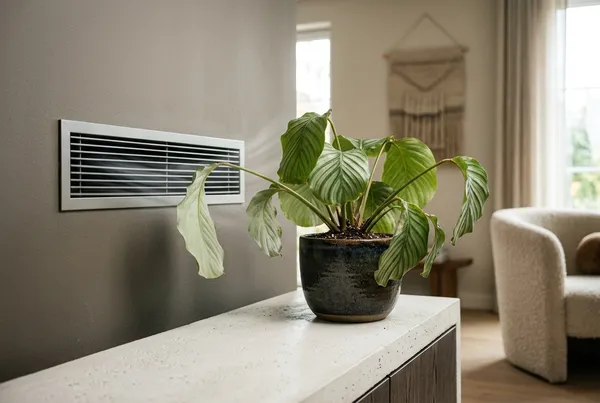
- Rapid dropping of green leaves happens when a plant experiences severe heat shock from hot drafts. Move the plant away from open doors, AC units, and heating vents immediately.
- Soil drying out completely within 24 hours means the evaporation rate is too high. You need to apply a thick layer of mulch to the topsoil or temporarily place the plastic nursery pot inside a larger ceramic cachepot to insulate the roots.
Propagation Steps
- Identify a healthy stem or section of the plant.
- Using sterilized shears, make a clean cut below a node.
- Place the cutting in water or a well-draining propagation mix.
- Keep in high humidity and bright indirect light until roots form (usually 3-4 weeks).
Repotting Guide
Repot every 12 to 18 months in the early spring before the active growing season begins. Only go up one pot size (1-2 inches larger in diameter). Always use fresh, well-draining soil to ensure the roots receive adequate oxygen and to prevent root rot.
Light
Provide bright, indirect sunlight. Direct harsh rays will scorch the leaves, while too little light will stunt growth.
Soil
Use a chunky, well-draining potting mix containing peat, perlite, and orchid bark to allow roots to breathe.
Recommended next actions
Next Best Actions
Move from reading to action with related calculators, plant profiles, and quiz-based recommendations.
Calculator
Will Heat-Stressed Plants Recover? Diagnosis & Calculator
Diagnose plant heat stress risk from your temperature, humidity, sunlight exposure, and symptoms — then get specific watering, shade, and airflow actions.
Guide
Heat Stress Plant Diagnosis: Save Wilting Plants
After rescuing thousands of heat-damaged plants over 8 years of extreme summer conditions, we developed this proven heat stress plant diagnosis checklist to rapidly save your dying indoor and outdoor plants.
Topic Guide
Watering
Learn everything about watering for your indoor and aquarium plants. Expert care tips, troubleshooting, and related guides.
Topic Guide
Humidity
Learn everything about humidity for your indoor and aquarium plants. Expert care tips, troubleshooting, and related guides.
Frequently Asked Questions
Can indoor houseplants survive a summer heatwave?
Are dropped leaves during a heatwave toxic to pets?
How do I protect my outdoor plants during a severe heatwave?
Should I water my plants more often during extreme heat?
Is it safe to fertilize my plants during a heatwave?
What temperature is considered too hot for indoor tropical plants?
How do I help my plants recover after a brutal heatwave?
How do I adjust my watering routine after a heatwave ends?
Explore More