Air Plant (Tillandsia) Care Guide: Light, Watering & Xeric vs. Mesic
With 12 years of experience maintaining over 200 Tillandsia species in climates from desert-dry to coastal-humid, we've built a trichome-based watering protocol that eliminates guesswork for air plant owners.
Quick Answer
Air plants absorb water through leaf trichomes, not roots. In humidity below 40%, soak them for 30 minutes weekly; between 40–60%, soak every 10–14 days with a light mist mid-cycle; above 60%, soak every 14 days without misting. Always dry upside down for 4 hours after soaking to prevent crown rot.
Key Takeaways
- Submerge plants in room-temperature water for 20 to 30 minutes weekly.
- Invert plants to dry upside down for 4 hours after soaking to prevent crown rot.
- Provide bright, filtered sunlight and maintain consistent ambient airflow.
- Apply a heavily diluted, low-copper bromeliad fertilizer once per month.
We see the exact same tragedy repeat itself every summer in heavily air-conditioned homes: a beautiful Tillandsia ionantha turns crisp from 'daily misting' in a dry AC blast, or rots into mush after a weekly soak in a humid, unventilated bathroom during monsoon. The soak-versus-mist debate isn't a matter of opinion—it's a strict mechanical equation of how your air plant's microscopic trichomes interact with your home's ambient moisture. This guide breaks down that mechanism to give you a precise, no-regret watering routine.
Fertilizer
Tillandsias are light feeders, but in a closed indoor environment, they need occasional nutrients. Apply a bromeliad-specific fertilizer (or a general-purpose liquid feed diluted to quarter-strength, with no urea nitrogen) once every 3–4 weeks during active growth in spring and summer. The optimal NPK ratio is 17-8-22, which supports leaf stiffness without forcing soft, sappy growth. Fertilize only by adding the diluted solution to your soak water—never mist fertilizer, as salt residues on trichomes can block absorption and cause tip burn. In winter, when light is lower and growth slows, stop fertilizing entirely.
Propagation
Air plants propagate by producing offsets called “pups” at the base of the mother plant after flowering. Wait until each pup is at least one-third the size of the parent before separating, usually 3–6 months after it appears. Use a gentle twist-and-pull motion; if resistance is felt, leave it attached longer. The mother plant will gradually decline after blooming, but can produce 2–8 pups over its remaining 1–2 years. Some species, like Tillandsia usneoides (Spanish moss), spread by fragmentation—simply pull a live strand and drape it elsewhere.
Repotting & Mounting
Air plants never require soil, so “repotting” means refreshing their mount or base. Every 12–18 months, remove any accumulated dead leaves from the base with a gentle tug, and clean the mounting surface (wood, cork, or wire). If attached with a non-toxic adhesive like E6000, check that the glue hasn’t degraded. For loose-growing species, a new piece of driftwood or a well-ventilated glass globe works beautifully. Always ensure the mount is 100% dry before re-attaching to prevent rot at the point of contact.
Toxicity
All Tillandsia species are non-toxic to cats, dogs, and humans according to the ASPCA. No part of the plant contains calcium oxalate crystals or other irritants. However, ingestion can cause mild gastrointestinal upset simply from fibrous plant material. The real risk is that pets may knock glass globes or mount setups off shelves; secure displays accordingly.
Common Problems
The top three problems we diagnose are rot from overwatering, dehydration crisp, and sunburn. Rot appears as a black, mushy base with leaves that pull out easily; it’s irreversible once the core is soft. Dehydration crisp shows as curled, in-rolled leaves and brown leaf tips; a plant in this state needs a 2-hour emergency soak. Sunburn manifests as bleached, papery patches on the upper leaf surfaces after a move to direct sun. Learn to read trichome density—plants with dense silver fuzz tolerate more light but still require diffused brightness.
Temperature
Tillandsias thrive between 60°F and 85°F (16°C–29°C). They can tolerate brief spikes to 95°F (35°C) if humidity is above 60% and air movement is strong, but tissue damage occurs at 40°F (4°C). Keep them away from AC vents blowing cold, dry air, which parches trichomes within hours—a common issue in Indian summers when air conditioning runs continuously.
Humidity
Household humidity between 40% and 60% is ideal for most Tillandsias, but this is where the soak-versus-mist decision becomes critical. In rooms below 40% humidity (common in heavily air-conditioned rooms during summer), a weekly 30-minute soak is mandatory; misting alone cannot rehydrate dessicated trichomes. In 40–60% humidity, a 30-minute soak every 10–14 days plus a light mist on the 7th day maintains perfect hydration. Above 60% humidity—prevalent during the monsoon months—a 20-minute soak every 14 days is sufficient, with no misting needed. Use a digital hygrometer placed near your plants to decide—not a guess.
Light
Provide bright, indirect light for 12–14 hours daily. Silver-leaved, densely trichomed species like Tillandsia xerographica can handle direct morning sun for 2 hours; thin green-leaved types like Tillandsia bulbosa burn easily. A south-facing windowsill shaded by a sheer curtain is perfect. If using artificial light, a full-spectrum LED positioned 6–8 inches above for 14 hours daily works well.
Xeric vs. Mesic Air Plants: Tailoring Light and Moisture
Tillandsia species differ in how they are adapted to moisture and light. Xeric types generally have heavier trichome coverage and are adapted to drier conditions, while mesic types generally retain more moisture and suit more humid, sheltered conditions. Use the plant's species characteristics together with leaf texture, light exposure, and drying speed when deciding how often to soak and how much light to provide.
The Soak vs. Mist Matrix
| Home Humidity Level | Primary Hydration (Soak) | Supplemental (Mist) |
|---|---|---|
| Dry (Below 40%) Peak summer AC |
30-minute soak every 7 days | 1 light mist on Day 4 |
| Average (40% - 60%) Mild weather |
30-minute soak every 10–14 days | 1 light mist on Day 7 |
| Humid (Above 60%) Monsoon season |
20-minute soak every 14 days | None required |
During the monsoon, when humidity often exceeds 80% for days, you can even extend the soak interval to 21 days and skip misting entirely—just ensure the plant dries within 4 hours to prevent fungal issues.
Watering
The definitive schedule, based on trichome physiology: soak plants fully submerged in room-temperature, non-softened water for 30 minutes. Use rain water, distilled water, or tap water that has sat for 24 hours to off-gas chlorine. After soaking, shake each plant upside down vigorously to dislodge water from the central cup, then dry upside down on a towel with a fan for 4 hours. Failure to dry properly causes fatal crown rot. Frequency follows humidity: below 40% humidity, soak every 7 days with a 1-minute mist on day 4; 40–60%, soak every 10–14 days with a light mist on day 7; above 60%, soak every 14 days, no mist. This method replaces the conflicting “soak vs mist” advice with a single, humidity-mapped routine.
Mounting & Substrate
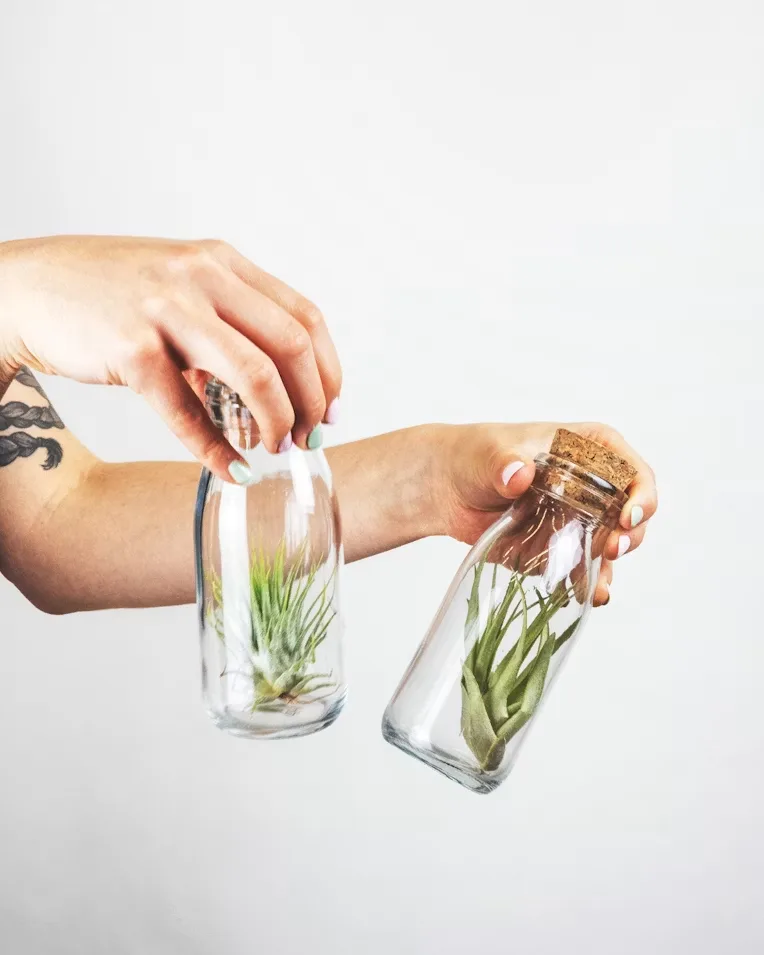
Air plants do not require soil and will rot if potted in potting mix. They attach to surfaces via holdfast roots that serve only for anchorage. Use non-toxic, water-resistant glue, fishing line, or wire to attach them to driftwood, cork bark, or stone. The mount must be completely dry before attachment and allow 360° airflow around the plant's base. For loose display, a wire stand or a glass globe with a large opening (4 inches or wider) ensures ventilation.
Recommended next actions
Next Best Actions
Move from reading to action with related calculators, plant profiles, and quiz-based recommendations.
Topic Guide
Humidity
Learn everything about humidity for your indoor and aquarium plants. Expert care tips, troubleshooting, and related guides.
Topic Guide
Watering
Learn everything about watering for your indoor and aquarium plants. Expert care tips, troubleshooting, and related guides.
Guide
How to Get Rid of Fungus Gnats in Houseplants (Step-by-Step)
The most reliable way to control fungus gnats is to target both the adult flies and the larvae developing in consistently moist potting soil. Learn the evidence-based, step-by-step eradication method.
Guide
Monstera Deliciosa Care: Watering, Light & Growth Tips
After growing and troubleshooting Monstera deliciosa plants across nine years and multiple home environments, we've mapped out exactly what this iconic climbing aroid needs to produce large, dramatically split leaves indoors.
Frequently Asked Questions
Why do my air plant leaves curl inward and turn brown at the tips?
How often should I water my air plant?
Is misting or soaking better for air plants?
How much light does an air plant need?
Do air plants need soil?
Are air plants toxic to cats and dogs?
How do I remount or reposition an air plant without killing it?
What is the white fuzz on my air plant and why is it important?
Explore More