Air Conditioner Draft Damage on Houseplants: How to Stop the Crispy Leaf Problem
After 11 years of diagnosing more than 2,500 indoor climate failures across apartment collections and office plants, we have learned exactly how air conditioner drafts desiccate leaves, stall growth, and mimic underwatering in houseplants.
Quick Answer
Air conditioner draft damage on houseplants happens when cold, dry airflow raises transpiration faster than the roots can replace water. Move the plant 2 to 4 feet away from the vent, stabilize humidity, and then adjust watering; crispy leaves will not recover, but new growth should improve within 2 to 4 weeks.
Key Takeaways
- Position plants 2 to 4 feet away from direct air conditioning vents.
- Inspect leaves for marginal crisping and inward curling caused by rapid transpiration.
- Use physical baffles or deflectors if vents cannot be redirected.
- Elevate localized humidity to counter the moisture-depleting effects of cooled air.
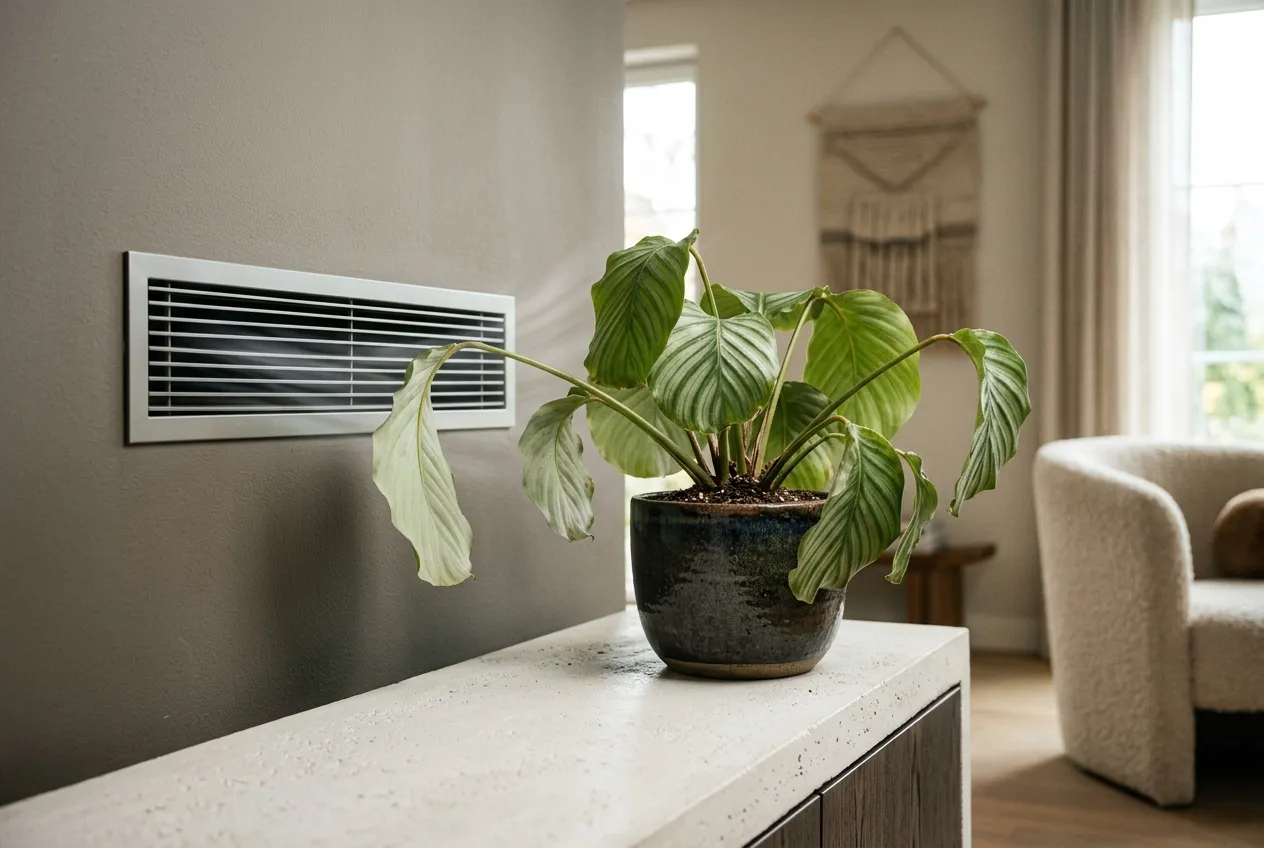
If your plant looks fine one day and then starts curling, crisping, or dropping leaves after you turned on the AC, you are not imagining it. A cold, dry air stream can pull moisture from leaf tissue faster than the roots can replace it, and the damage often appears first on the side of the plant facing the vent.
Science and mechanism behind draft damage
Air conditioner drafts create a very specific stress pattern: rapid evaporative demand, lower leaf temperature, and unstable humidity around the canopy. The plant responds by closing stomata to limit water loss, but that also slows photosynthesis and growth. In practical terms, the leaves dry out from the edge inward, even when the potting mix still feels slightly moist.
| Symptom | Most likely cause | What you usually see first | Timeline |
|---|---|---|---|
| Leaf curl with dry edges | Cold, dry AC airflow | Leaves closest to the vent curl upward or inward | 1 to 7 days |
| Slow, stalled growth | Repeated temperature swings | No new leaves, smaller new growth | 2 to 4 weeks |
| Brown tips and crispy margins | Low humidity plus airflow | Tip burn on older leaves first | 3 to 14 days |
| Drooping despite moist soil | Root-zone cooling and transpiration mismatch | Leaves look limp even after watering | Same day to 3 days |
The counterintuitive fact is that plants near an AC can look underwatered even when the real problem is not water volume but water movement. If the roots are cold and the air is dry, the plant cannot push moisture to the leaves efficiently. This is why moving the pot three feet away from a vent often improves it faster than adding another watering.
Identification
Start by checking whether the damage is directional. Draft injury usually appears on the vent-facing side of the plant first, while the side away from the vent stays healthier. You may also notice the soil drying unevenly, with the top layer crusting while the lower half stays damp because the plant is not using water steadily.
Compare it with other issues before you treat it as a watering problem. Heat stress plant diagnosis becomes more likely if the plant is receiving direct sun and afternoon heat, while wilting houseplants rescue guide fits better when the whole plant collapses from true dehydration or root failure. Draft damage is usually more localized and repeats in the same position every time the AC runs.
Solutions and alternatives
Move the plant out of direct airflow first. Even a shift of 2 to 4 feet can break the draft path and reduce leaf moisture loss. If moving the plant is not possible, redirect the vent, use a deflector, or place a tall barrier between the unit and the plant so the air disperses before it reaches the foliage.
Next, stabilize humidity around the plant. A target of 50 to 60 percent works for many common houseplants, and 60 to 70 percent helps more sensitive species such as Calatheas, Peace Lilies, and ferns. Do not mist as your main fix, because misting only raises humidity for a few minutes and does not interrupt the air stream.
Adjust watering only after you fix the airflow. Water when the top 1 to 2 inches of mix are dry for most tropical houseplants, and check the pot weight before adding more. Overwatering a plant that is already stressed by cold airflow can create root decline quickly, especially in dense peat-heavy mixes. If the plant is in a decorative cachepot, empty any standing water within 10 minutes of watering.
For plants that remain exposed to AC season after season, switch to a slightly chunkier potting mix with perlite, bark, or pumice so roots stay oxygenated while the surface dries more evenly. This is especially helpful for aroids and peperomias, which dislike stagnant moisture but also hate cold drafts. You can compare related moisture strategies in tap water for houseplants and humidity tray vs humidifier houseplants when you are fine-tuning the whole environment.
How to prevent it from coming back
- Move Away From Vents: Keep the plant away from direct vent lines, door gaps, and the path of portable AC exhaust.
- Rotate the Pot: Rotate the pot one-quarter turn every 7 days so one side does not absorb all the stress.
- Monitor Microclimate: If your room swings between hot afternoons and cold evenings, use a simple thermometer-hygrometer combo near the foliage so you can see the real microclimate, not just the thermostat reading across the room.
Plants next to AC units often fail because the air at leaf level is much drier than the room average. Recovery usually begins with softer new growth within 2 to 4 weeks after the plant is moved. Old brown tissue will not turn green again, but new leaves should emerge larger, less curled, and less brittle if the draft problem is solved. If the symptoms continue after the plant is relocated, the next things to check are root rot, salt buildup, and pest damage rather than assuming the AC is still to blame.
Common problems
Curling leaves usually mean the plant is trying to conserve moisture because the air moving across it is too dry or too cold. Brown tips often appear first on older leaves because those tissues lose water fastest and are the least able to recover.
Sudden leaf drop can happen when a sensitive species experiences repeated hot and cold swings near the vent. The plant drops older foliage to reduce stress and redirect energy into survival.
Stalled growth is common when the root zone stays cool for long periods. The plant is still alive, but metabolism slows and it stops making new leaves until the environment stabilizes.
Uneven damage on only one side of the plant is a strong clue that the issue is airflow, not a general watering mistake. That directional pattern is one of the easiest ways to separate draft injury from nutrient deficiency or disease.
FAQ
Why do houseplants near an AC vent get crispy so fast? Cold, dry air increases transpiration and strips moisture from leaf edges before the roots can replace it. The effect is fastest on thin-leaved species and on leaves that face the vent directly.
How far should I move my plant away from an air conditioner? Start with 2 to 4 feet away from the direct airflow. If the vent is strong or the plant is very sensitive, move it even farther until the leaves stop curling.
Can an AC draft look like underwatering? Yes, and that is one of the most common misreads. The plant may droop and crisp even while the potting mix still holds enough water, because the real problem is air movement and low humidity.
Should I mist a plant that is getting blasted by AC? Misting is a short-lived cosmetic fix, not a real solution. It does not stop the draft, and the leaf surface usually dries again within minutes.
Which houseplants are most sensitive to AC drafts? Peace Lilies, Calatheas, Marantas, ferns, and thin-leaved aroids are among the first to show damage. Thick-leaved plants like ZZ Plants and Snake Plants usually tolerate mild drafts better.
Will the damaged leaves recover? No, brown or crispy tissue will not turn green again. The goal is to stop new damage and confirm that the next flush of growth comes in healthy.
What is the fastest fix if I cannot move the plant? Redirect the vent or install a deflector so the air does not hit the leaves directly. Then raise humidity and check watering only after the airflow issue is reduced.
How do I know if the problem is AC damage or root rot? AC damage usually shows directional curling and crisping on the vent side of the plant, while root rot causes widespread yellowing, soft stems, and a sour smell from the soil. If the whole plant declines evenly, check the roots.
Recommended next actions
Next Best Actions
Move from reading to action with related calculators, plant profiles, and quiz-based recommendations.
Topic Guide
Humidity
Learn everything about humidity for your indoor and aquarium plants. Expert care tips, troubleshooting, and related guides.
Guide
Heatwave Plant Protection Guide: Survive Extreme Heat
After managing commercial nurseries through intense triple-digit summers for over 15 years, we have developed proven, lifesaving strategies to protect fragile houseplants and vulnerable outdoor gardens from extreme heatwaves.
Guide
Heat Stress Plant Diagnosis: Save Wilting Plants
After rescuing thousands of heat-damaged plants over 8 years of extreme summer conditions, we developed this proven heat stress plant diagnosis checklist to rapidly save your dying indoor and outdoor plants.
Guide
Humidity Tray vs Humidifier: Which Works Better?
With over 14 years of indoor climate management across more than 1,800 diagnosed humidity-failure cases — from browning Calathea tips in air-conditioned apartments to crisping Alocasia leaves during dry winters — we've measured exactly how much humidity each method actually delivers at leaf level, and the gap is larger than most plant owners expect.
Guide
Wilting Houseplants: Is it Thirsty, Drowning, or Dying?
As horticulturists, we've found that the biggest mistake indoor gardeners make when seeing a wilted plant is blindly reaching for the watering can. We use a simple diagnostic matrix based on turgor pressure to determine exactly why a plant has collapsed.
Guide
Tap Water vs Filtered Water for Houseplants: Which Is Better?
Most houseplants tolerate tap water without issue — but a specific group of fluoride-sensitive and mineral-sensitive plants develop brown leaf tips from ordinary municipal water. This guide compares tap water vs filtered water, identifies which plants are actually at risk, and gives you the cheapest effective fix for each scenario.
Frequently Asked Questions
Why do houseplants near an AC vent get crispy so fast?
How far should I move my plant away from an air conditioner?
Can an AC draft look like underwatering?
Should I mist a plant that is getting blasted by AC?
Which houseplants are most sensitive to AC drafts?
Will the damaged leaves recover?
What is the fastest fix if I cannot move the plant?
How do I know if the problem is AC damage or root rot?
Explore More