LECA vs Pon: Semi-Hydroponic Substrates Compared
LECA and Pon are the two most common semi-hydroponic substrates, and they behave differently. LECA is a fired clay ball with a honeycomb interior, large air gaps, low capillary lift, low weight and almost no nutrient buffering. Pon is a mineral blend of pumice, zeolite and lava rock with a higher capillary lift, more micropores, more weight and a high cation exchange capacity (CEC) from the zeolite. This guide compares them on physical structure, capillary mechanics, chemistry and pH, root grip, cleaning and reuse, and cost. It then recommends a substrate by plant group, with warnings about sizing and mixing. Use it with the Pon guide, the DIY recipe, the conversion guide and the fertilizer dosing guide.
Quick Answer
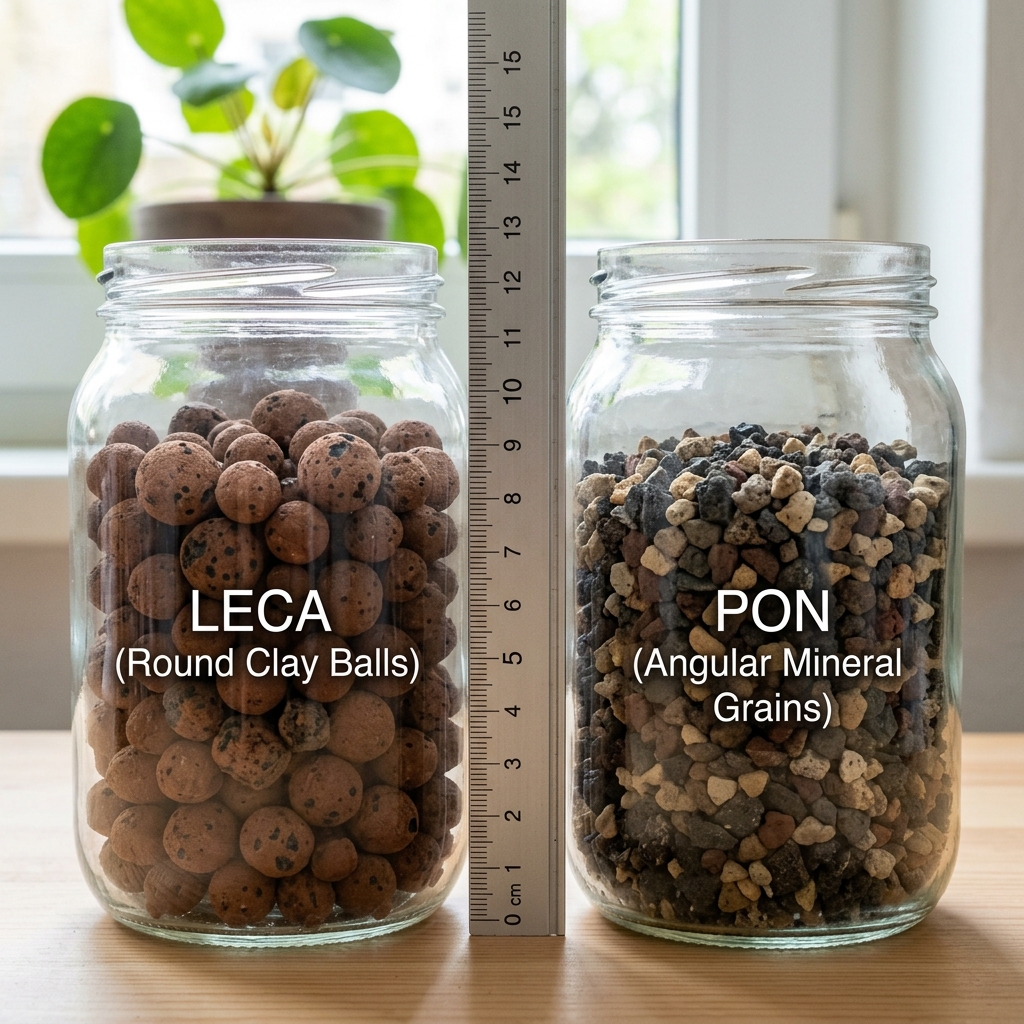
Choose LECA for thick-rooted aroids and epiphytic orchids that want fast drying and maximum oxygen, and choose Pon for fine-rooted plants, cuttings, top-heavy specimens and self-watering pots. LECA is round, light and nearly inert, with a capillary lift of roughly 8-10 cm. Pon is a heavy, angular mineral blend with a lift of roughly 12-18 cm and a zeolite component that buffers fertilizer. Both work, and many keepers use each where it suits the plant.
Key Takeaways
- LECA offers large air gaps, fast drying and easy cleaning, but a low capillary lift (roughly 8-10 cm), low weight and almost no nutrient buffering, so fertilizer mistakes reach the roots at once.
- Pon lifts water higher (roughly 12-18 cm), holds more moisture in its micropores, weighs more and buffers ammonium, potassium and magnesium through its zeolite fraction.
- LECA suits thick-rooted aroids, epiphytic orchids and plants that like quick drying cycles. Pon suits fine-rooted plants, cuttings, tall or top-heavy specimens and self-watering pots.
- Soak and rinse new LECA before use because it floats, can carry dust, and may start alkaline. Rinse Pon until the water runs clear and screen out the fines.
- Roots grip Pon's rough surface tightly, so repotting takes more care, while LECA is easier to clean and reuse. You can layer the two in one pot, but avoid mixing fine Pon through coarse LECA.
LECA and Pon at a Glance
Both substrates hold a plant above a water reservoir and feed it by capillary action, but they do it differently. LECA (lightweight expanded clay aggregate) is a clay ball fired until it puffs up into a honeycomb of internal pores. Pon is a mineral blend, usually pumice, zeolite and lava rock, that you can buy ready-made or mix yourself using the DIY Pon recipe. For the full system, including reservoir depth and flushing, read the semi-hydroponics with Pon guide. The figures below are typical hobby ranges. They shift with grain size, packing, temperature and the specific product.
Physical and Capillary Characteristics
LECA: Round, Airy and Light
LECA balls are smooth and round, usually 8-16 mm across. The big gaps between balls stay filled with air, so roots get a lot of oxygen and the medium dries quickly. The trade-offs follow from the same structure.
- Low capillary lift. Water climbs only about 8-10 cm above the water line, so the top layer of a tall pot stays dry unless you add a wick or top-water.
- High air-filled porosity. This suits thick roots and epiphytes, but it can dry small, fine roots too fast.
- Low weight. Dry LECA is light enough to float, and a tall plant in a light pot can topple. Use a heavy cachepot or a layer of heavier material at the base.
Pon: Gritty, Dense and Wetter
Pon grains are angular and typically 3-6 mm. The gaps between grains are smaller than in LECA, and the grains themselves are porous, so the mix holds more water in micropores while keeping air in the larger gaps.
- Higher capillary lift. Roughly 12-18 cm, which suits taller pots and shallow, wide containers.
- Balanced porosity. Moderate air space plus abundant micropores gives steadier moisture.
- High weight. The dense minerals anchor top-heavy plants reliably.
The first table above sets the two side by side.
Chemical Dynamics and Nutrient Buffering
Cation Exchange Capacity
LECA is close to inert. It has very low CEC, so it does not store fertilizer ions. Whatever strength you put in the reservoir is what the roots feel, and a dosing mistake hits the root hairs immediately. Pon includes zeolite (clinoptilolite), which has a high CEC. Zeolite captures ammonium, potassium and some magnesium and releases them slowly, which moderates nutrient spikes. That buffering is a safety margin, not a license to overfeed, and salts still build up, so flush monthly. Feeding schedules for both media are in the semi-hydro fertilizer dosing guide.
pH Behavior
New LECA can release alkaline residues from manufacturing, and the soak water of some products tests well above neutral. Values differ a lot between brands, so check rather than assume. Common practice is to soak for 12-24 hours, rinse, and test the runoff. Some keepers soak in mildly acidified water if the result is high. Pon is usually stable near neutral, often in the 6.5-7.0 range, but the result depends on your water and the product. Test the reservoir if you grow pH-sensitive plants.
Root Grip, Cleaning and Reuse
- Root grip. Fine roots anchor into Pon's rough, angular surface, which gives excellent physical support. The same grip makes repotting slower, since roots must be teased or soaked loose. In LECA, roots slide between smooth balls and detach easily, but support is weaker.
- Cleaning. LECA is the easier medium to clean. Rinse, boil or soak, and it is ready. Pon needs rinsing and screening to separate root debris from the mineral grains, and it generates fines over time that you should sieve out.
- Reuse. Both are inorganic and reusable. Sterilize between plants if disease was present. Moving a plant between media is covered in the guide to converting houseplants to semi-hydro.
Which Plants Prefer Which?
The second table above gives a full list. As a rule:
- LECA suits thick-rooted aroids such as large Philodendron and Epipremnum, epiphytic orchids, and any plant that wants maximum oxygen and quick drying cycles.
- Pon suits fine-rooted plants such as Hoya, Peperomia, Begonia, Anthurium and Alocasia, small cuttings, self-watering reservoir pots, and tall or top-heavy specimens.
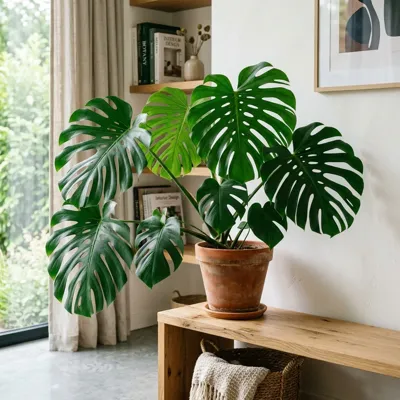
Plenty of plants do well in either. A hardy aroid such as Monstera deliciosa grows in LECA and in Pon, and the choice often comes down to pot height, plant weight and how often you want to water. Match the substrate to your routine as well as the species.
Reservoir and Pot Considerations
Pot height matters more with LECA, because the capillary ceiling is lower. In pots taller than about 10 cm of substrate above the water line, the upper layer may stay dry. A wick, top-watering or a shallower pot fixes this. Pon covers more height but can stay wetter in wide, shallow containers, so use the reservoir depth rule from the Pon guide (1/4 to 1/3 of the pot height) and a shallower level for sensitive plants. To work out how much substrate and water a pot needs, use the semi-hydro Pon calculator.
Mixing LECA and Pon
Combining the two is possible, but do it with a plan.
- Layering works best. Put LECA at the bottom of a tall pot, where it keeps air near the reservoir, and Pon on top, where it holds moisture and grips roots. Alternatively, put a heavier Pon layer at the bottom to anchor the pot.
- Avoid blending fine Pon through coarse LECA. Small grains sift down between the balls and fill the air gaps, which removes the benefit of LECA's structure.
- Use similar grain sizes if you do mix. A coarse Pon grade (6 mm) combined with small LECA behaves more predictably.
- Keep notes. A hybrid pot dries differently from either medium, so track how fast it dries and adjust the reservoir.
Cost and Availability
Prices vary by region and supplier. LECA is widely available and is often cheaper per liter, especially in large bags. Commercial Pon is often pricier per liter, while a DIY mix from bulk minerals is usually cheaper once you buy at scale, at the cost of sourcing, washing and screening. For a large collection, compare bulk LECA with DIY Pon, and for one small plant a small bag of either is fine.
Troubleshooting Summary
| Symptom | Likely cause | Quick fix |
|---|---|---|
| LECA floats and drifts in the reservoir | Dry balls with trapped air | Pre-soak for 12-24 hours so balls absorb water |
| Top layer of LECA stays dry | Pot taller than the capillary lift | Add a wick, top-water or use a shorter pot or Pon |
| Tall plant tips over in LECA | Light substrate and a light pot | Use a heavier cachepot, a Pon base layer or stakes |
| Brown leaf tips after feeding in LECA | No nutrient buffering and a strong dose | Flush with plain water and halve the fertilizer strength |
| Pon stays soggy | Fines or dust, or too deep a reservoir | Re-screen, re-wash and lower the water level |
Related Resources
See how the full system works in the semi-hydroponics with Pon guide, make your own mineral mix with the DIY Pon recipe, move plants over with the conversion guide, plan your feeding with the fertilizer dosing guide, work out quantities with the semi-hydro Pon calculator, and see an easy first plant on the Monstera deliciosa page.
Frequently Asked Questions
Can I mix LECA and Pon in the same pot?
Yes, but layering works better than blending. Put LECA at the bottom for air and Pon on top for moisture and root grip, or put Pon at the bottom as an anchor. Avoid mixing fine Pon grains through coarse LECA, because they sift into the gaps and fill the air space. If you mix, use similar grain sizes and watch how quickly the pot dries.
Do I need to soak LECA before using it?
Yes. Rinse off the dust and soak the balls in plain water for 12-24 hours. Soaking lets the balls absorb water so they sink and stay put, and it lets you check the soak water for alkaline residues. If the water tests well above neutral, rinse again or soak in mildly acidified water, and test again before planting.
Is LECA or Pon cheaper?
It depends on the region and the supplier. LECA is often cheaper per liter and easy to find. Commercial Pon is often pricier, and a DIY Pon from bulk pumice, zeolite and lava rock is usually cheaper at scale but takes time to wash and screen. Compare local prices for the volume you need.
Which is better for Alocasia corms, LECA or Pon?
Many keepers prefer Pon for Alocasia because of the finer grain and steadier moisture, but the corm is the real issue. Corms rot in wet conditions, so keep the corm above the water line, use a shallow reservoir and consider starting in damp sphagnum. LECA can also work if you keep it airy, and the best choice is the one that lets you keep the corm dry and the roots moist.
Why does LECA float in the water reservoir?
Dry LECA balls contain trapped air in their closed pores, which makes them buoyant. Soaking for 12-24 hours lets water enter the pores, so the balls sink. Balls that still float after soaking may have sealed outer surfaces, and you can discard those or use them in the top layer.
Which has better capillary action, LECA or Pon?
Pon. Typical hobby figures are roughly 12-18 cm of lift for Pon and about 8-10 cm for LECA, though real values depend on grain size and packing. In a tall pot, LECA's upper layers can stay dry unless you add a wick or top-water.
Does LECA or Pon buffer fertilizer better?
Pon does. The zeolite in Pon has a high cation exchange capacity, so it holds ammonium, potassium and magnesium and releases them gradually. LECA has almost none, so fertilizer strength in the reservoir directly affects the roots. This makes careful dosing more important with LECA.
Is LECA better for root rot prevention?
LECA's large air gaps give excellent oxygen to the roots, which helps prevent rot in thick-rooted plants. Pon can also prevent rot when it is screened and the reservoir is shallow. Rot is mostly a result of a deep or stale reservoir, a plant that dislikes constant moisture, or fines that fill the air space, not of the substrate alone.
Which substrate is easier to clean and reuse?
LECA. You can rinse, boil or soak it, and it is ready again. Pon is also reusable but needs sieving to remove root debris and the fines that form as grains wear. Both should be sterilized if the previous plant had disease.
Should a beginner start with LECA or Pon?
Either works. LECA is simple, easy to clean and forgiving for hardy aroids, as long as you keep the pot short and dose fertilizer lightly. Pon gives more buffering and stability, and suits fine-rooted plants and tall specimens. Pick based on your first plant and its pot height.
Sources & References
-
Source: edis.ifas.ufl.edu
Type: horticultural-reference
-
Source: extension.psu.edu
Type: horticultural-reference
-
Source: rhs.org.uk
Type: horticultural-reference
Explore More
Related Articles
Related Plant Guides
Recommended next actions
Continue Exploring
Dive deeper into related plant care tools and profiles.
Calculator
Semi-Hydro Pon Volume & Mineral Split Calculator
Calculate net Pon volume, root displacement, DIY mineral components (pumice, zeolite, lava rock), dry weight, and water reservoir depth in metric or imperial units.
Plant Guide
Monstera
Grow a thriving Monstera deliciosa with the light, watering and climbing support it needs to develop large, mature, fenestrated leaves indoors.
Topic Guide
Converting Houseplants to Semi-Hydro: Root Transition & Rot Prevention
Step-by-step guide to converting soil houseplants to semi-hydroponics: washing soil roots, 3% hydrogen peroxide soaks, water root transition, and rot prevention.
Topic Guide
DIY Pon Recipe: Mineral Ratios, Particle Sizing & Preparation
Make your own DIY mineral Pon substrate: exact pumice, zeolite, and lava rock ratios, mineral particle sizing (3-6 mm), rinsing, and fertilizer dosing.
Topic Guide
Semi-Hydro Fertilizer Dosing: EC Targets, Nutrients & Salt Flushing
Master fertilizer dosing in semi-hydroponics: EC and PPM targets by plant family, hydroponic vs standard fertilizer, flushing salt buildup, and foliar feeding.
Topic Guide
Semi-Hydroponics with Pon: The Complete Passive Hydroponics Guide
Master semi-hydroponics using mineral Pon: passive capillary wicking mechanics, self-watering pots, water reservoir depth, root oxygenation, and flushing.