Plant Phytotoxicity & Spray Damage: How to Diagnose and Recover
Applying pest sprays, oils, soaps, or foliar fertilizers can accidentally cause leaf scorch, spotting, or curling—a condition known as phytotoxicity. This diagnostic guide helps you evaluate whether a recent treatment may have damaged your foliage, differentiate chemical injury from sunburn or disease, and follow conservative recovery steps to protect your plant.
Quick Answer
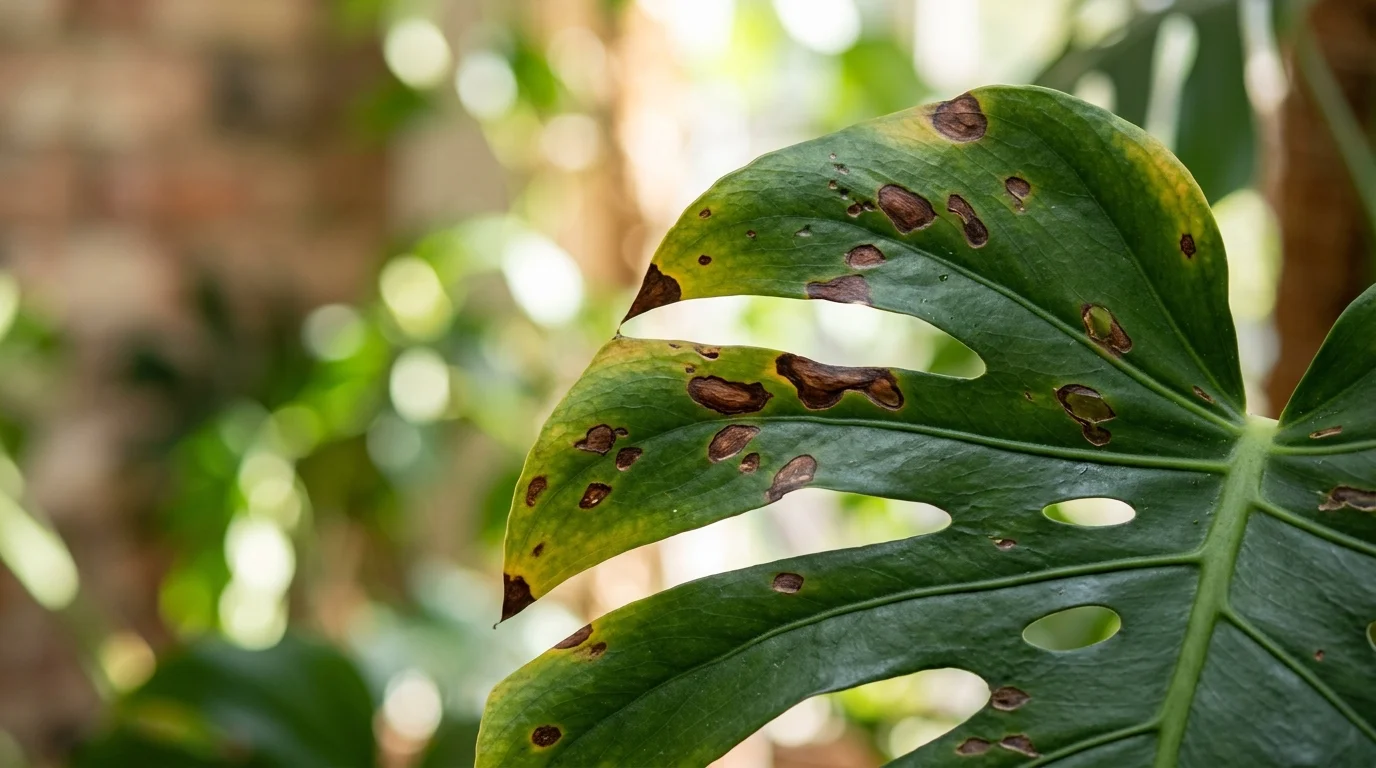
Plant phytotoxicity is chemical injury to plant tissue caused by exposure to pesticides, oils, soaps, fertilizers, or other chemicals. It can cause spotting, scorch, bleaching, curling, distortion, or leaf drop and may resemble disease, pests, or environmental injury. If spray damage is suspected, stop the treatment, follow the product label for cleanup, reduce additional stress, and avoid unnecessary further chemical or fertilizer applications while the plant stabilizes.
Key Takeaways
- Phytotoxicity is contact injury to plant tissue from sprays, oils, soaps, fertilizers, or other chemicals and can resemble pest, disease, or environmental damage.
- Recent application history, timing, distribution of symptoms, and exposed surfaces can provide useful clues, but no single symptom pattern proves phytotoxicity.
- Household dish detergents are generally not recommended as plant sprays because cleaning formulations can injure foliage; use products labeled for application to plants.
- Risk can increase when products are misapplied or used under unsuitable conditions such as excessive heat, strong sunlight, or on stressed or sensitive foliage.
- For conservative recovery: stop the suspected treatment, follow product-label cleanup guidance, reduce additional environmental stress, retain useful green leaves, and avoid unnecessary corrective chemicals or fertilizer.
Quick Facts
- Primary cause Direct contact injury from sprays, oils, soaps, foliar fertilizers, or other chemicals
- Key risk factor Unsuitable application conditions, including excessive heat or strong direct sunlight for some products
- Golden rule Follow the product label and use a small-area test for unfamiliar treatments when the label permits
What Should I Do?
Leaves develop spots, scorch, bleaching, curling, or drop after a recent spray
Leaves are partially browned or spotted
PlantSolve Recommendation
- Conservative dosage designed for container plants
- Based on manufacturer instructions
- Adjusted using horticultural best practices
- Start low and increase only if vigorous growth is observed
When a houseplant develops sudden leaf spots, brown scorched margins, or bleaching shortly after receiving a pest treatment or foliar misting, chemical injury—known horticulturally as phytotoxicity—is one possible cause. However, jumping to conclusions too quickly can lead to misdiagnosing a fungal infection, sunburn, or watering stress and applying the wrong corrective treatment.
This guide establishes a conservative, evidence-based diagnostic framework to help you evaluate recent spray applications, recognize chemical leaf injury clues, understand environmental risk factors, and manage plant recovery safely without causing additional stress.
What Is Phytotoxicity?
Phytotoxicity is a toxic or injurious effect on plant tissue caused by exposure to a chemical substance. For indoor houseplants, spray damage may occur on foliage or tender stems following the application of pesticides, horticultural oils, insecticidal soaps, household cleaning mixtures, or foliar fertilizers, particularly when a product is misapplied or the plant and environmental conditions are unsuitable.
It is important to distinguish direct foliar phytotoxicity from root-zone salt damage. While fertilizer burn on houseplants can result from excessive soluble salts accumulating in potting soil and increasing osmotic stress around roots, foliar spray injury occurs directly on exposed plant surfaces. Depending on the product and exposure, chemicals can damage the leaf cuticle, disrupt cellular tissue, or interfere with normal surface gas exchange.
Diagnostic Framework: Spray Damage vs. Other Leaf Problems
Leaf symptoms naturally overlap across environmental, biological, and chemical stresses. Use the comparative matrix below to evaluate whether recent spray applications align with observed damage. Remember that these clues are diagnostic indicators, not definitive proof, and multiple stress factors can occur at the same time.
| Diagnostic Clue | Chemical / Spray Injury | Sunburn / Heat Stress | Pest Damage | Fungal / Bacterial Disease |
|---|---|---|---|---|
| Application History | Recent spraying or foliar treatment may be relevant | Recent shift to direct sun or high temperature | Active infestation may be present regardless of spraying | May be associated with conditions favorable to the specific pathogen, such as prolonged leaf wetness or poor airflow |
| Symptom Onset | May develop relatively soon after treatment, but timing varies with product, concentration, plant, and conditions | May develop after direct light or heat exposure | Often progresses as pest feeding continues | Progression varies by pathogen and host conditions |
| Pattern & Distribution | May correspond to exposed spray surfaces or areas where droplets accumulated | Often concentrated on leaves receiving the strongest light or heat exposure | May include stippling, webbing, feeding injury, or chewed margins depending on the pest | May produce expanding or irregular lesions, halos, water-soaked tissue, or other pathogen-specific signs |
| Progression to New Growth | If injury came from a one-time exposure, later growth may remain unaffected once the exposure has stopped, but this is not guaranteed | New growth may remain healthier after the environmental stress is corrected | Can continue affecting new growth while pests remain active | May spread or recur on new foliage under favorable disease conditions |
| Visible Residue or Organisms | May leave visible film or residue depending on the product, but residue or odor is not required for phytotoxicity | No spray residue or organisms are expected from the environmental cause itself | Live insects, scale coverings, honeydew, webbing, or other pest signs may be present | Visible pathogen signs may include spores, bacterial ooze, coatings, or other disease-specific evidence |
If your plant exhibits yellowing without a recent spray or foliar treatment, review our comprehensive diagnostic guide on houseplant leaves turning yellow for broader environmental, watering, pest, and nutrient possibilities.
Common Triggers of Spray Damage
Chemical injury can result from formulated products as well as unsuitable homemade mixtures. Understanding how different treatments interact with plant tissue helps prevent accidental damage:
- Horticultural & Neem Oils: Oil-based products can cause phytotoxicity under certain conditions, particularly when used on stressed or sensitive plants or when environmental conditions and product restrictions are unfavorable. Always follow the specific product label for permitted plants, temperatures, application rates, and timing.
- Insecticidal Soaps vs. Household Detergents: It is important to distinguish between commercially formulated insecticidal soaps and household dish detergents. Insecticidal soaps are formulated for pest control on plants and use specific fatty-acid soap chemistry. Household detergents are designed for cleaning rather than plant treatment, and their formulations may injure foliage when applied to leaves. Use only products labeled for application to plants.
- Foliar Fertilizers: Spraying liquid fertilizers directly onto leaves can provide nutrient uptake under specific conditions (see our overview of foliar feeding for houseplants). If the solution is too concentrated or applied under unsuitable conditions, dissolved salts can contribute to foliar injury.
- Pesticide Tank-Mixing & Frequency: Combining products or applying treatments more frequently than the label permits can increase the risk of plant injury. Follow label instructions for compatibility, dosage, and application intervals.
Environmental Factors & Plant Sensitivity
The risk of chemical injury is influenced by the product, the plant, and the conditions at the time of application:
- Heat & Temperature Extremes: High temperatures can increase phytotoxicity risk for some products. University extension guidance for horticultural oils and other treatments includes product-specific temperature precautions, so always check the label rather than relying on one universal temperature threshold.
- Direct Sunlight & UV Exposure: Strong sunlight can increase leaf-surface heating and may increase injury risk for some spray products. Follow product-specific guidance about sunlight and application timing.
- Drought & Root Stress: Plants already under water or root stress may be more vulnerable to additional chemical injury.
- Foliar Sensitivity: Tender young leaves and some plants with delicate or sensitive foliage can be more susceptible to spray injury than mature, tougher leaves. Sensitivity varies by species and product.
Conservative Recovery Protocol
If you suspect a recent spray application has injured your plant, use conservative steps to manage recovery without introducing additional stress:
- Stop the Suspected Treatment: Cease applying the suspected product or mixture. Do not attempt to "correct" chemical damage by applying another chemical or homemade neutralizer.
- Consult the Product Label: Review the manufacturer's label for specific cleanup, rinsing, or handling instructions. Product labels are the authoritative source for product-specific safety directions.
- Remove Remaining Surface Residue Where Appropriate: If product guidance supports it and the treatment was recent, gently wiping or rinsing foliage with plain, room-temperature water may help remove unabsorbed surface residue. Avoid aggressive scrubbing, which can cause additional mechanical injury. Rinsing cannot reverse tissue that has already become necrotic.
- Reduce Environmental Stress: Where appropriate, move the plant to a location with bright, indirect light away from harsh direct sun, cold drafts, or heating vents. Protecting damaged foliage from additional environmental extremes can reduce further stress while the plant stabilizes.
- Retain Partially Green Foliage: Do not immediately remove leaves that are only partially spotted or scorched. Remaining green tissue can still photosynthesize and contribute to recovery. Remove fully dead or decaying tissue when appropriate rather than pruning healthy green tissue unnecessarily.
- Avoid Unnecessary Fertilization During Acute Stress: Do not add fertilizer simply to accelerate recovery. Resume normal feeding based on the plant's condition and relevant product guidance rather than using extra nutrients as a treatment for chemical injury.
Prevention & Small-Area Testing
Preventing phytotoxicity is generally easier than managing damaged foliage. Adopt these precautionary habits before treating indoor plants:
- Perform a Small-Area Test When Permitted: Before treating an entire plant or collection with an unfamiliar product, test it on a small, inconspicuous area when the product label allows this practice. Observe the treated area for the label-recommended interval before broader application. Injury may sometimes appear later than the initial observation period.
- Measure Accurately: Never guess dilution rates or add "extra for good measure." Use appropriate measuring equipment and follow the product label. When formulating neem oil sprays, consult our structured Neem Oil Spray Calculator for ratio-based dilution guidance.
- Spray Under Suitable Conditions: Apply treatments only under conditions permitted by the product label, avoiding periods of excessive heat, strong direct sunlight, or other stated environmental restrictions.
- Follow Integrated Pest Management: For long-term pest control, combine monitoring, isolation, physical controls, and targeted treatments where appropriate. Learn more in our guide to indoor plant pest eradication.
Authority References & Further Reading
The diagnostic principles and safety guidance in this article are informed by established horticultural extension resources:
- University of Maryland Extension: Guidance on phytotoxicity, pesticide-related plant injury, and environmental leaf damage.
- University of Minnesota Extension: Guidance on houseplant pest management and safe treatment practices.
- UC IPM (University of California Agriculture and Natural Resources): Guidance on pesticide phytotoxicity and plant injury risk factors.
Recommended next actions
Next Best Actions
Move from reading to action with related calculators, plant profiles, and quiz-based recommendations.
Fertilizer Guide
Fertilizer Burn on Houseplants: Symptoms & Fast Fixes
How to identify, treat, and prevent fertilizer burn in houseplants and garden plants.
Guide
Yellow Houseplant Leaves: Diagnose & Fix Guide 2026
After diagnosing hundreds of yellow-leaf cases across dozens of plant species, we've mapped the ten distinct causes that look nearly identical at first glance — and built the only systematic guide that tells you not just what's wrong, but exactly how to confirm it and fix it.
Guide
Indoor Plant Pest Eradication: Full ID & Treatment
The PlantSolve Editorial Team will teach you to identify pests by their damage, mix the perfect neem oil spray, and use BTI to kill gnats at the source—all without toxic chemicals.
Topic Guide
Foliar Feeding for Houseplants
Learn how foliar feeding works for houseplants. Discover when to spray leaves with fertilizer, which nutrients absorb best, and how to avoid chemical leaf.
Frequently Asked Questions
What is plant phytotoxicity?
How can I tell spray damage apart from fungal disease?
Are household dish soaps safe to spray on plant leaves?
Should I prune leaves damaged by chemical spray?
How can I prevent spray damage on my houseplants?
Sources & References
-
Source: extension.umd.edu
Guidance on phytotoxicity, pesticide-related plant injury, and environmental conditions that can contribute to chemical damage.
-
Source: extension.umn.edu
Guidance on managing insects on indoor plants and applying treatments safely.
-
Source: ipm.ucanr.edu
Information on pesticide phytotoxicity and environmental risk factors affecting plant injury.
Explore More