Indoor Plant Pest Eradication: How to Identify and Treat Common Invaders
The PlantSolve Editorial Team will teach you to identify pests by their damage, mix the perfect neem oil spray, and use BTI to kill gnats at the source—all without toxic chemicals.
Quick Answer
The five most common indoor plant pests are spider mites (fine webbing, stippled leaves), mealybugs (white cottony clumps), scale (brown bumps on stems), fungus gnats (small black flies), and thrips (silvery scars). Treat spider mites and mealybugs with a neem oil spray (5 ml neem, 2 ml mild soap, 1 liter water) weekly for 3 weeks. Scrape scale with an alcohol swab. Use mosquito dunks (BTI) in water to kill gnat larvae. Isolate any infested plant immediately and increase humidity to deter mites.
Key Takeaways
- Isolate infested plants immediately to protect the rest of your collection.
- Identify specific pests correctly before selecting chemical or biological treatments.
- Apply neem oil, insecticidal soap, or isopropyl alcohol systematically to leaf undersides.
- Repeat treatments every 5 to 7 days for at least 3 weeks to break hatch cycles.
You spotted a fine web between the stems of your Calathea, or a white cottony patch on your Hoya, and now you’re side‑eyeing every plant in the room. Indoor pests don’t appear out of nowhere—they hitchhike on new plants, drift in through open summer windows, or explode when dry AC air mimics their native hot, arid conditions. The key is a swift, systematic, and organic approach that targets both adults and eggs without turning your living space into a chemical hazard. This guide covers the Big Five and exactly how to eliminate them.
Identifying the Big Five Pests
How do I get rid of spider mites without chemicals?
Spider mites are tiny, reddish‑brown dots on leaf undersides, leaving fine webbing and stippled, dusty‑looking foliage. They thrive in hot, dry air (below 40% humidity). First, increase humidity by placing the pot on a pebble tray and running a humidifier at 60%—this alone slows their reproduction. Then shower the plant with lukewarm water (22°C/72°F) to physically blast them off. After the leaves dry, apply a neem oil solution (use our Neem Oil Calculator for exact dilution) to every leaf surface, repeating every 5–7 days for 3 weeks to break the egg‑hatch cycle. Isolate the plant. For a severe infestation, after treating, introduce predatory mites (Phytoseiulus persimilis) if the room is warm enough. Our spider mites on houseplants guide provides a detailed battle plan.
What is the white fuzzy stuff on my plant stems?
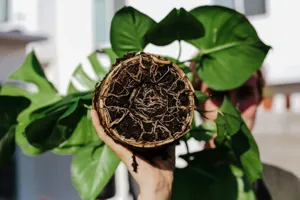
That’s mealybugs—soft, oval insects covered in white wax. They cluster in leaf axils and along stems, sucking sap and excreting sticky honeydew that leads to sooty mold. Remove them by dabbing each cluster with a cotton swab soaked in 70% isopropyl alcohol; it dissolves their wax instantly. For heavy infestations, follow up with the same neem oil spray used for mites, ensuring it reaches crevices. Check roots too—root mealybugs look like white powder in the soil and require repotting with a hydrogen peroxide drench (1 part 3% peroxide to 3 parts water). A Calathea orbifolia is a notorious mealybug magnet; our Calathea care guide covers preventive care for sensitive plants.
Fungus Gnats and Scale
How do I stop tiny black flies around my houseplants?
Those are fungus gnats, and the adults are annoying but harmless; it’s the larvae in the soil that chew roots. Kill the larvae by watering exclusively with water that has had a mosquito dunk (BTI) soaking in it for 30 minutes. Use it every watering for 3–4 weeks, and the lifecycle breaks. Simultaneously, let the top 2–3 cm (1 inch) of soil dry out between waterings, and top‑dress with coarse horticultural sand. Yellow sticky traps at soil level catch adults. A Neem Oil Calculator can help you prepare a neem drench if you prefer, but BTI is more targeted and safer for beneficial organisms.
Thrips and Scale
Why does neem oil work on pests, and how often should I apply it?
Neem oil contains azadirachtin, which disrupts insect hormones, preventing feeding, moulting, and egg‑laying. It doesn’t kill on contact instantly; it’s a growth regulator, so you need to apply it every 5–7 days for 3 weeks to catch each new generation as it hatches. Mix 5 ml of pure cold‑pressed neem oil with 2 ml of mild castile soap per liter of water, shake vigorously, and spray all leaf surfaces until dripping. Apply in the evening or in shade to avoid leaf burn; if you suspect previous treatment damage, see our guide on plant spray damage and recovery. For scale insects—brown, dome‑shaped bumps on stems—physically scrape them off with an alcohol‑soaked cotton pad first, then spray neem to kill crawlers. Thrips cause silvery scarring and black faecal dots; they require the same spray routine plus blue sticky traps.
Prevention
How do I prevent pests when bringing new plants home?
To safely acclimate and quarantine new houseplants, keep every new plant in a separate room for 2 weeks. Inspect leaves with a 10x magnifying loupe, especially the undersides and where the leaf meets the stem. Wipe all leaves with a damp microfiber cloth and spray with a preventive neem oil solution at half strength (2.5 ml per liter). During those 2 weeks, check daily for any signs of pests or eggs. Never place a new plant directly into your collection. If you spot anything, treat it while still isolated. Open windows in summer? Install fine mesh screens to prevent outdoor pests from drifting in. A healthy, properly watered plant is less susceptible; our Watering Calculator ensures you’re not overwatering, which attracts gnats.
Pest Treatment Table
| Pest | Identification | Immediate Action | Follow‑up Treatment |
|---|---|---|---|
| Spider mites | Fine webbing, stippled leaves | Shower plant, raise humidity to 60% | Neem oil spray every 5–7 days for 3 weeks |
| Mealybugs | White cottony clumps | Dab with alcohol swab | Neem oil spray; check roots for root mealybugs |
| Fungus gnats | Small black flies near soil | Let soil dry; yellow sticky traps | BTI mosquito dunk water every watering for 4 weeks |
| Scale | Brown bumps on stems | Scrape off with alcohol pad | Neem oil spray; repeat every 7 days |
| Thrips | Silvery scars, black dots | Blue sticky traps; shower plant | Neem oil spray; Spinosad if severe |
Frequently Asked Questions
How do I get rid of spider mites without chemicals?
What is the white fuzzy stuff on my plant stems?
How do I stop tiny black flies around my houseplants?
Why does neem oil work on pests, and how often should I apply it?
How do I prevent pests when bringing new plants home?
Explore More