How to Fix a Broken Plant Stem: Splinting and Repair Guide
Learn how to assess a bent or snapped plant stem, splint partial breaks, and propagate healthy sections that cannot be repaired.
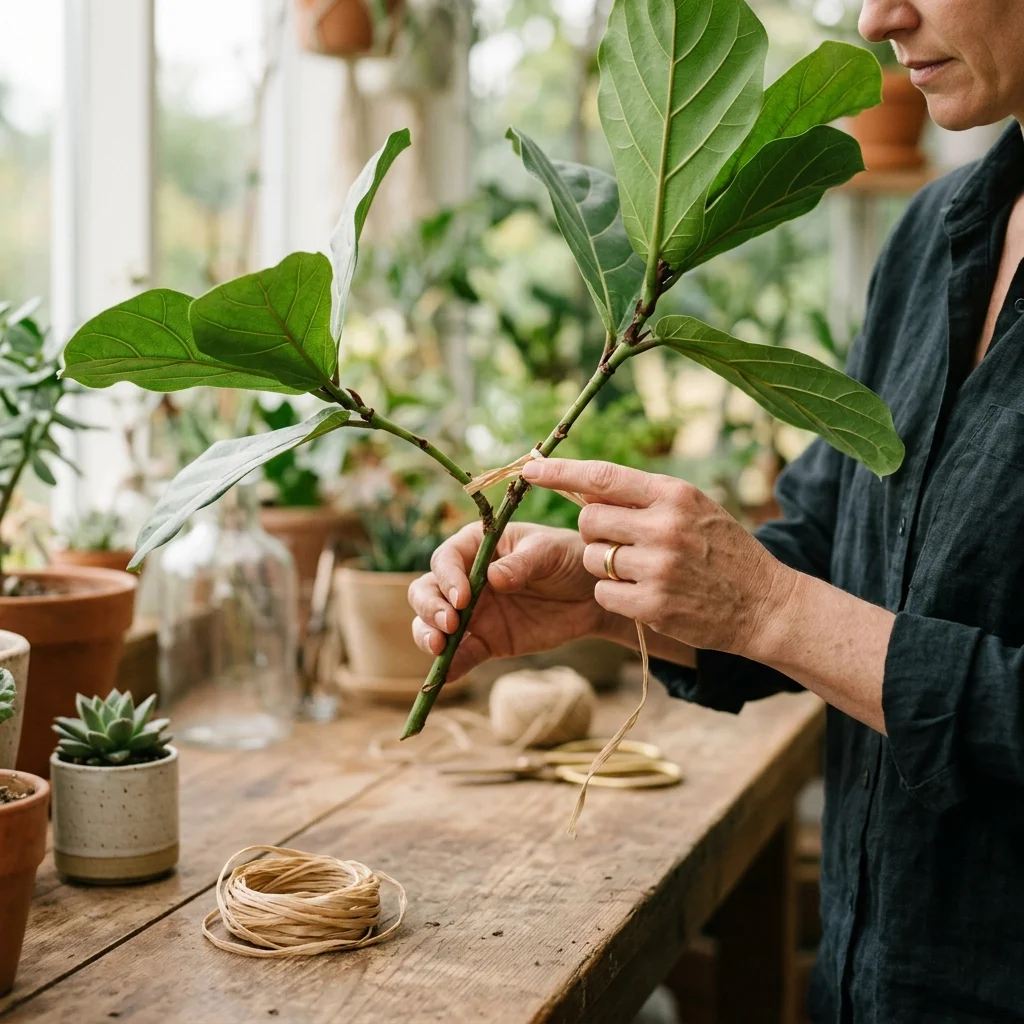
Quick Answer
A partially broken or sharply bent plant stem can sometimes recover if the tissues remain connected. Gently realign the stem, support it with a small splint, and secure it loosely with soft plant tape while it heals. If the stem is completely severed, do not try to tape the pieces back together. Make a clean cut below the damage on the parent plant and, if the broken section contains a viable node, use it as a cutting for propagation.
Key Takeaways
- A bent or partially split stem may recover if enough vascular tissue remains connected.
- Realign a partially broken stem gently and support it with a splint rather than forcing it into position.
- Use soft plant tape or another flexible binding material and avoid tying the damaged area tightly.
- A completely severed stem cannot normally be fused back onto the parent plant.
- A snapped section containing a viable node may be propagated in water or an appropriate propagation medium.
- If a plant falls, gently reposition the dislodged root ball, avoid compacting the soil, and hold off on routine fertilizing until active growth resumes.
Quick Facts
- Partial break Realign gently, support with a splint, and secure loosely with soft plant tape.
- Complete break Do not attempt to fuse the severed stem; make a clean cut and consider propagation.
- Propagation requirement The salvaged section generally needs at least one viable node to produce new growth.
- Splint material Use a chopstick, bamboo stake, skewer, or similar rigid support with soft flexible tape.
- Recovery period Keep the support in place until the stem is stable and new tissue has formed; timing varies by plant and severity.
- Priority Protect the remaining healthy stem, crown, and roots before attempting cosmetic repairs.
What Should I Do?
The stem is bent but still attached and the leaves above it remain firm
The stem is cracked but still connected on one side
The stem is completely severed
The broken section has no viable node
The entire plant was stepped on or crushed
The damaged stem begins turning soft, dark, or increasingly wet
Broken Plant Stem: Damage Type and Best Response
| Damage | What It Looks Like | Best Response | Recovery Potential |
|---|---|---|---|
| Bent but intact | Stem is bent or creased but the outer tissue remains connected and foliage above the injury remains supported. | Gently return it toward its natural position and provide external support. | Often good if the vascular connection remains functional. |
| Partially split | Stem has cracked or split but remains attached on one or more sides. | Carefully align the tissues and stabilize the stem with a splint and loose soft binding. | Possible, depending on the extent of tissue damage and plant species. |
| Completely snapped | Stem is fully separated from the parent plant. | Make a clean cut on the damaged parent stem and assess the detached section for propagation. | The original connection cannot normally be restored, but the cutting may produce a new plant if viable. |
| Crushed or mangled | Stem or crown tissue is flattened, torn, or severely damaged. | Remove irreparably damaged tissue and inspect the crown and roots for additional injury. | Depends primarily on whether healthy crown, stem, and root tissue remains. |
Assess the Damage: Bent, Split, or Snapped
Mechanical damage can happen when a plant is knocked over, moved, handled roughly, stepped on, or exposed to strong wind. Before cutting anything, determine how much of the stem remains connected.
A bent or partially split stem may recover when some vascular tissue remains connected. A completely severed stem is different: the detached section cannot normally be fused back onto the parent plant, but it may still be useful as a cutting if it contains a viable node.
Bent or Partially Broken Stem
If the stem is bent or cracked but remains attached, check whether the foliage above the injury is still receiving water. A stem that remains reasonably firm and supports its leaves has a better chance of recovering than one that is completely collapsed or severed.
Completely Snapped Stem
If the stem is completely separated, do not spend time trying to tape the two pieces back together. Make a clean cut on the damaged section of the parent plant and inspect the detached piece for a viable node. If a node is present and the cutting is otherwise healthy, it may be propagated.
Will My Broken Plant Stem Grow Back?
Recovery depends on how much healthy tissue survives, the plant species, and whether healthy nodes or growing points remain. No outcome can be guaranteed, and timing varies with the plant and its conditions. Use these situations as a starting point:
- Bent but still connected: If the stem is firm and the leaves above it are still supported, it often has a reasonable chance of recovering with support.
- Split lengthwise or hanging by a strip of tissue: Recovery is possible only if enough connected tissue remains. Stabilize it, avoid moving it, and watch for wilting above the break.
- Snapped cleanly off: The two pieces will not rejoin. The parent plant may produce new shoots from nodes or buds below the break, and the detached piece may root if it has a viable node.
- Broken main growing tip versus a damaged side branch: Many branching plants can push new growth from nodes below a broken tip, but plants that grow from a single growing point may not replace it. A damaged side branch is usually a smaller loss than the main stem.
- Soft, crushed, or blackening stem: Tissue that is collapsing or decaying will not recover. Cut back to firm, healthy tissue with clean tools and check the crown and roots.
How to Splint a Bent Plant Stem
Splinting does not make the plant tissue instantly fuse back together. Instead, it reduces movement and keeps a partially damaged stem in a stable position while the plant produces new tissue around the injury.
- Choose a support: Use a chopstick, bamboo stake, plant stake, or similar rigid support. Choose one that is long enough to stabilize the injured section without pressing unnecessarily against the stem.
- Position the splint: Place the support alongside the damaged stem. If inserting it into the potting mix, avoid pushing it directly through the root ball.
- Realign gently: Bring the stem toward its natural position without forcing it. If the tissue starts tearing further, stop and stabilize the stem where it naturally rests.
- Secure loosely: Use soft plant tape, flexible ties, or another soft material. The binding should prevent excessive movement but must not constrict the stem.
- Monitor the injury: Check the stem periodically for worsening splitting, softening, discoloration, or loss of support. Do not repeatedly bend or unwrap the injured section unnecessarily.
What to Do With a Completely Snapped Stem
A completely severed stem generally cannot be reattached successfully to the parent plant. The better approach is to clean up the damaged parent stem and evaluate the detached section for propagation.
- Clean the parent plant: Use a clean, sharp pruning tool to remove ragged or crushed tissue from the remaining stem.
- Inspect the cutting: Look for at least one healthy node. A leaf by itself is not enough for many common houseplant stem cuttings to produce a new shoot.
- Prepare the cutting: Trim away severely damaged tissue and remove leaves that would otherwise sit below the propagation medium or in water.
- Choose a propagation method: Depending on the plant species, the cutting may be propagated in water, an appropriate propagation medium, or another suitable method.
- Provide suitable conditions: Keep the cutting warm and in bright, indirect light while avoiding conditions that cause the cutting to remain excessively wet or dry.
Plant-Specific Examples
Plants respond to stem injuries differently, so use these as short examples rather than rules for every species.
- Pothos and philodendron: Find a node (the point where a leaf stem joins the main stem) before preparing a snapped stem for propagation. A piece without a node is unlikely to produce new growth.
- Monstera: Tell a broken leaf stalk apart from a damaged main stem. A stalk without a node is not a stem cutting, while a main stem section with a node may be propagated.
- Snake plants: A broken leaf may be propagated in suitable circumstances, but in cultivars whose variegation is not maintained through leaf propagation, plants grown from leaf cuttings can lose some or all of the variegation pattern.
- Woody houseplants: A split woody branch may call for a different pruning decision than a soft, green stem. Cutting back to sound wood is often cleaner than trying to splint a badly split branch.
Can a Plant That Was Stepped On Be Saved?
Often, the answer depends on how much healthy tissue remains. If only a few leaves or stems were damaged, remove tissue that is completely crushed or torn and allow the remaining healthy growth to recover.
If the pot was crushed or the plant was pulled violently from its container, inspect the root system and crown as well. Do not automatically repot a stressed plant unless the roots or potting environment were actually damaged. If roots have been severely crushed, remove only tissue that is clearly nonviable and return the plant to an appropriate growing medium.
Plant First Aid: What to Do If a Pot Falls Over
When a houseplant is knocked off a shelf, windowsill, or table, stem damage often occurs alongside root disturbance and spilled potting mix. Managing root trauma and soil disruption is just as important as stabilizing broken branches.
1. Inspect the Root Ball and Substrate
Carefully assess how much of the root system was dislodged or exposed. If the root ball popped out of the container largely intact, gently set it back into its pot. If potting mix spilled out, replenish around the root zone using a fresh, well-draining mix suited to the species (such as standard indoor potting soil amended with perlite for aeration). Tap the pot gently on a surface to settle the medium around the roots—avoid pressing down firmly or packing the soil, which can crush fragile fine root hairs and restrict oxygen flow.
2. Check Moisture and Provide Gentle Light
Check how moist the potting mix is before watering. If it is still damp, hold off and follow the plant's normal watering needs. If it is dry, or if you added fresh mix, water lightly with room-temperature water to settle the substrate into contact with the roots and reduce large air pockets. Place the plant in a stable location with suitable, filtered indirect light. Temporarily avoiding direct, intense sun helps reduce transpiration stress on foliage while injured roots recover their moisture-uptake capacity.
3. Pause Routine Feeding
Hold off on applying fertilizer until the plant has stabilized and shows signs of renewed active growth. Roots that have experienced physical tearing or abrasion cannot absorb concentrated mineral salts efficiently, and premature feeding risks causing osmotic stress or root burn. Once new growth emerges, resume fertilizing according to product label directions.
First Aid Action Table
| Injury Type | Immediate Action | Follow-Up Care |
|---|---|---|
| Partially Snapped Stem | Gently realign tissues; support with a splint and loose, soft plant tape. | Provide bright indirect light; avoid bending the injury and monitor for stabilization. |
| Completely Severed Stem | Make a clean pruning cut below the break on the parent plant; check the detached piece for a viable node. | Propagate the viable cutting in water or a suitable medium; transition to a container once roots develop. |
| Dislodged Root Ball from a Fall | Reposition the root ball, replenish spilled mix without compacting, and water only as needed to settle it. | Keep in gentle indirect light to reduce moisture loss; withhold fertilizer until active growth resumes. |
Aftercare During Recovery
A mechanically damaged plant needs stable conditions rather than constant intervention. Keep it in the light, temperature, humidity, and watering conditions appropriate for its species. Avoid unnecessary repotting, fertilizing, pruning, or relocation while the plant is recovering unless there is a specific problem that requires action.
Watch for progressive softening, darkening, unpleasant odor, or tissue collapse around the injury. These signs can indicate that the damaged tissue is deteriorating and should be reassessed.
Common Mistakes to Avoid
- Do not force a severely damaged stem straight: Additional pressure can turn a partial break into a complete break.
- Do not bind the stem tightly: Growing tissue needs room, and excessive pressure can cause additional injury.
- Do not try to glue a completely severed stem back together: The vascular connection has been interrupted.
- Do not remove healthy tissue unnecessarily: Preserve viable leaves and stems whenever possible.
- Do not overwater a damaged plant: Mechanical injury does not increase the plant's need for water.
Bottom Line
A partially broken plant stem may recover when it is carefully aligned and stabilized. A completely snapped stem cannot normally be reattached, but the detached portion may become a new plant if it contains a viable node. The most important step is to distinguish repairable partial damage from a complete break and then minimize additional stress while the plant recovers.
Frequently Asked Questions
Can a broken stem grow roots?
Should I cut off a bent plant stem?
Can a plant survive if its main stem breaks?
Will a broken stem heal on its own?
Should I put a broken stem in water immediately?
Can I save a broken stem that has started wilting?
What should I do if a plant stem breaks near the soil?
How long should I leave a splint on a broken plant stem?
Can you propagate a plant from a leaf that broke off?
What should I do if my plant was stepped on?
Should I water a plant after its stem breaks?
How do I stop a fallen plant from going into shock?
Sources & References
-
Source: extension.umn.edu
Type: extension
-
Source: hgic.clemson.edu
Type: extension
-
Source: yardandgarden.extension.iastate.edu
Type: extension
-
Source: extension.umaine.edu
Type: extension
Explore More