Why Are My Monstera Leaves Turning Yellow?
Discover why your Monstera deliciosa leaves are turning yellow. Learn to diagnose overwatering, pest damage, nutrient deficiencies, and root rot to save your plant.
Quick Answer
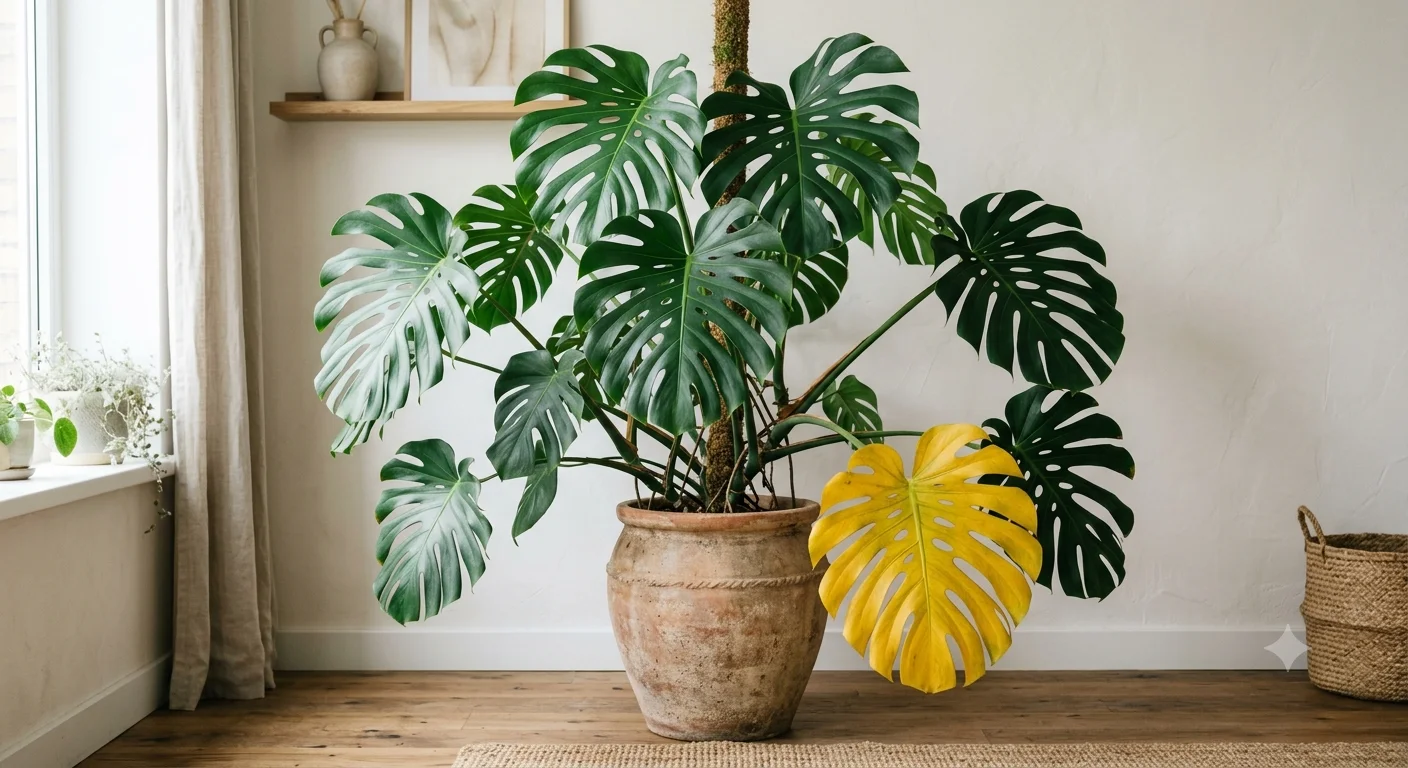
The most common reason for yellow Monstera leaves is overwatering and poor soil drainage, which starves the roots of oxygen and leads to root rot. Other frequent causes include underwatering, insufficient sunlight, pest infestations (like thrips), nutrient deficiencies, or the natural aging of older bottom leaves. To fix it, check the soil moisture first—only water when the top 2 to 3 inches of the potting mix are completely dry.
Key Takeaways
- Overwatering and poor drainage in heavy soils is the leading cause of yellowing, often leading to root rot.
- A chunky, well-aerated aroid mix is critical, especially in humid or monsoon-prone climates where soil dries slowly.
- Patchy yellowing with tiny black dots is a strong indicator of a thrips infestation.
- An occasional yellow lower leaf is part of the normal aging process and is not a cause for concern.
- Always check soil moisture, drainage, and light levels before attempting to fix yellow leaves with fertilizer.
Quick Facts
- Most Common Cause Overwatering resulting in root oxygen deprivation (root rot)
- Pest Indicators Thrips and spider mites cause patchy, mottled yellowing rather than solid color changes
- Soil Requirement Requires a chunky, highly porous aroid mix (bark, perlite, pumice) for rapid drainage
- Normal Aging Occasional single bottom-leaf yellowing is harmless senescence
Monstera Yellow Leaf Symptom Checker
| Symptom | Likely Cause | Action Required |
|---|---|---|
| Yellowing with soft, dark brown or black spots | Overwatering / Root Rot | Inspect roots, trim mushy parts, and repot in a chunky aroid mix. |
| Yellowing with dry, crispy brown edges | Underwatering / Low Humidity | Water thoroughly until it drains out the bottom; adjust watering frequency. |
| Patchy yellowing, tiny black dots, or silvery streaks | Pest Infestation (Thrips / Spider Mites) | Isolate plant, wash foliage, and treat with organic insecticidal soap or neem oil. |
| Overall pale yellowing, starting on older bottom leaves | Nutrogen Deficiency | Apply a balanced, water-soluble fertilizer during the active growing season. |
| A single, very old bottom leaf turns solid yellow and drops | Natural Aging (Senescence) | No action needed. Prune the leaf once it has fully yellowed. |
1. Excess Moisture and Root Rot (The #1 Culprit)
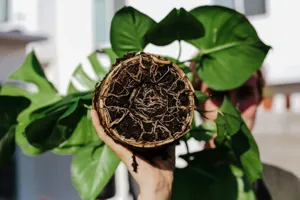
One of the first things to check when Monstera leaves turn yellow is the moisture level around the roots. A standard, dense potting mix that stays saturated for too long reduces the oxygen available to roots, leading to root asphyxiation and eventual rot. This often manifests as yellow leaves accompanied by dark, mushy brown spots.
The Fix: In tropical climates or during high-humidity monsoon seasons, potting soil takes significantly longer to dry out. Ensure your Monstera is potted in a highly porous, chunky "aroid mix" containing generous amounts of perlite, orchid bark, and pumice. Always use a pot with drainage holes and never let the plant sit in a saucer of stagnant water.
2. Underwatering and Root Desiccation
While overwatering is common, underwatering can also cause chlorosis (yellowing). When a Monstera is left bone-dry for too long, the plant sacrifices its older leaves to conserve moisture for new growth. Underwatered yellow leaves usually feel dry and papery, often featuring crispy brown edges.
The Fix: Give the plant a thorough soak until water runs freely out the drainage holes, ensuring the entire root ball is rehydrated.
3. Insufficient Light
Monstera deliciosa can tolerate lower light than many tropical plants, but it generally grows best with bright, indirect light. In very low light, photosynthesis slows down drastically. Lacking the energy to support all its foliage, the plant will shed older leaves, which turn yellow before dropping.
The Fix: Move the plant gradually toward a brighter location with filtered light. Avoid placing it directly into harsh afternoon sun, which can scorch the leaves.
4. Pest Infestations (Thrips and Spider Mites)
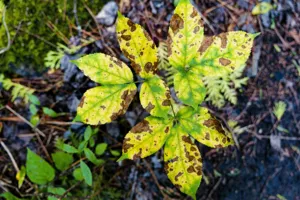
Sap-sucking insects are a major cause of patchy, yellowing foliage. Thrips, in particular, love Monsteras. They drain the plant's cellular fluids, leaving behind yellow, mottled patches, silvery streaks, and tiny black dots (frass).
The Fix: Inspect the undersides of the leaves closely. If pests are present, isolate the plant immediately. Wipe down the leaves and treat with an eco-friendly pest control formulation, such as cold-pressed neem oil or insecticidal soap, repeating weekly until the infestation is gone.
5. Nutrient Deficiencies
If your Monstera has been in the same pot for years, the soil may be depleted of essential nutrients. A lack of Nitrogen typically causes older leaves to turn a uniform pale yellow, while a Magnesium deficiency may leave the veins green while the rest of the leaf yellows (interveinal chlorosis).
The Fix: Apply a balanced liquid fertilizer or incorporate a slow-release bio-fertilizer during the growing season. Ensure your soil pH is balanced so roots can actually absorb the nutrients.
6. Natural Aging of Older Leaves
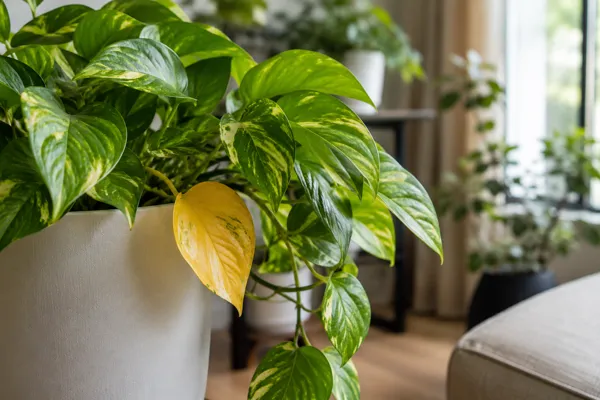
An occasional yellowing of an old, lower leaf near the base of the stem is completely normal. Plants naturally shed older foliage (senescence) as they redirect resources and energy toward pushing out new, fenestrated leaves at the top.
The Fix: If only one old leaf is yellowing and the rest of the plant looks vigorous, simply wait until the leaf is easily detachable or prune it off with sterilized shears.
Frequently Asked Questions
Can a yellow Monstera leaf turn green again?
Why are my Monstera leaves turning yellow with brown spots?
How do I know if my Monstera has root rot?
Why are the bottom leaves of my Monstera turning yellow?
Should I cut yellow leaves off my Monstera?
Sources & References
-
Source: mrec.ifas.ufl.edu
Type: academic
-
Source: extension.psu.edu
Type: extension
Explore More