Purple Coneflower Care Guide
Grow thriving Purple Coneflower (Echinacea purpurea) with the sun, soil and minimal watering it needs to bloom for pollinators all summer.
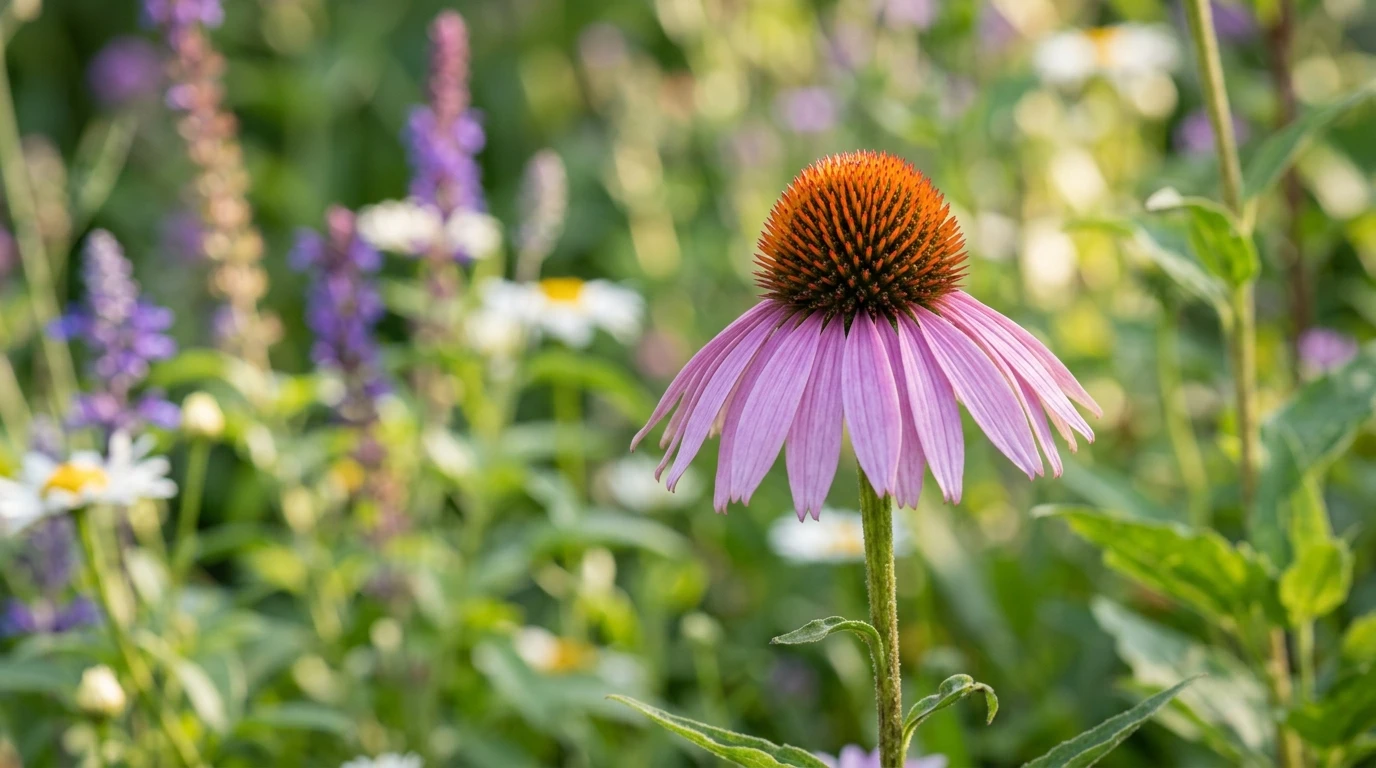
-
Difficulty
Medium
-
Light
Bright indirect
-
Temperature
65°F - 85°F (18°C - 29°C) during active growth
-
Growth
Moderate
-
Biggest Owner Mistake
Planting in heavy, slow-draining clay soil and overwatering. As a prairie native, this plant is highly drought-tolerant and quickly succumbs to root rot if its feet stay wet.
-
What Nobody Tells You
Leaving the dried, spiky seed heads standing through fall and winter is not just for visual interest—it provides a crucial, natural food source for goldfinches and other seed-eating birds during the coldest months.
-
Real Home Conditions
They are incredibly resilient in extreme summer heat and poor, rocky soils where other perennials fail, making them perfect for low-maintenance, water-wise gardens. They don't need any supplemental indoor humidity or specialized fertilizers.
Quick Answer
Purple Coneflower needs full sun, well-drained soil, and minimal watering once established. It is drought-tolerant, hardy to USDA zone 3, and not toxic to pets or humans. Deadheading extends bloom, but leaving seed heads through winter feeds goldfinches and other birds.
Key Takeaways
- Plant in full sun with well-drained soil; it tolerates poor, sandy, or rocky ground better than constantly moist soil.
- Water regularly the first season to establish roots, then only during extended drought.
- Deadhead spent blooms to extend flowering, or leave seed heads standing through fall and winter to feed goldfinches.
- Divide clumps every 3-4 years in spring or fall to maintain vigor and control spread.
- Watch for powdery mildew in humid conditions and aster yellows disease, which has no cure and requires removing infected plants.
Overview
Echinacea is a genus of prairie wildflowers native to North America, and Echinacea purpurea is its most widely cultivated species, grown for its long summer bloom, pollinator appeal, and low water needs once established.
Difficulty
Purple Coneflower is considered one of the easiest perennials for beginner gardeners. It tolerates poor soil, heat, drought, and inconsistent care far better than most flowering perennials, and largely fends for itself once its first season of establishment is over. The main way to run into trouble is the opposite of neglect: planting it in soil that stays wet, which invites root and crown rot. Give it full sun and drainage, and it asks for very little else.
Watering
Water regularly through the first growing season while roots establish. After that, water only during extended dry spells; established plants are drought-tolerant and more likely to suffer from overwatering than underwatering.
Light
Full sun is best for the most abundant blooms and sturdy, upright stems. It tolerates light or part shade, but plants grown with less than 6 hours of direct sun tend to flower less and may flop or lean toward the light source.
Soil
Prefers average to sandy, well-drained soil and tolerates poor or rocky ground. Heavy clay or soil that stays consistently wet is the main soil condition to avoid, since it leads to root and crown rot.
Temperature
Hardy across USDA zones 3-8. Foliage dies back to the ground after fall frost, and the plant regrows from its crown and roots in spring. Tolerates summer heat well once established.
Humidity
Grown outdoors, ambient humidity is not a significant care factor. In consistently humid, still conditions, good air circulation between plants matters more than humidity level, since it reduces the risk of powdery mildew.
Fertilizer
Needs little to no supplemental fertilizer. A light top-dressing of compost in spring is usually sufficient; heavy fertilizing tends to produce tall, floppy growth that requires staking rather than more or better blooms.
Propagation
Most commonly propagated by dividing established clumps in early spring or fall, or by direct-sowing seed, which typically needs a period of cold stratification to germinate reliably. Basal stem cuttings are possible but less commonly used than division.
Toxicity
Purple Coneflower is not listed as toxic to cats, dogs, horses, or humans. Ingesting large quantities of any plant material can still cause mild digestive upset in pets, but no toxic principle is documented for this species.
Pests Diseases
Powdery mildew can appear on foliage in humid, still conditions and is managed with better spacing and airflow rather than chemical treatment in most home gardens. Aster yellows, a phytoplasma disease spread by leafhoppers, causes stunted, yellowed, distorted growth and has no cure; infected plants should be removed and destroyed to prevent spread. Japanese beetles and leaf miners are occasional pests but rarely serious.
Winter Care
For winter interest and wildlife value, leave spent flower heads standing rather than cutting them back in fall — the seed heads are a favorite winter food source for goldfinches and other seed-eating birds. Cut dead foliage back to the ground in late winter or early spring, just before new growth resumes, to tidy the planting without removing the winter food source too early.
Structured Plant Data
Plant Data Profile
The following data is extracted directly from our botanical knowledge graph for accuracy and transparency.
Environmental Parameters
| Parameter | Recommended | Survivable |
|---|---|---|
| Temperature | 65°F - 85°F (18°C - 29°C) during active growth | Hardy to roughly -34°C (-30°F) average annual minimum (USDA zone 3); heat-tolerant well above 32°C (90°F) once established |
Relationships
-
Asteraceae
Belongs To Family
-
Asterales
Belongs To Order
-
Soil Well Draining Average
Recommended Soil
-
Water Drought Tolerant Low
Watering Profile
-
Light Full Sun
Light Profile
-
Eastern North America
Native Region
-
Central North America
Native Region
-
Black Eyed Susan
Shares Care With
Troubleshooting & Diagnostics Guide
1 White, powdery coating on leaves
Diagnosis: Powdery mildew
Treatment: Improve air circulation between plants, avoid overhead watering, and remove heavily affected foliage.
Prevention: Space plants for airflow and water at the soil line rather than overhead.
2 Stunted, yellowed growth with distorted, excessive branching
Diagnosis: Aster yellows (phytoplasma spread by leafhoppers)
Treatment: Remove and destroy infected plants; there is no cure and treating foliage will not resolve it.
Prevention: Control leafhopper populations where feasible and remove infected plants promptly to limit spread.
3 Wilting, blackened base, or plant collapse despite adequate watering
Diagnosis: Root or crown rot from poorly drained, consistently wet soil
Treatment: Improve drainage where possible, reduce watering frequency, and amend heavy soil with grit or compost.
Prevention: Plant in well-drained soil from the start and avoid low-lying spots where water collects.
Authoritative Resources
For additional peer-reviewed information on plant diseases, toxicity, and care, consult these trusted botanical and agricultural extensions:
Frequently Asked Questions
Is Purple Coneflower toxic to dogs or cats?
Why are my coneflower leaves turning yellow and distorted?
Should I deadhead my Purple Coneflower?
How much sun does Purple Coneflower need?
How often should I water Purple Coneflower?
What kind of soil does Purple Coneflower need?
How do I divide Purple Coneflower?
Why is my coneflower flopping over?
Does Purple Coneflower attract pollinators?
Is Purple Coneflower deer resistant?
How long does Purple Coneflower live?
Can Purple Coneflower grow in containers?
Explore More